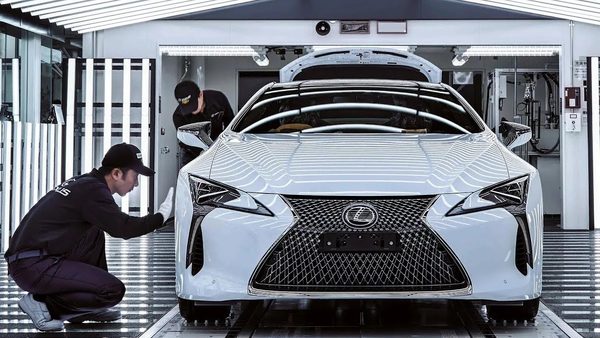
Toyota announced in February 2025 that it would set up a wholly owned company in Shanghai to develop and build Lexus electric vehicles and batteries, and broke ground in the Jinshan district on 27 June 2025. The plot runs to roughly 1.13 million square metres and was acquired for 1.353 billion yuan ($189 million); total investment in the site is 14.6 billion yuan ($2.02 billion).
The ownership is the unusual part. China required foreign carmakers to manufacture through a local joint venture until it began lifting the rule in 2018, and Tesla’s Gigafactory Shanghai was the first plant built under the relaxed terms. Jinshan is the second, and the first belonging to a Japanese manufacturer. Toyota’s existing Chinese production runs through FAW Toyota and GAC Toyota, in which Chinese partners hold half.
Construction is due to finish in August 2026, with production following in the second half of 2027 and initial employment of about 1,000 people. The plant is designed for roughly 100,000 cars a year, though it is not expected to approach that immediately: Nikkei Asia reports a first year at about 1,000 cars a month, stepping up to tens of thousands of units from 2028. Shanghai authorities have said output will be exported as well as sold in China, including to Japan.