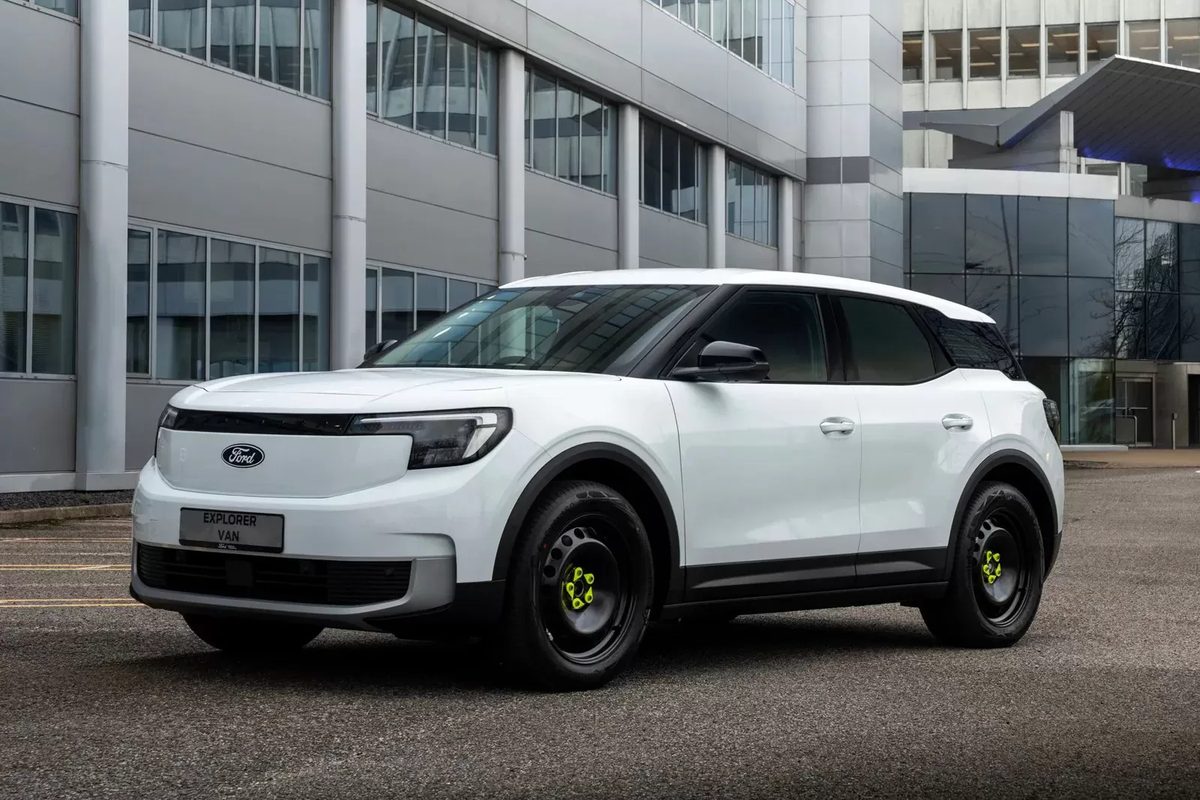
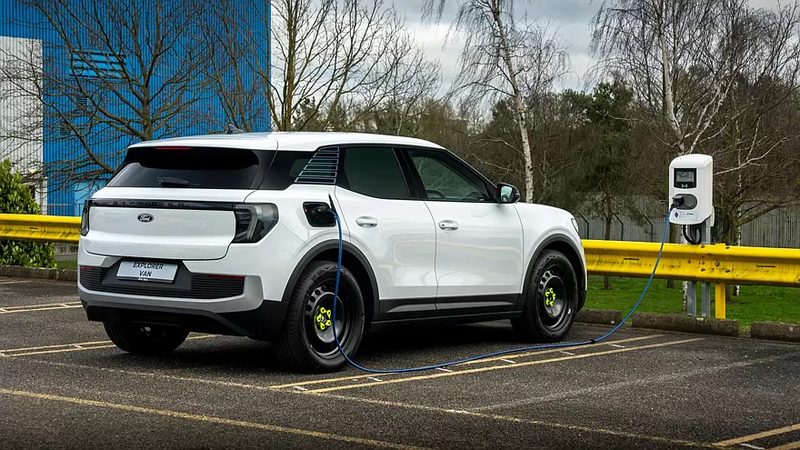
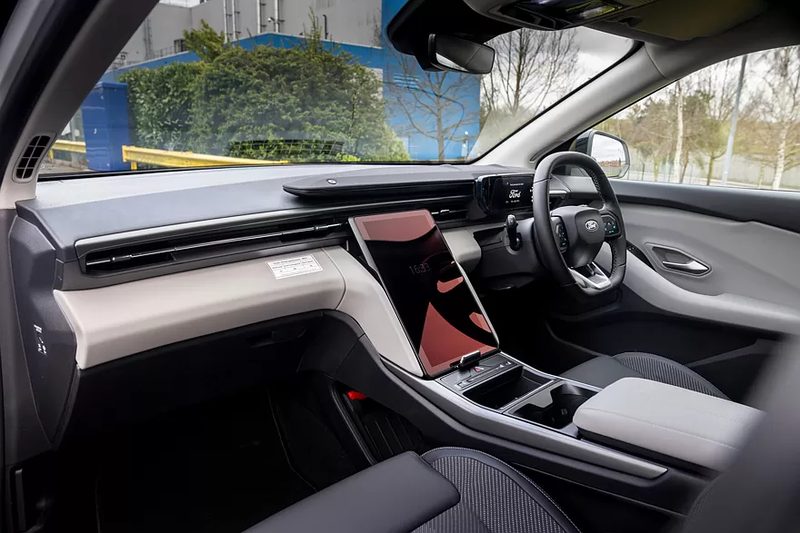
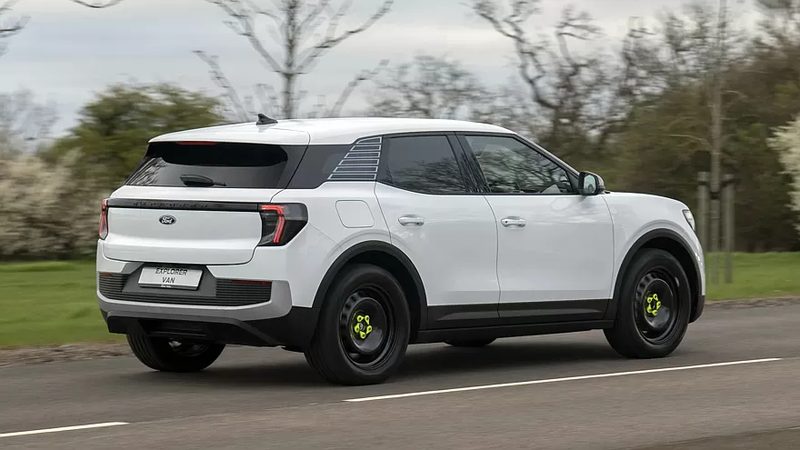
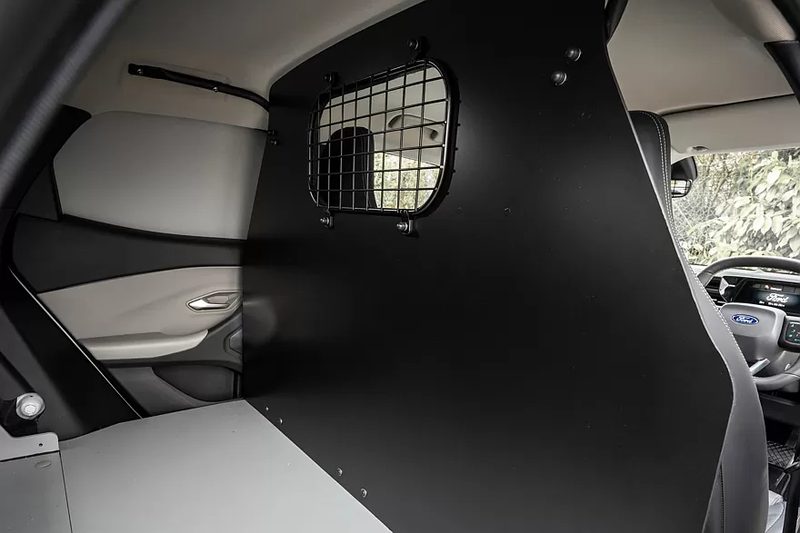
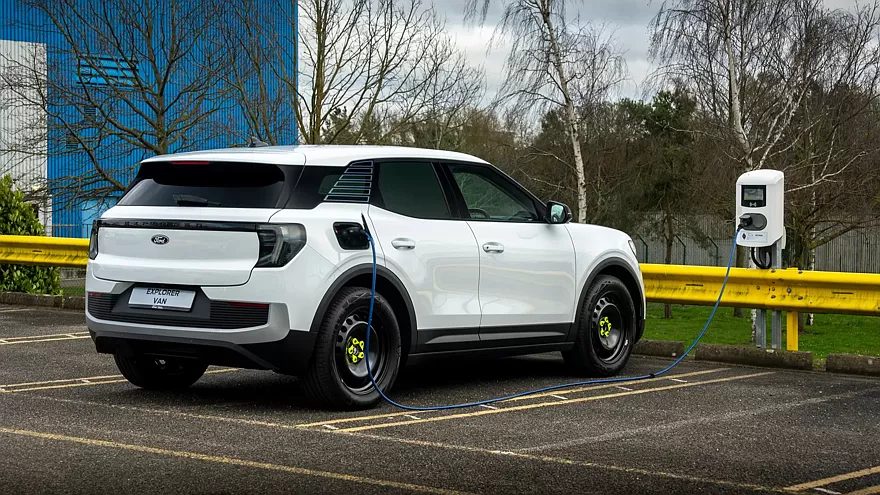
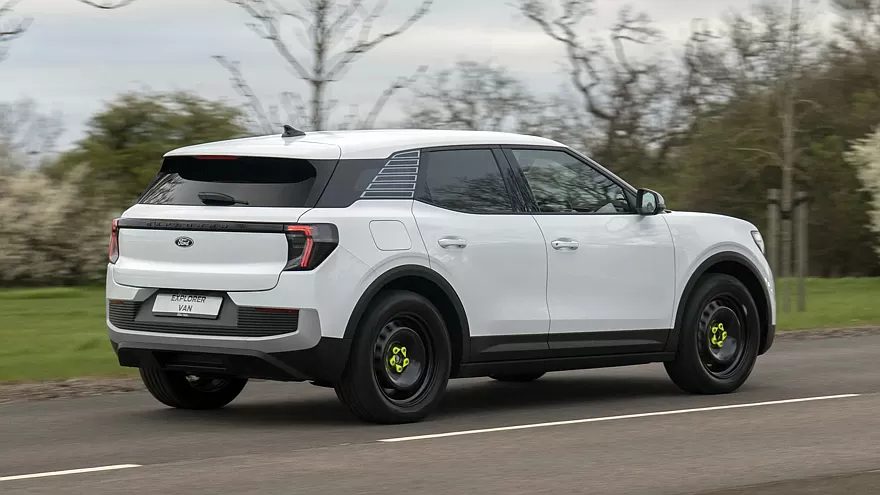
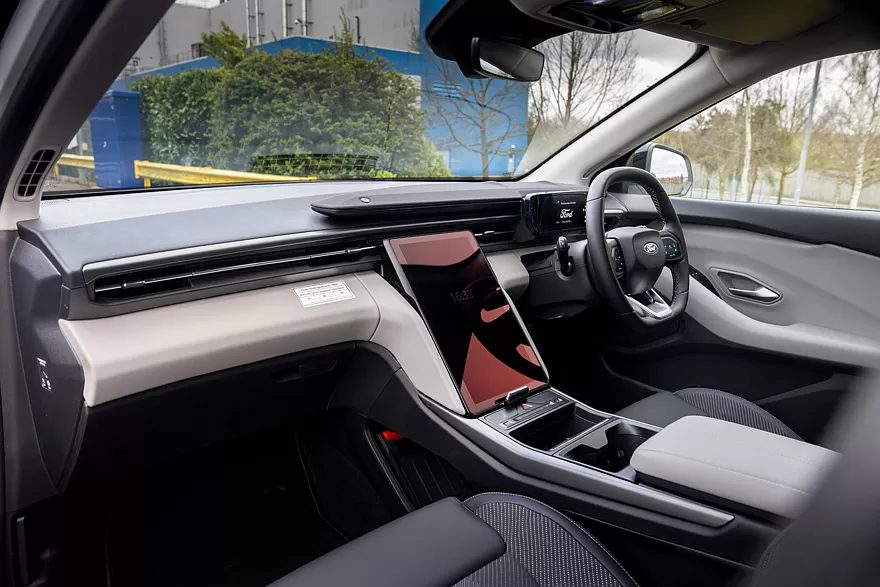
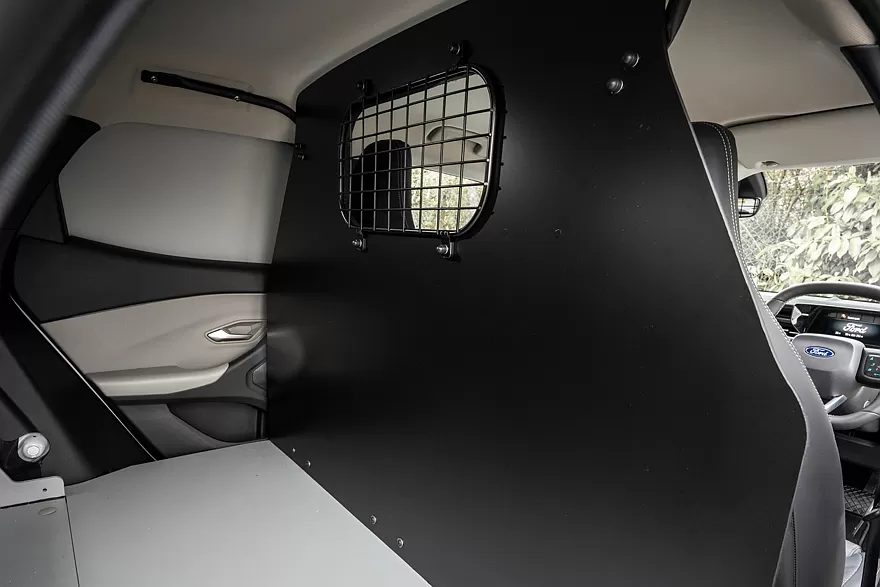
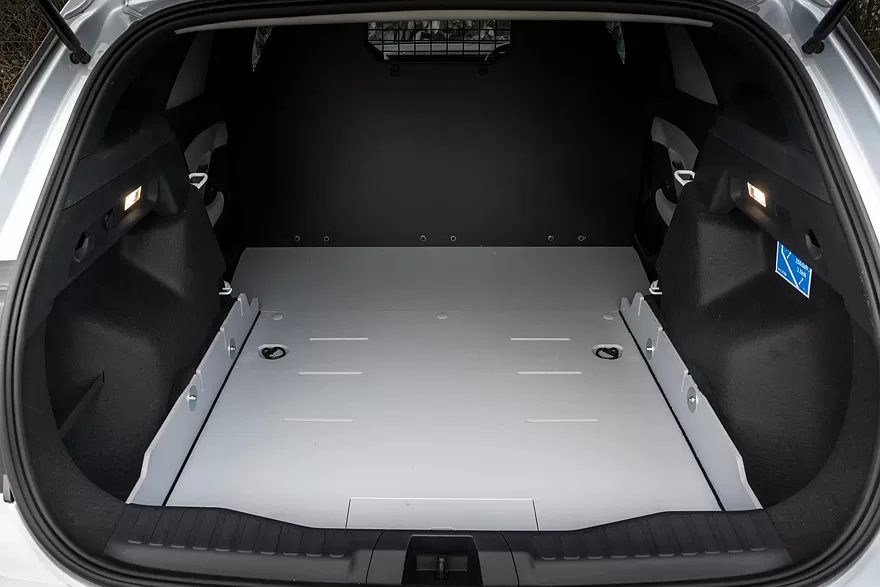
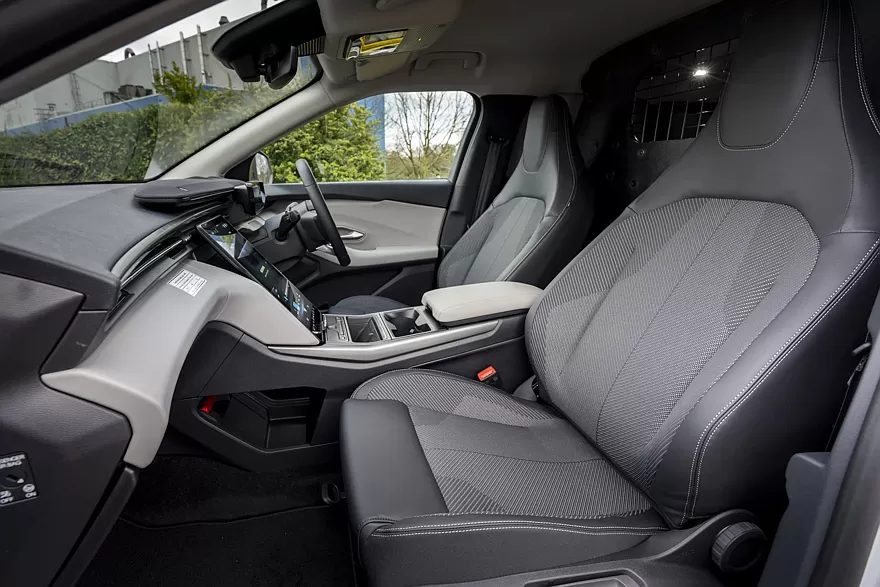
Ford Pro is turning its European electric Explorer SUV into a commercial van. The Explorer Van EV starts life as the standard passenger Explorer, built on Volkswagen’s MEB platform, and is converted at Ford Pro’s Dagenham Conversion Centre in London. A permanent bulkhead replaces the rear seats, re-homologating the vehicle from a passenger car (M1) to a light commercial vehicle (N1) and turning the rear into a flat, tie-down-equipped cargo bay with 1,460 litres of load space and a payload of about 650 kg.
Two powertrains carry over from the passenger Explorer. The rear-wheel-drive version pairs a 77 kWh battery with a single rear motor producing around 286 hp and 545 Nm of torque, good for up to 373 miles (600 km) of WLTP range and towing up to 1,000 kg. The all-wheel-drive version steps up to a 79 kWh battery and a dual-motor setup rated around 340 hp and 679 Nm, with towing capacity rising to 1,200 kg and WLTP range at 353 miles (568 km). Both support DC fast charging up to 135 kW, taking about 25 minutes to charge from 10 to 80 percent.
Ford is positioning the Explorer Van EV for fleet roles built around long distances and irregular access to charging, such as jobs carried out by one or two people with modest equipment. Orders have so far been taken on a fleet basis only, with the van shown publicly at the CV Show in Birmingham; Ford has said it expects to add the model to its general price list later in 2026 if fleet demand holds up.
Pricing for the rear-wheel-drive version starts from £36,308 (commercial, on-the-road), rising to £43,617 for the all-wheel-drive model. The Explorer Van EV sits alongside Ford’s existing electric commercial range, aimed at single- or two-person jobs where a car-derived van’s smaller footprint and lower running costs matter more than the load volume of a full-size panel van.