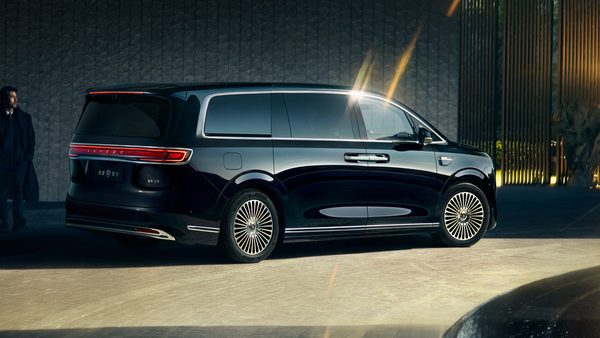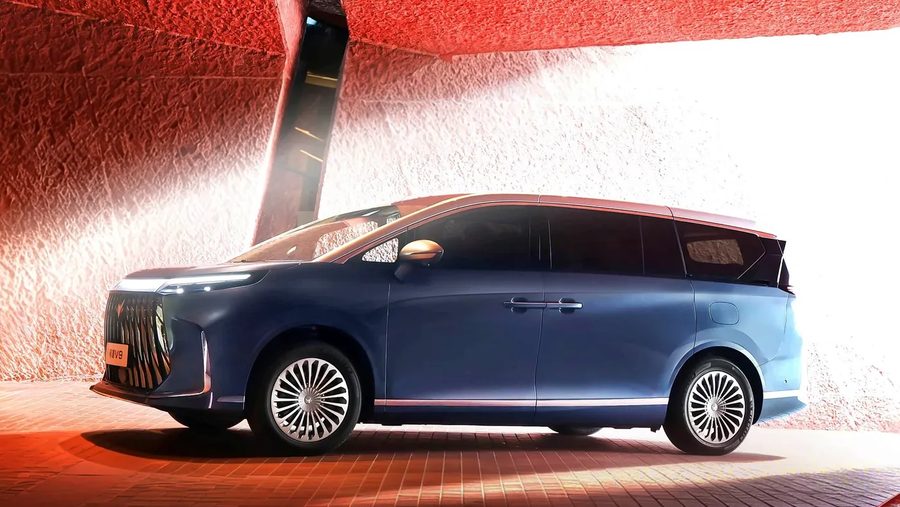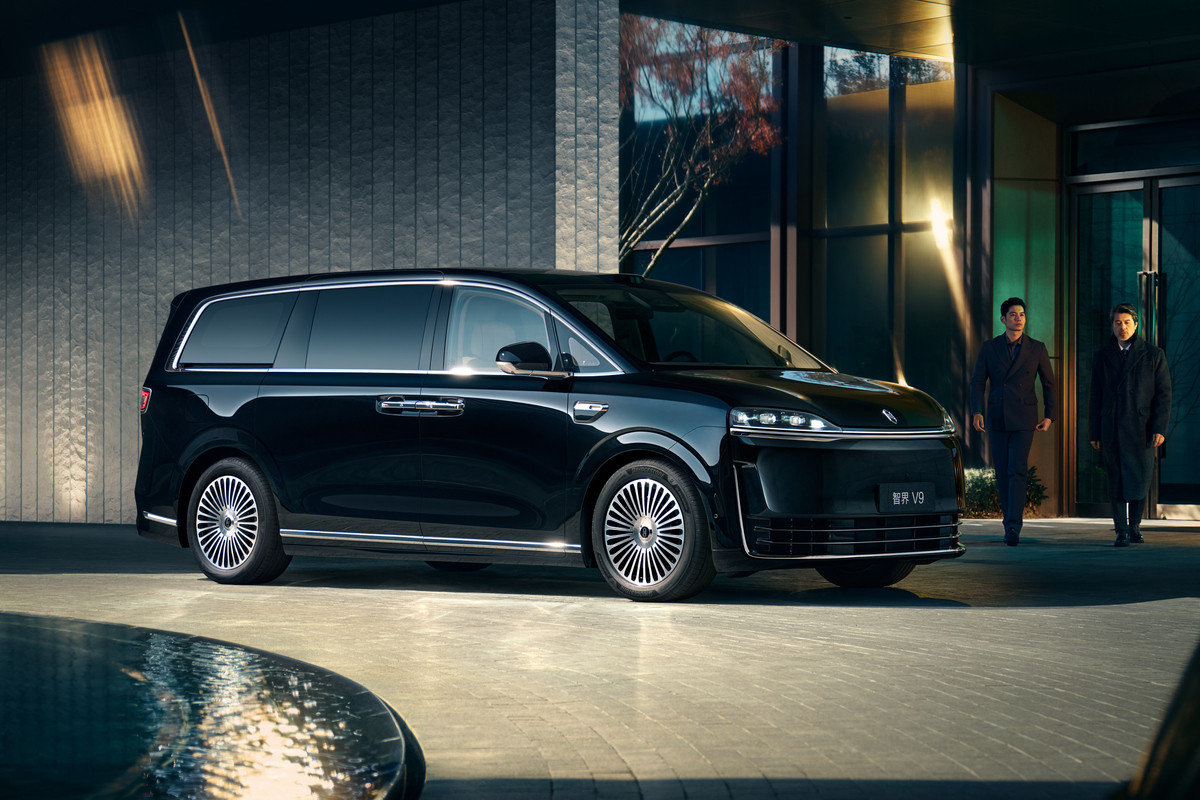
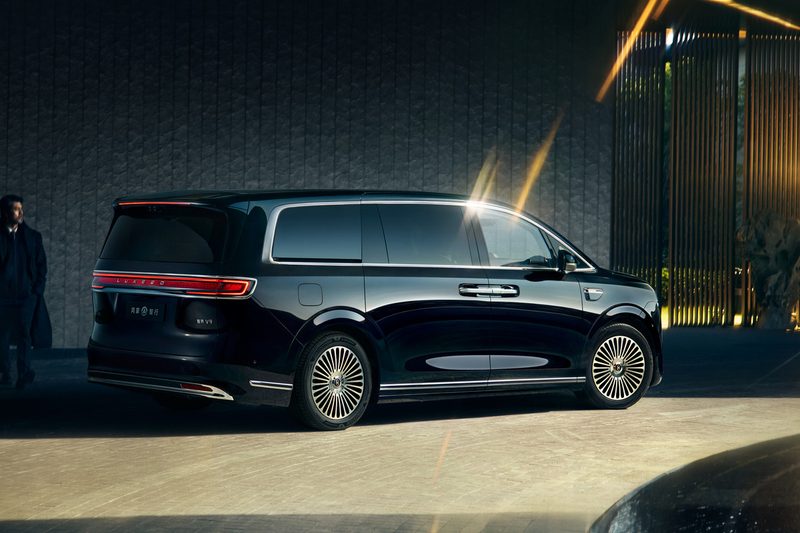
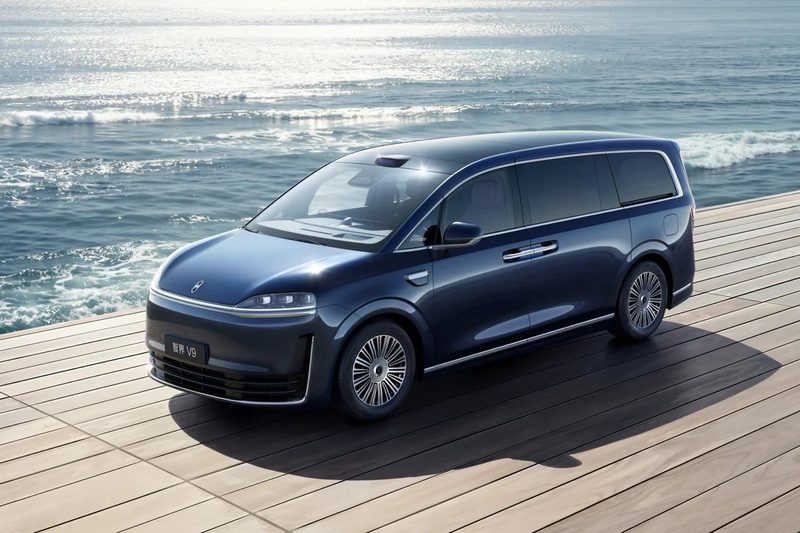
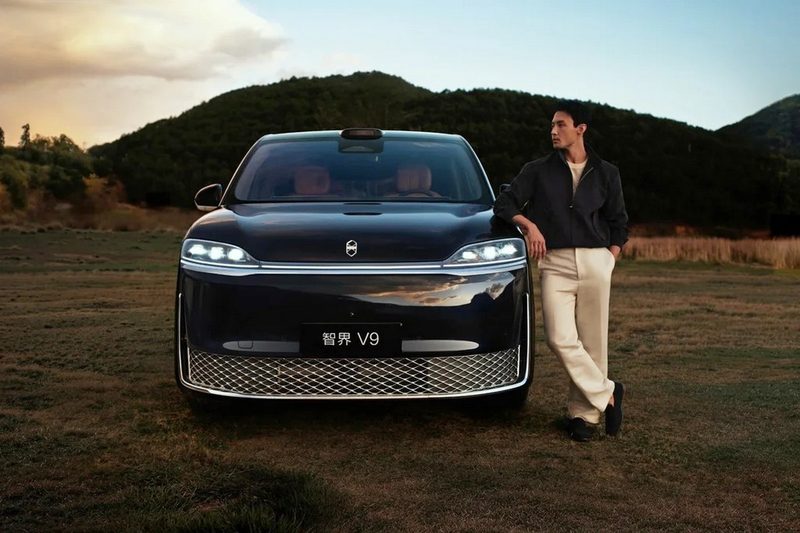
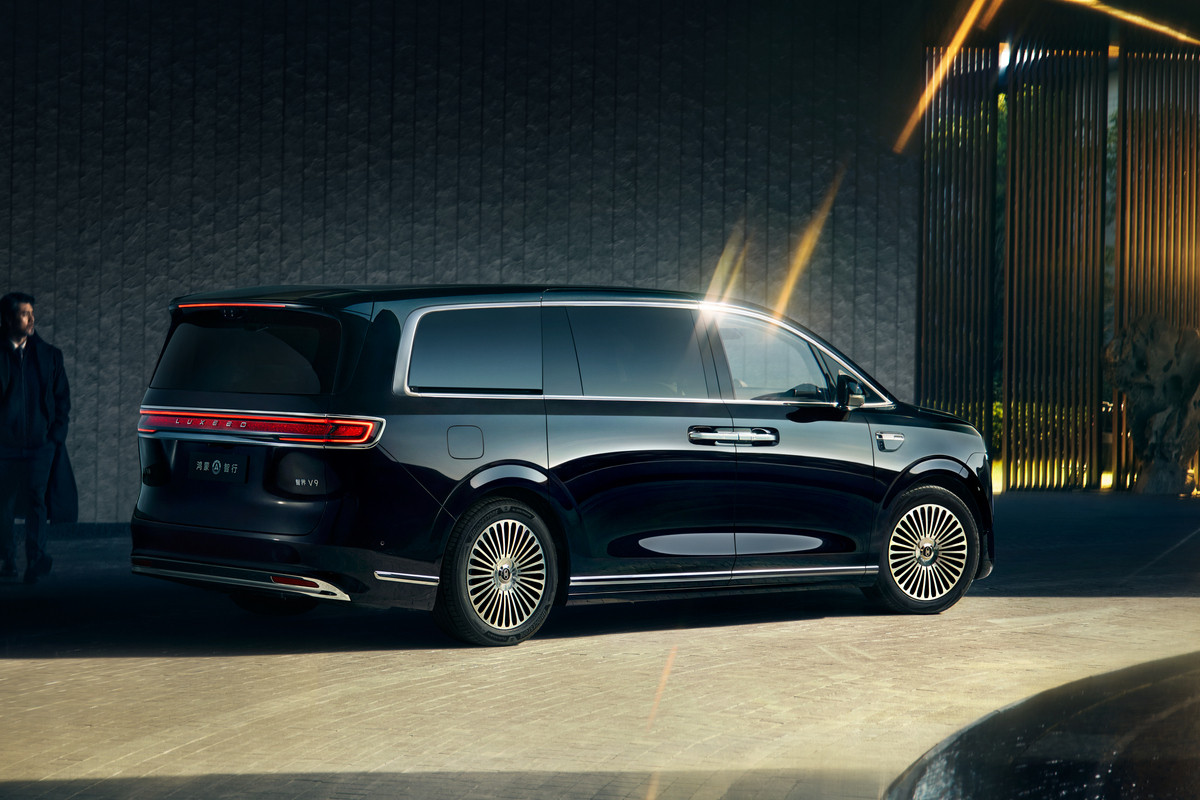
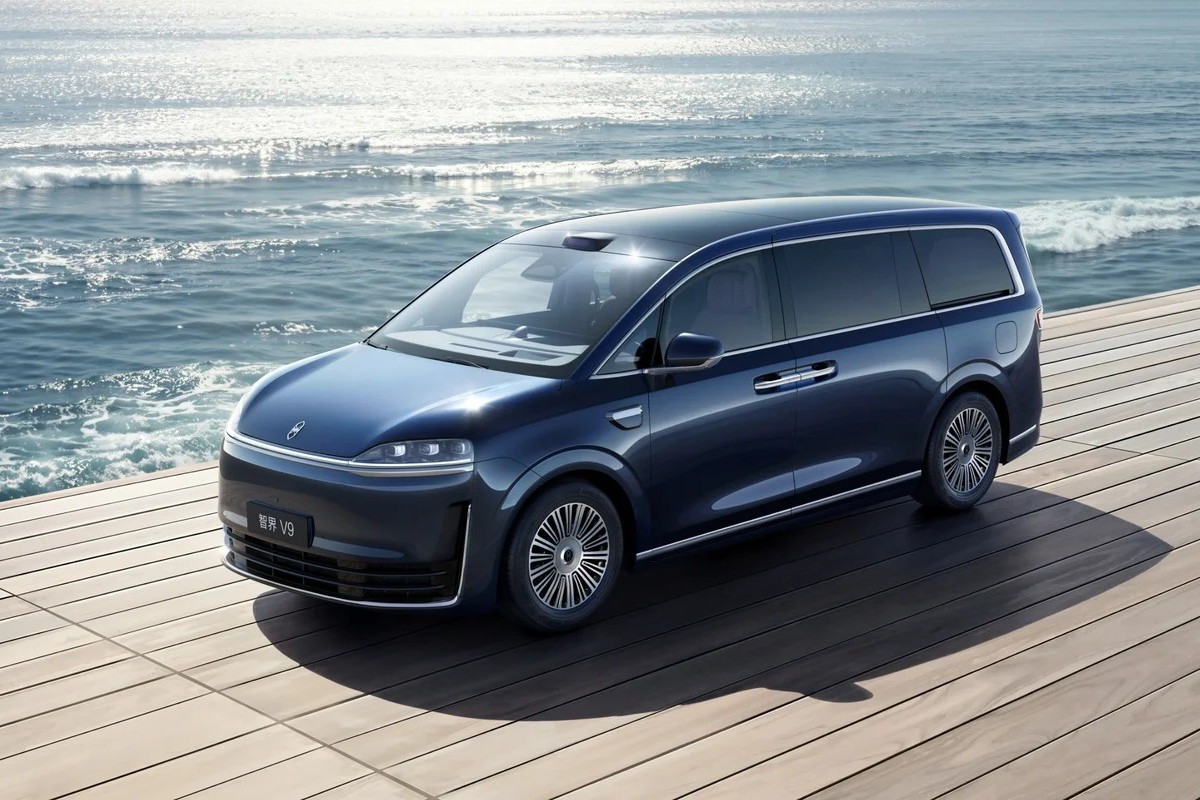
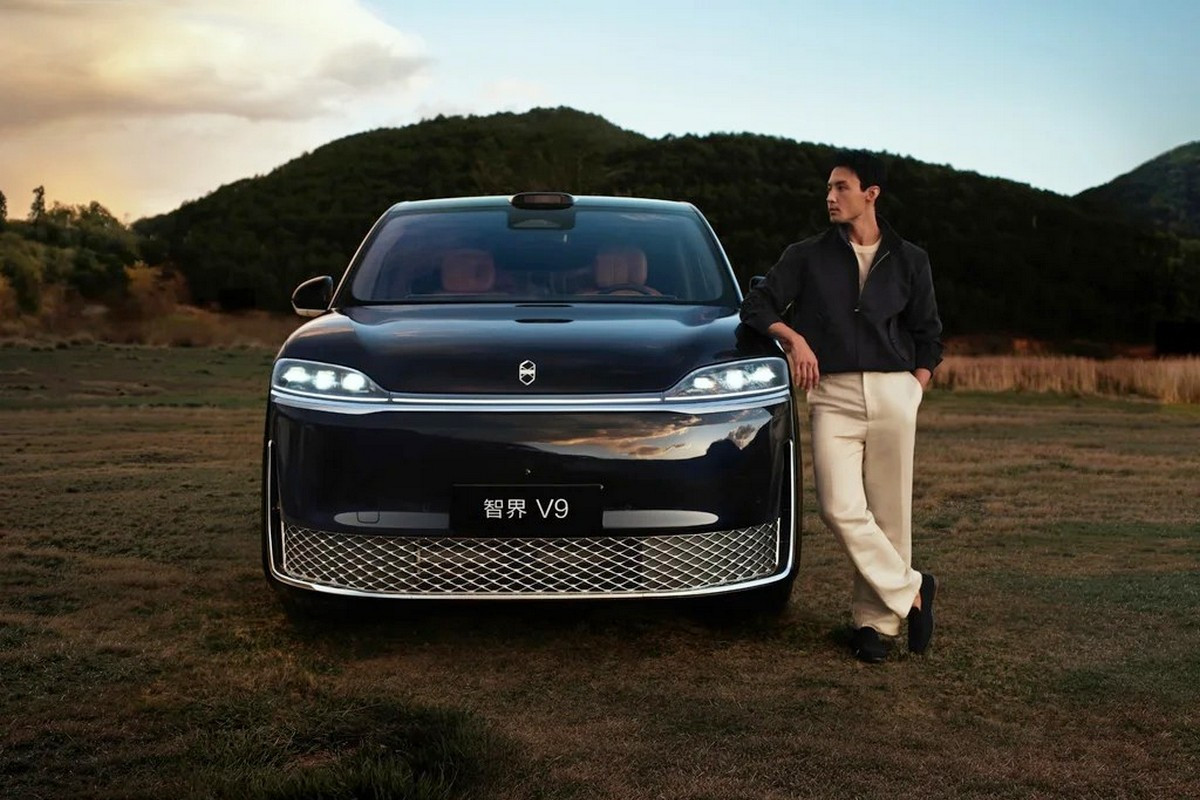
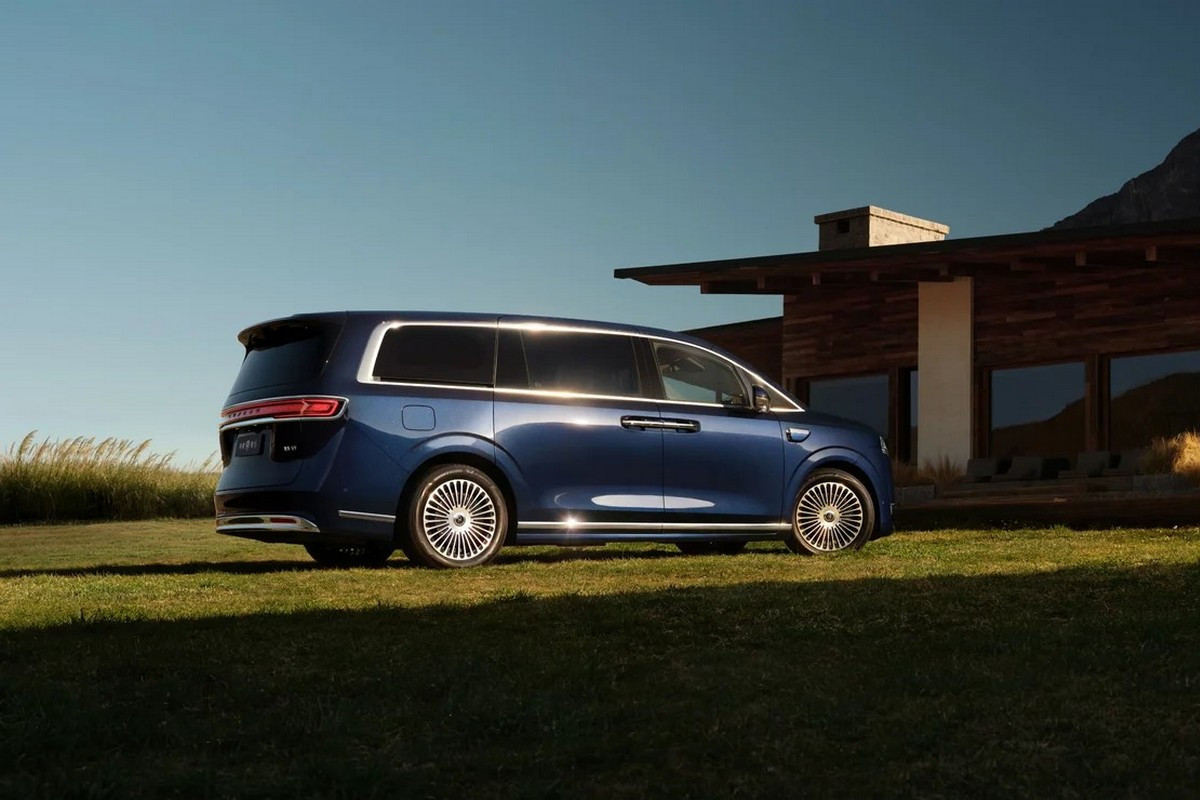
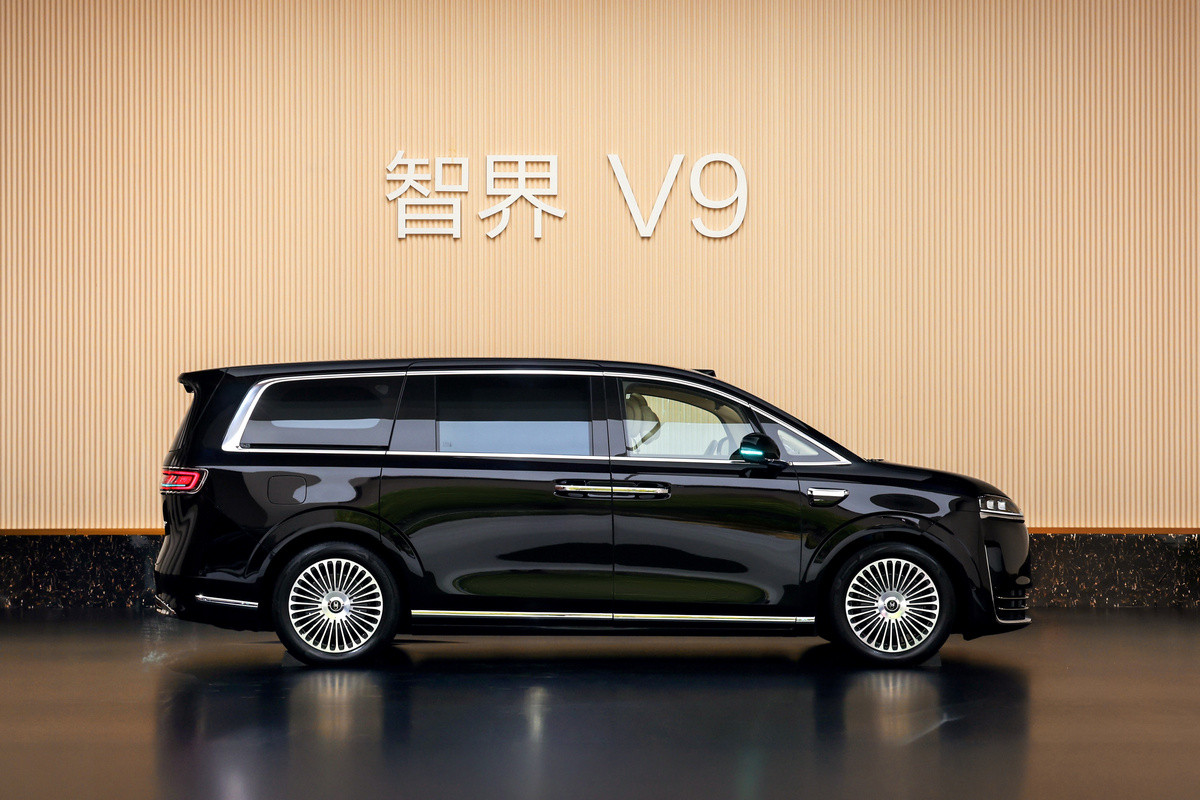
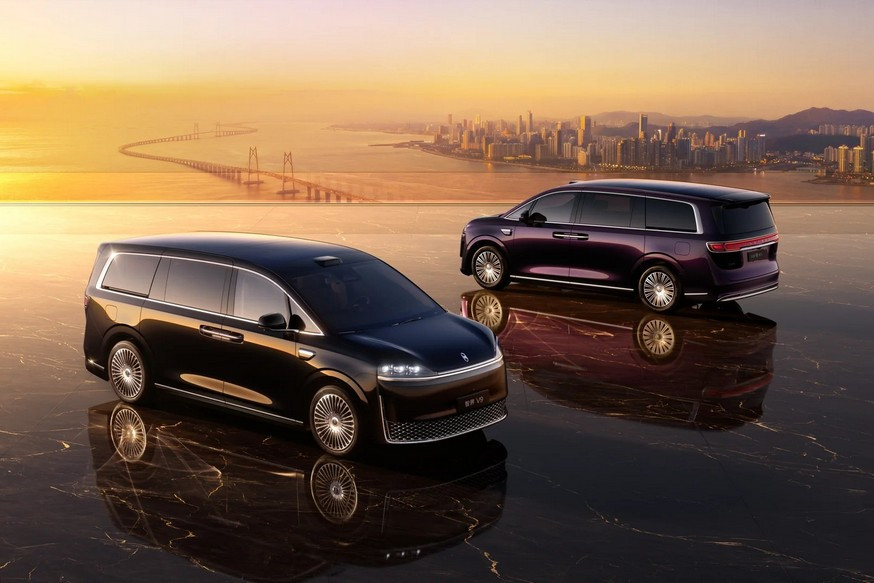
The Luxeed V9 is the brand’s first MPV and third production model, following the S7 sedan (2023) and R7 crossover (2024). It targets the Chinese luxury people-carrier segment - a fast-growing category occupied by the Denza D9 and Li Auto MEGA - with a combination of Huawei’s technology stack and Chery’s engineering capability under the HIMA alliance.
Platform and powertrain: The V9 is built on Chery’s E0X-L platform with Huawei’s DriveONE 800V electrical architecture. The range extender uses a 1.5-litre turbocharged petrol engine producing 156 hp acting exclusively as a generator - it never drives the wheels directly. A 53.4 kWh battery stores generated and recovered energy. The rear-wheel drive version produces 309 hp from a single electric motor, covering 305 km on a single charge (CLTC). The AWD configuration adds a front motor for 520 hp combined and 285 km CLTC range, reaching 100 km/h in 5.9 seconds.
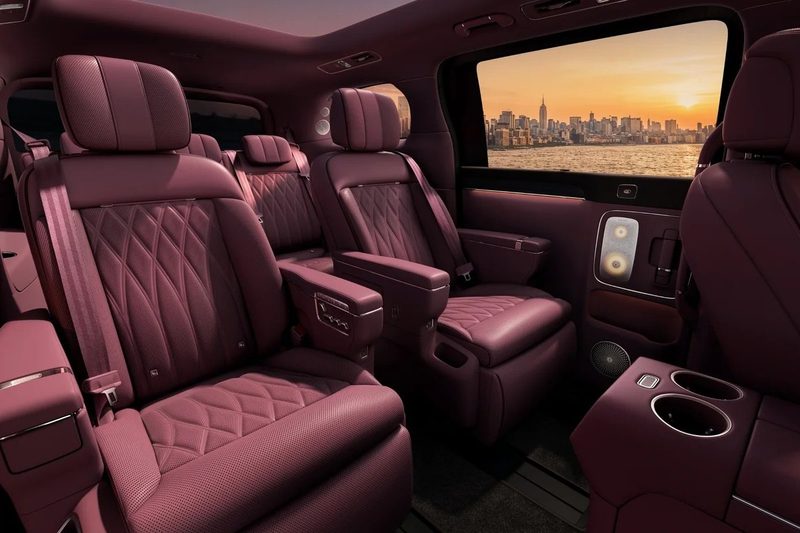
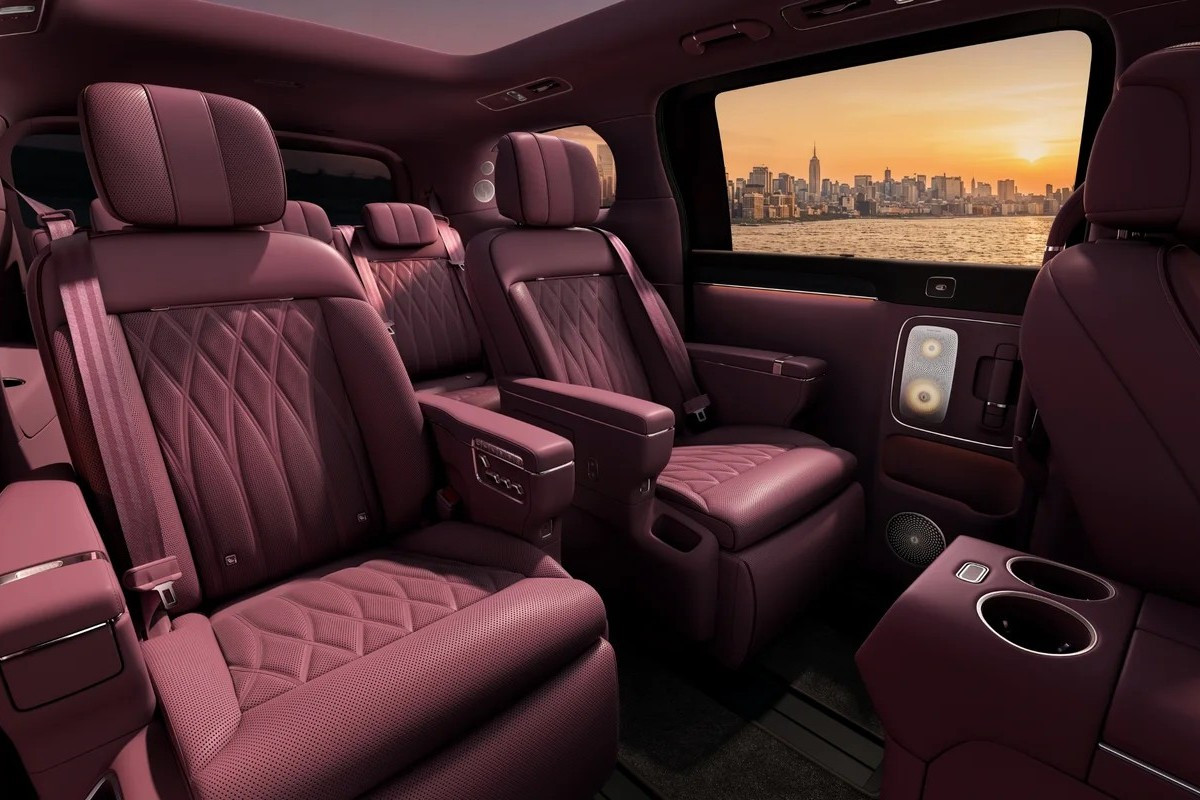
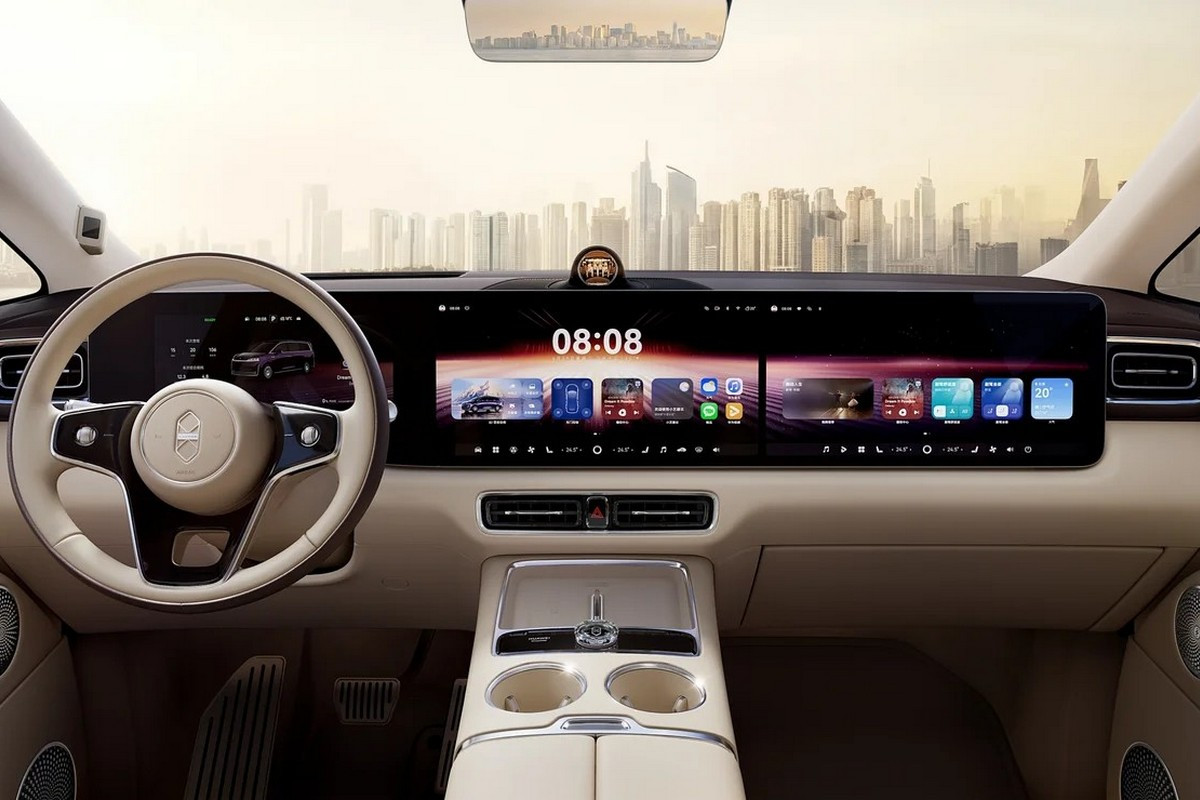
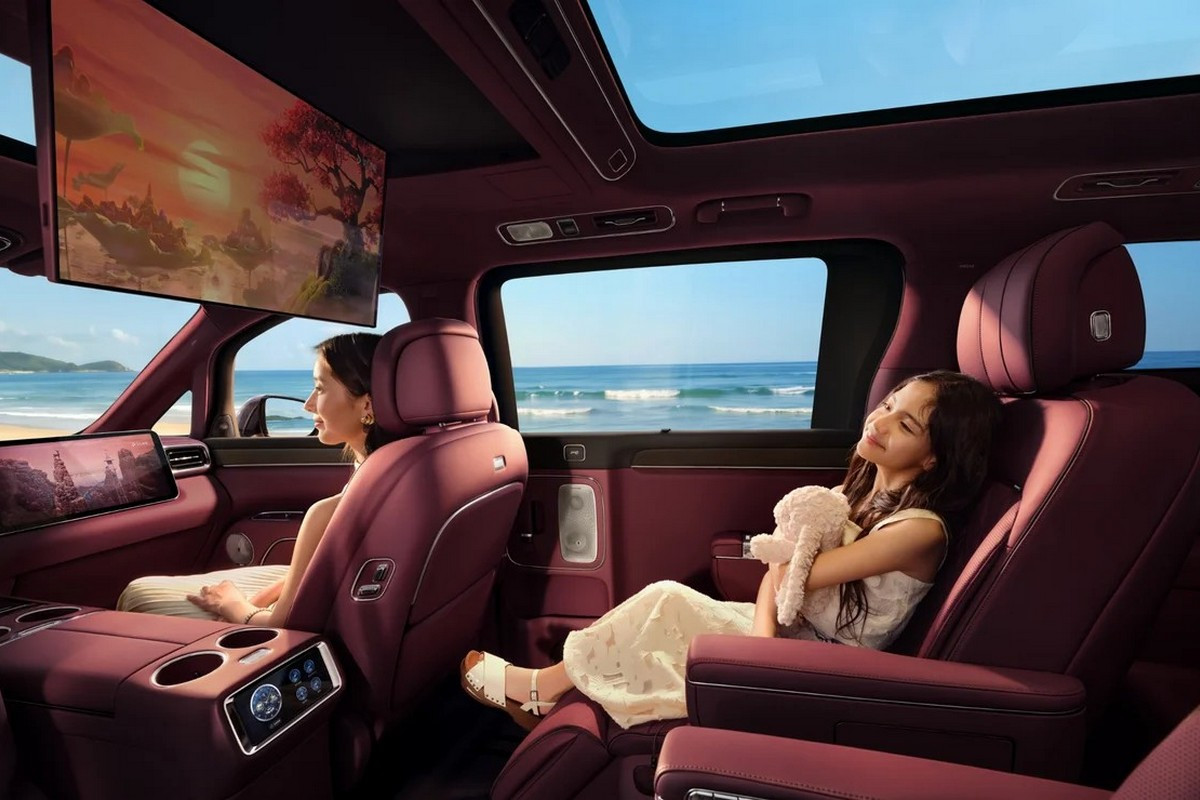
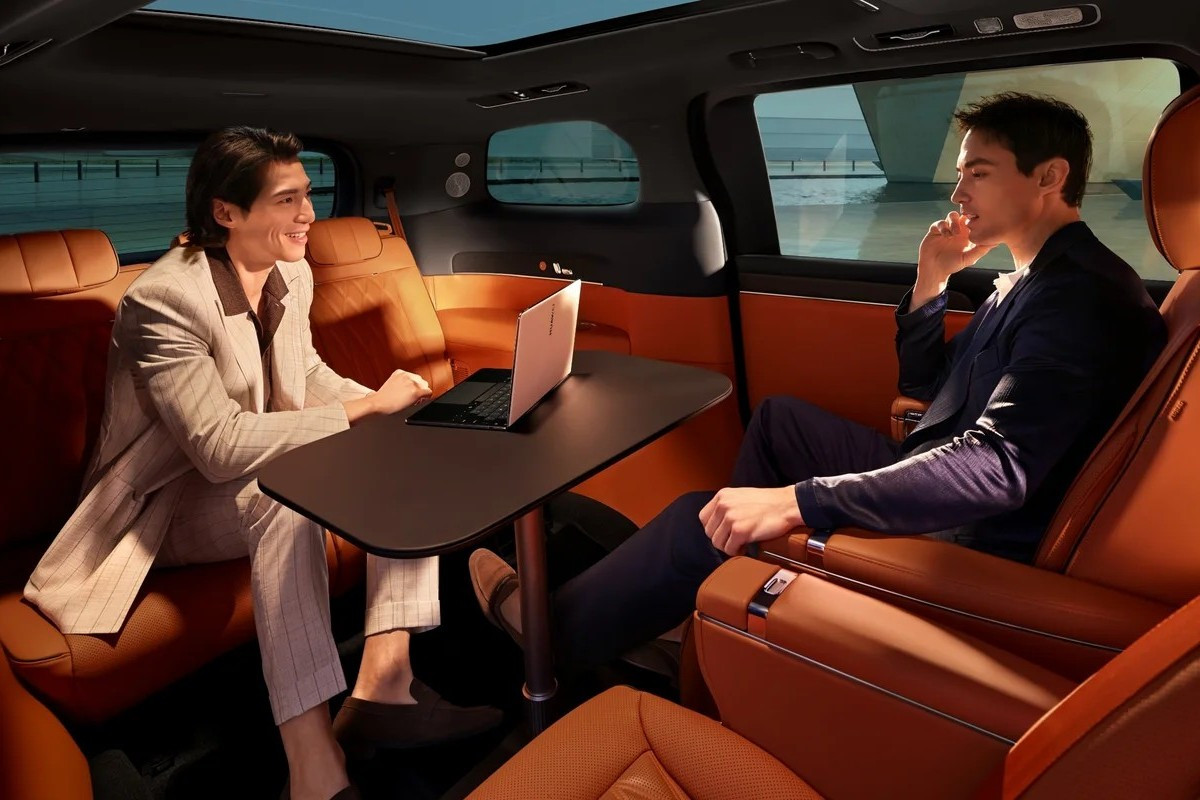
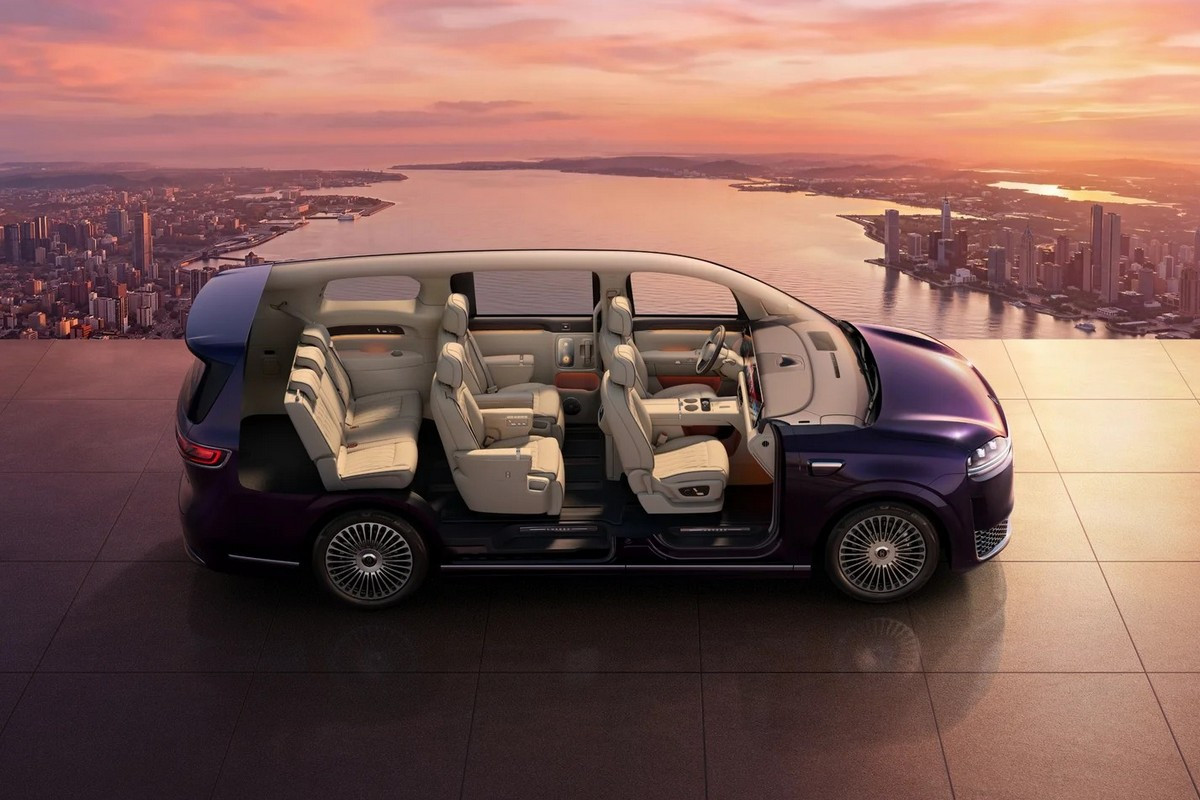
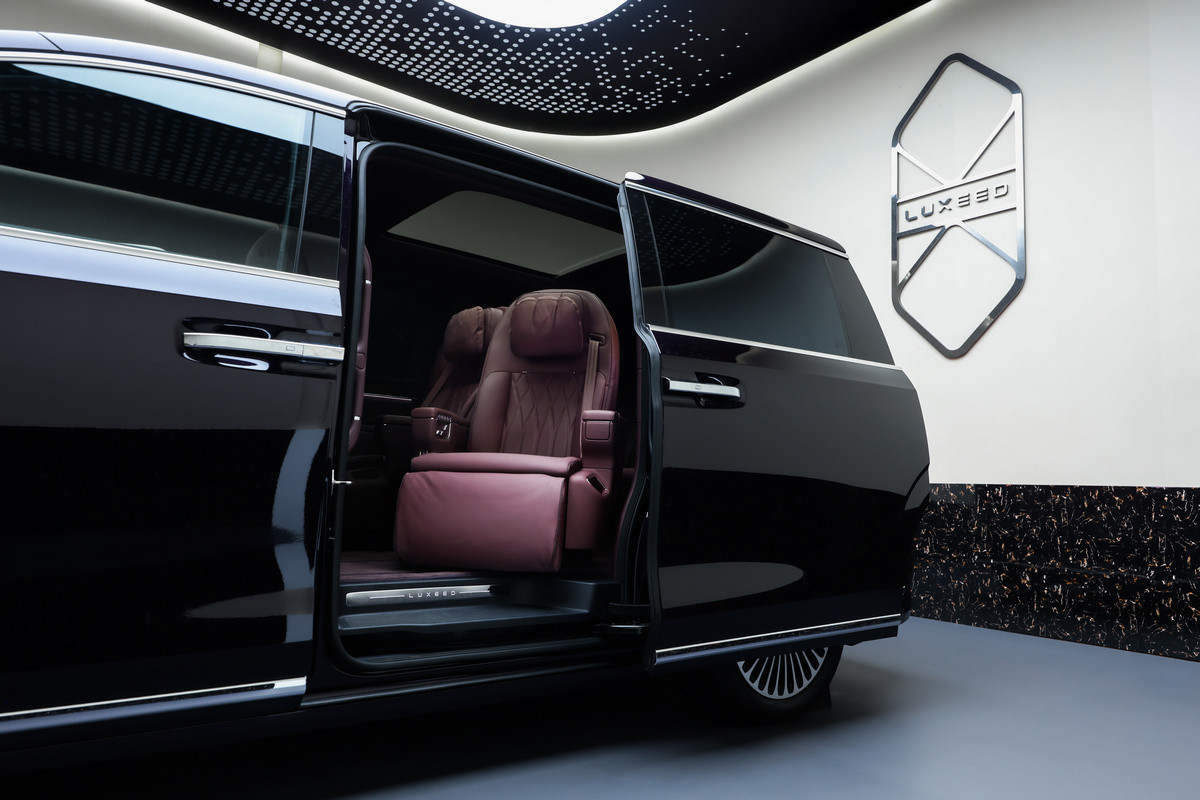
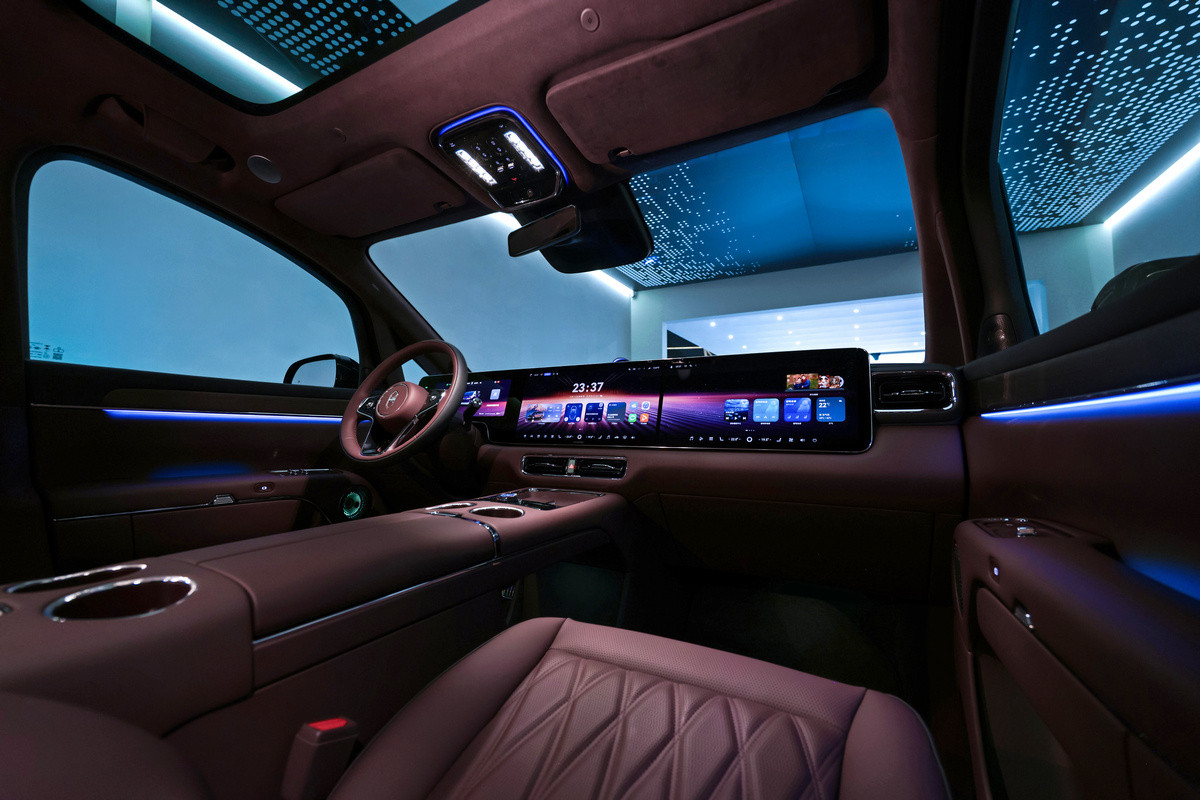
Interior: Seven-seat configuration with captain’s chairs in the second row. The second-row seats rotate to face rearward, allowing them to be positioned facing the third row - a feature borrowed from luxury van conversions and increasingly popular in Chinese premium MPVs. The instrument panel carries a 12.3-inch driver display, flanked by two 17.2-inch infotainment screens for front and rear passengers. A ceiling-mounted tablet measures 21.4 inches, the largest integrated display currently available in a production MPV. A refrigerator compartment, a 25- to 35-speaker audio system (depending on variant), and Huawei HarmonyOS cockpit integration are standard across the range.
Technology: Huawei’s ADS intelligent driving system is fitted with lidar and full autonomy hardware. Rear-axle steering and air suspension with adaptive damping are standard. The system adjusts ride height and stiffness based on road conditions and load.
Chinese sales are open. Pricing runs from ¥389,800 to ¥519,800 (approximately $57,000–$76,500 USD).