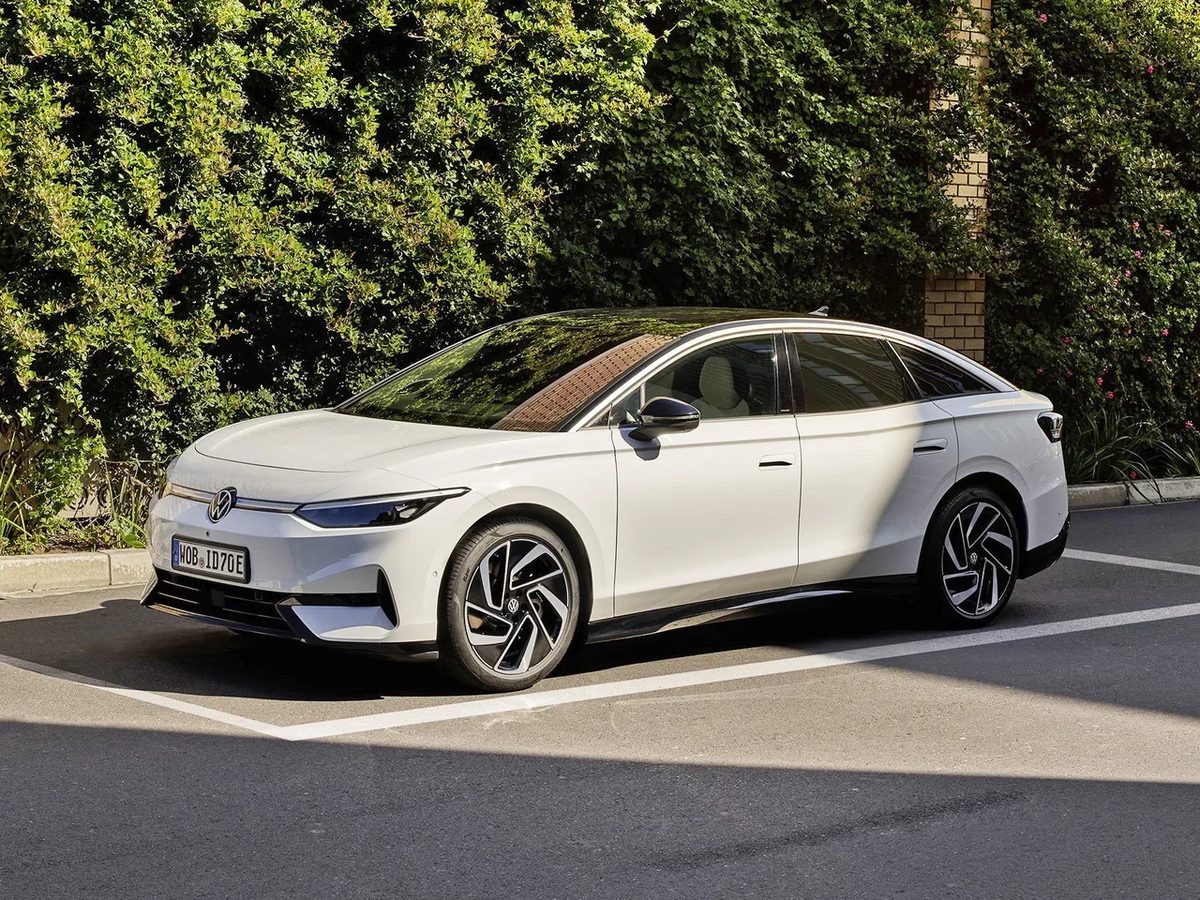
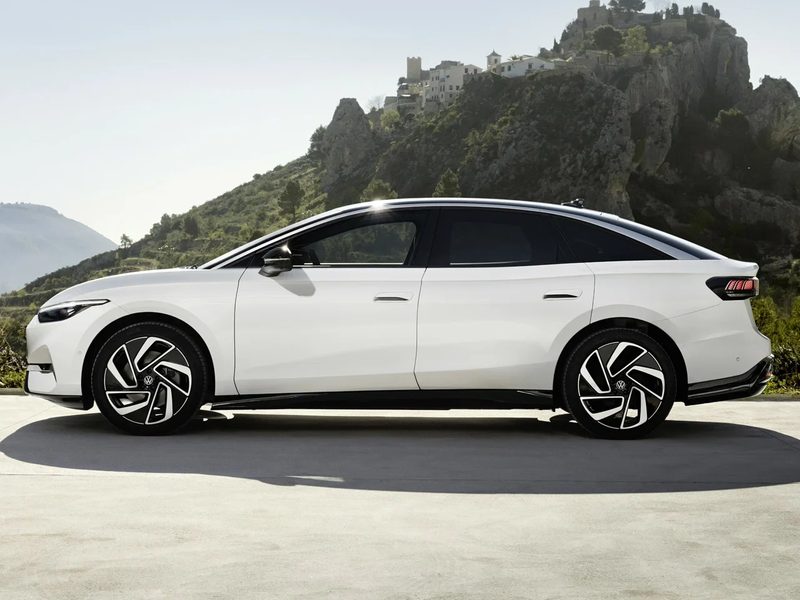
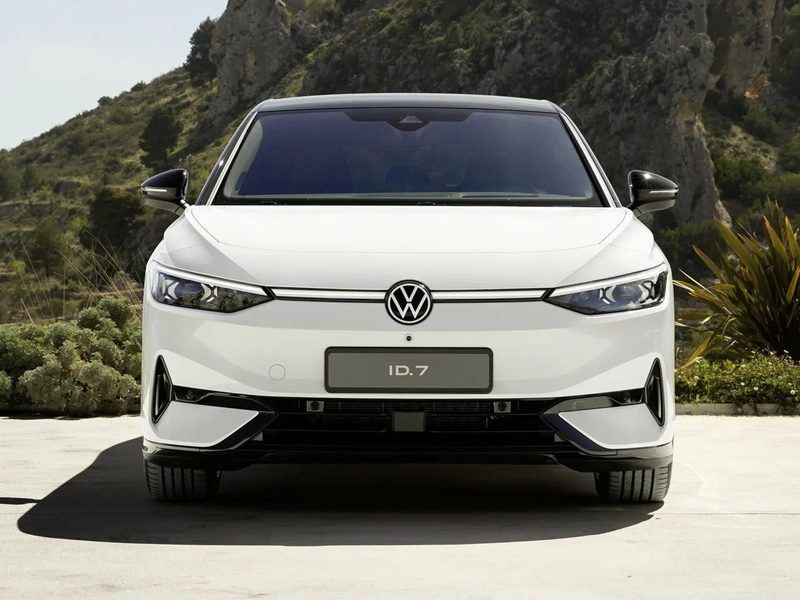
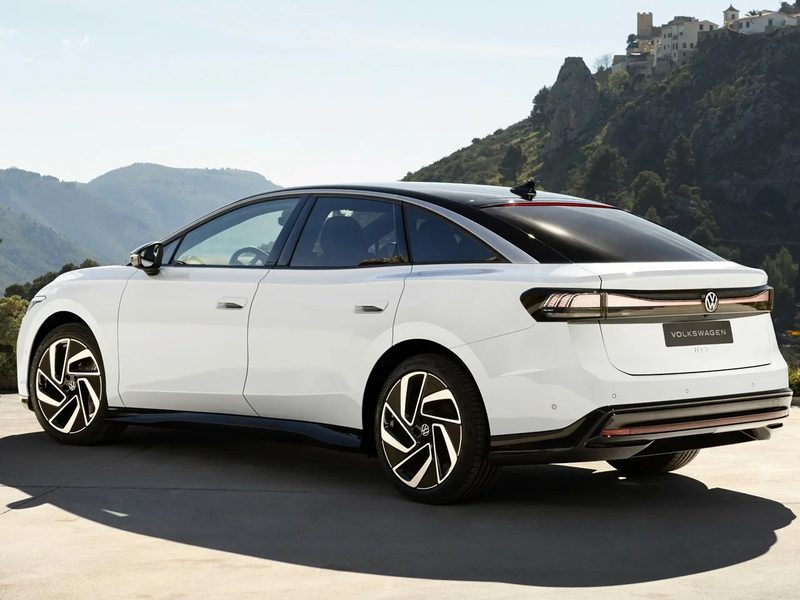
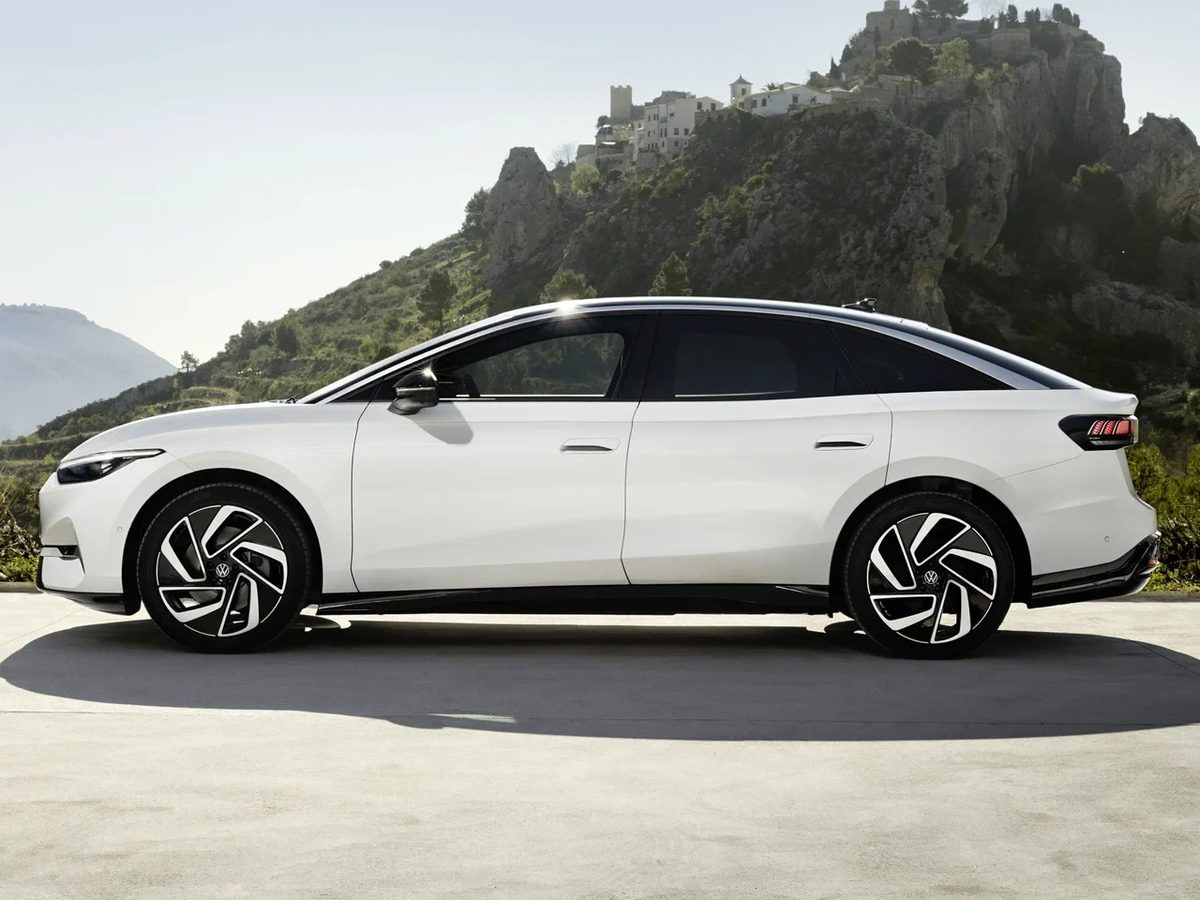
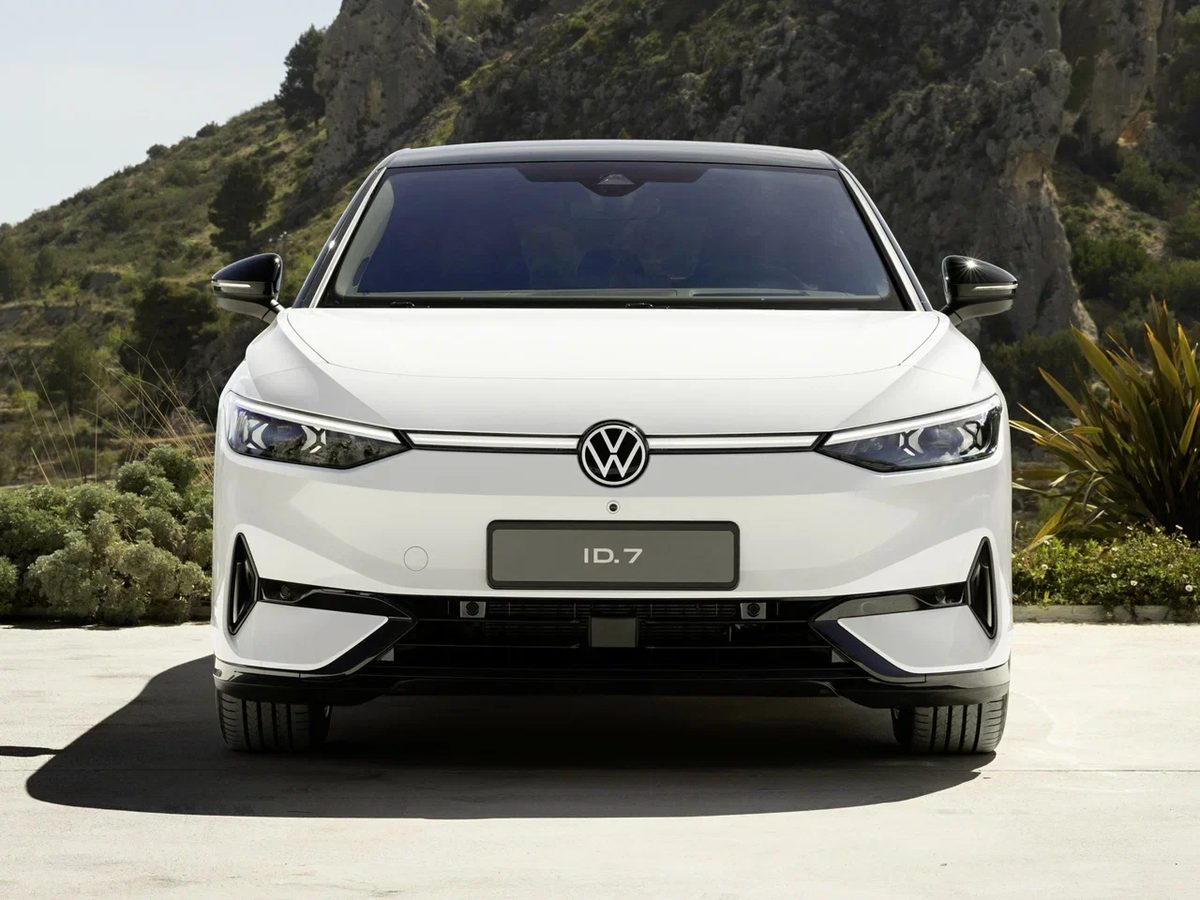
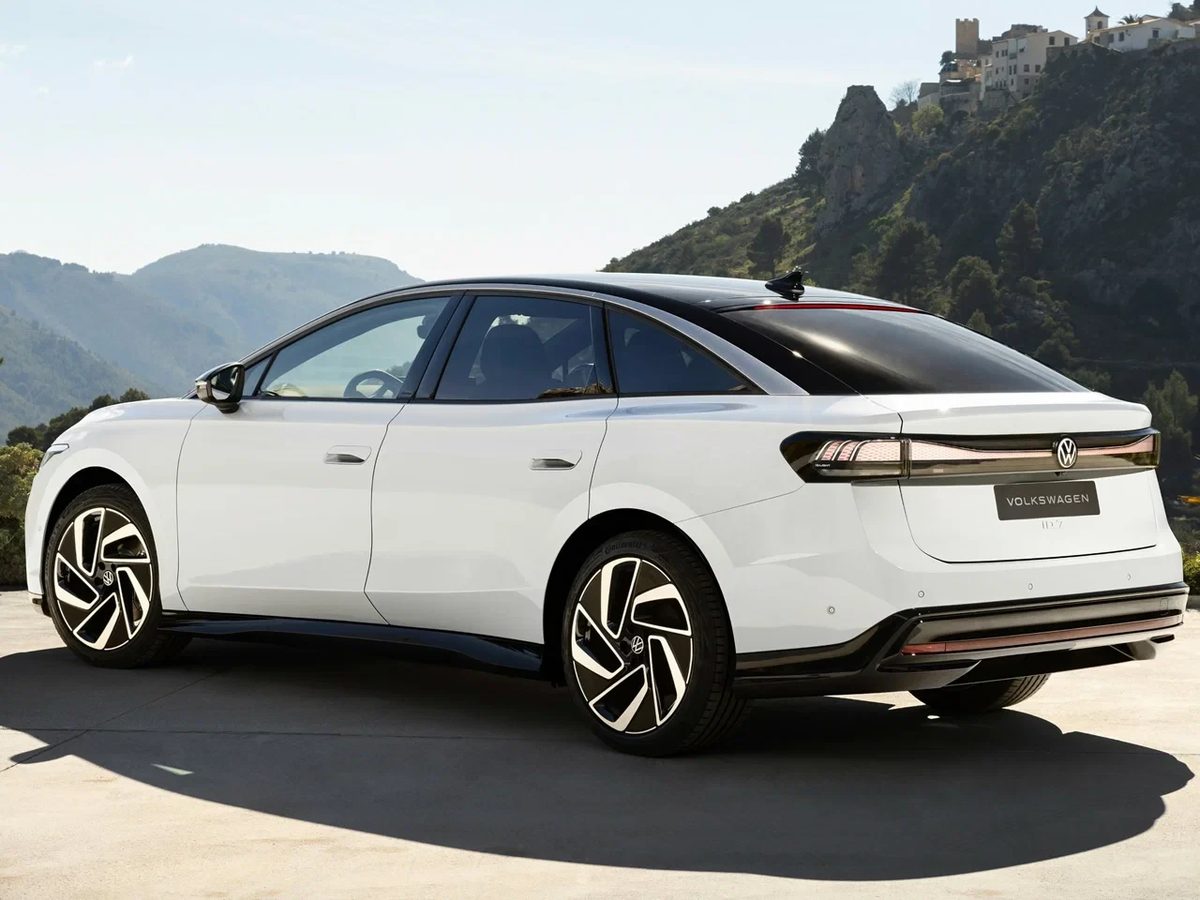
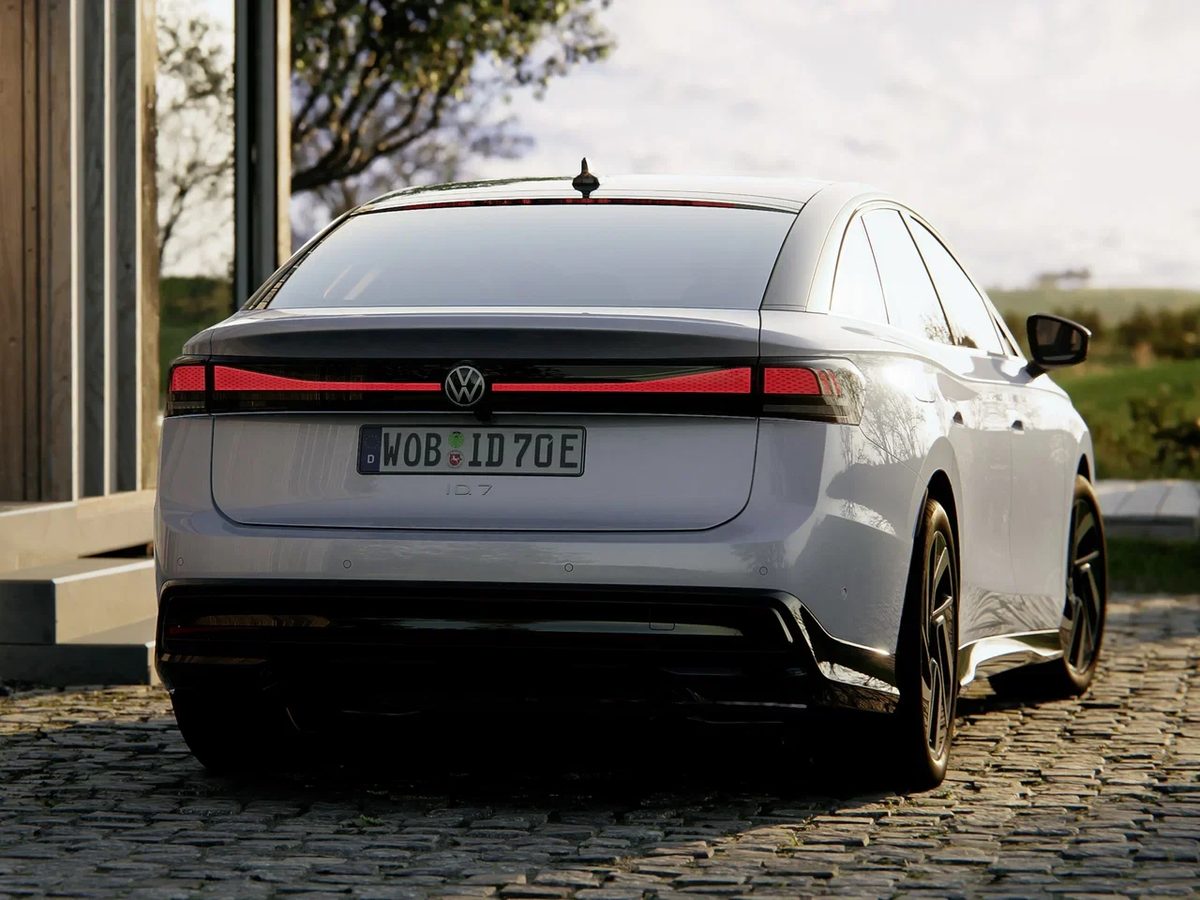
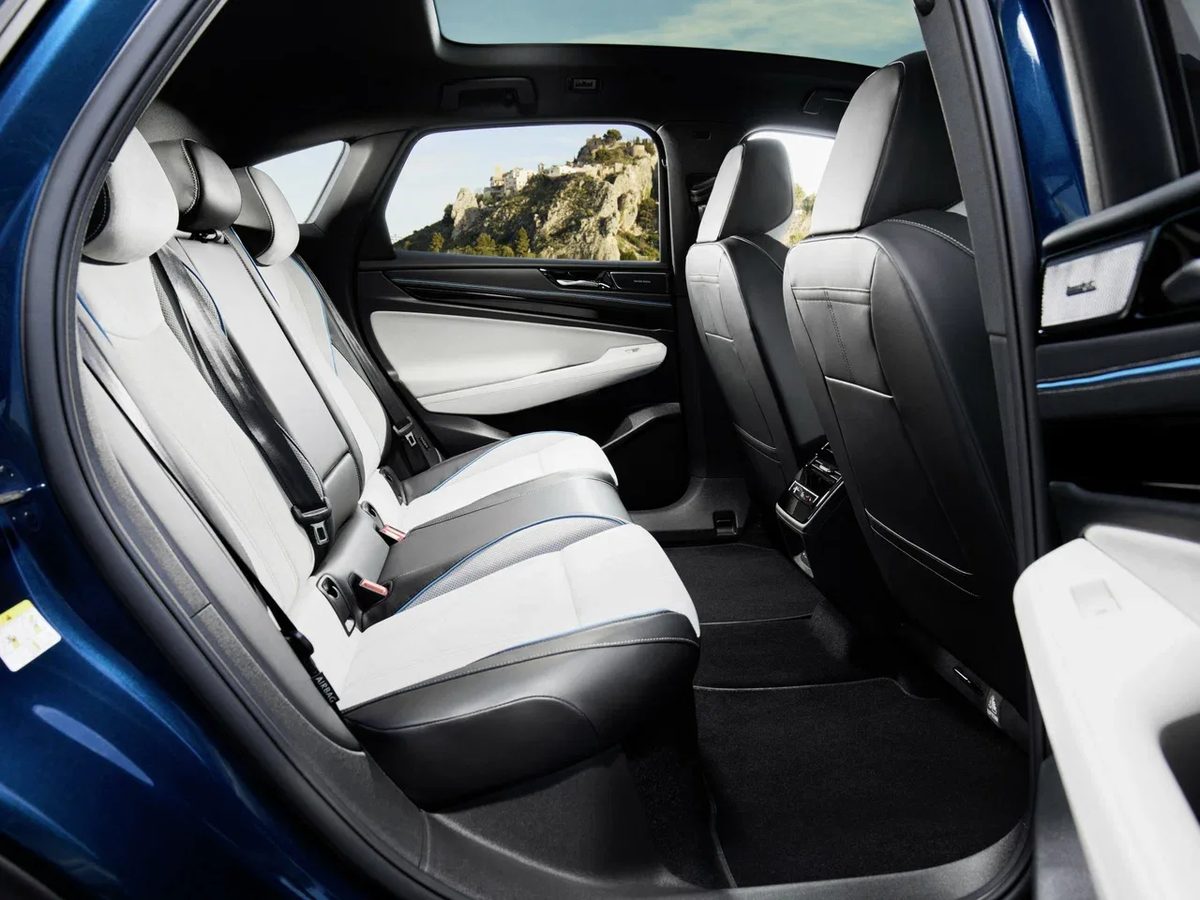
The ID.7 is Volkswagen’s electric executive car, a 4,961 mm saloon with a liftback tailgate on a 2,971 mm wheelbase. It occupies the space the Passat saloon used to hold in the range, and it is built in the same plant, Emden, which Volkswagen converted from Passat assembly to electric production. Boot space is 532 litres, or 1,586 litres with the rear seats down. An estate version, the ID.7 Tourer, followed in 2024.
Two rear-drive versions carry the range. Both use a 210 kW (282 hp) motor with 545 Nm, and they differ only in battery: the Pro has 77 kWh usable and up to 599 km WLTP at 175 kW DC charging, the Pro S has 86 kWh and 709 km at up to 200 kW. That 709 km figure is the longest Volkswagen quotes for anything in its lineup. The GTX adds an 80 kW asynchronous motor on the front axle for 250 kW (335 hp), 679 Nm, all-wheel drive and 5.4 seconds to 100 km/h, with 606 km WLTP.
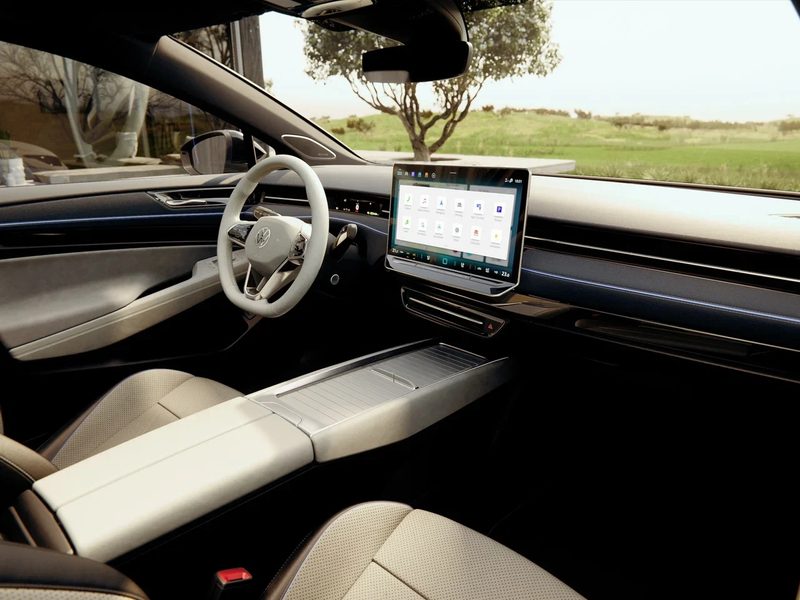
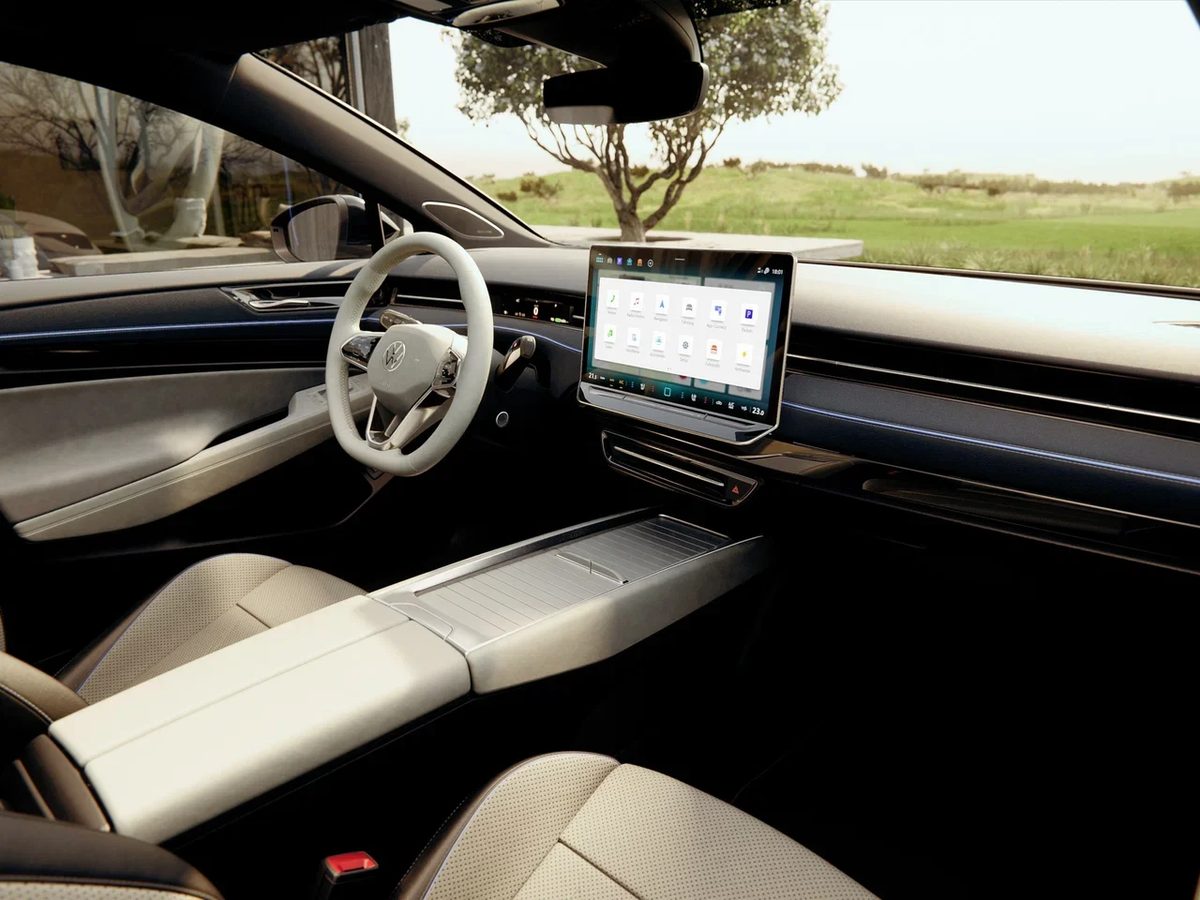
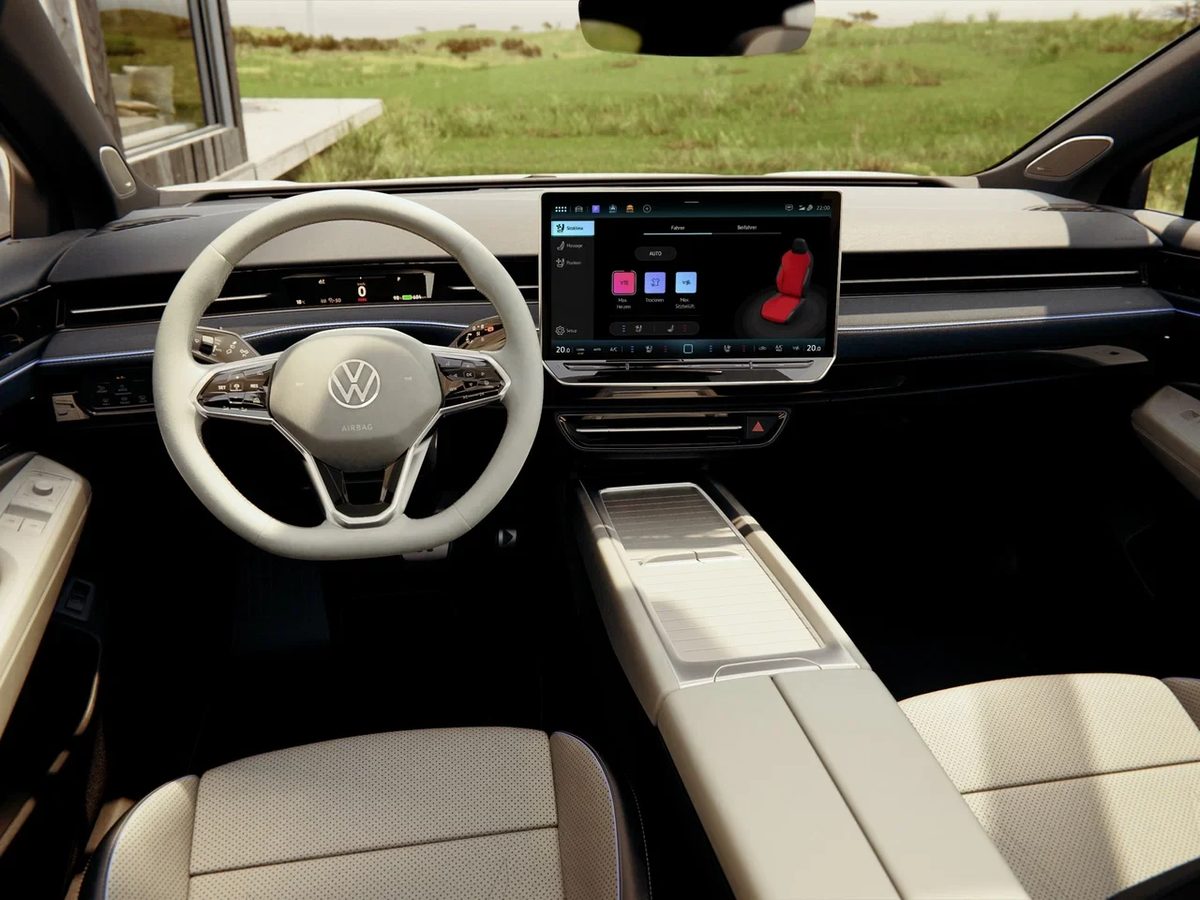
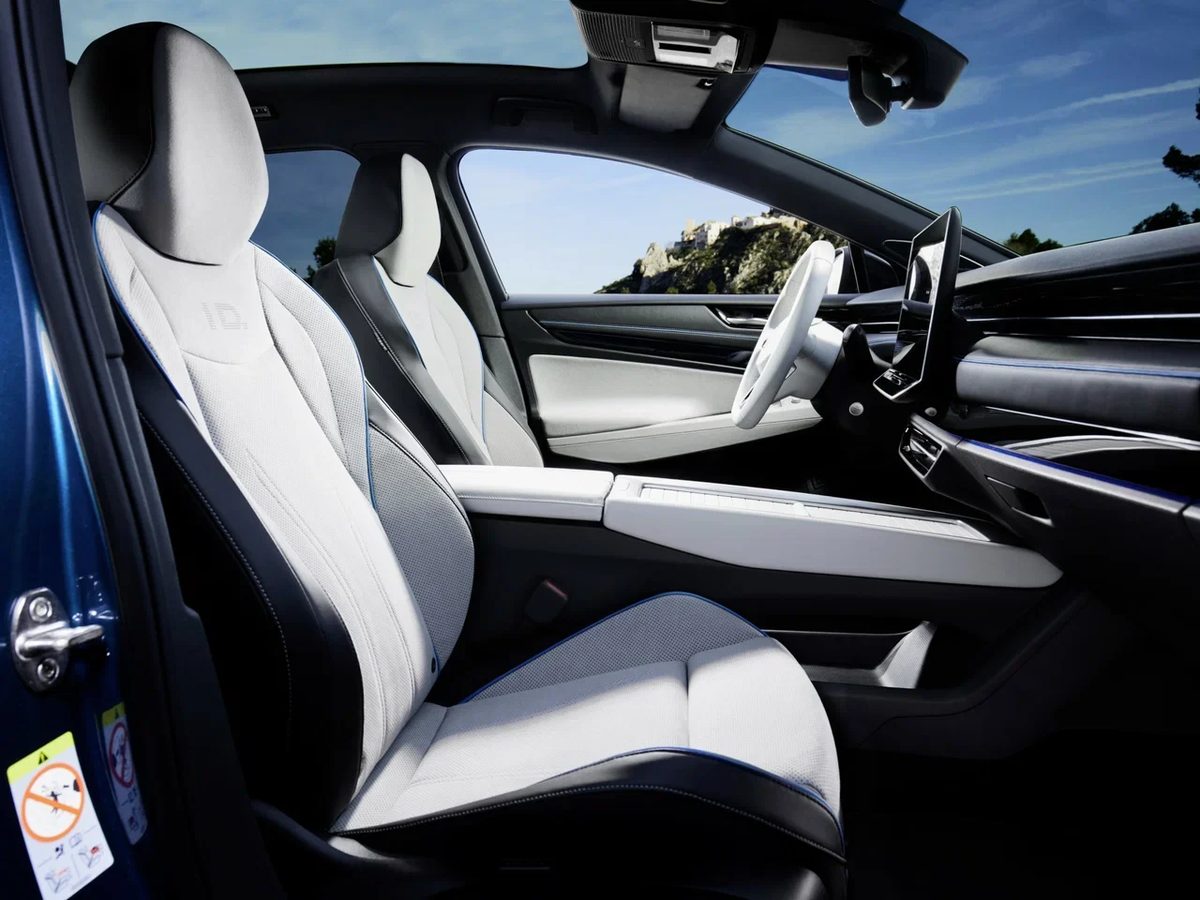
The cabin is built around a 15-inch central screen with a permanently visible climate row along the bottom, a slim driver display behind the wheel rather than a full instrument binnacle, an optional augmented-reality head-up display, and illuminated sliders below the screen, which the earlier ID. models had left unlit. Air vents are electrically adjustable and can be steered from the touchscreen. The seats offer optional massage and a climate function that pre-conditions the cabin before the driver reaches the car.
German list prices run from €54,505 for the Pro to €63,835 for the GTX, with Volkswagen running a purchase bonus of up to €6,000 that puts transaction prices below those figures. The ID.7 finished tenth in Norway’s August 2026 registrations, the month the country’s electric share reached 98.7%, in a top ten led by the ID.4. Full brand background is on the Volkswagen page.