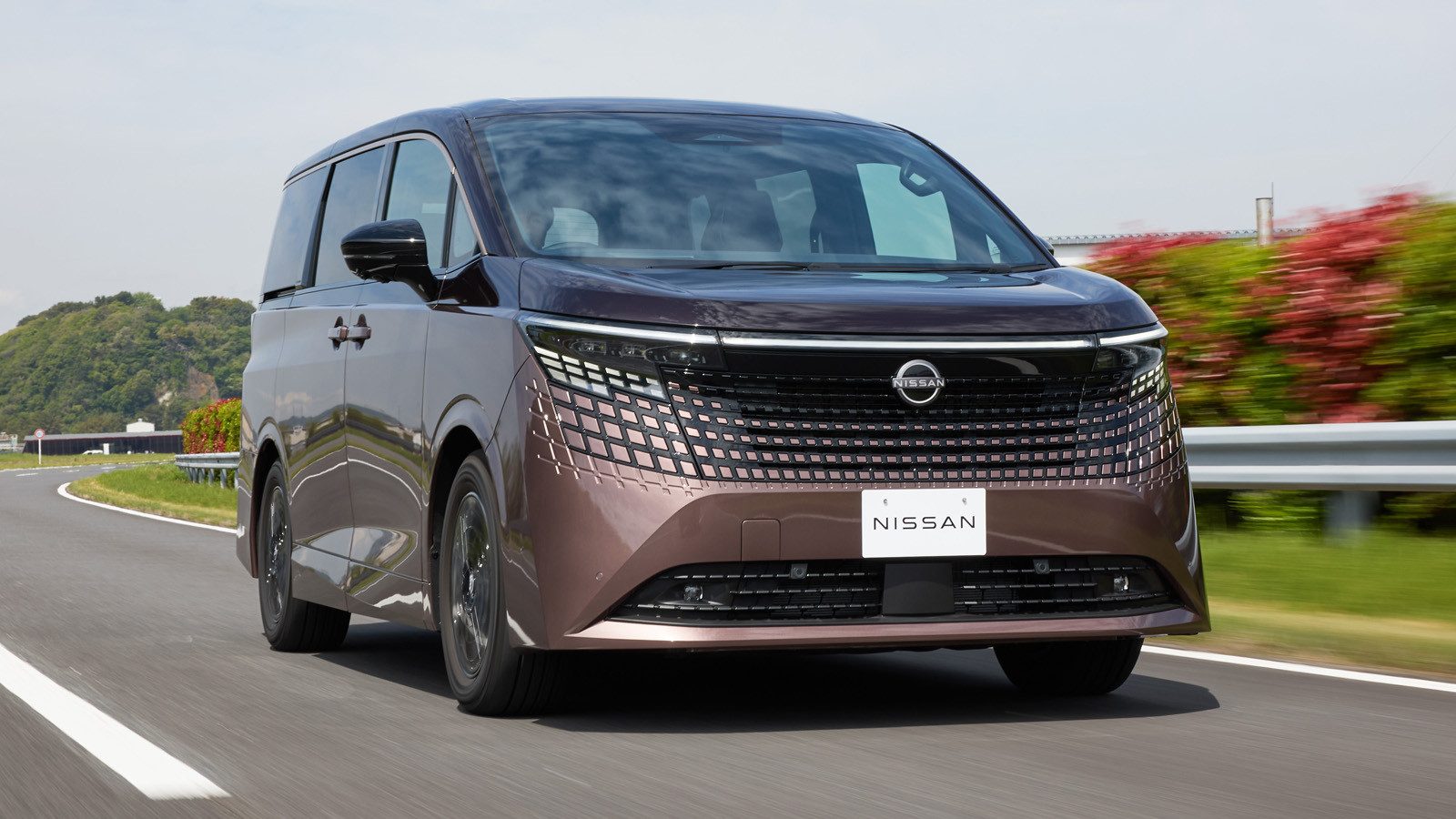
The sliding door is the giveaway, and it is not a styling decision. Everything else about the shape follows from a decision to build a passenger car as a box: a low flat floor, a windscreen well forward, three rows within a length that would give a sedan two, and rear seats that fold away instead of coming out. Minivan is the North American word for it, coined in the 1980s to separate this new car-based thing from the commercial van it looked like. That separation still holds, and it is the useful one. A van is engineered around cargo volume and sold to businesses; a minivan is a passenger car whose body happens to be square.
Within the wider MPV family this is the large end, and it is where electric platforms fit unusually well. A flat battery floor is exactly the floor the body style wanted, and the motors leave the space between the axles alone. The Volkswagen ID. Buzz, 4,712 to 4,962 mm long depending on wheelbase, is built that way from scratch, while the Nissan Elgrand at 4,995 mm keeps the Japanese reading of the format, which puts more of the money into the second row than into the third.