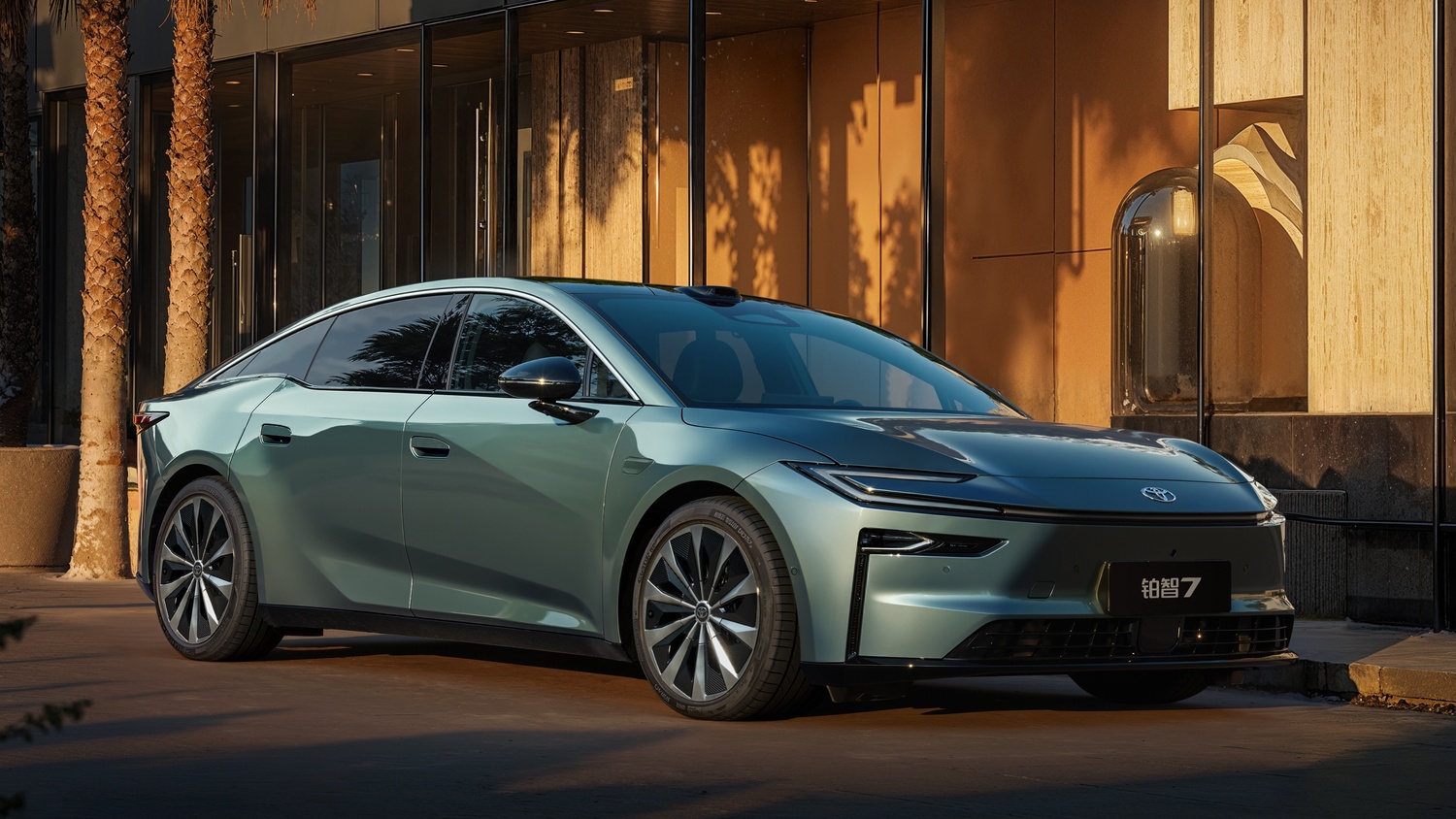
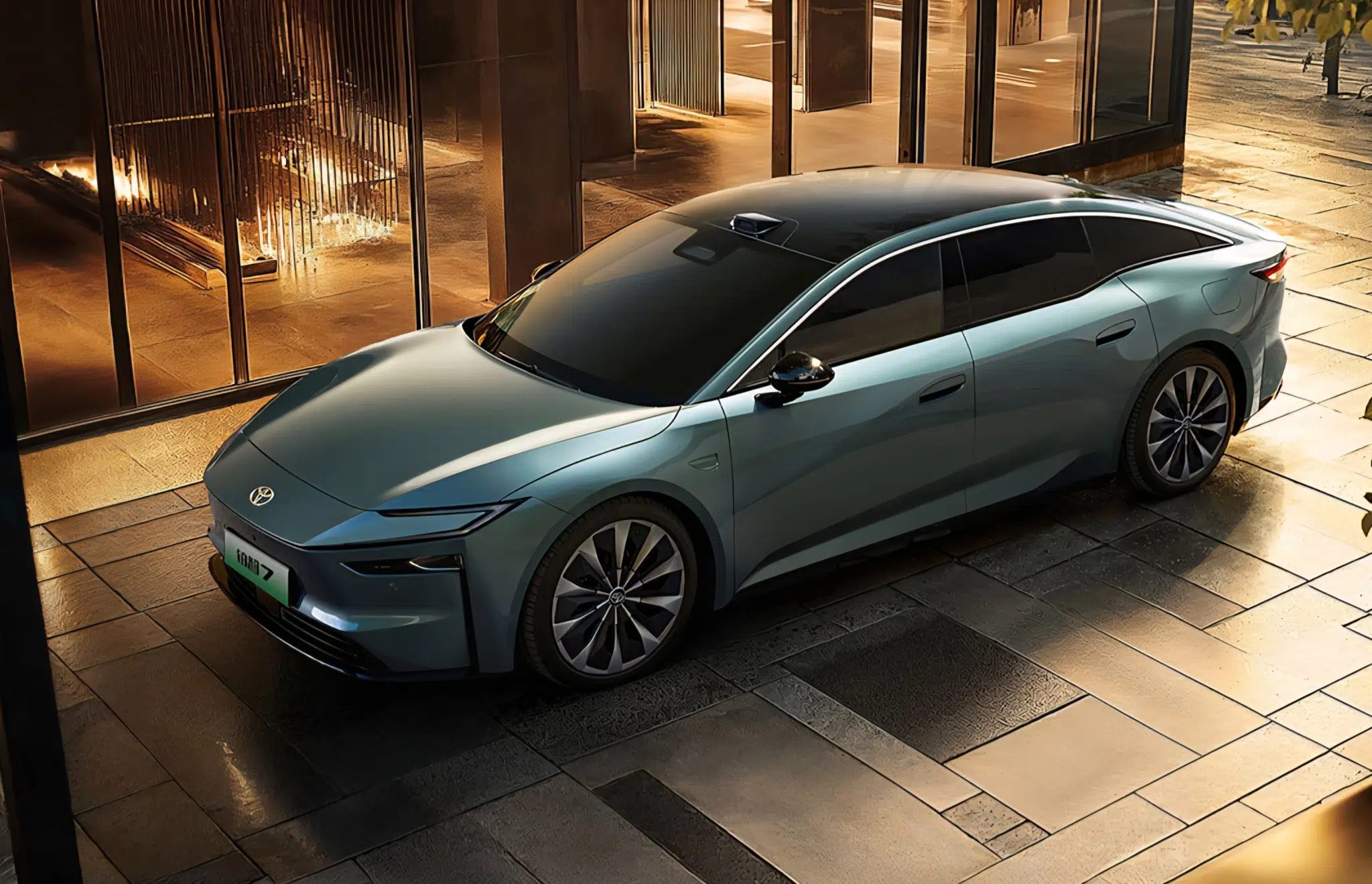
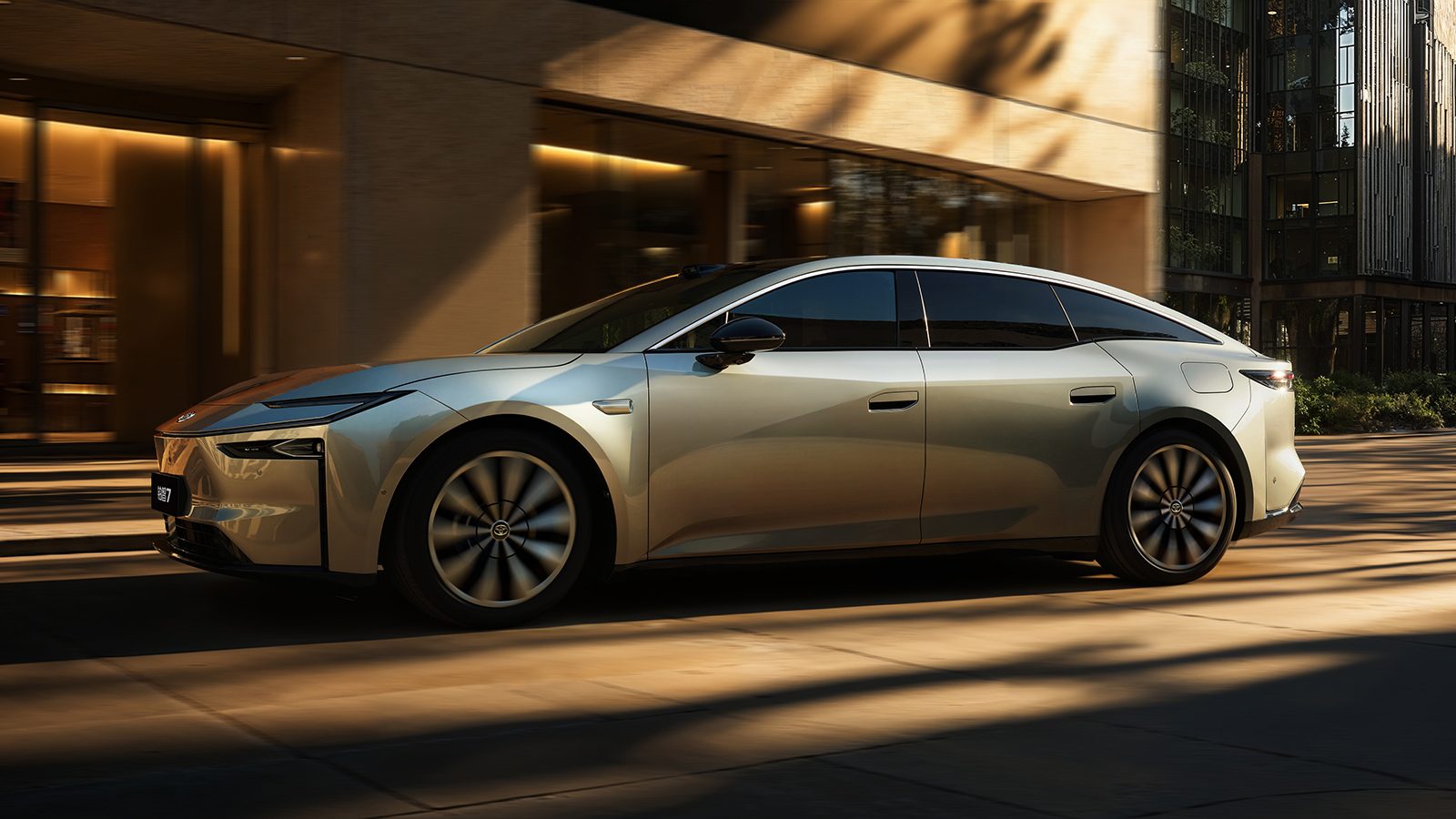
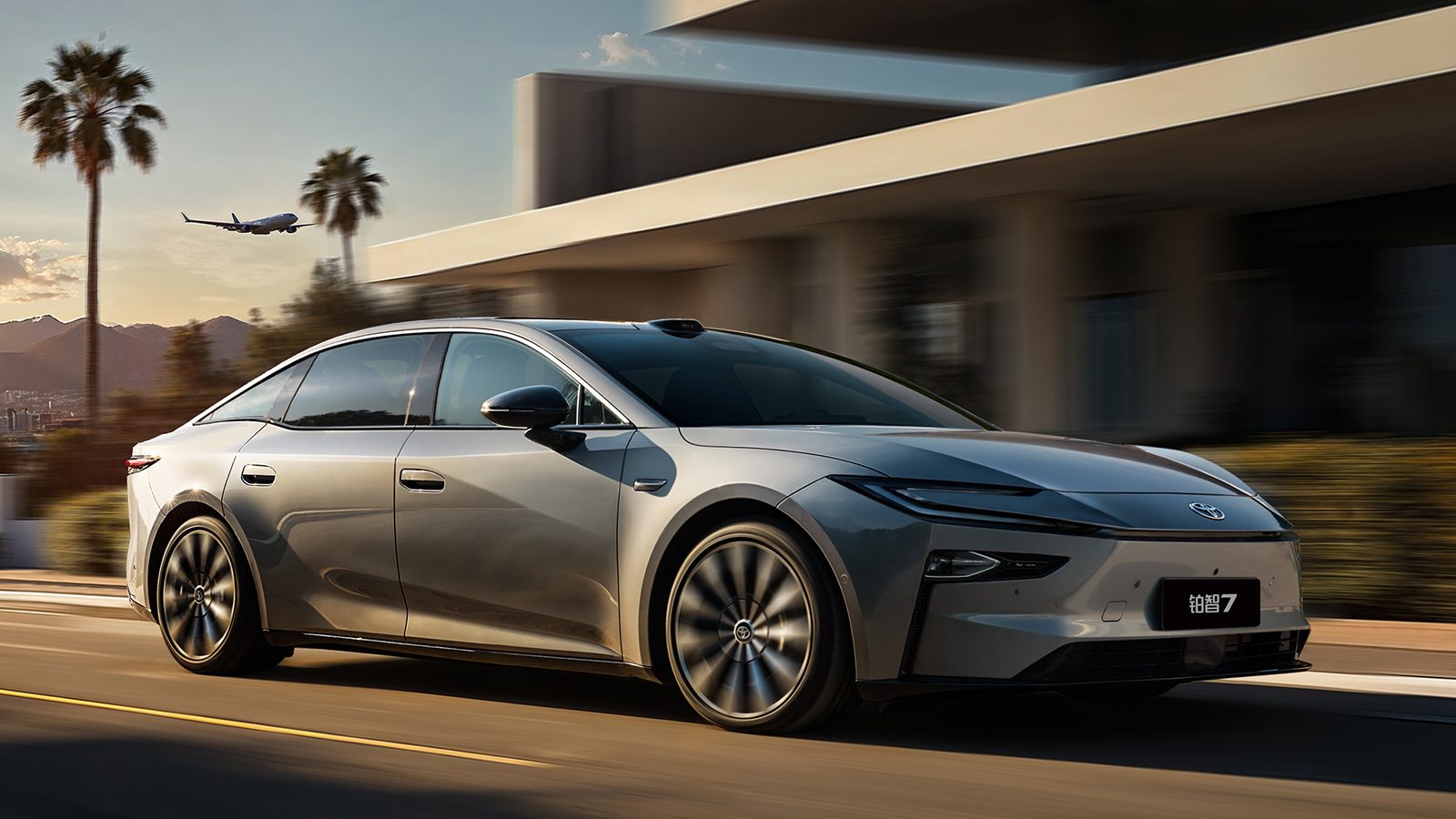
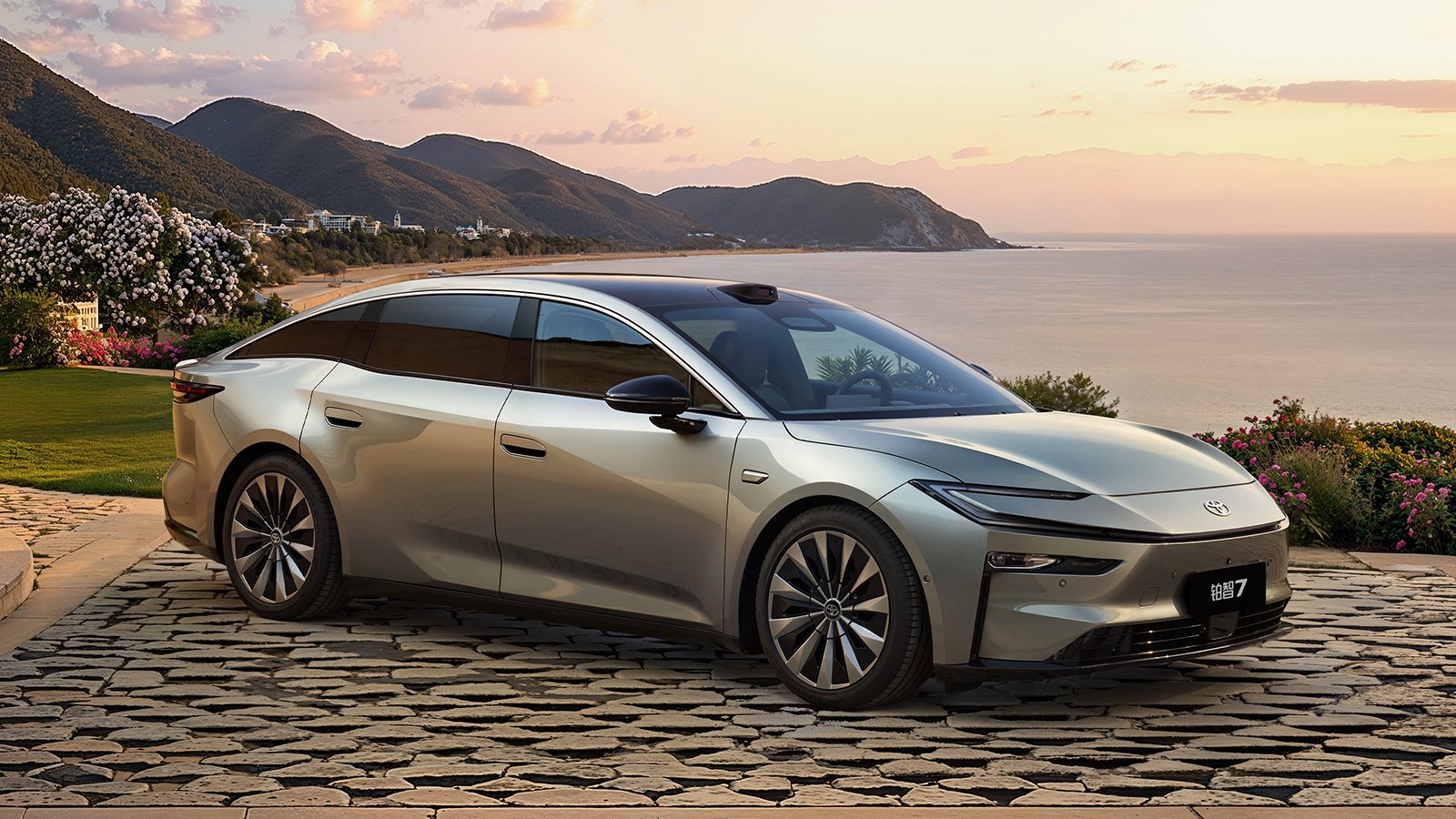
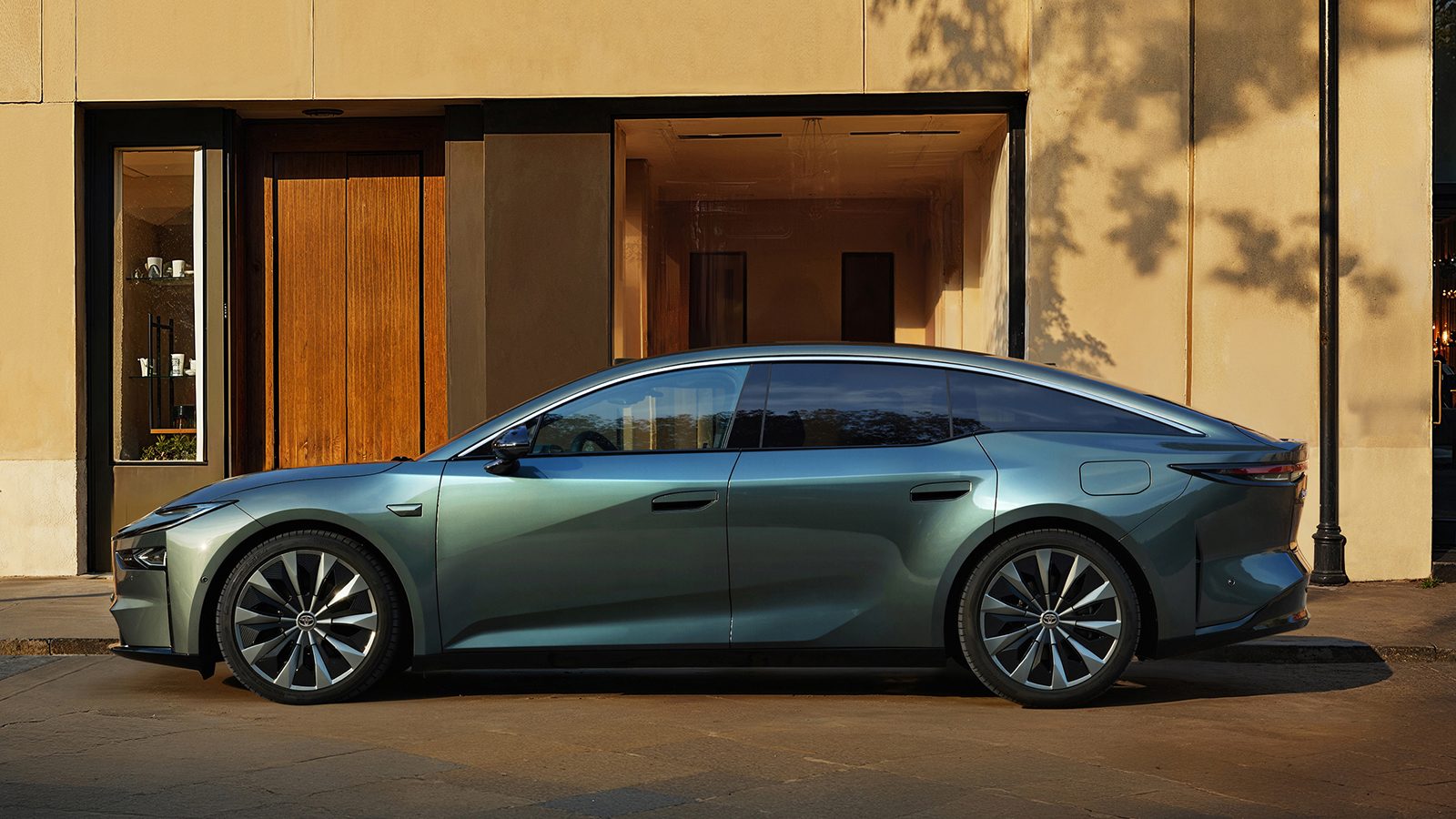
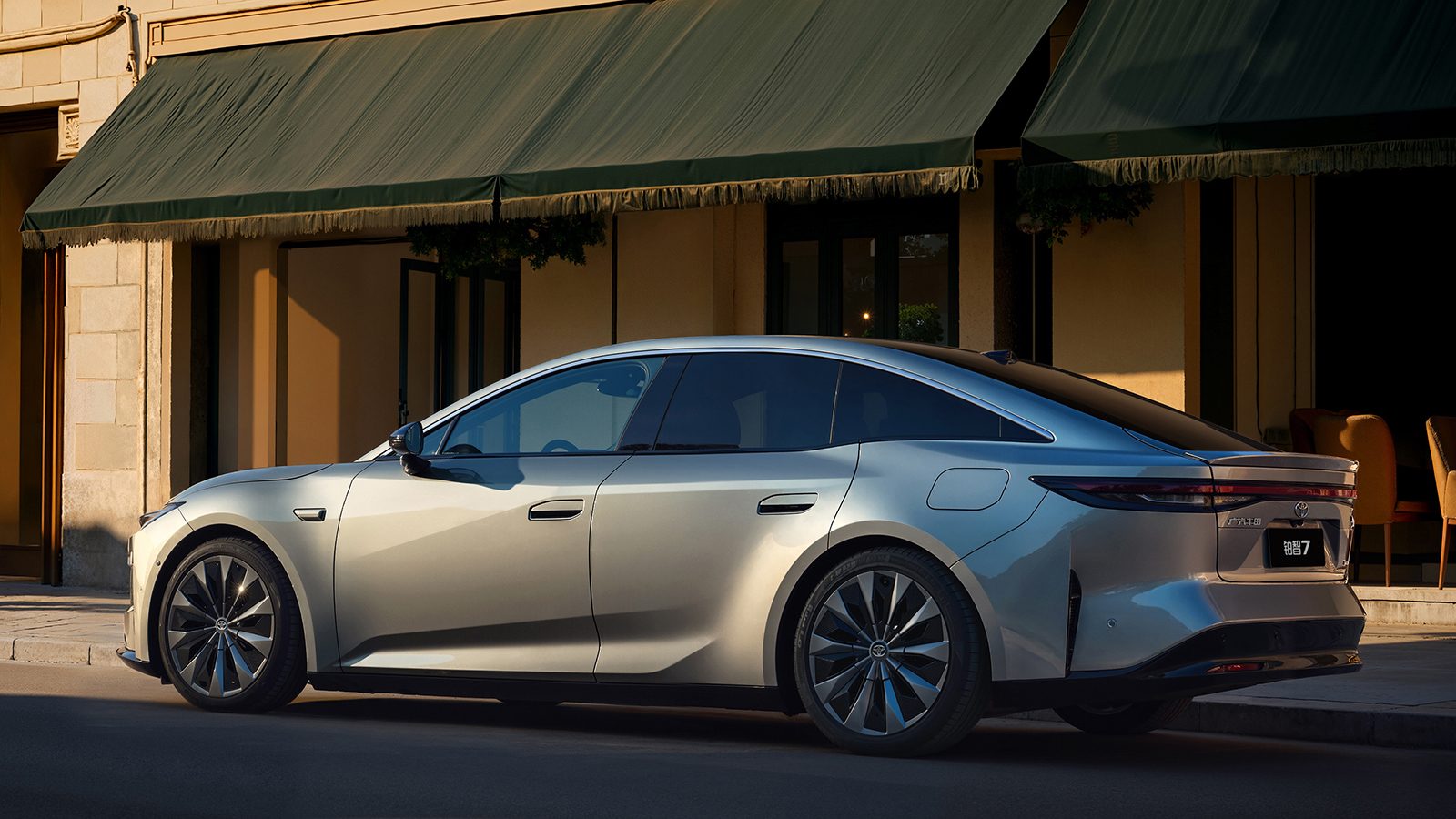
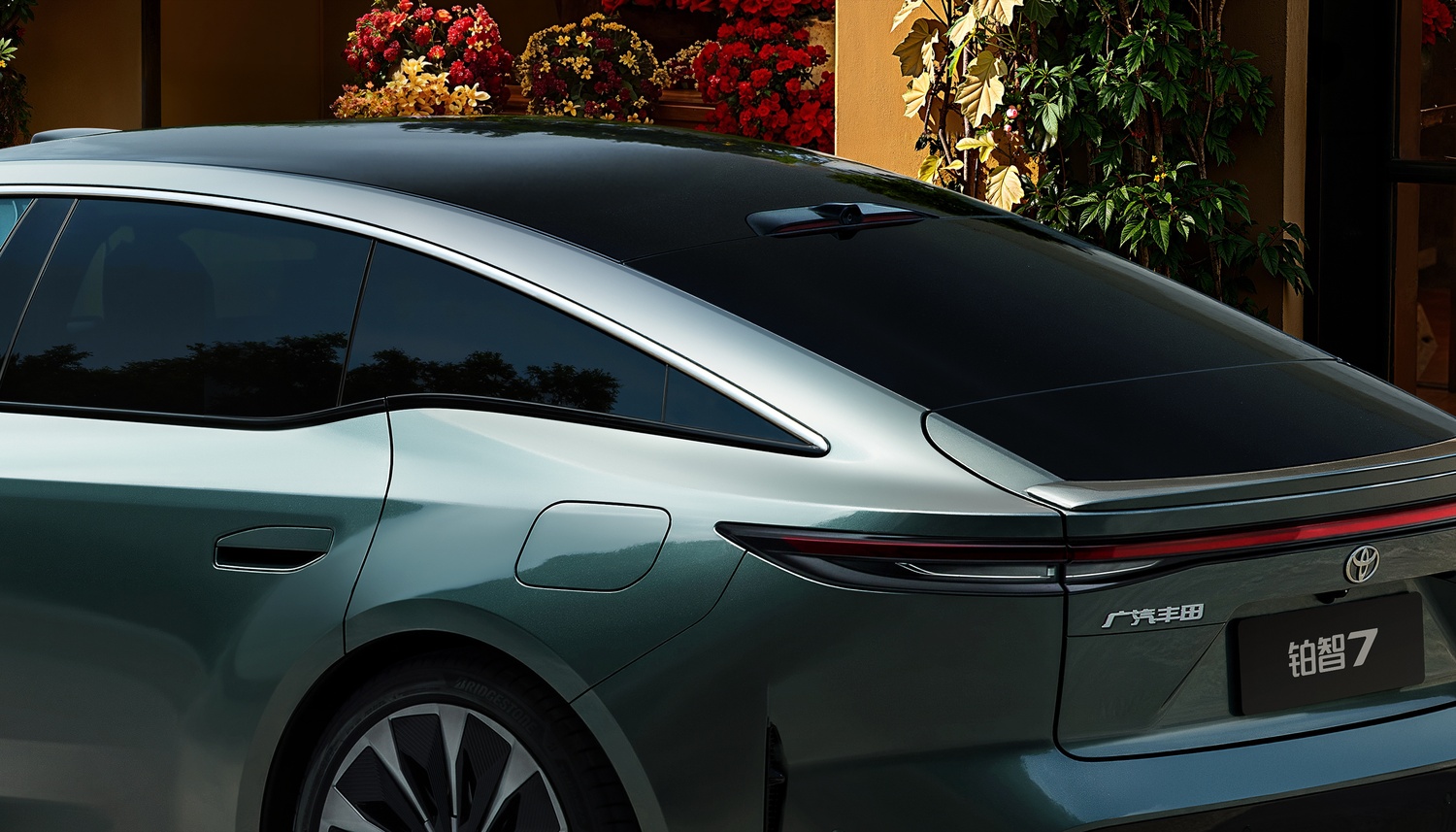
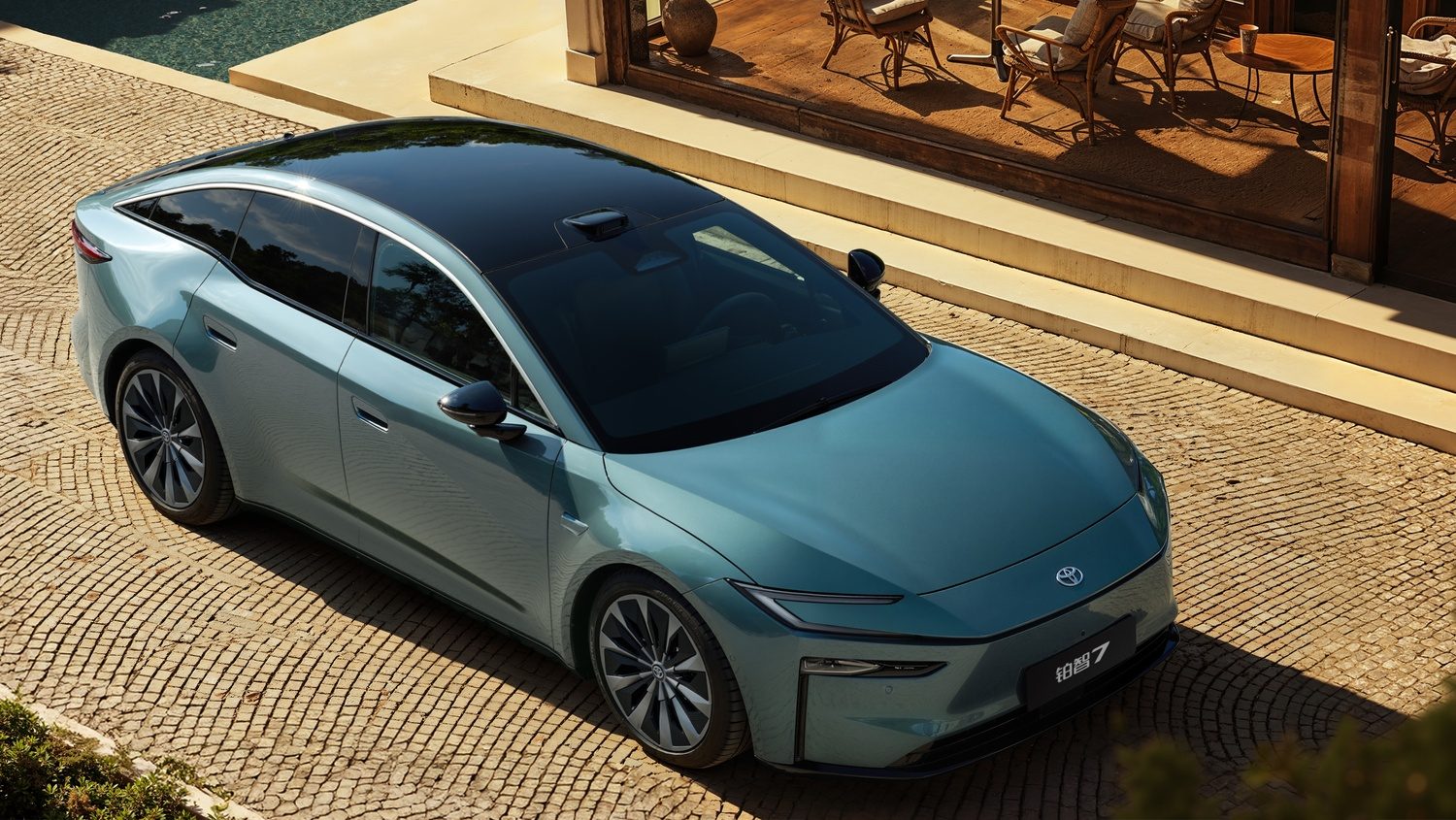
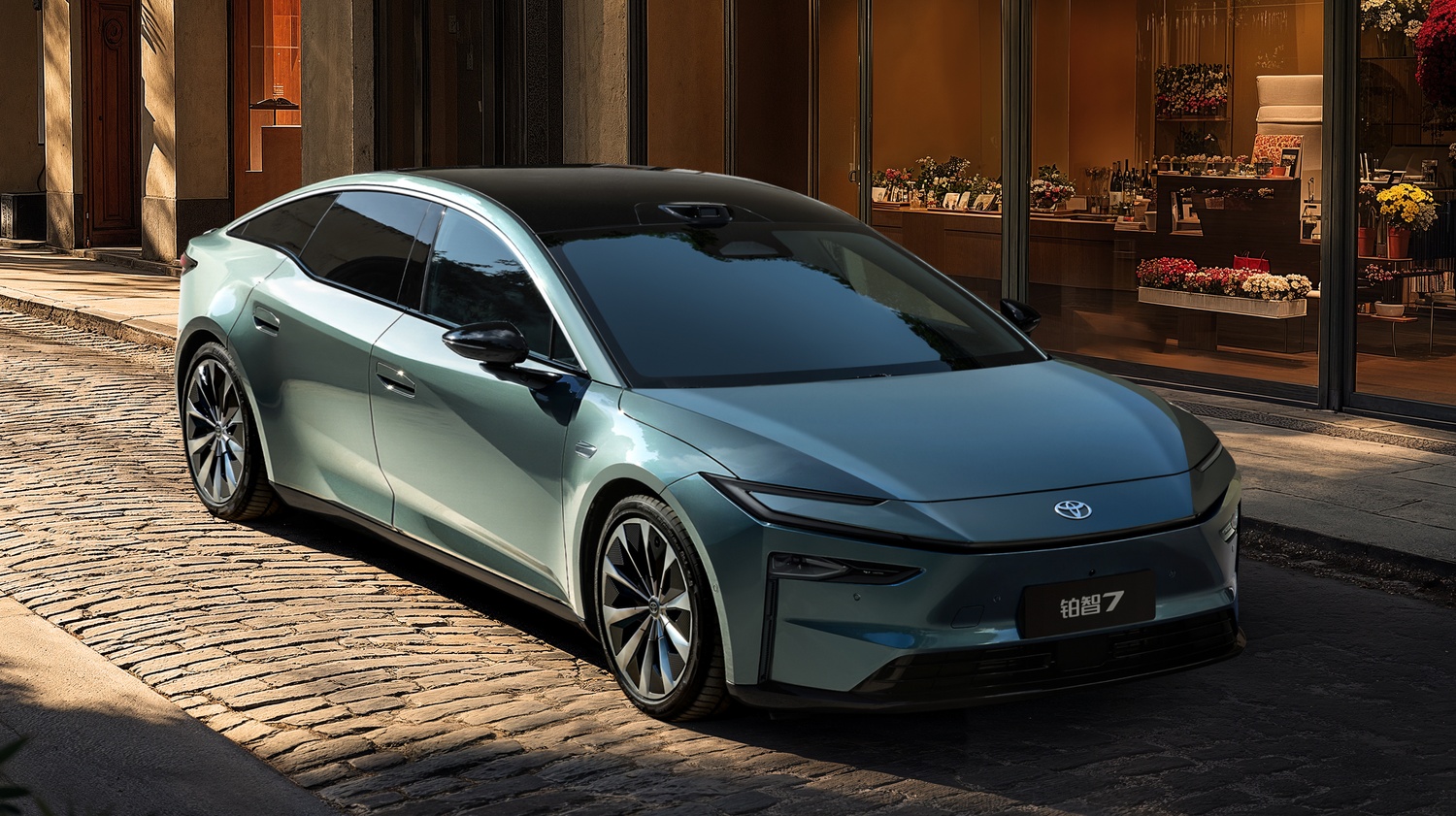
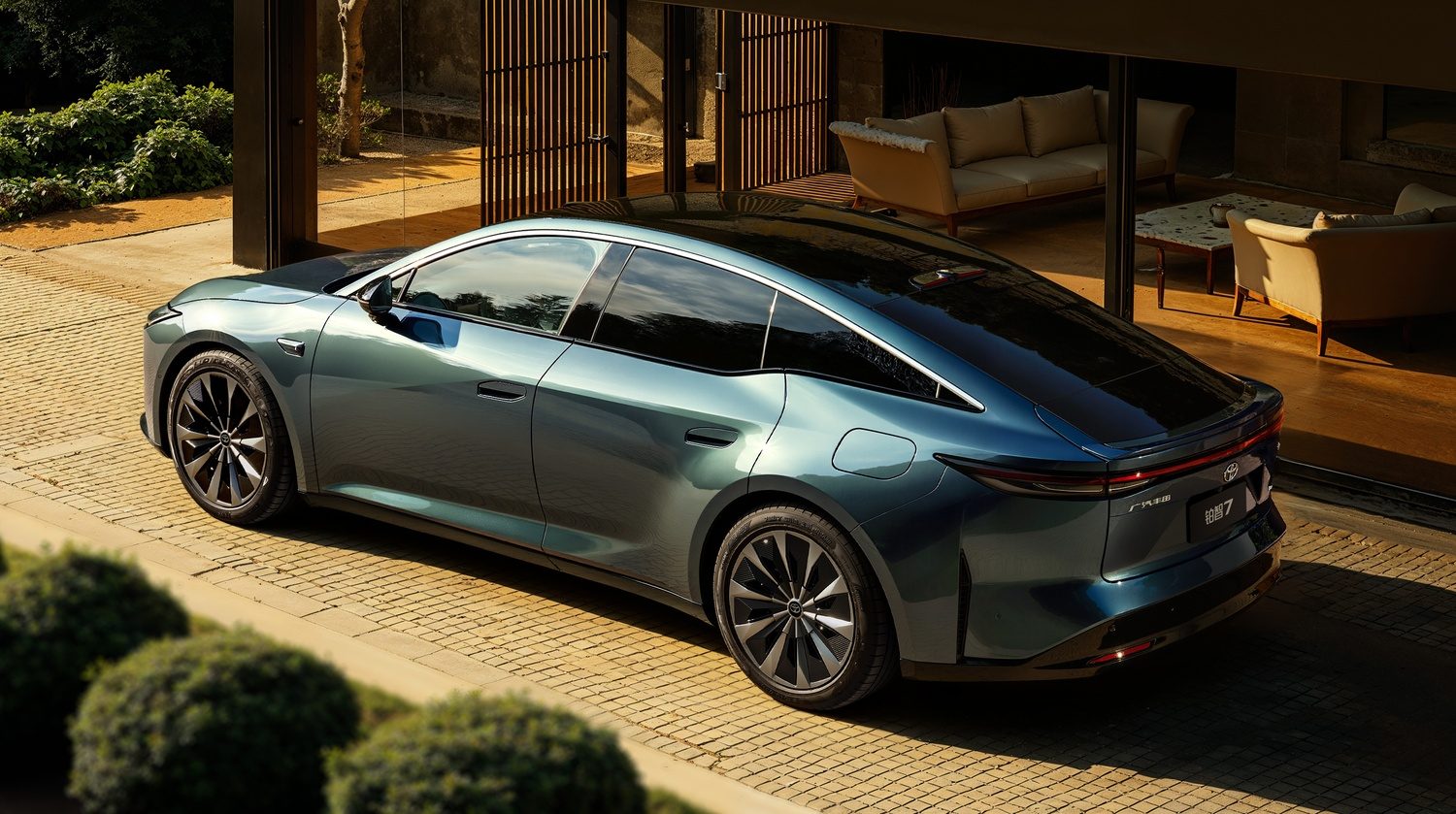
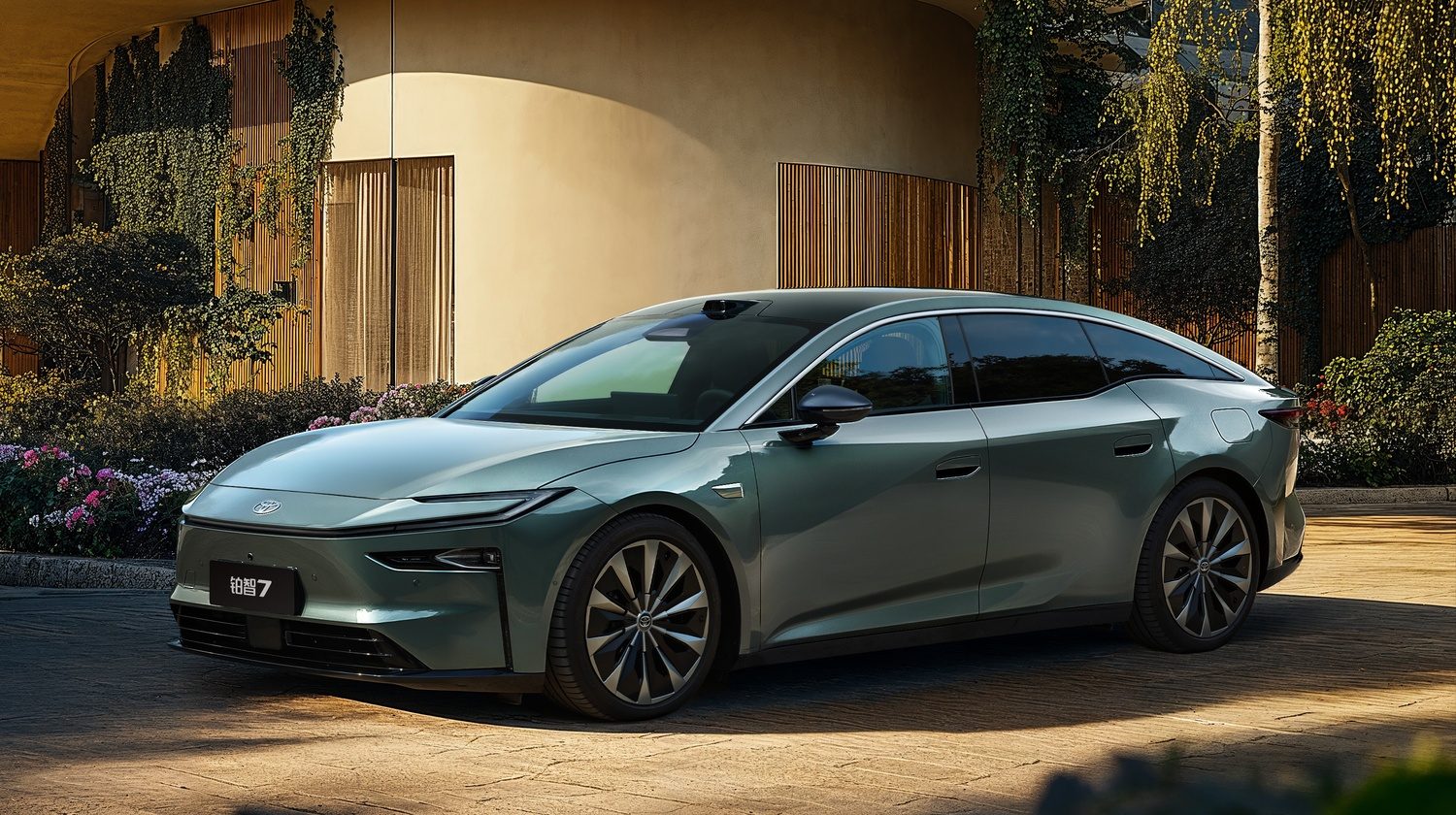
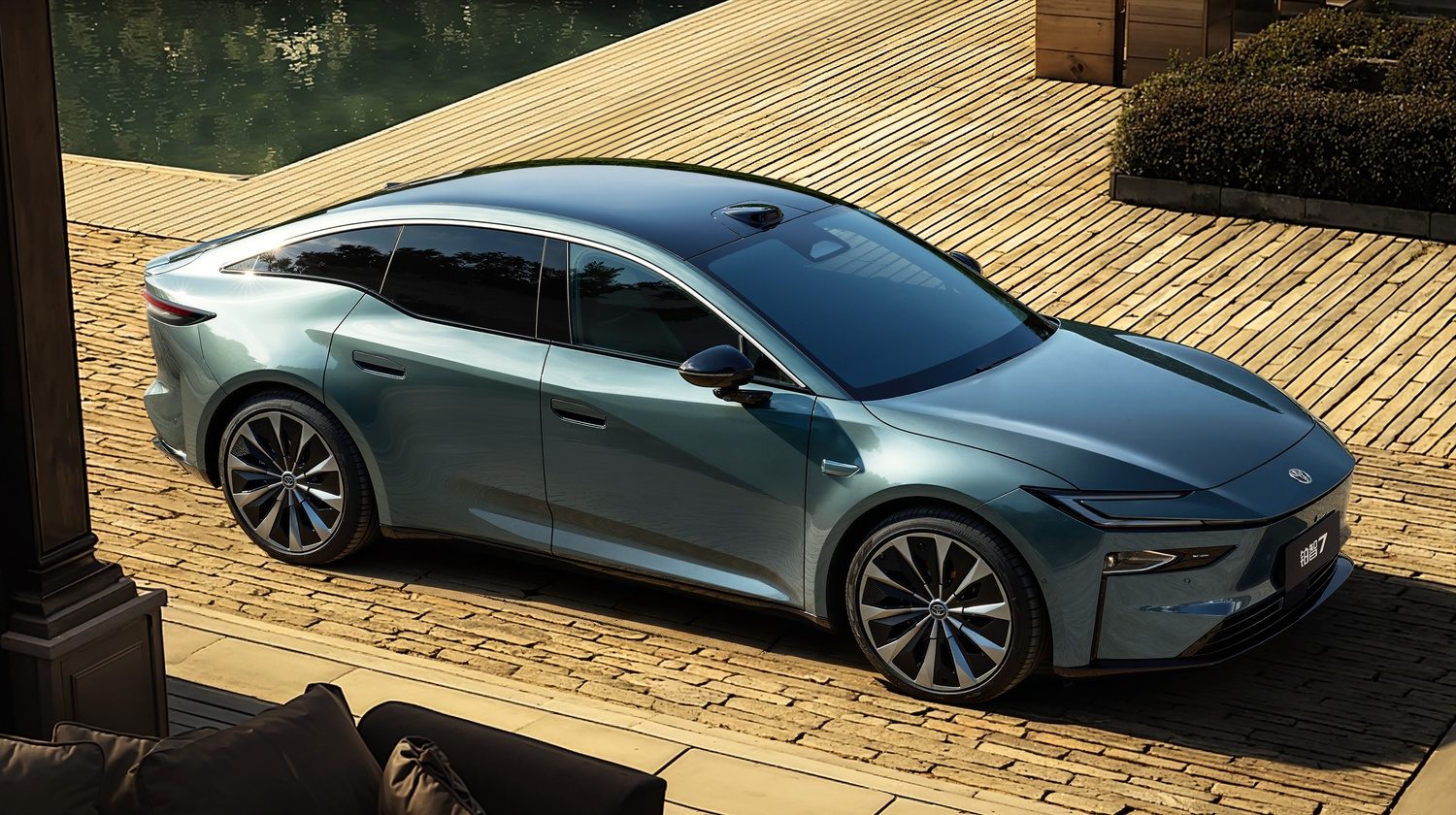
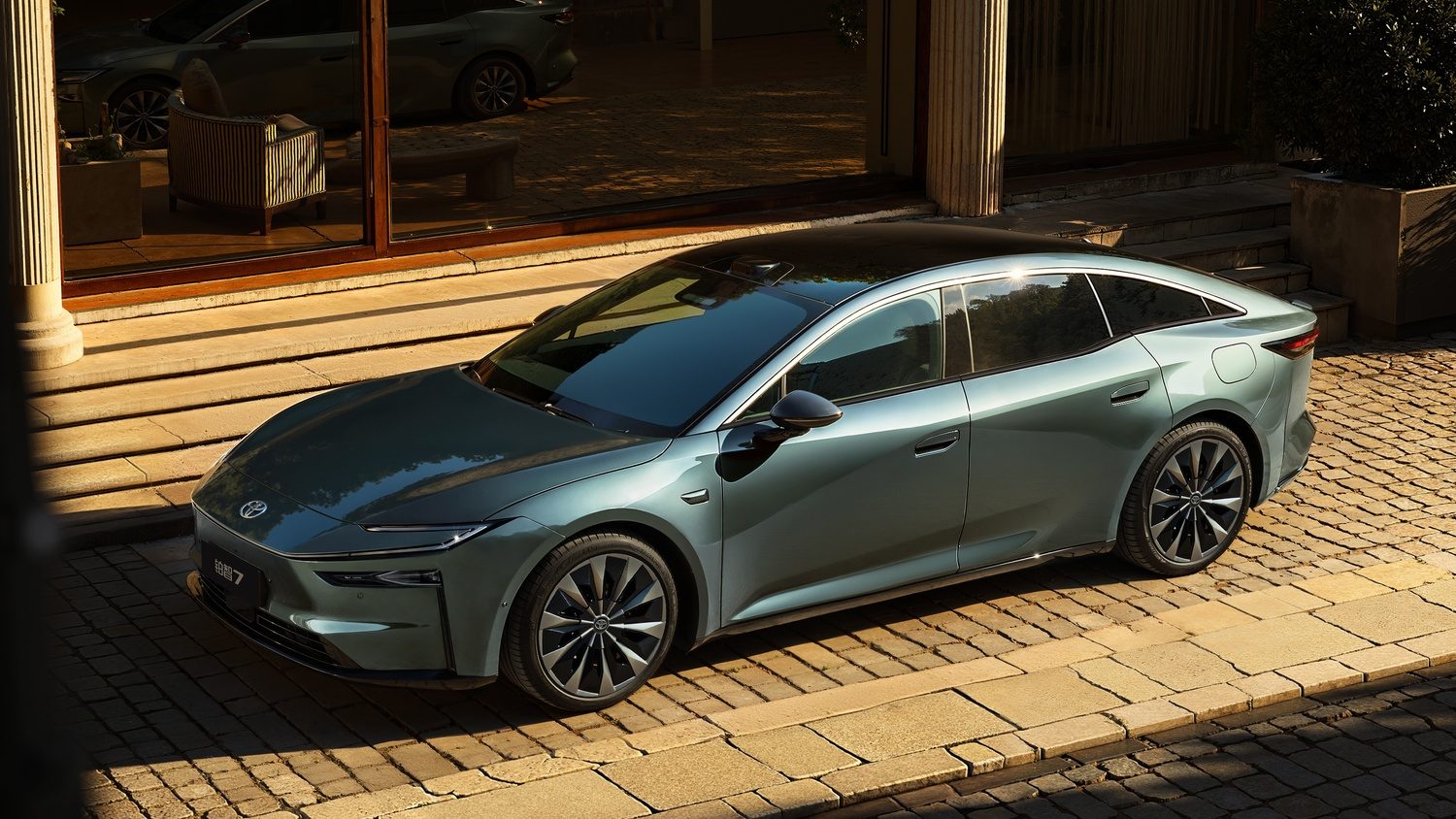
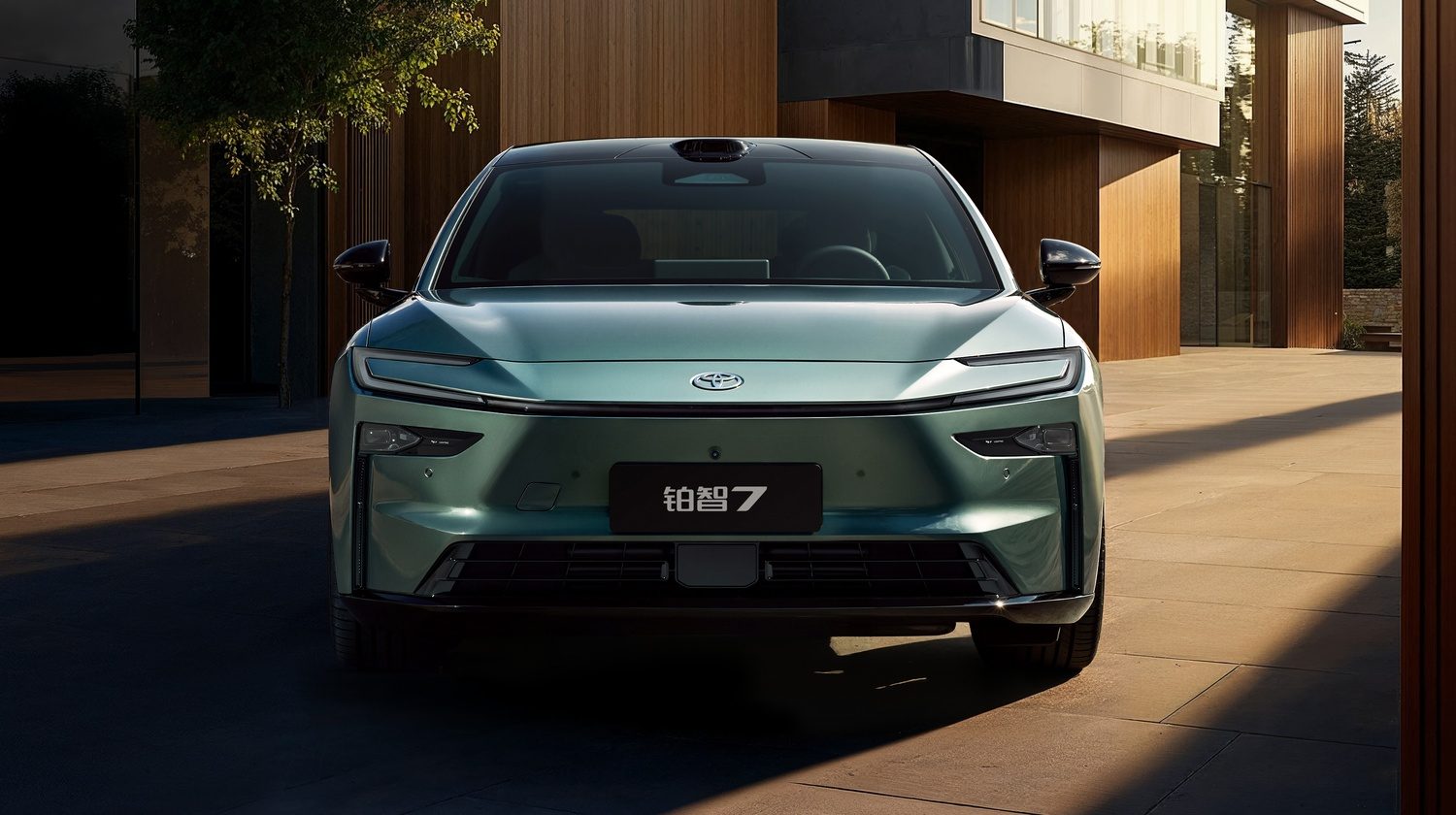
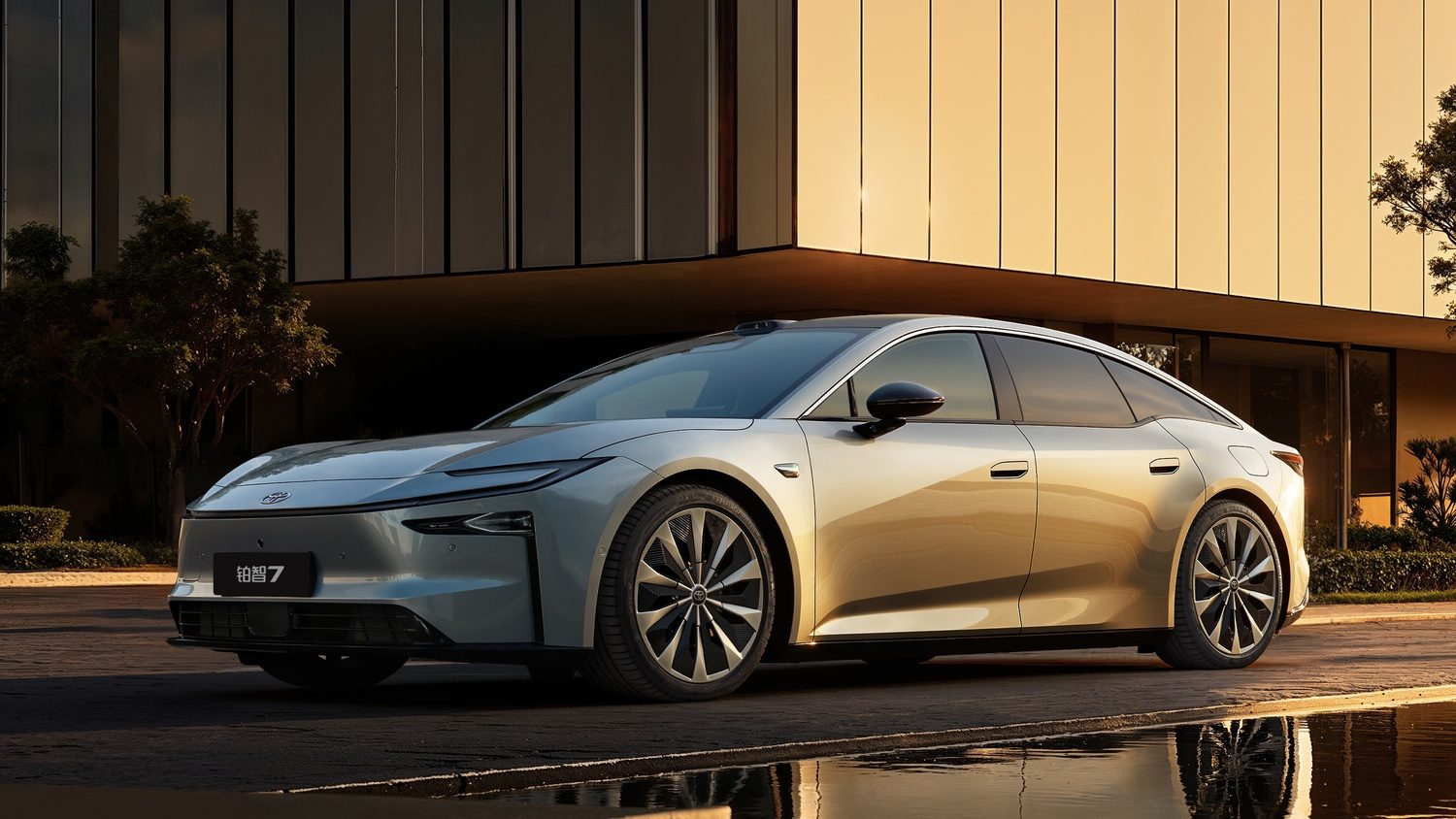
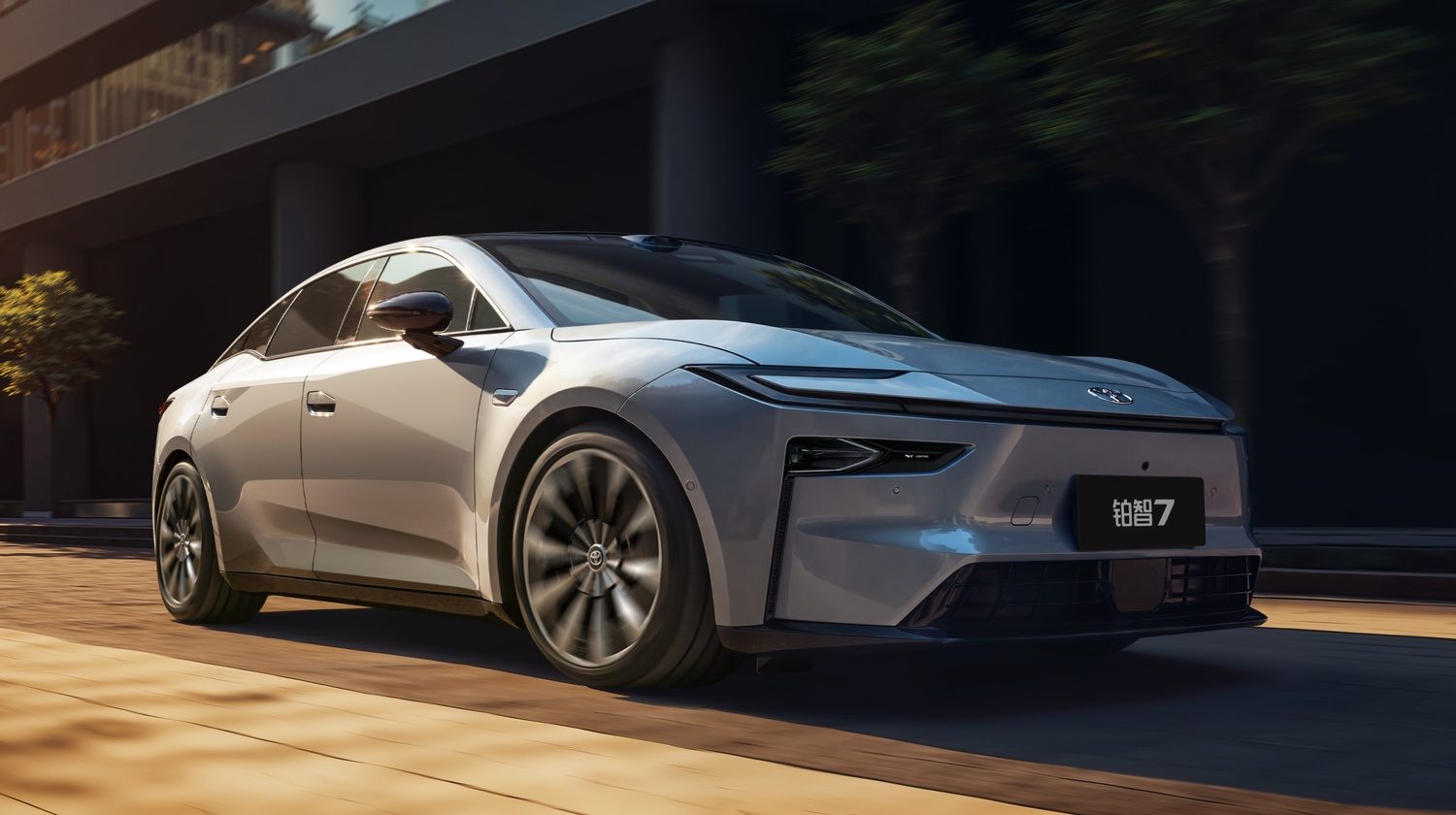
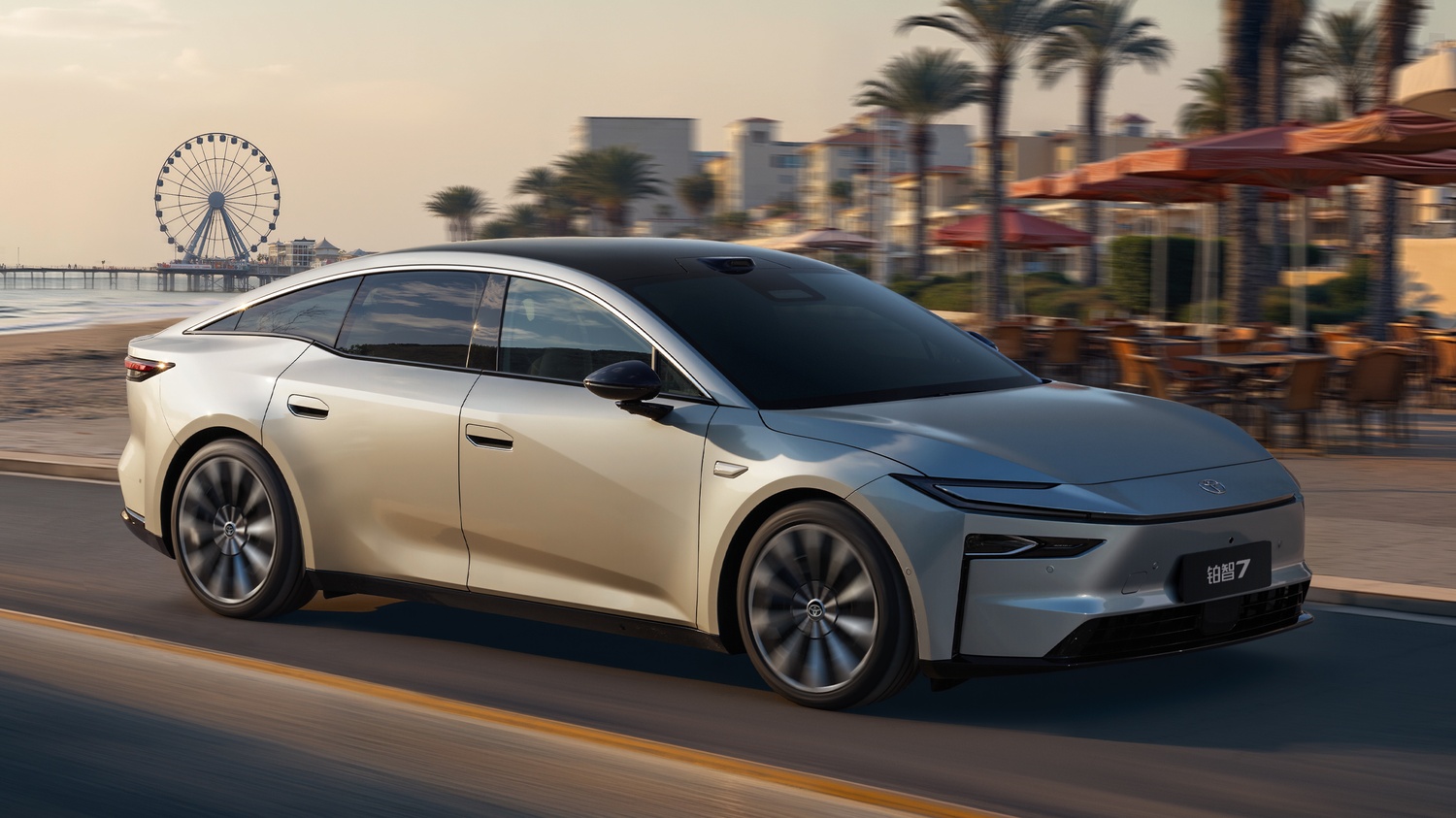
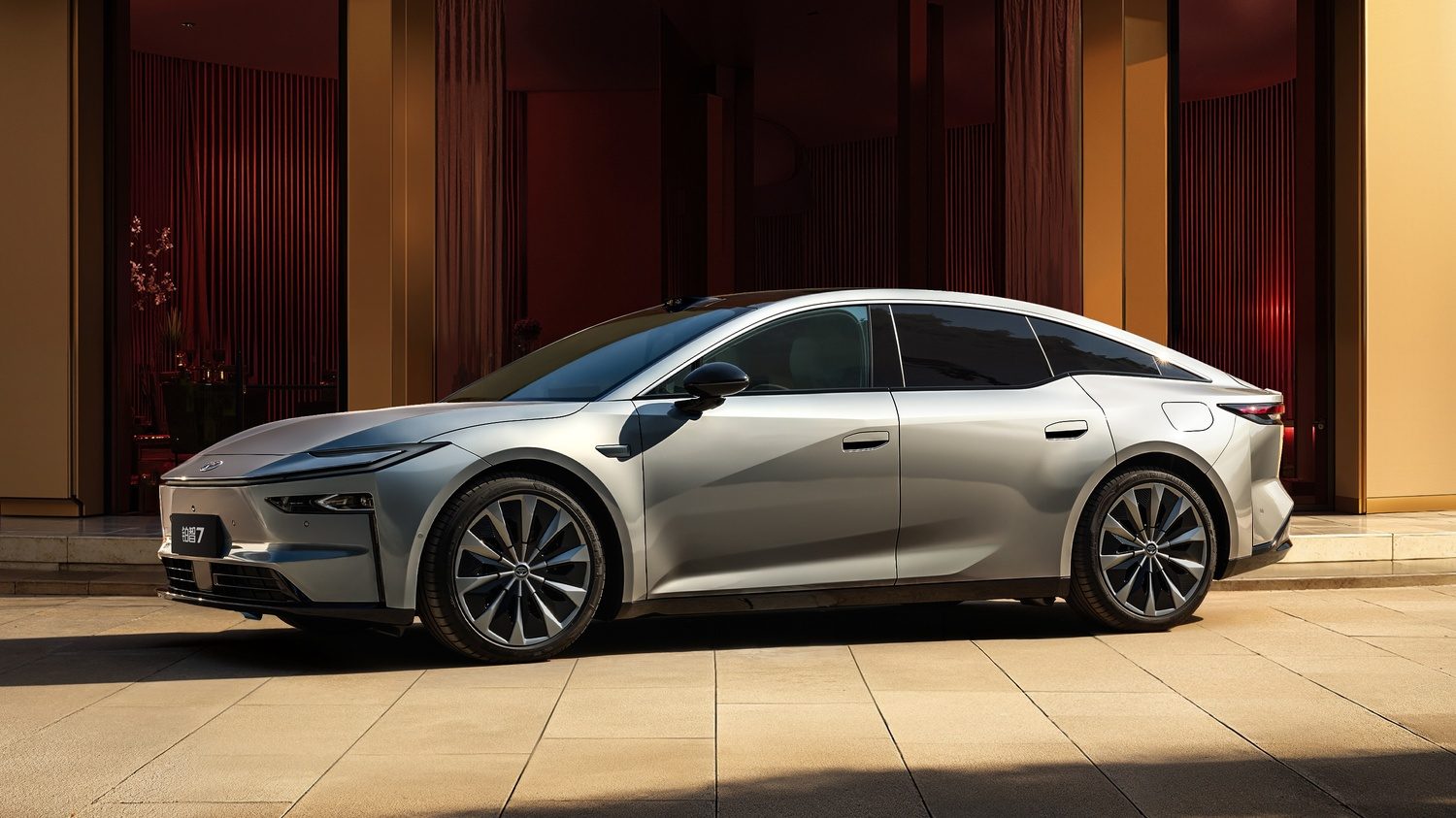
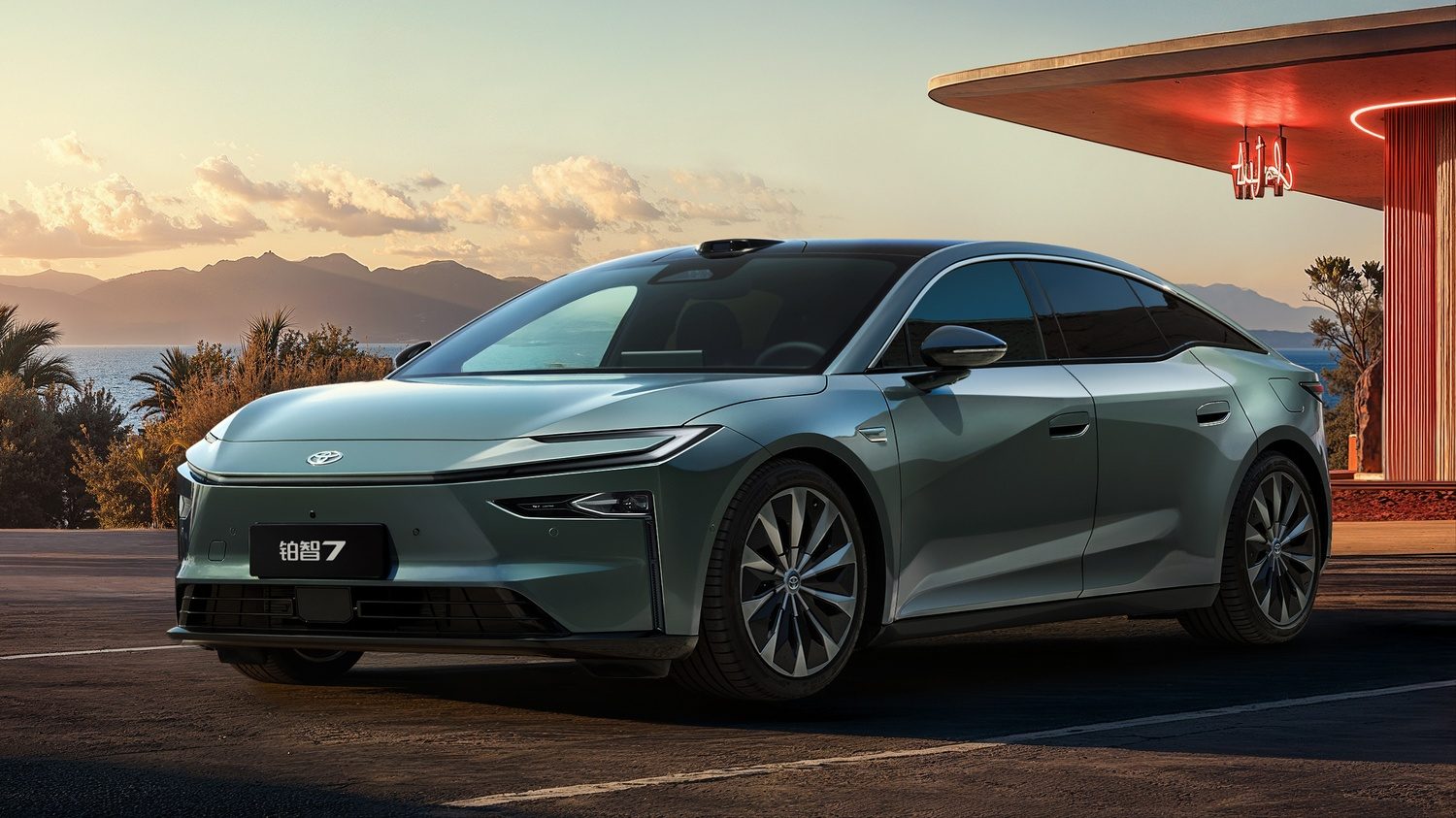
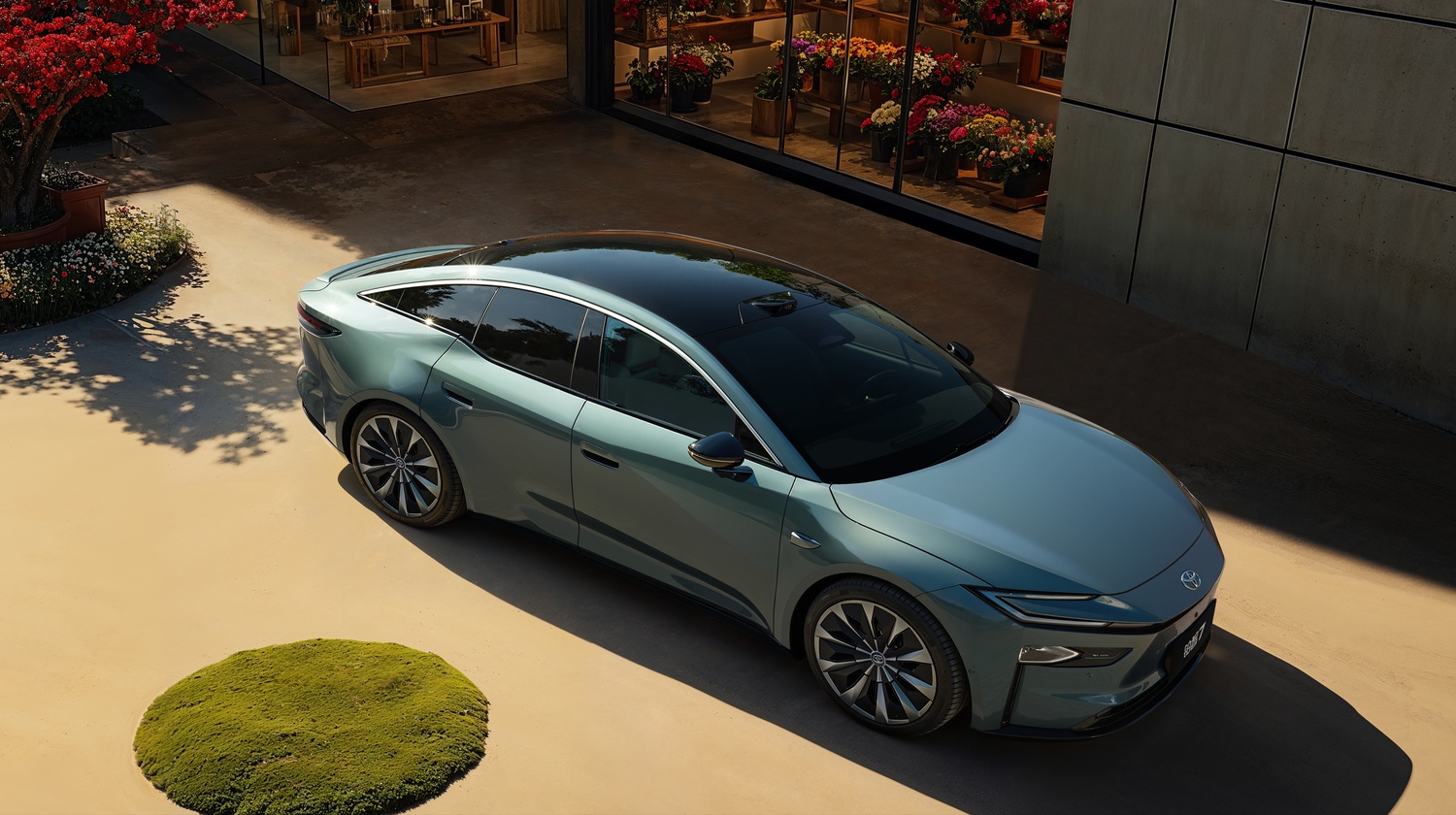
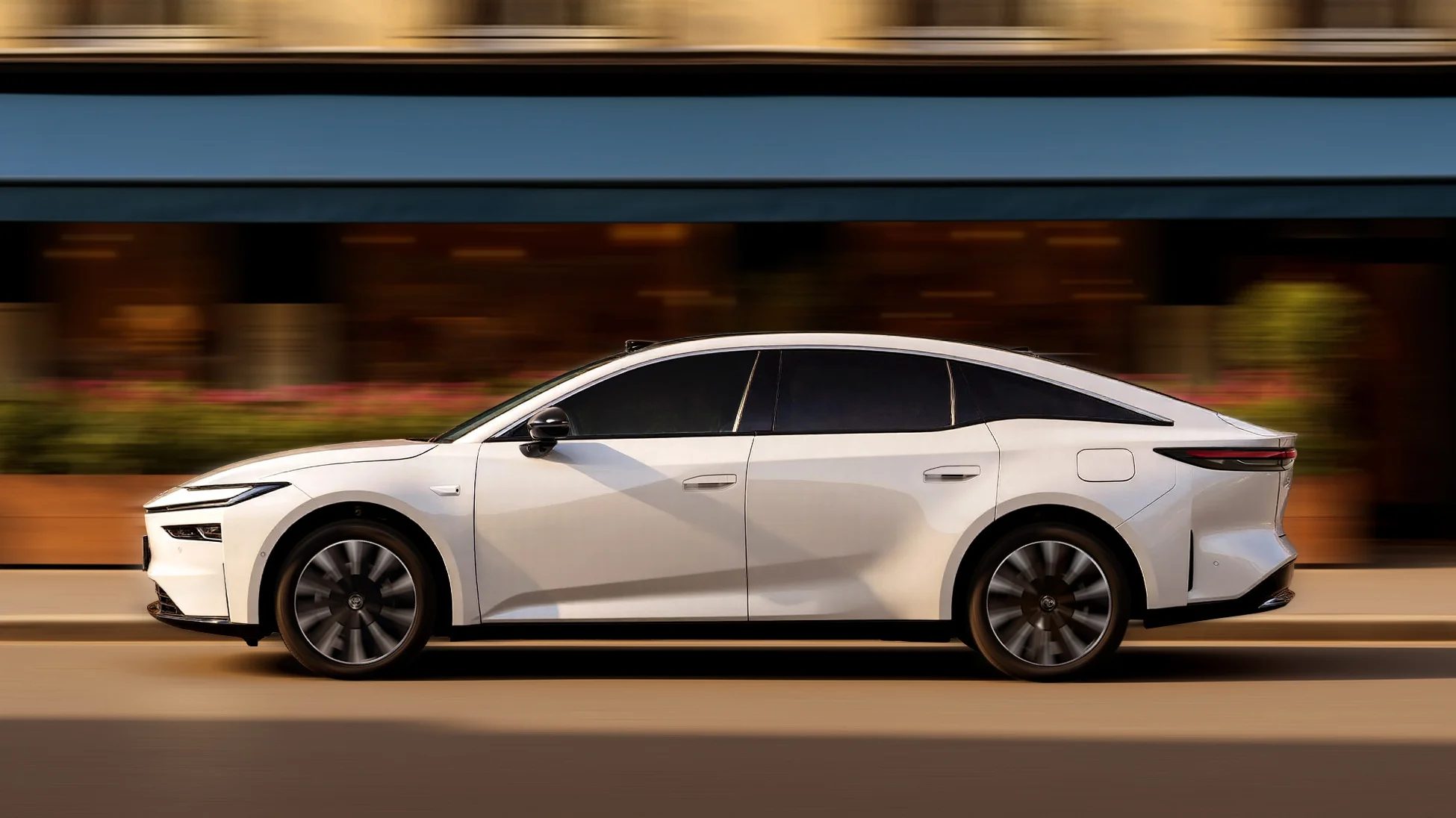
The Toyota bZ7 is a full-size electric sedan built and sold in China by GAC Toyota, the joint venture between Toyota and Guangzhou Automobile Group. It debuted at Auto Shanghai in April 2025 and reached showrooms in late March 2026 as the fifth model in Toyota’s bZ line. At 5,130 mm long on a 3,020 mm wheelbase, it is the largest car in that range, and it is not sold outside China.
The powertrain is a single rear-mounted Huawei DriveONE unit rated at 207 kW (278 hp), with a top speed of 180 km/h. Two lithium iron phosphate packs from CALB are offered across five versions: a 71.35 kWh battery good for 600 km on the CLTC cycle, and an 88.13 kWh battery rated between 680 and 710 km depending on trim.
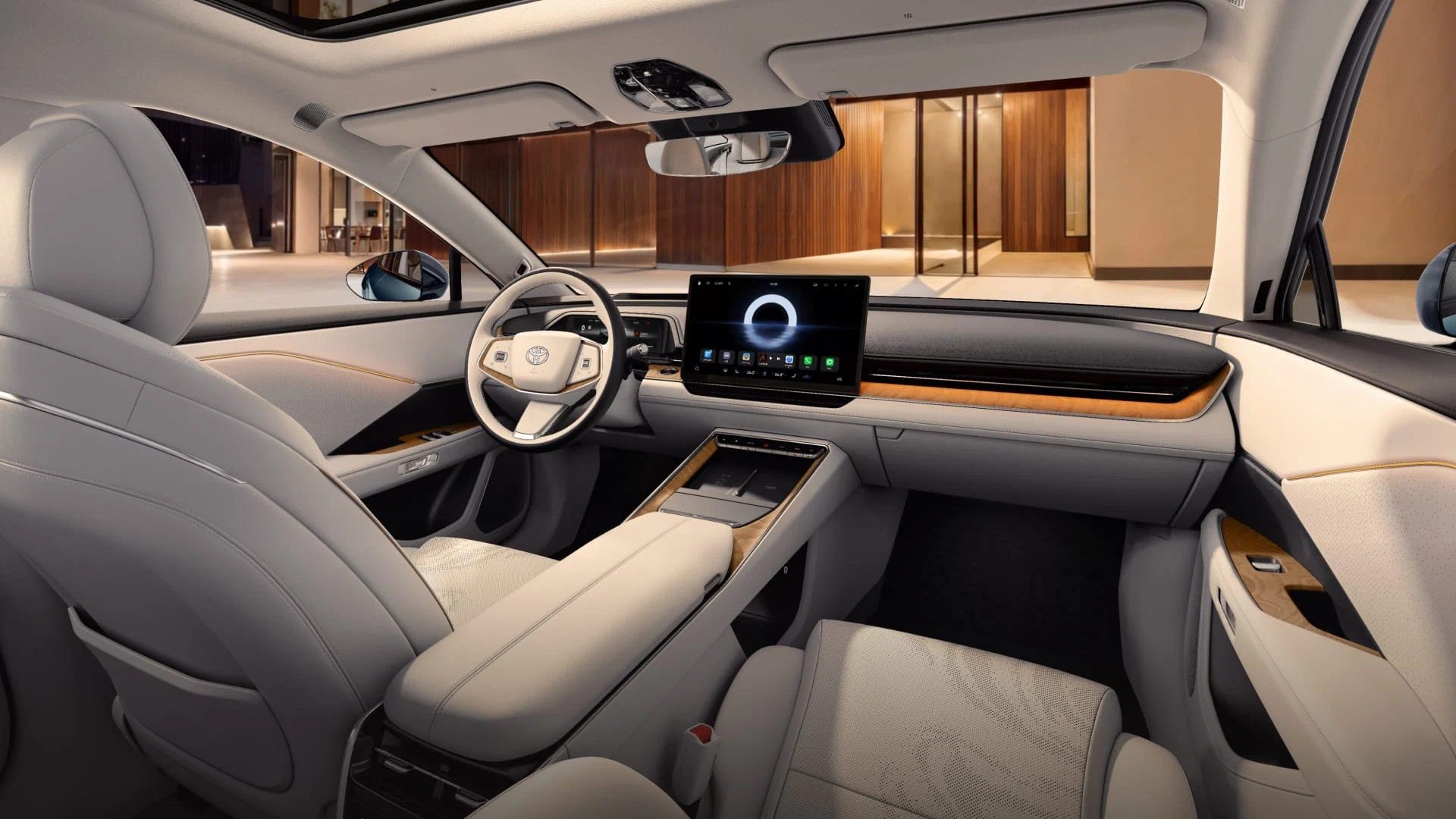
Almost everything the driver touches comes from Toyota’s Chinese technology partners. The bZ7 is the first Toyota to run Huawei’s HarmonyOS, here in Cockpit 5.0 form on a 15.6-inch central display, and it natively supports the Xiaomi smart-device ecosystem. Driver assistance is Momenta’s R6 system, fed by one LiDAR unit, five millimetre-wave radars, eleven cameras and ten ultrasonic sensors, with navigation-assisted driving on highways and city roads. A dual-chamber air suspension reads the road ahead and adjusts damping before the wheels reach it, and the rear seats recline into a zero-gravity position with massage.
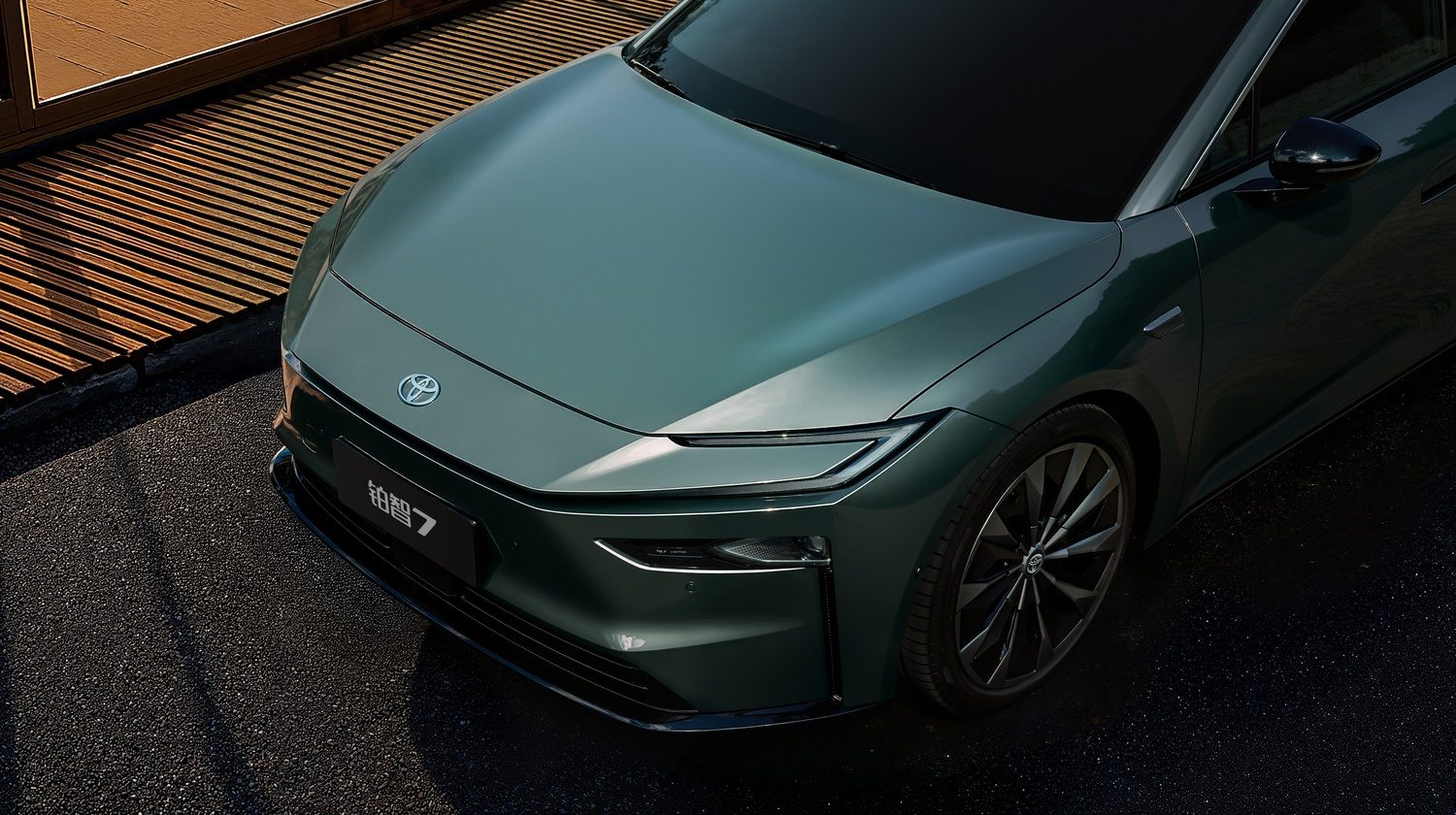
Outside, a full-width light bar gives the nose a semi-enclosed look that GAC Toyota describes as a hammerhead. Pre-sale pricing ran from ¥179,800 to ¥239,800, but the car launched at ¥147,800 to ¥199,800 with introductory incentives applied, and collected more than 3,100 orders in its first hour on sale.