 USA
USA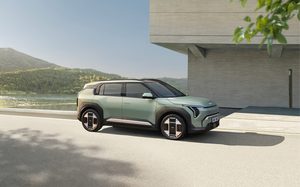
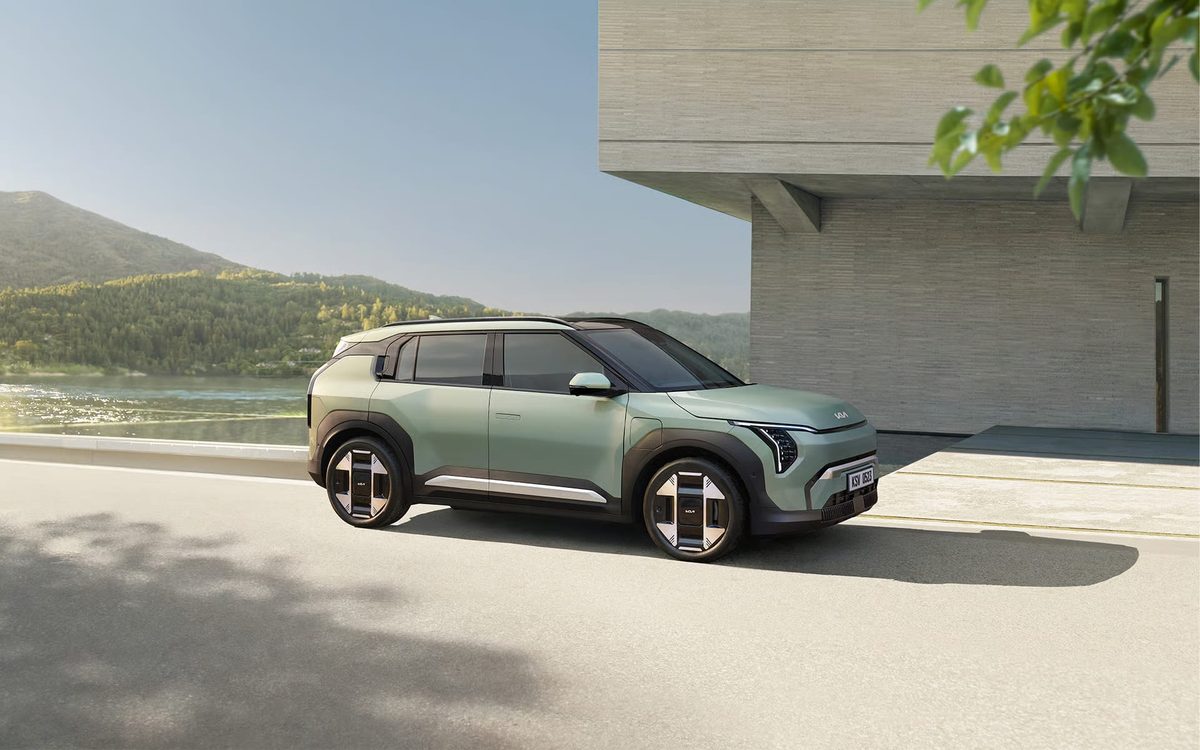
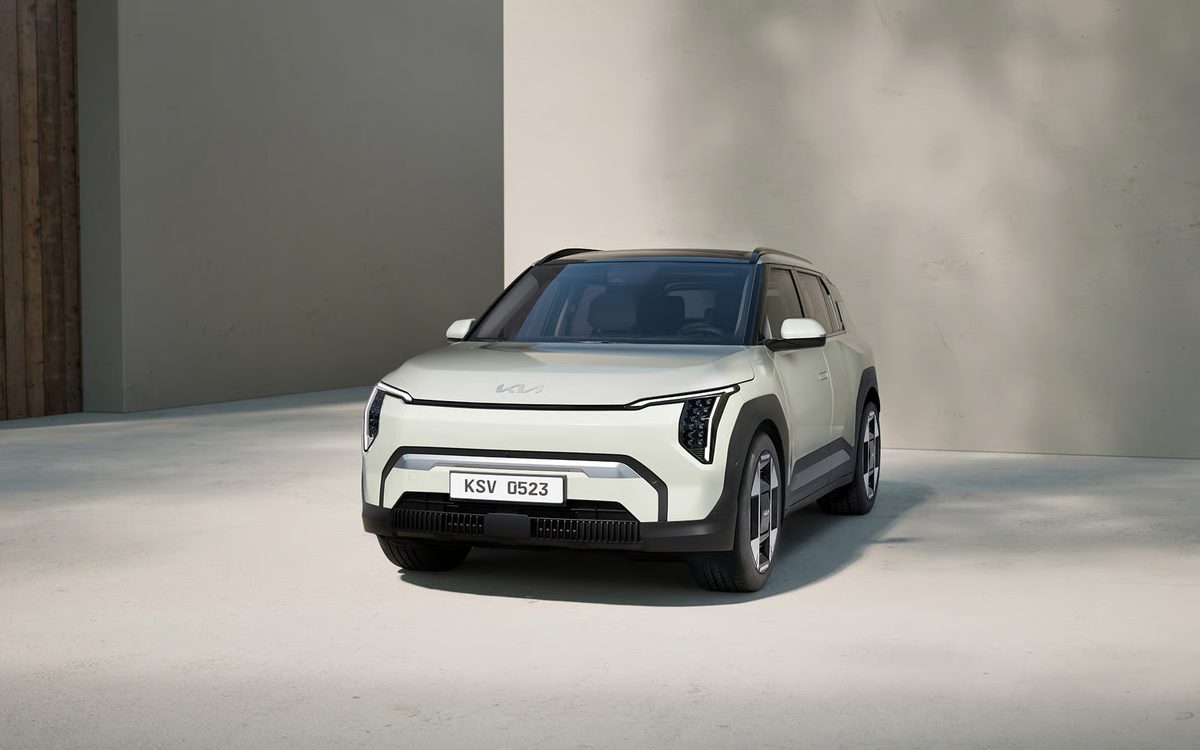
Kia has priced the 2027 EV3 for the United States: seven configurations across five trim names, running from $29,890 to $45,890 before freight. The version that goes furthest on a charge costs $34,990, which puts it second from the bottom of that list.
| Trim | Drive | MSRP | With destination | Battery | EPA range |
|---|---|---|---|---|---|
| Light | FWD | $29,890 | $31,385 | 58.3 kWh | 221 mi (356 km) |
| Wind | FWD | $34,990 | $36,485 | 81.4 kWh | 321 mi (517 km) |
| Land | FWD | $38,490 | $39,985 | 81.4 kWh | 321 mi (517 km) |
| Wind | AWD | $38,690 | $40,185 | 81.4 kWh | 280 mi (451 km) |
| Land | AWD | $41,690 | $43,185 | 81.4 kWh | 280 mi (451 km) |
| GT-Line | AWD | $43,490 | $44,985 | 81.4 kWh | 280 mi (451 km) |
| GT | AWD | $45,890 | $47,385 | 81.4 kWh | 280 mi (451 km) |
Range by battery and drivetrain
Two things vary across the table, and they pull in opposite directions.
The first is the battery. Only the base Light carries the smaller 58.3 kWh pack, and its 221 miles (356 km) is the lowest figure in the lineup. Every other EV3 has the 81.4 kWh pack, which is what takes the Wind FWD to 321 miles (517 km) for $5,100 more.
The second is the number of motors. All four all-wheel-drive configurations carry that same 81.4 kWh battery, but a second motor adds weight and drag on the driven axle, and they are rated at 280 miles (451 km). So the GT at $47,385 delivered covers 41 miles (66 km) less than the Wind at $36,485. Front-wheel-drive cars make 201 hp and 209 lb-ft (283 Nm), the all-wheel-drive pair 261 hp and 284 lb-ft (385 Nm), and the GT 288 hp and 345 lb-ft (468 Nm).
The $29,890 car costs $31,385
None of the prices in the left-hand column include the $1,495 destination charge, and that is not a Kia quirk. In the United States, federal law requires the destination fee to be printed on the window sticker of every new car, but automakers are allowed to leave it out of advertised prices, and nearly all of them do. The fee is a flat national average, so it is identical whether the car is collected next to the factory or shipped across the country, and it is not negotiable.
The practical effect is that no EV3 leaves a dealership at $29,890. It is still the number the car will be advertised, searched and compared by for years, which is why the gap is worth naming.
Charging and the NACS port
Every North American EV3 has a NACS socket built into the body rather than a CCS socket. The two are competing connector standards: most US fast chargers installed before about 2024 use CCS, while Tesla’s Supercharger network uses NACS. A car with a CCS socket can still use a Supercharger, but through an adapter the driver has to buy, carry and fit each time. A car with a NACS socket plugs straight in.
How much that is worth depends on where the car is parked overnight. A driver with a wallbox at home uses public chargers a few times a year, on longer trips. A driver without off-street parking uses them weekly, and for them the connector decides how much of the network is usable without extra hardware. The socket is the same on the $29,890 Light as on the $45,890 GT.
Charging from 10 to 80 percent takes about 29 minutes on the Light, and about 31 minutes on the larger pack using a 350 kW charger, according to Kia. A battery heater is standard across the range, and a heat pump is optional on all-wheel-drive cars.
US-market EV3s come from Kia’s plant at Pesquería in Nuevo León, Mexico, where assembly started on 4 August 2026 as part of a $649m investment. It is the first Kia electric car built outside South Korea.