This page collects news about the Malaysian car industry: model launches, national-brand strategy, assembly and ownership. Malaysia registered about 820,000 new vehicles in 2025, a fourth consecutive record, and the shape of that market is unusual for the region. Two national brands take 62.3% of it: Proton, founded in 1983 with Mitsubishi engineering and now 49.9% owned by Geely, and Perodua, founded in 1993 and built around Daihatsu component designs, which alone sold 359,904 cars in 2025. In most countries a domestic champion holds a share like that only behind a closed border; Malaysia’s is held in a market where every major foreign brand competes.
What keeps them there is tax. Excise duty on a fully imported car is far heavier than on one assembled locally from kits, so a brand that wants volume in Malaysia builds it there. Honda, Toyota, Mazda, Nissan, Mercedes-Benz, BMW and a growing list of Chinese makers all run Malaysian assembly, much of it through contract assemblers rather than their own plants. The same duty structure is why electric cars arrived on a separate track: fully imported EVs were given a duty exemption to seed the market at all.
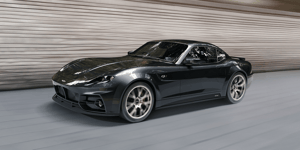
At the opposite end of the scale is Bufori, which has hand-built composite-bodied cars in Kepong, Kuala Lumpur since 1998 and makes its own bodies, wiring and control electronics. Its CS8 grand tourer takes over 9,000 man-hours per car. Nothing about it is representative of the industry around it, which is most of why it is worth knowing about.