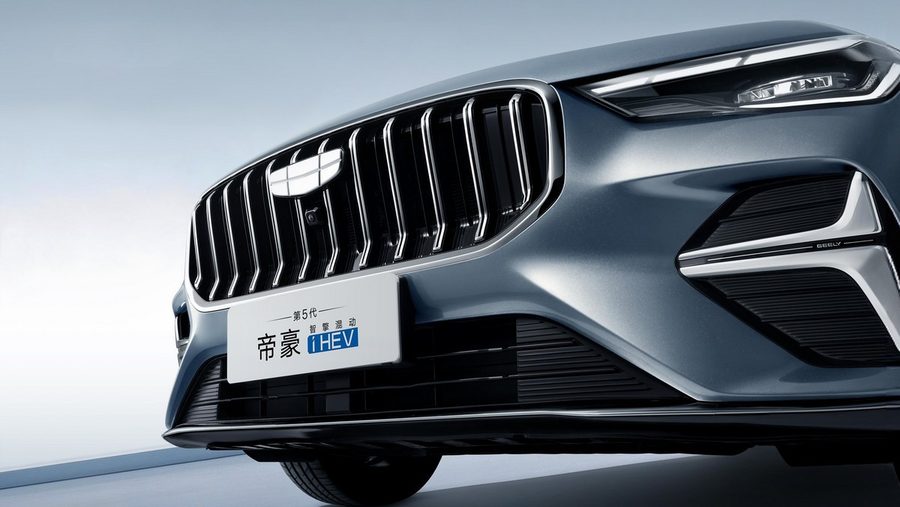
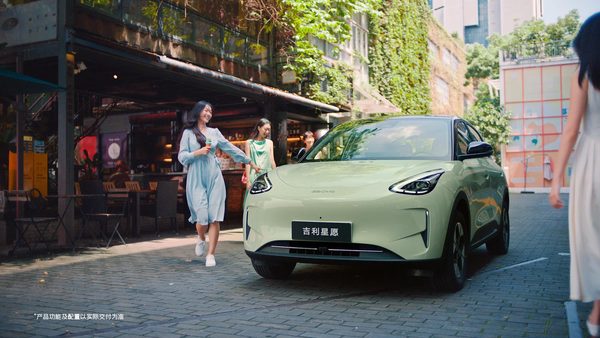
The Geely Emgrand i-HEV is the full-hybrid version of the fifth-generation Emgrand compact sedan, added in June 2026. The i-HEV system runs without a plug, pairing a 1.5-litre petrol engine with an electric motor for a quoted 3.83 l/100km on the WLTC cycle. Prices in China run from 87,900 yuan ($13,000).
Geely
Chinese automaker based in Hangzhou. Parent company of Volvo Cars, Polestar, Lotus, Proton, and Lynk & Co. Own-brand electric models sell under the Galaxy sub-brand; Zeekr is the premium EV arm.
Geely models
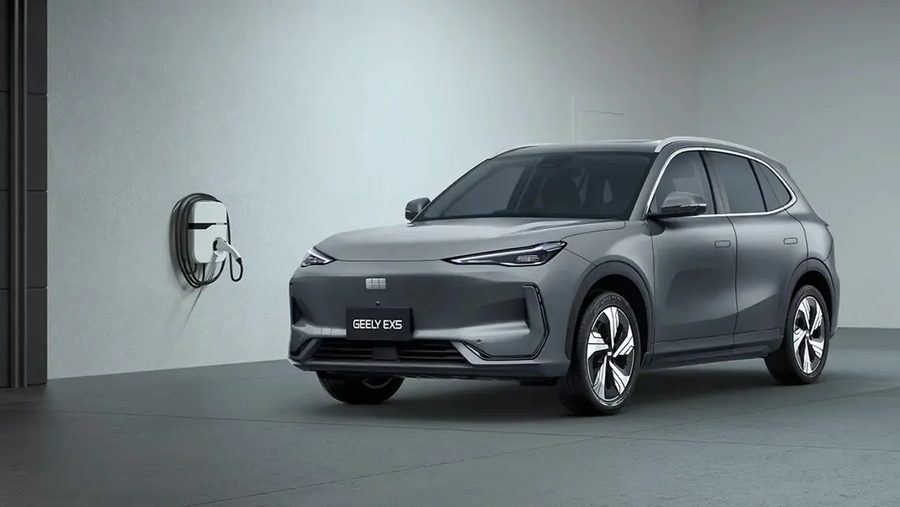
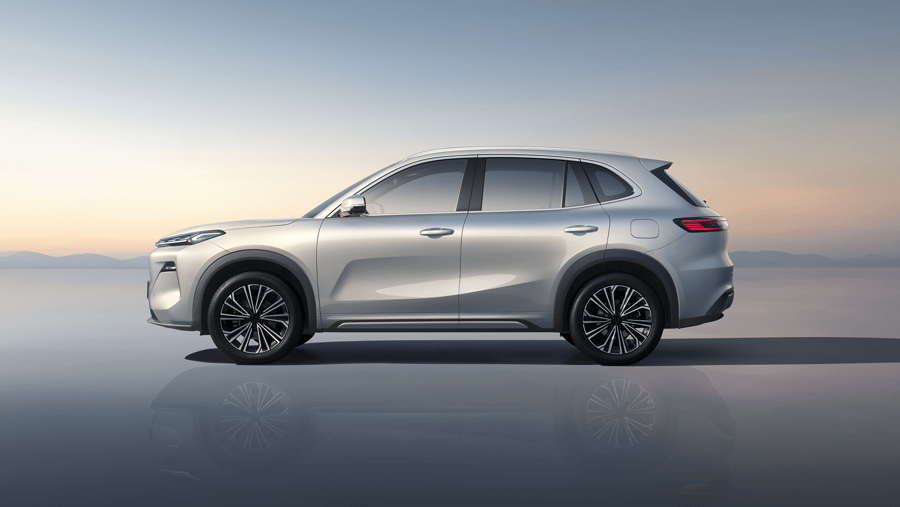
The Geely EX5 is a compact electric SUV and the export version of China's Geely Galaxy E5. A single 218 hp front motor drives all versions, with LFP batteries offering 440, 530 or 610 km of CLTC range. It measures 4,615 mm long on a 2,750 mm wheelbase.
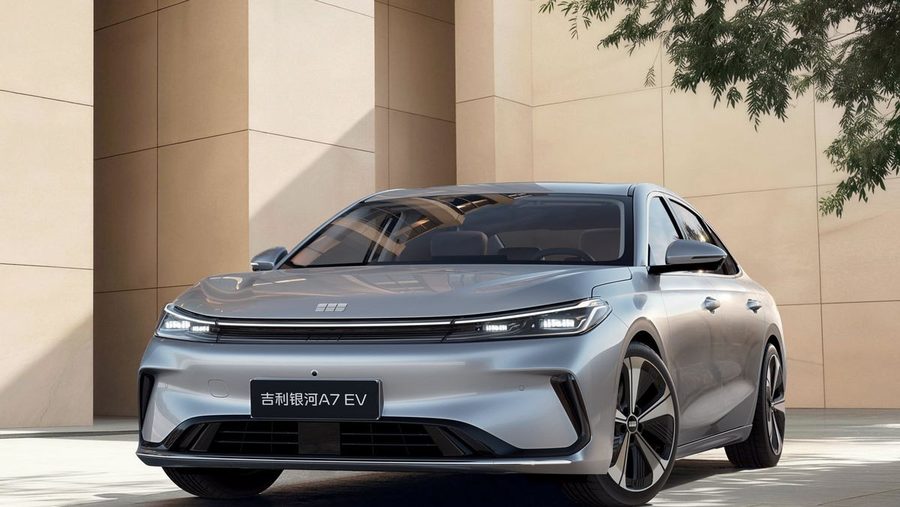
The Geely Galaxy A7 is a mid-size sedan sold as an EM-i plug-in hybrid with up to 235 km of CLTC electric range, or as a pure EV with 550 km CLTC range. Prices start from ¥97,800.
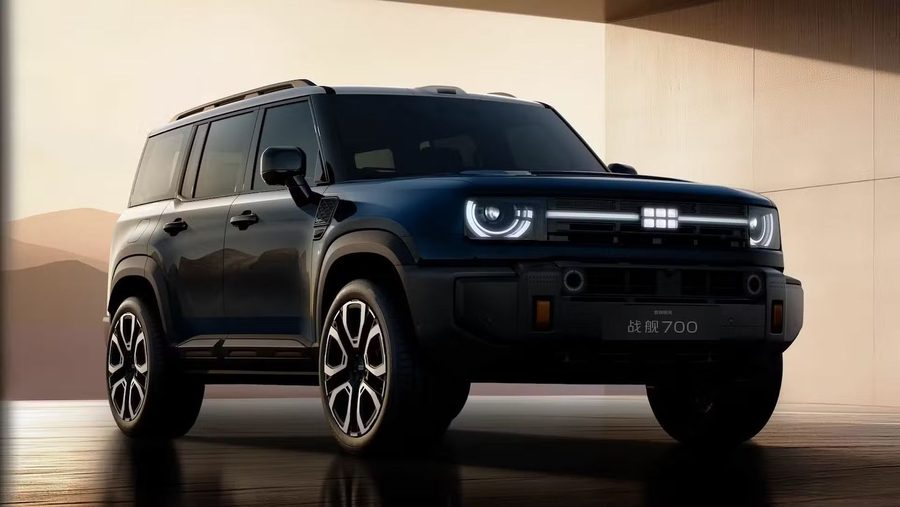
The Geely Galaxy Cruiser 700 is the production version of the Galaxy sub-brand's first off-road SUV, a plug-in hybrid with a combined 1,113 hp from a 2.0-litre turbo engine and three electric motors, a 70 kWh battery for up to 350 km of CLTC electric range, and hardcore off-road hardware.
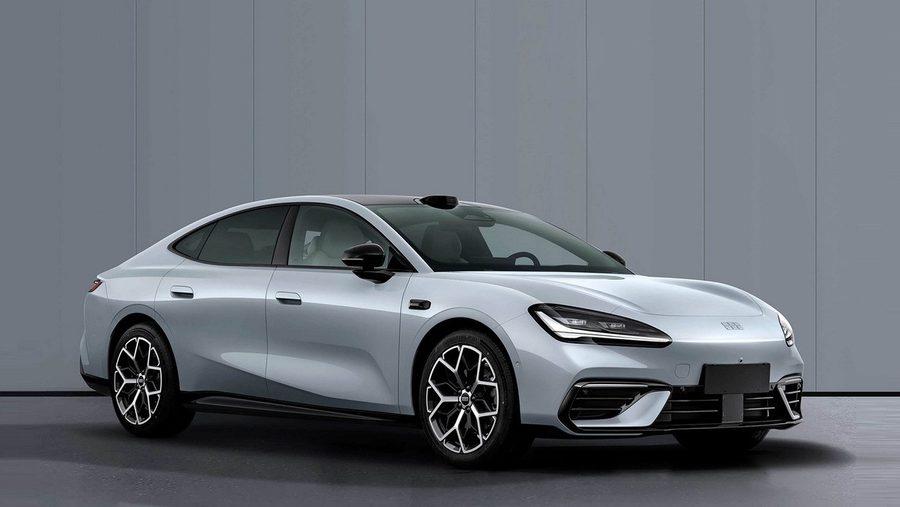
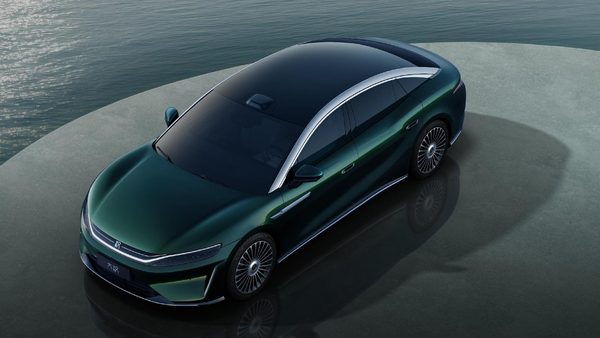
The Geely Galaxy TT is a C-segment electric sports sedan for China, in pre-sale since August 2026 from ¥145,900 ($21,500). It rides on Geely's GEA platform with an 800V architecture, a CATL Shenxing battery and 6C charging. Three rear-drive versions use a 245 kW (333 hp) motor for 540 or 640 km CLTC; the limited Ultra adds a second motor for 578 hp and 650 km.
The Geely Starray EM-i is a plug-in hybrid compact SUV on Geely's GEA architecture, the same platform used by the export-market EX5. A 1.5-litre engine and electric motor combine for 262 hp, with 18.4 kWh or 29.8 kWh battery options and up to 1,055 km of combined range with the tank full.
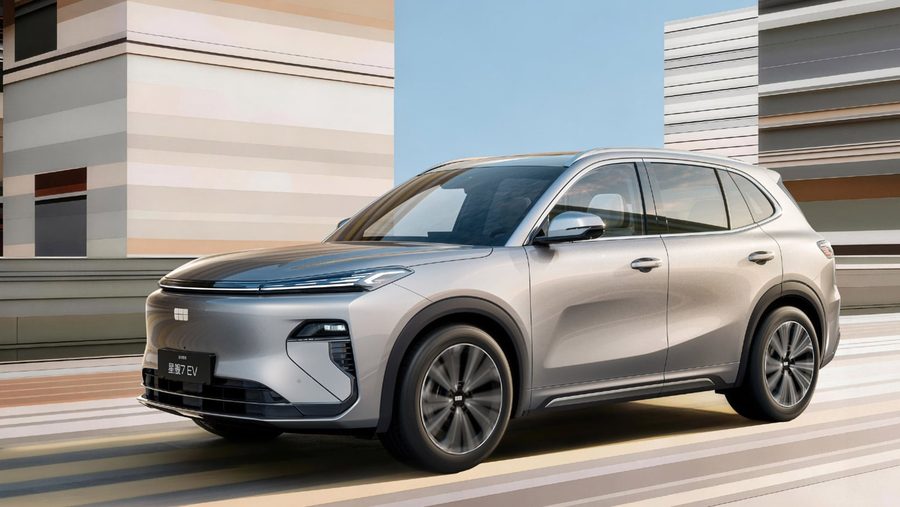
The Geely Galaxy Starship 7 EV is a compact electric SUV launched in China in June 2026, sitting above the Geely EX5 in the Galaxy line. A single 215 hp front motor pairs with two LFP batteries for up to 605 km of CLTC range, on an 800V platform. Prices start from a guide ¥109,800 (~$16,200).
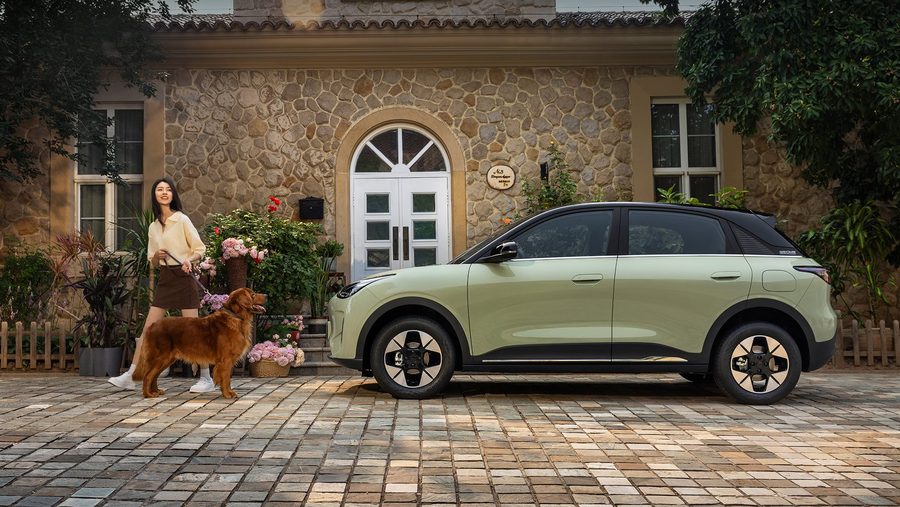
The Geely Xingyuan is a subcompact electric hatchback aimed at China's budget EV market. Two battery options give 310 to 410 km of CLTC range, with a single rear motor of 78 to 114 hp. Prices start from ¥59,800. It is exported as the Geely EX2, which uses larger 35 and 47 kWh batteries and WLTP figures of 249 and 344 km, and opened in the UK from GBP 20,990 in July 2026.
News about Geely
An Conghui, the new chairman of Geely Automobile, told the company's half-year results conference that from 2028 cars from the Geely Auto portfolio will be built at Volvo Cars' European plants. No model has been confirmed, but Geely Auto covers Geely, Zeekr and Lynk & Co, and Ghent is the plant with the electric lines already running.
Proton's e.MAS sub-brand passed 31,504 electrified registrations as of 31 July, the fastest any brand has reached that mark in Malaysian history - 20 months after the e.MAS 7's December 2024 launch. e.MAS now holds 42.6% of Malaysia's EV market, led by the e.MAS 5 hatchback.
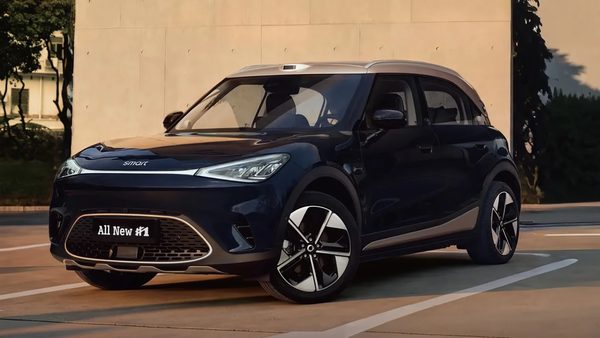
smart relaunched the second-generation #1 in China on August 6, moving the whole range onto an 800V silicon-carbide platform for the first time. The 61.52 kWh LFP battery gives 535 km CLTC range, with 10-80% DC charging in 12 minutes, from ¥149,900 ($22,080).
Explainers
The Volkswagens sold in China are built by two companies, and one of them is Chinese. That arrangement started in 1983 as a condition of entry, and it has since produced badges that exist nowhere else: Jetta, Wuling, and AUDI in block capitals with no rings. Who holds which half, which brands the ventures invented for themselves, and which of the old partnerships have quietly ended.
China's car market runs on a handful of giant groups, each fielding a stack of brands. Here is who owns what - the parent companies, the sub-brands, the Huawei alliance, and why the chart keeps changing.
Market Data
New-energy vehicles took a record 64.4% of China's retail car sales in July 2026, even as NEV retail itself fell 2% year on year - the seventh straight monthly decline. The record came from combustion collapsing faster than EVs are growing.
In May 2026 not a single petrol or diesel model made China's top 10 - the first time combustion cars have vanished from the list. It says less about an EV boom than a fuel-car collapse.
Zhejiang Geely Holding Group is headquartered in Hangzhou, China, and is one of the largest privately-owned automakers in the country. Founded in 1986 as a refrigerator manufacturer, it entered the auto industry in 1997. Key acquisitions: Volvo Cars (2010, from Ford), a 49.9% stake in Malaysia’s Proton and a controlling stake in Lotus (both 2017), and a 50% stake in smart (JV with Mercedes-Benz, 2019).
Geely’s current EV and PHEV models use the GEA platform. The Xingyuan (sold in some markets as the EX2) is the volume entry-level EV on that architecture. Premium EVs are sold under the Zeekr brand; Galaxy covers the mid-market electric range under the main Geely umbrella.
Geely is expanding production into Europe - it has agreed to buy a building at Ford’s Almussafes plant in Valencia, Spain, to produce GEA-platform models alongside affordable Ford EVs on the same architecture.