EV charging time calculator
Charging time, range added and cost for 162 electric cars, worked out from each maker's own battery, range and fast-charge figures. Every result is a band, not one number: real sessions move with the weather, the charger and the battery's temperature.
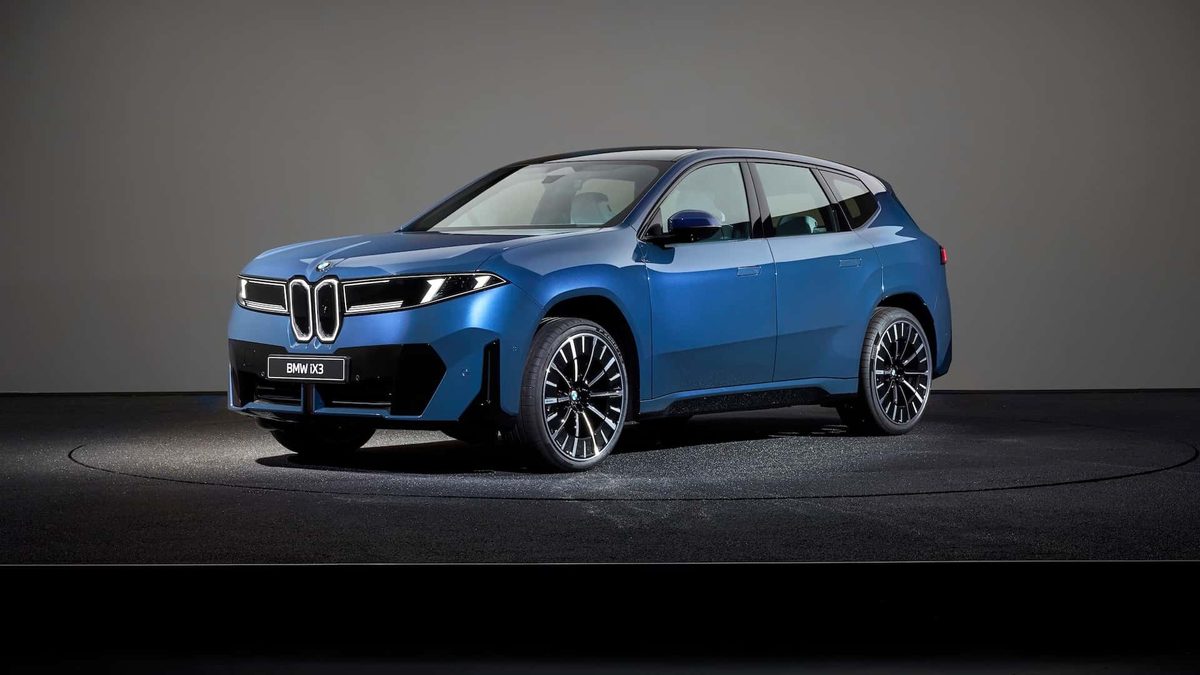
BMW iX3 50 xDrive
108.7 kWh battery · 400 kW peak
27-34 min
Adds 440-490 km
About a meal stop
BMW says 10-80% in about 21 min.
We have not yet confirmed whether the 108.7 kWh figure is gross or usable capacity, so the band covers both.
About $39-$44 at $0.54 per kWh
-
 US average $0.54
 -
 EU average €0.54
 -
 UK price cap £0.79
Charging times for the BMW iX3 50 xDrive
| Charger | 10-80% | Range added |
|---|---|---|
| Home, 7 kW | 11-13 h | 35-45 km per hour |
| Home, 11 kW | 7-8 h | 60-70 km per hour |
| Fast, 150 kW | 27-34 min | 130-190 km per 10 min |
| Fast, 400 kW | 20-24 min | 225-295 km per 10 min |
Where the figures come from
- Battery: 108.7 kWhMaker claim
Source, as of 2026-10-09
- Range: 805 km (WLTP)Maker claim
Source, as of 2026-10-09
- Fast charge: BMW says 10-80% in about 21 min.Maker claim
Source, as of 2026-10-09
- Peak charging power: 400 kWMaker claim
Source, as of 2026-10-09
- Onboard AC charger: 11 kWMaker claim
Source, as of 2026-10-09
- WLTP range to real-world range: x0.78-0.87Estimate
Source, as of 2025-12
Dutch real-world data: cars fell 13% short of WLTP in 2020 and 22% in 2024.
- Mild range: x1, no adjustmentEstimate
Source, as of 2025-12
The test-cycle factor above already describes mild weather (WLTP runs at 23 °C).
- Mild fast-charge time: x1, no adjustmentEstimate
Source, as of 2026-02
No slowdown applied: maker claims assume a warm battery. Real sessions still vary, so every fast-charge time is a band around the claim.
- US average: $0.18 per kWh at home, $0.54 on a public fast chargerMeasured
Home price source, as of 2026-07; Fast-charge price source, as of 2026-06
- EU average: €0.29 per kWh at home, €0.54 on a public fast chargerMeasured
Home price source, as of 2025-12; Fast-charge price source, as of 2026-03
- UK price cap: £0.26 per kWh at home, £0.79 on a public fast chargerMeasured
Home price source, as of 2026-10; Fast-charge price source, as of 2026-09
How we calculate
We fit each maker's fast-charge claim to a typical charging curve, flat to about 50% and tapering above it, so any window and any charger power can be read off the same curve. Range comes from the car's rated figure, scaled to real-world driving by its test cycle and then by the weather, with each factor's source listed above. When a battery figure is not confirmed as gross or usable, the band allows for both, and every result is printed as a band. The estimates are least reliable for range rated on the Chinese CLTC cycle, for very cold sessions where the battery was not warmed before charging, and for anything above 80%, where charging curves differ most between cars.
Questions
How is EV battery charging time calculated?
Charging time is the energy the battery takes in, divided by the power it accepts. The power is not constant: most cars charge near their peak to about 50% and slow down as the battery fills, which is why makers quote 10-80% rather than 0-100%. We fit each maker's own 10-80% claim to that curve, so the BMW iX3, which its maker rates at about 21 minutes from 10% to 80% at up to 400 kW, is estimated at 20-24 minutes on a 400 kW charger in mild weather.
How long does an EV take to charge at home?
Overnight, for most cars. A home wallbox delivers 7 kW on a single-phase supply and 11 kW on three-phase. The BMW iX3, with a 108.7 kWh battery, takes an estimated 11-13 hours from 10% to 80% on 7 kW and 7-8 hours on 11 kW, adding about 35-45 km of range per hour on the slower one.
How long does a 10-80% charge take?
On a fast charger it depends on the car's peak power and the charger's, whichever is lower. The BMW iX3 takes an estimated 20-24 minutes on a 400 kW charger and 27-34 minutes on a 150 kW one in mild weather. In winter the 150 kW figure stretches to 27-45 minutes, the high end being a battery that was not warmed on the way to the charger.
How accurate is an EV charging time calculator?
It is as good as the maker figures it starts from, which is why every result here is a band. A charging session can match a maker's claim on a warm day and take over a quarter longer with a cold battery. Range figures rated on the Chinese CLTC cycle are the least reliable input, because no study measures that cycle against real driving.