 China
China
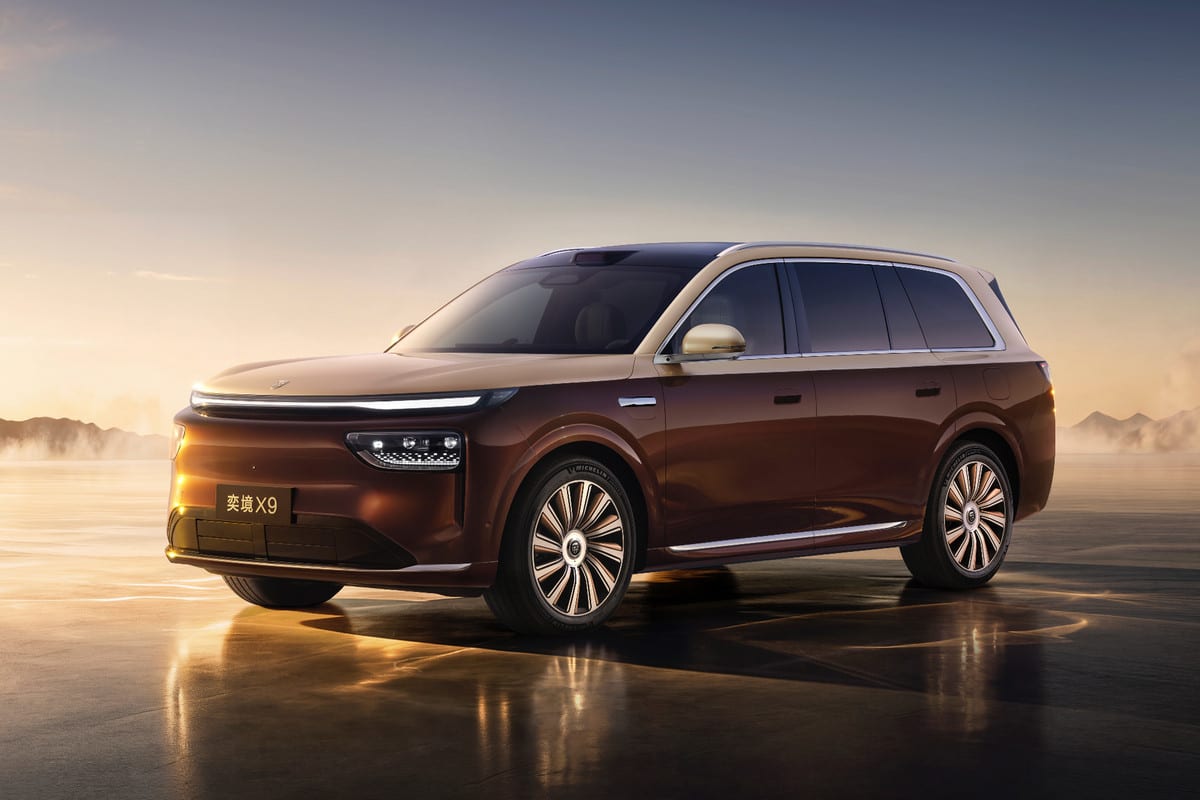
Dongfeng has opened pre-orders in China for the Epicland X9, a full-size six-seat SUV and the first model from a brand it announced in November 2025 at Huawei’s Qiankun ecosystem conference. Epicland has almost no English-language footprint, so the place to start is who is behind the car.
The brand behind the car
Huawei does not build cars, but it now sells its technology to Chinese carmakers in two distinct arrangements. The better known is HIMA, the alliance that produced AITO, Luxeed, Stelato and Maextro, where Huawei helps define the product and sells the finished car through its own retail network. Epicland belongs to the other kind: a Qiankun partnership, announced alongside a similar brand set up with GAC, in which the carmaker leads product decisions and Huawei supplies the systems underneath.
In practice that means Dongfeng owns the brand, engineers the vehicle and builds it, at a rebuilt plant in the Chengdu Economic and Technological Development Zone where the first production X9 came off the line on 20 July. Huawei supplies the Qiankun ADS driver assistance, the HarmonyOS cabin software, the audio and the chassis control electronics.
An extended-range car, not a plug-in hybrid
The X9 is sold in one powertrain form. It is an extended-range electric vehicle, which means the wheels are driven only by electric motors and the 1.5-litre turbocharged petrol engine, rated at 95 kW, works purely as a generator. That is the difference from a plug-in hybrid, where the engine can also drive the wheels directly.
All three versions share a 74.29 kWh lithium-iron-phosphate battery from CATL on an 800-volt system. The rear-drive Max Long Range has a single 300 kW (402 hp) motor and 465 km of battery-only range on China’s CLTC cycle. The two all-wheel-drive Ultra+ versions add a front motor for 420 kW (563 hp) and 760 Nm, reach 100 km/h in 5.1 seconds and cover 432 km on the same cycle. Epicland quotes more than 1,500 km combined from a full battery and the 50-litre tank, and a 20 to 80 percent charge in about ten minutes.
What comes as standard
The car is 5,301 mm long on a 3,120 mm wheelbase, with six individual seats in three rows. Double-chamber air suspension with 90 mm of travel, rear-wheel steering of up to seven degrees each way for a 5.3-metre turning circle, the HarmonyOS cabin and Huawei’s 896-line lidar are all fitted to the cheapest version. The Ultra+ trims move up to the four-lidar Qiankun ADS 5 Max sensor set and add a 21.4-inch screen in the roof for the second row. The dashboard is a pair of linked 17.2-inch 3.4K displays running HarmonySpace 6, with a head-up display Huawei quotes as a 75-inch projected image and 21 speakers.
Pre-sale prices are 299,800 yuan ($44,200), 339,800 yuan ($50,100) and 379,800 yuan ($56,000). Epicland reported 16,217 pre-orders in the first 12 hours. These are pre-sale figures rather than the final price list, which arrives with the launch in the third quarter of 2026.