🇨🇳

Car News from China

The world's largest car market, run by about a dozen groups that each sell under several badges at once.

95 articles · 44 brands

This page collects news about the Chinese car industry: model launches, plants, exports and ownership. Start with the size of it. About 31 million vehicles were sold in China in 2024 and almost all of them were built there, in regions that have each specialised: Shanghai and Hefei around electric assembly, Shenzhen around BYD and the electronics supply base it grew out of, Changchun and Chongqing around the older state groups. What reordered the industry, though, was the supply chain rather than the cars. China refines most of the world’s battery-grade lithium and graphite, and CATL alone accounts for more than a third of the electric-car batteries fitted anywhere. Product cycles run off that base: a new model can go from sign-off to showroom in around 18 months, roughly half what the same job takes in Europe, and the domestic price war that opened in 2023 has kept the pace there. Two dates mark the result. China passed Japan as the world’s largest vehicle exporter in 2023, and new energy vehicles took more than half of monthly retail sales for the first time in July 2024.

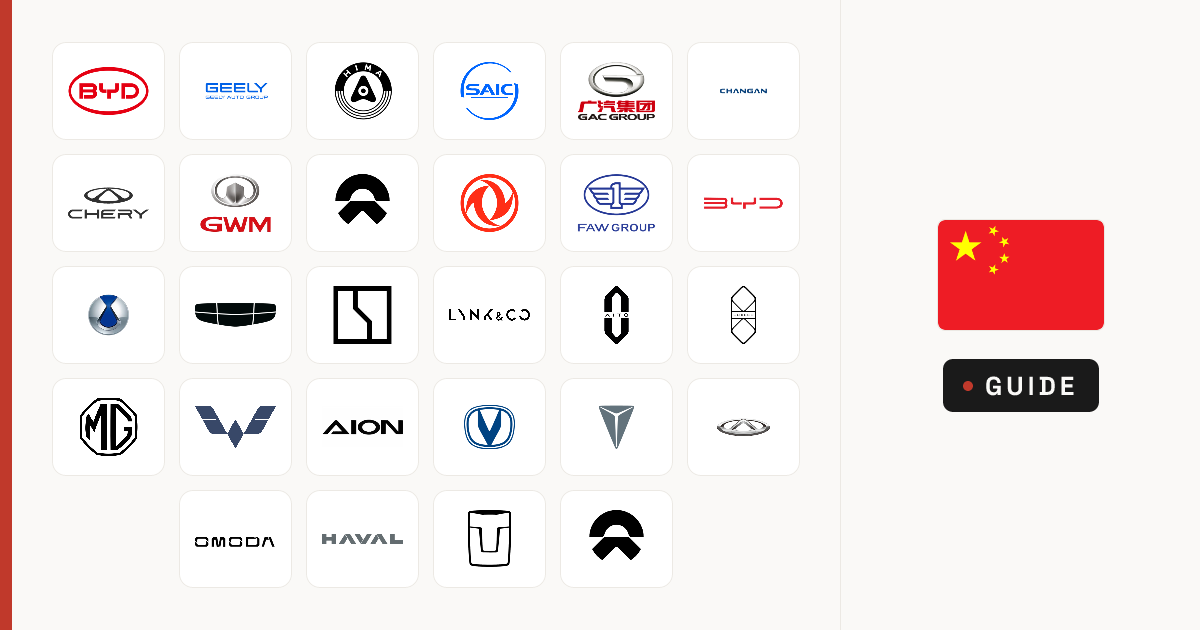
Ownership is a short list sitting behind a long one. Roughly a dozen groups run those two dozen badges as ladders: BYD sells its Dynasty and Ocean lines under its own name with Denza, Fangchengbao and Yangwang above them, Geely Holding reaches from Geely and Zeekr at home to Volvo, Polestar and Lotus in Europe, and Chery fronts export markets with Omoda, Jaecoo and Lepas while keeping Jetour and Exeed for China. Five of the largest owners, SAIC, FAW, Dongfeng, Changan and GAC, are state enterprises; the rest are private. Huawei belongs in neither column, since its HIMA brands, AITO, Luxeed, Stelato and Maextro, are an alliance in which the partner carmaker builds the vehicle and Huawei supplies the software, electronics and showrooms. The full map of parents and sub-brands is in China’s car brands, explained.


Brands

View all 44 brands →

Factories

Market Data

Explainers

Joint-venture car brands in China

The Volkswagens sold in China are built by two companies, and one of them is Chinese. That arrangement started in 1983 as a condition of entry, and it has since produced badges that exist nowhere else: Jetta, Wuling, and AUDI in block capitals with no rings. Who holds which half, which brands the ventures invented for themselves, and which of the old partnerships have quietly ended.
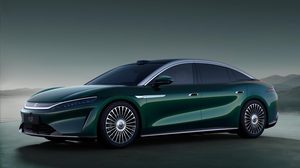
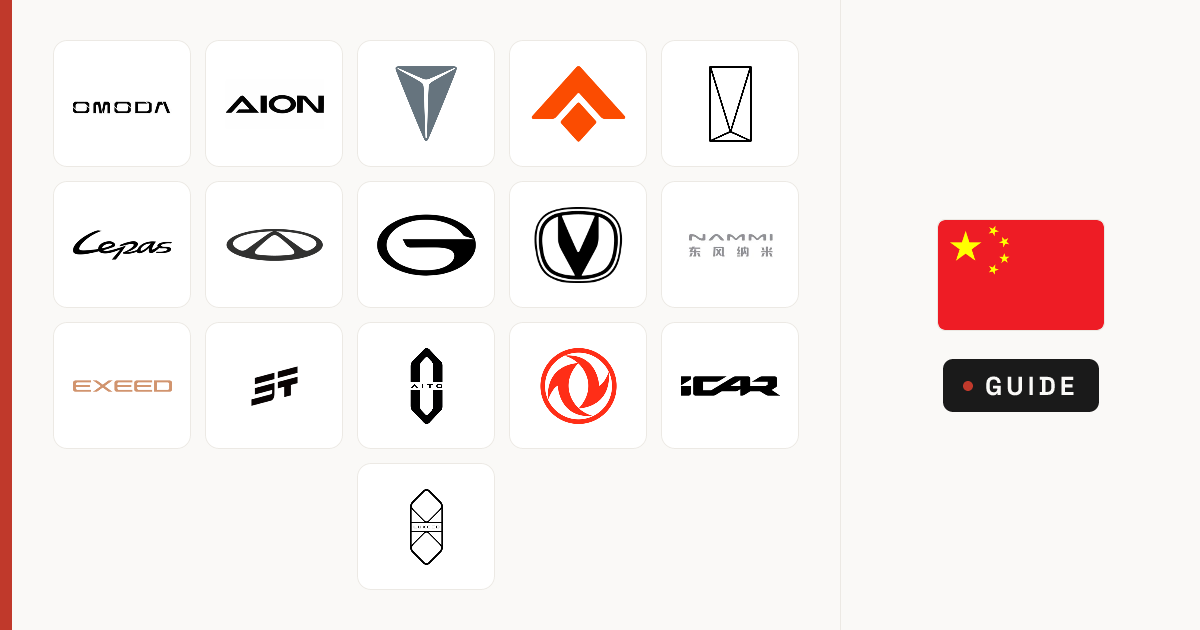
Who makes Aion, Jaecoo and Deepal: China's export badges explained

Aion is GAC, Jaecoo and Omoda are Chery, Deepal is Changan, Nammi is Dongfeng. Ten Chinese brands whose names do not carry the parent company, grouped by how each one relates to its owner: brands sold only outside China, recent badges on long-established state groups, brands two levels below the group, and one that Huawei supplies but does not own.

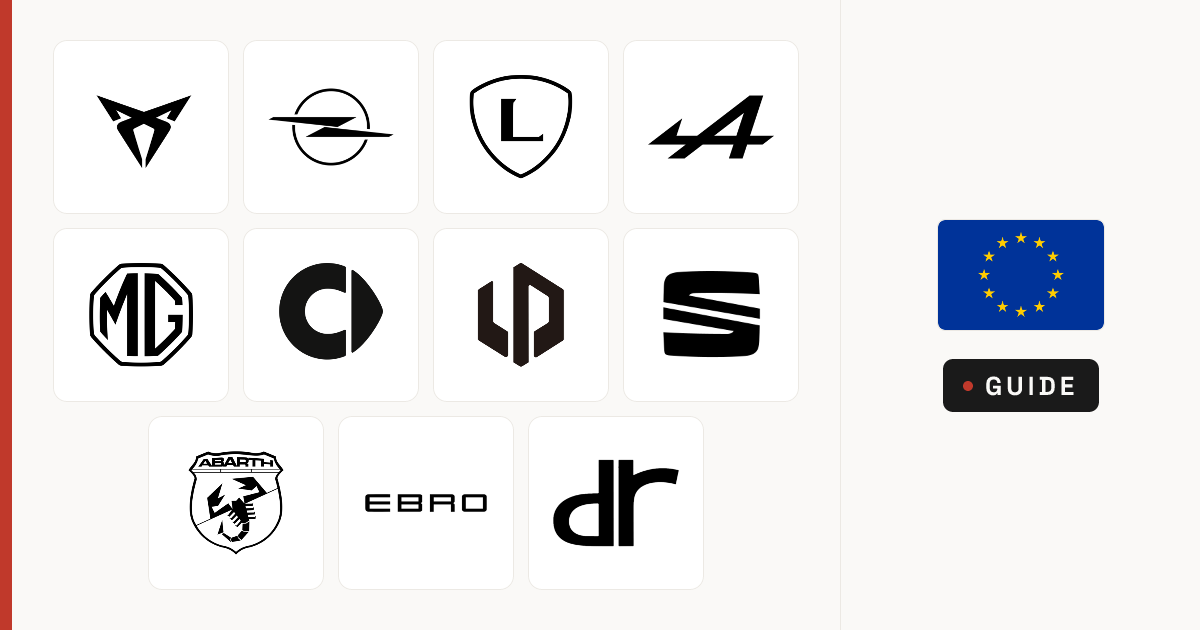
European car brands where the badge and the owner disagree

Twelve European badges whose nationality does not match their ownership: Cupra, Vauxhall, DS, Opel, Lancia, Alpine, Abarth, MG, Ebro, DR Automobiles, smart and Leapmotor. Some are Spanish or British names owned in Germany or the Netherlands, some are revived badges on Chinese hardware, and several are assembled in a third country again.

Europe's Car Brands: The Ownership Structure

Most European badges trace back to about five mega-groups - Volkswagen, Stellantis, BMW, Mercedes-Benz and Renault. But several beloved European brands are now owned abroad, in China, India and the UAE, and a few Chinese and joint-venture names now sell under European flags. Here is who owns what in 2026.

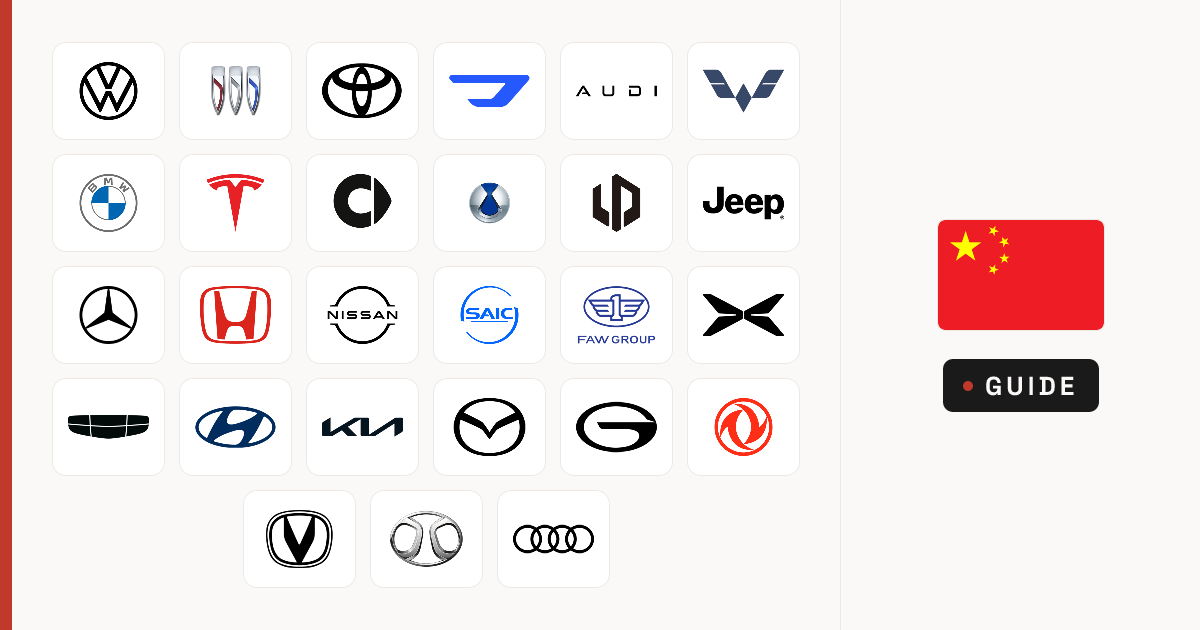
China's Car Brands: Explained

China's car market runs on a handful of giant groups, each fielding a stack of brands. Here is who owns what - the parent companies, the sub-brands, the Huawei alliance, and why the chart keeps changing.

Frequently asked questions
What does NEV mean in China?
New energy vehicle. The Chinese regulatory category covers battery-electric, plug-in hybrid, range-extender and fuel-cell cars, and it is what qualifies a vehicle for a green licence plate and the purchase incentives attached to it. Conventional hybrids without a plug are excluded, which is why a Toyota Prius counts as an ordinary petrol car in Chinese statistics.
Why do Chinese carmakers launch so many brands?
Because a badge is cheaper than a company. A group that already has an engineering base and a supplier network can open a new brand to reach a different price bracket, a different age group or a different sales channel without building anything new underneath it. Most of these sub-brands share platforms, batteries and software with their parent.
Which Chinese carmaker sells the most cars?
BYD, by a wide margin. It sold 4.27 million vehicles in 2024, and it makes its own batteries and semiconductors rather than buying them in. Geely and Chery follow, with Chery the largest exporter of the three.
Are Chinese car companies owned by the state?
Some are. SAIC, FAW, Dongfeng, Changan and GAC are state-owned enterprises, which is what gave them the capital and the political standing to run several joint ventures with foreign automakers at once. BYD, Geely, Great Wall and the newer technology-led makers are privately held. Chery moved to a mixed-ownership structure in 2025.
News about China

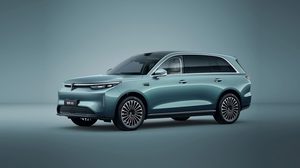
Denza reveals the N8, a 1,003 km five-seat EV

Denza has detailed the N8, a five-seat electric SUV that shares its 3,075 mm wheelbase with the six-seat N8L. Chinese filings list two Blade Battery packs and CLTC range from 800 km to 1,003 km, with a tri-motor version making 890 kW (1,194 hp). The interior drops the instrument cluster for a 1.1-metre projection strip and a 30-inch screen. No prices yet.

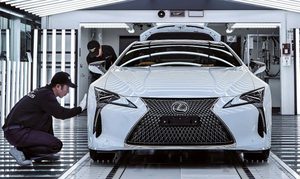
Lexus gets its first China plant, and Toyota owns all of it

Toyota is finishing a Lexus factory in Shanghai's Jinshan district, the brand's first production site in China and the first Japanese-owned car plant in the country with no local joint-venture partner. Investment is 14.6 billion yuan ($2.02 billion), capacity around 100,000 cars a year, and production starts in the second half of 2027.

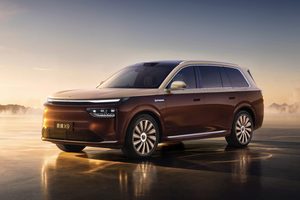
Epicland X9: Dongfeng and Huawei open pre-orders

Dongfeng has opened pre-orders in China for the Epicland X9, the first car from a brand it set up with Huawei in November 2025. The full-size six-seat SUV is sold only as an extended-range electric vehicle, with a 74.29 kWh CATL battery on an 800 V system and prices from 299,800 to 379,800 yuan ($44,200 to $56,000). Sales start in the third quarter.

Jeep returns to building cars in China

Stellantis and Dongfeng have registered Dongfeng Stellantis Automotive Technology, a company with 8.2 billion yuan ($1.2 billion) of capital that will develop two electrified Jeeps and two Peugeots. They are built at DPCA's Wuhan plant from 2027, and the Jeeps are meant for export.

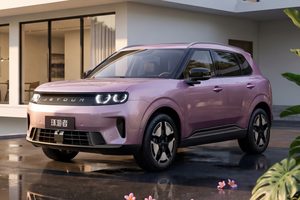
Jetour's first electric SUV opens blind orders

Jetour has opened refundable blind orders in China for the Tourer, the first battery-electric car from Chery's SUV and MPV brand. A certification filing lists a 200 kW rear-drive version and a 275 kW dual-motor version; the battery capacity, the range and the prices are all still unpublished. Sales start in the fourth quarter of 2026.

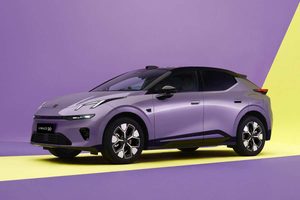
Lynk & Co 20 gets 800V and 12-minute charging

Lynk & Co has updated its compact electric SUV for China, dropped the Z from the name and moved the car to an 800-volt architecture with 6C charging, which the company rates at 10 to 80% in 12 minutes. Lidar and the Qianli Haohan H5 assisted-driving system are standard on every version. Prices have not been announced.

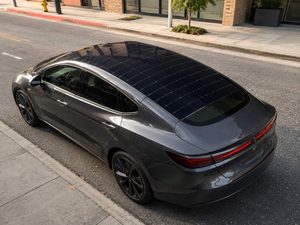
Fuyao's solar roof is ready for production

Fuyao has solar cells laminated inside panoramic roof glass and says it can mass-produce it. What the roof actually delivers is harder to pin down: the company has published no specification sheet, and the 720 W figure attached to it by Chinese media has been confirmed by nobody.

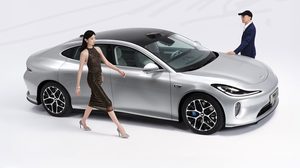
IM L6 gets a Jimmy Choo edition, 1,000 cars

IM Motors opened pre-sales of the new L6 with a limited edition designed with Jimmy Choo, priced at ¥244,900 to ¥259,900 ($36,300 to $38,500) and capped at 1,000 cars. The blue is taken from a pair of satin shoes Choo made for Princess Diana in 1997. Nothing under the skin changes.

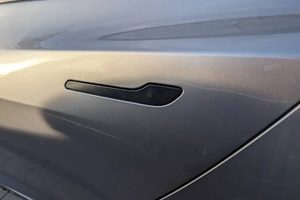
China orders record recall over door handles

China's market regulator has ordered nearly 4.3 million vehicles from 11 manufacturers back for a fix, the largest recall in the country's history. The fault is the emergency door release inside the cabin, which occupants and rescuers may not find after a crash cuts the power. Tesla accounts for about 2.98 million cars.

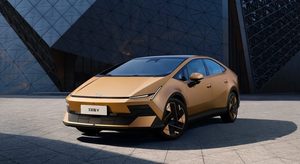
Hyundai's Ioniq V opens pre-sales at $17,700

Beijing Hyundai opened Chinese pre-orders on the Ioniq V in three trims, from 119,900 to 139,900 yuan ($17,700 to $20,600), with CLTC range of 540 or 650 km from CATL LFP packs on an 800-volt E-GMP platform. Sales start in September. The driver-assistance system was developed with Momenta, and the infotainment runs AI models from Baidu and ByteDance.

MG 07 launches at $16,100, under pre-sale

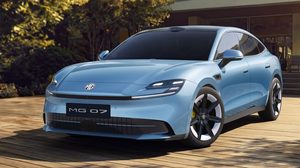
MG set official prices for the 07 at ¥108,900 to ¥159,900 ($16,100 to $23,600), and every electric trim came in below the pre-sale figure quoted in July - ¥9,000 off the 67 kWh cars and ¥6,000 off the 91 kWh cars. Two plug-in hybrids join below them, with 245 km of electric range rather than the 185 km shown earlier.

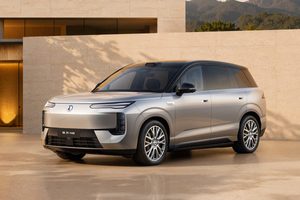
GAC Aion Ray 7: a new badge and Huawei hardware

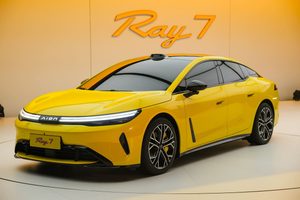
GAC Aion has unveiled the Ray 7, the first car in its new Ray line and the first to wear the brand's redesigned logo. The rear-drive electric fastback runs a 180 kW Huawei DriveONE motor, quotes 700 km of CLTC range, and takes its lidar, its brakes and much of its driver assistance stack from Huawei and WeRide. Prices have not been announced.

BYD's Qin Max lands 48 hours after the Seal 06

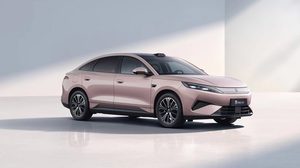
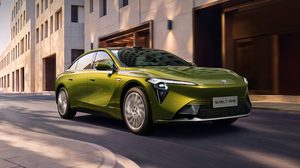
BYD put the Qin Max on sale in China on 13 August at ¥99,900 to ¥143,900 ($14,700 to $21,200), two days after launching the 2027 Seal 06 at ¥99,900 to ¥155,900. The two sedans share a 2,820 mm wheelbase, the same DM-i and EV powertrains and the same second-generation Blade battery, and their bodies are 4 mm apart in length. What separates them is the dealer network.

Freelander 8 opens pre-sales from 339,900 yuan

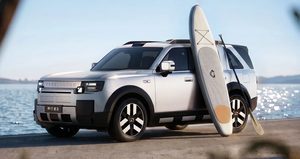
Chery Jaguar Land Rover priced its first Freelander-badged model from 339,900 yuan (about $50,100), rising to 429,900 yuan for the top six-seater. The venture had publicly aimed at the 300,000 yuan segment, and the entry car lands 13 percent above that target.

Wey V8X launches in China from 239,800 yuan

Great Wall's premium brand put its five-seat flagship SUV on sale in five trims from 239,800 yuan (about $35,300). The V8X is a plug-in hybrid, but certified electric-only range spans 258 km to 402 km across the lineup, so which trim you buy changes the car more than the badge suggests.

Avatr fitted an 896-channel lidar to its new SUV and still starts it at $32,380

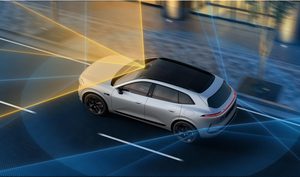
Avatr launched the 07L, a five-seat electric SUV, in China on 8 August at 229,900 yuan ($32,380). An 89.33 kWh CATL Shenxing pack claims up to 725 km CLTC, and Huawei's ADS 5 driver assistance is standard, fed by a roof-mounted 896-channel lidar Avatr says resolves a 14 cm object at 120 m.

Buick's Chinese electric sedan costs $25,190 after subsidy - and $28,910 without one

SAIC-GM opened pre-sales on the Buick Electra L7, a rear-drive electric sedan, at 169,900, 186,900 and 206,900 yuan after subsidy - or 194,900, 211,900 and 231,900 yuan at list. It claims 378 hp, over 700 km CLTC range and 450 km added in 10 minutes of fast charging.

BYD's Da Han flagship claims 1,008 km of range

BYD has released official images and filed specifications for the Da Han, a 5,256 mm sedan that becomes the first D-segment car in its Dynasty line. The rear-drive version claims 1,008 km on the CLTC cycle from a 102.3 kWh LFP Blade pack. It debuts at the Chengdu Auto Show on 21 August. No price has been announced.

CALB overhauls battery quality after GAC Aion S cell failures

CALB, China's third-largest battery maker, has launched a manufacturing quality overhaul after a 177 Ah LFP cell it supplied swelled into a curved "banana" shape and lost power in about 213,000 high-mileage Aion S Plus, Charming 580, and Max sedans built 2022-2023. GAC Aion extended the affected cars' battery warranty to 8 years or 300,000 km rather than issue a recall.

Denza says its new Z9S goes 1,100 km. Here's what that number is measuring

Denza opened pre-orders on the Z9S electric sedan from ¥319,800 ($47,100), claiming up to 1,100 km of CLTC range on the top trim - which it calls the longest of any mass-produced electric car. A tri-motor Performance version makes 1,194 hp and does 0-100 km/h in 2.68 seconds.

Search