Hydrogen

Hydrogen Cars Cars: News & Models

Fuel-cell cars: an electric drivetrain fed by compressed hydrogen instead of a large battery, refuelled in minutes wherever a station exists.

1 article · 1 model

A fuel cell is a chemical plant the size of an engine. Hydrogen from the tanks meets oxygen from the air across a membrane, and the reaction produces electricity, heat and water vapour. Nothing burns and there are no pistons. The electricity goes to an electric motor, so a fuel-cell car drives like a battery-electric one: instant torque, one gear, regenerative braking. A small battery sits between the stack and the motor to catch that regen and to cover the moments when the driver asks for more power than the stack can deliver quickly.

What changes is the refuelling. Hydrogen is stored as a compressed gas, usually at 700 bar, in tanks wound from carbon fibre because no reasonable thickness of steel would do the job at that pressure and weight. The BMW iX5 Hydrogen carries seven of them under the floor, holding at least 7 kg between them, and BMW quotes a full refill in under five minutes. That is the case for the technology in one sentence, and it is why fuel cells keep being proposed for the vehicles a charging stop hurts most: long-distance trucks, buses on fixed routes, and large heavy cars.

Two things have kept the segment small. One is the station network, which exists in useful density in Japan, South Korea, California and parts of Germany, and barely at all elsewhere; a fuel-cell car outside that footprint is unusable in a way a battery car never quite is. The other is the hydrogen itself. Most of what is produced today comes from natural gas, and the emissions saved at the exhaust are spent at the reformer instead. Hydrogen made by electrolysis from renewable electricity changes that arithmetic, and is a much smaller share of supply than the marketing around it suggests.

Models

Coming Soon

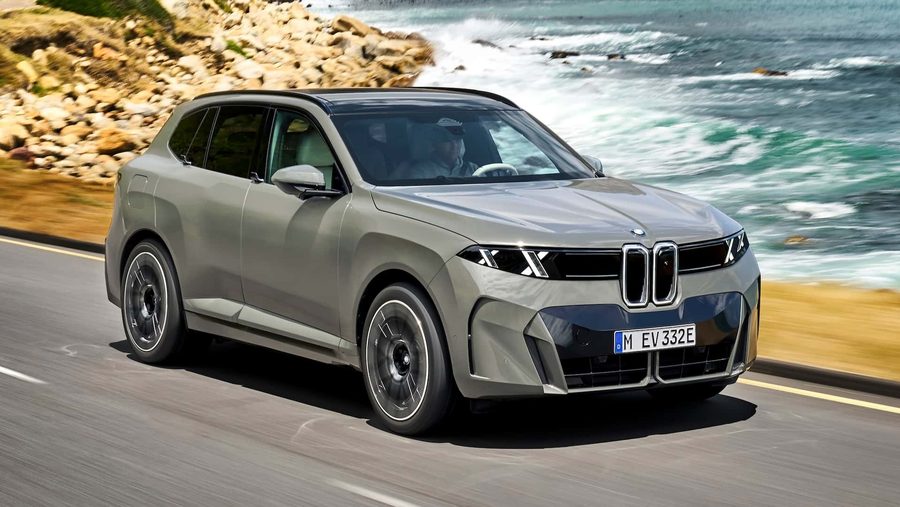
The BMW iX5 60 xDrive is the battery-electric version of the fifth-generation X5, with a 141 kWh pack, up to 845 km of WLTP range, 570 hp and 460 kW peak charging that adds 274 km of range in 10 minutes. A hydrogen fuel-cell iX5, developed with Toyota and storing at least 7 kg of hydrogen in seven 700-bar tanks, enters series production in 2028.

570 hp 845 km WLTP AWD
Frequently asked questions
How does a hydrogen fuel-cell car work?
A fuel cell combines hydrogen from the tanks with oxygen from the air to produce electricity, water and heat. That electricity drives an electric motor, so the car accelerates and brakes like any other EV. A small buffer battery sits alongside the stack to absorb regenerative braking and cover peak demand, because a fuel cell responds more slowly than a battery does.
Is a hydrogen car the same as an electric car?
In the drivetrain, yes: both are driven by electric motors and neither burns anything. The difference is where the energy is stored. A battery-electric car carries it in cells that take between twenty minutes and a night to refill. A fuel-cell car carries it as compressed gas and refills in about the time a petrol car does, but only at a hydrogen station.
How long does it take to refuel a hydrogen car?
Under five minutes for a passenger car, which is the one clear advantage over fast-charging a battery. The tanks are filled at 700 bar, and the pump handles the pressure and the cooling; the driver's part of it looks much like filling a petrol tank.
Why are there so few hydrogen cars?
The stations, mostly. A fuel-cell car is useless outside range of one, and the networks are small and concentrated in a handful of countries. The hydrogen itself is a second constraint: most of it is currently made from natural gas, which undercuts the case for the car unless the supply is made from renewable electricity.
Is a fuel-cell car the same as a hydrogen combustion engine?
No. A fuel cell generates electricity and has no pistons. A hydrogen combustion engine burns hydrogen in a conventional piston engine, which is mechanically closer to a petrol car and less efficient than a fuel cell. Both run on hydrogen; only one is an electric car.
Search