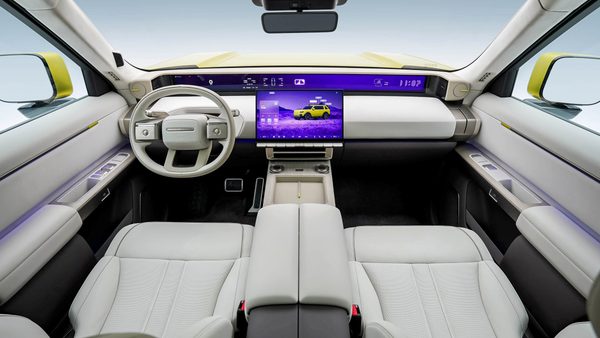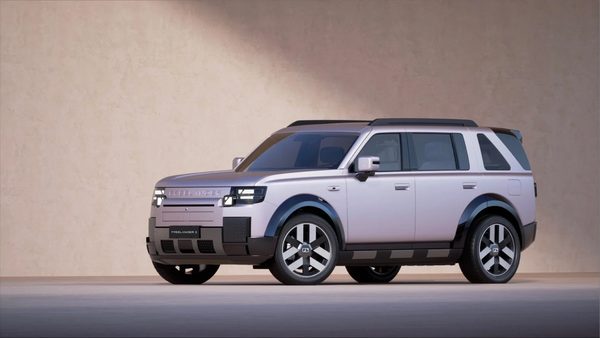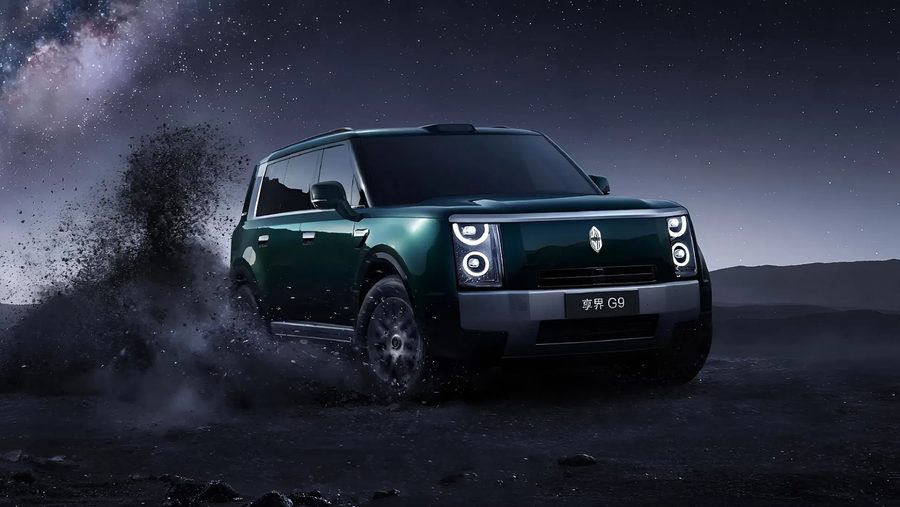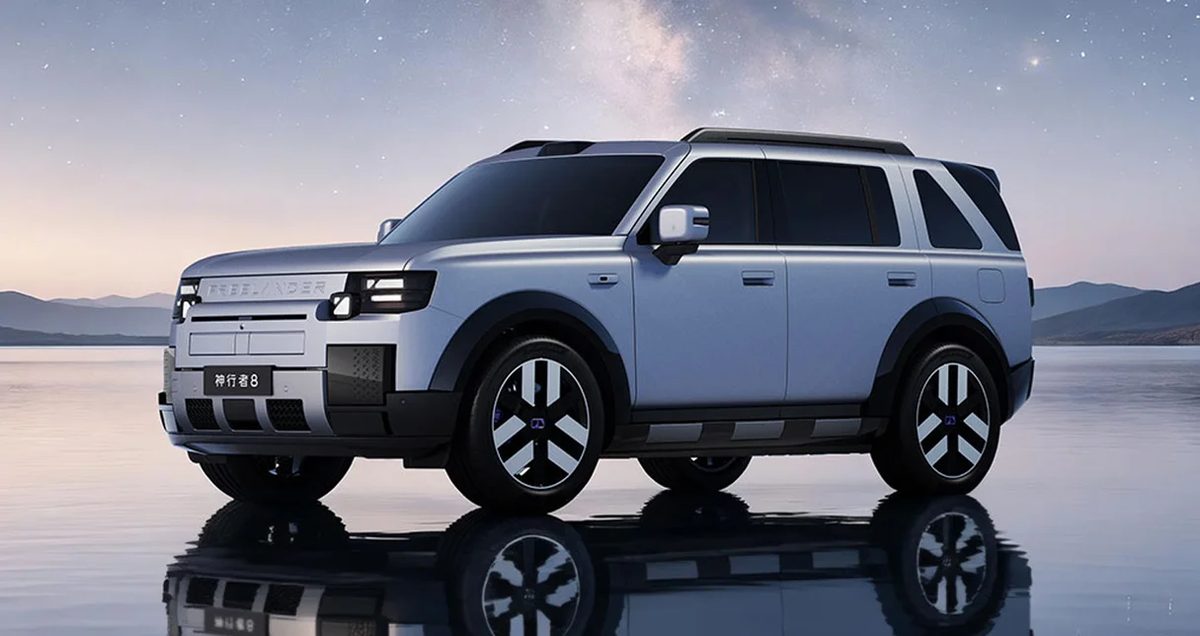

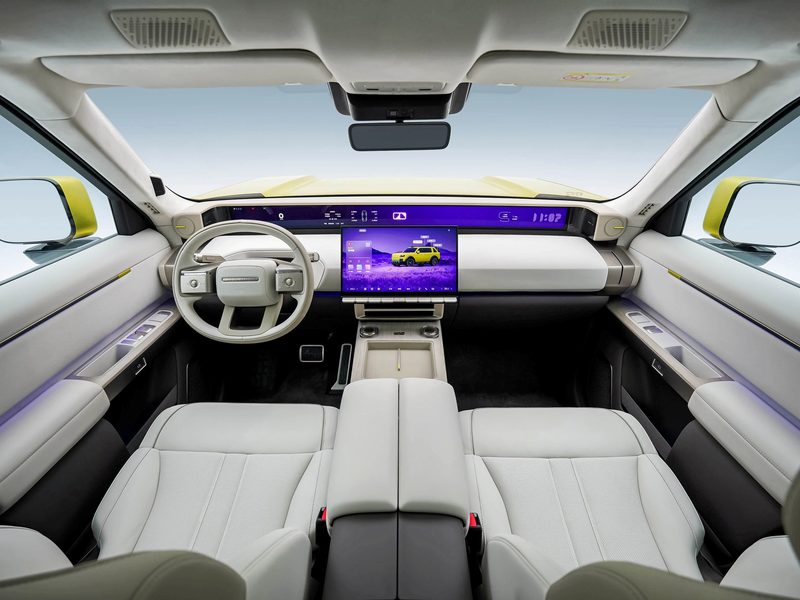
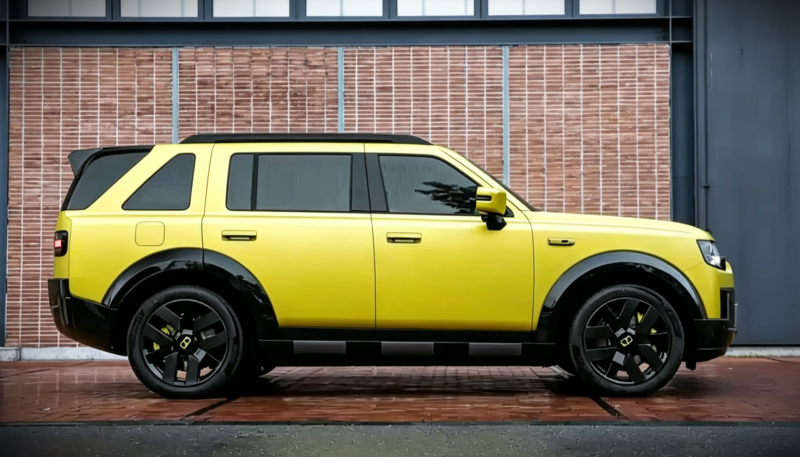
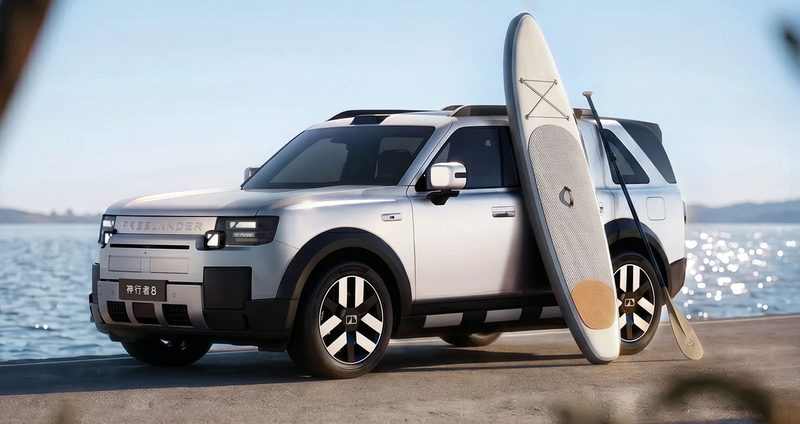
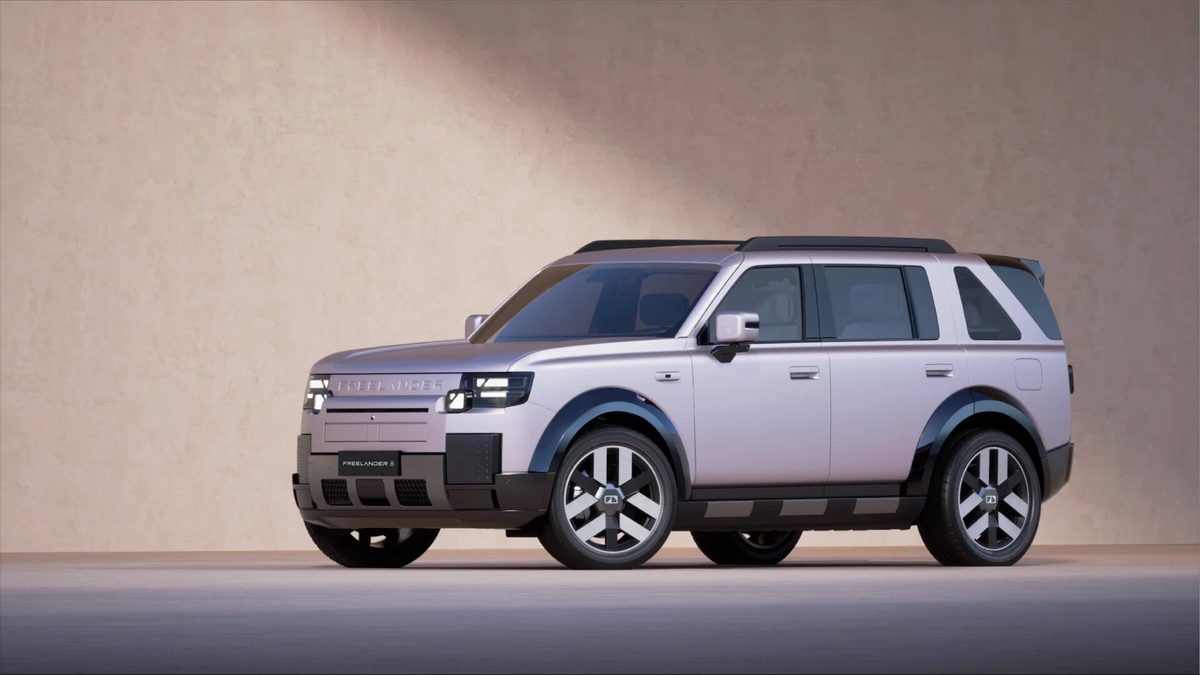
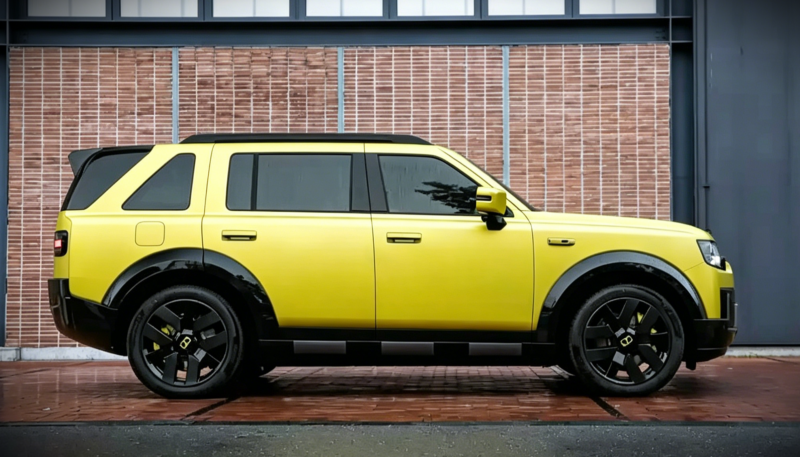
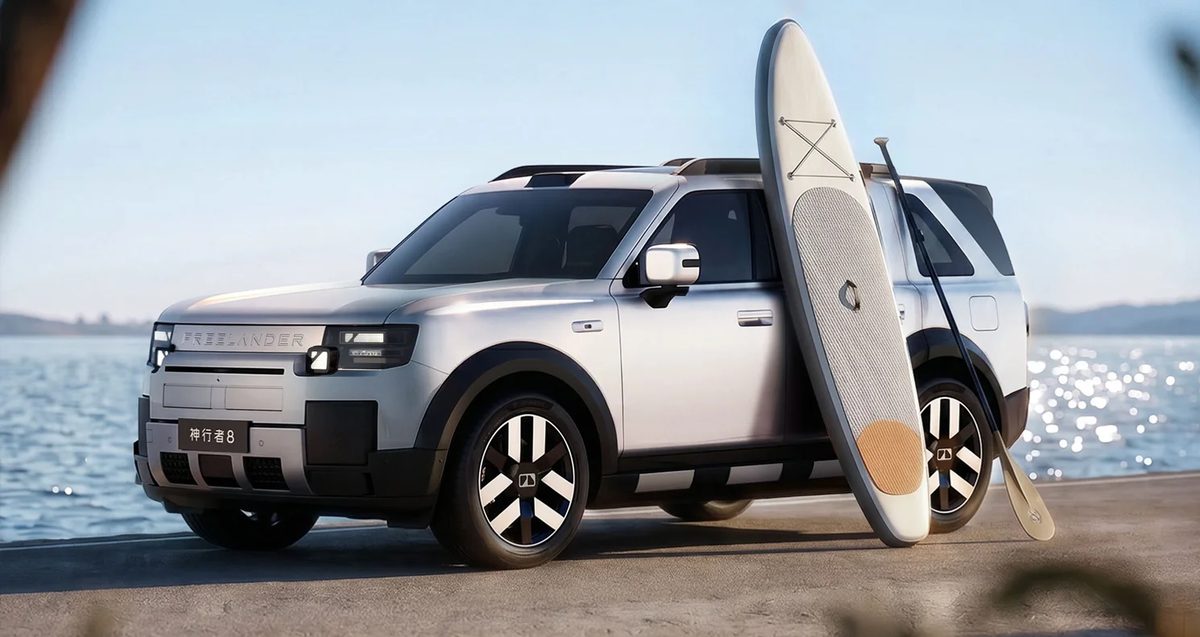
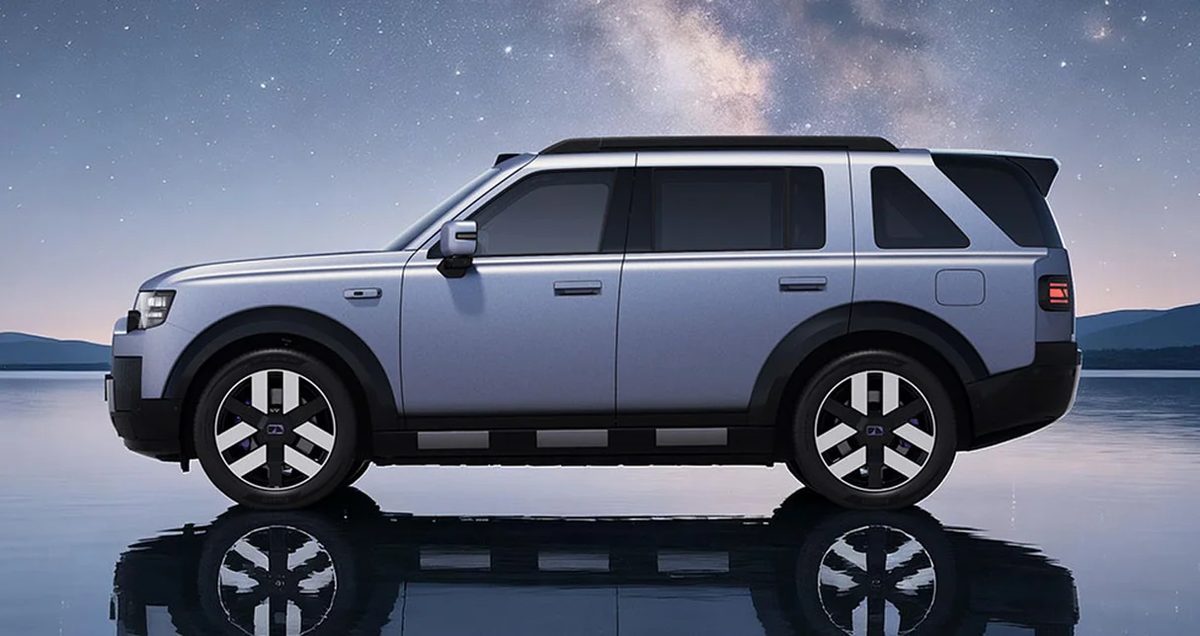
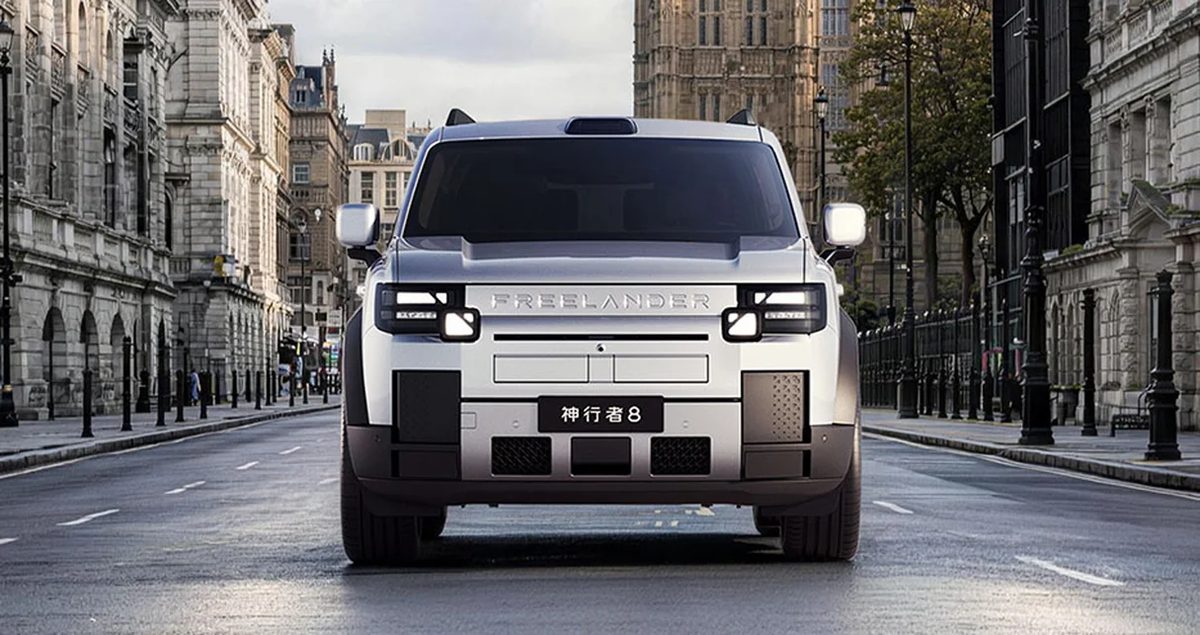
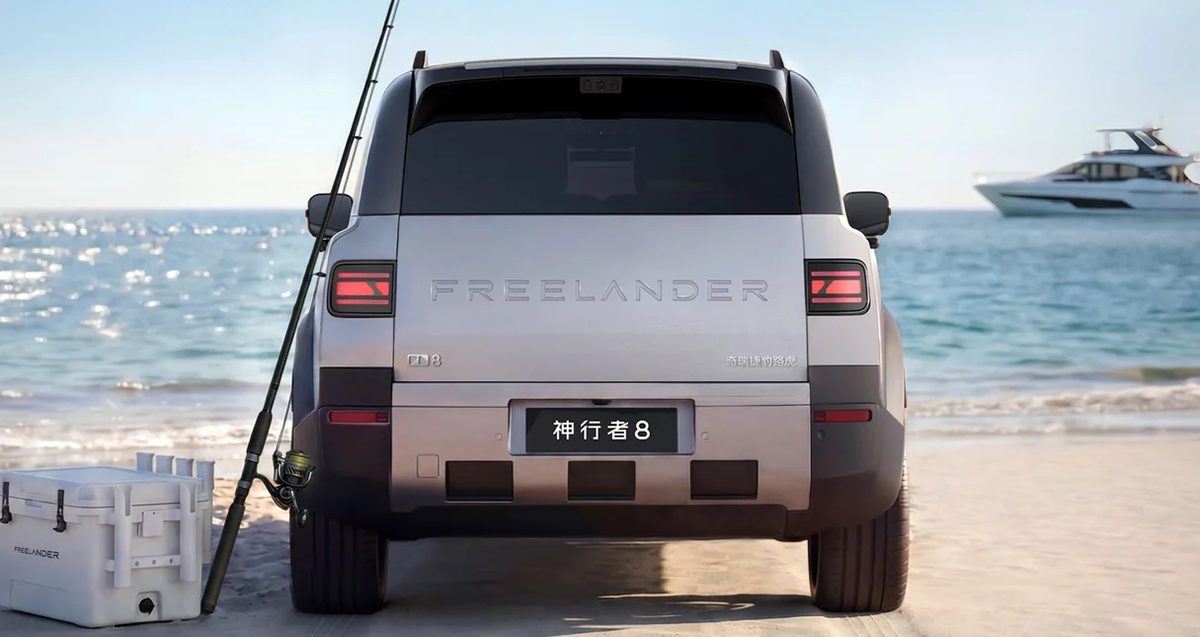
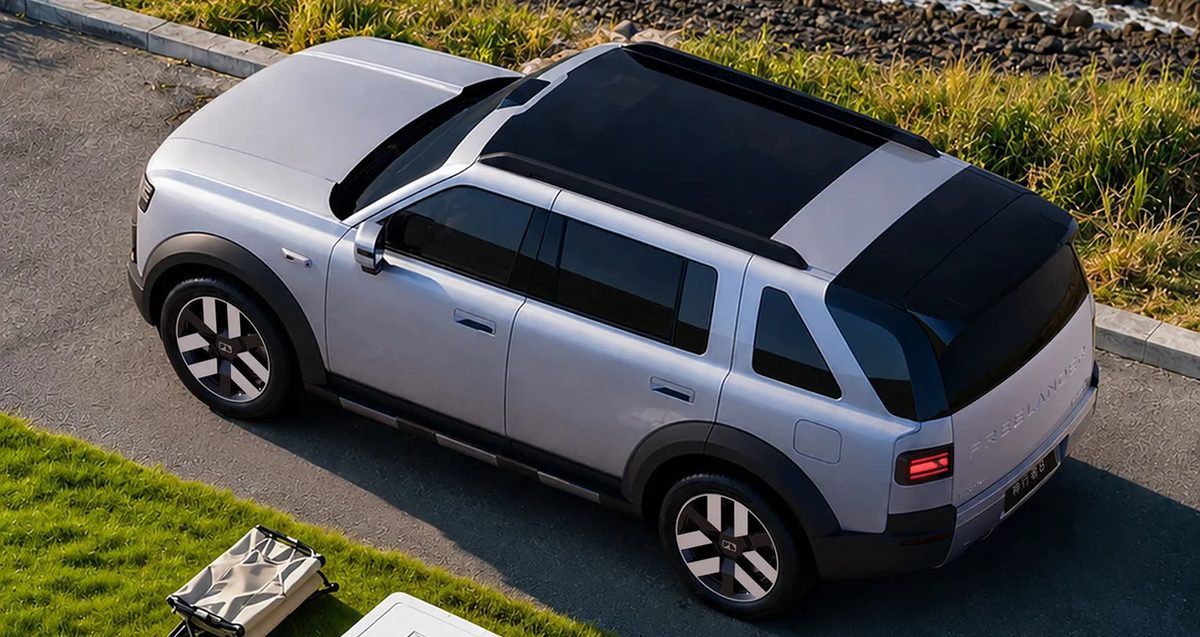
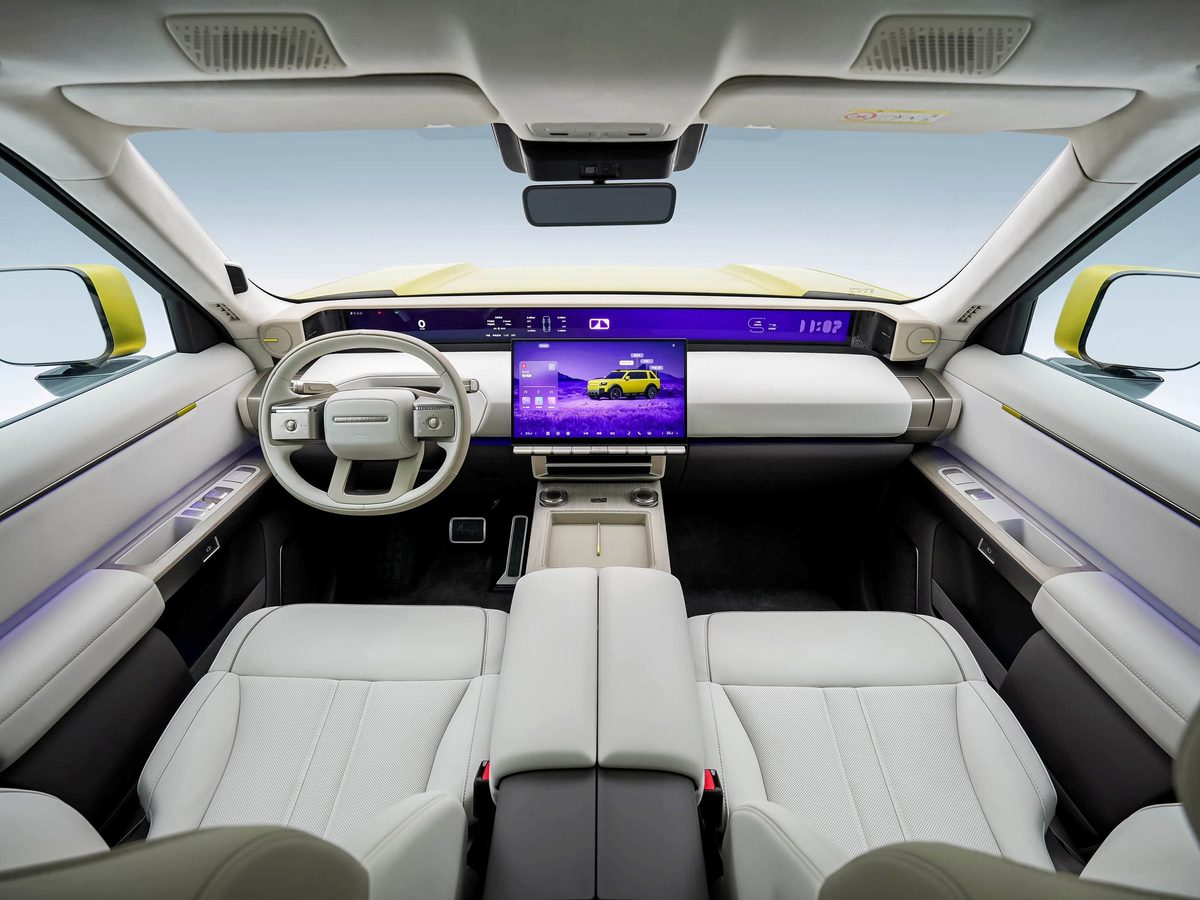
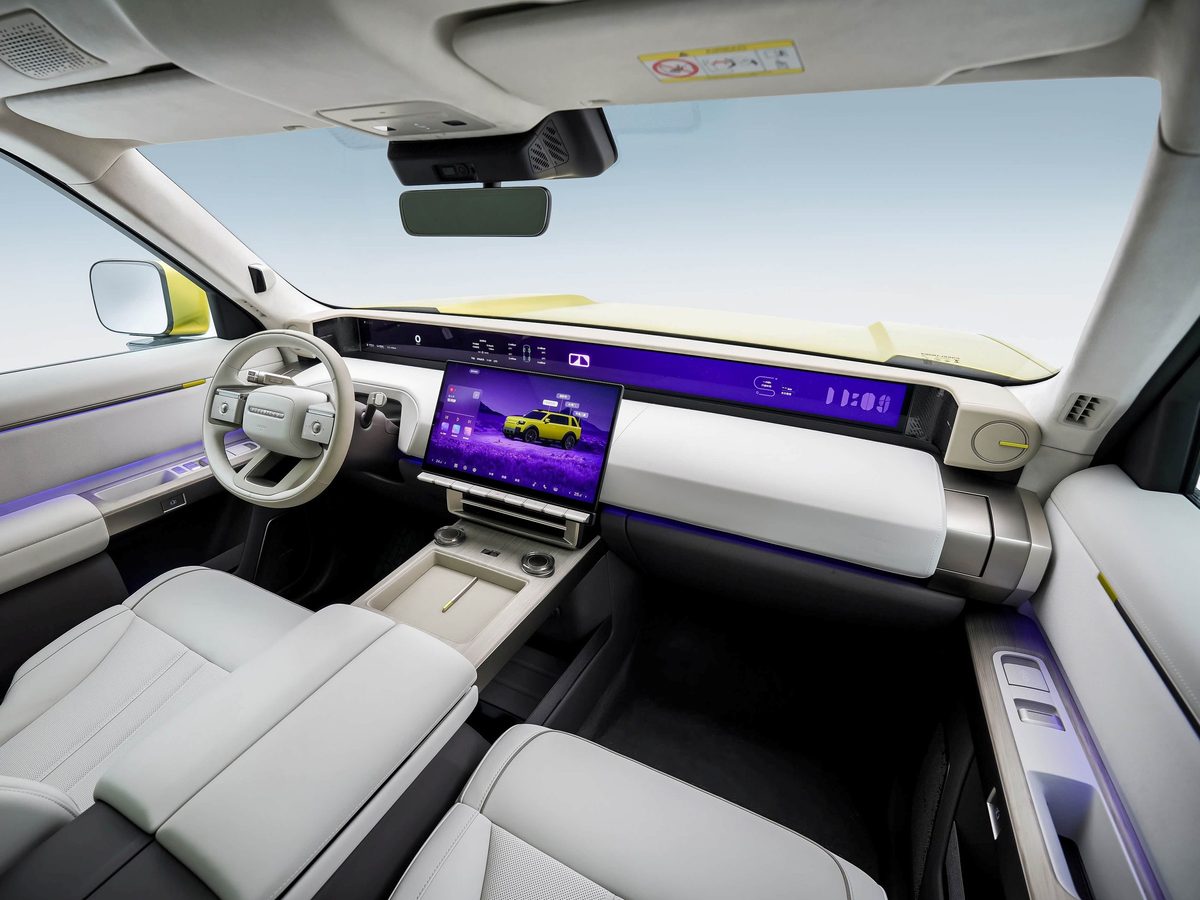
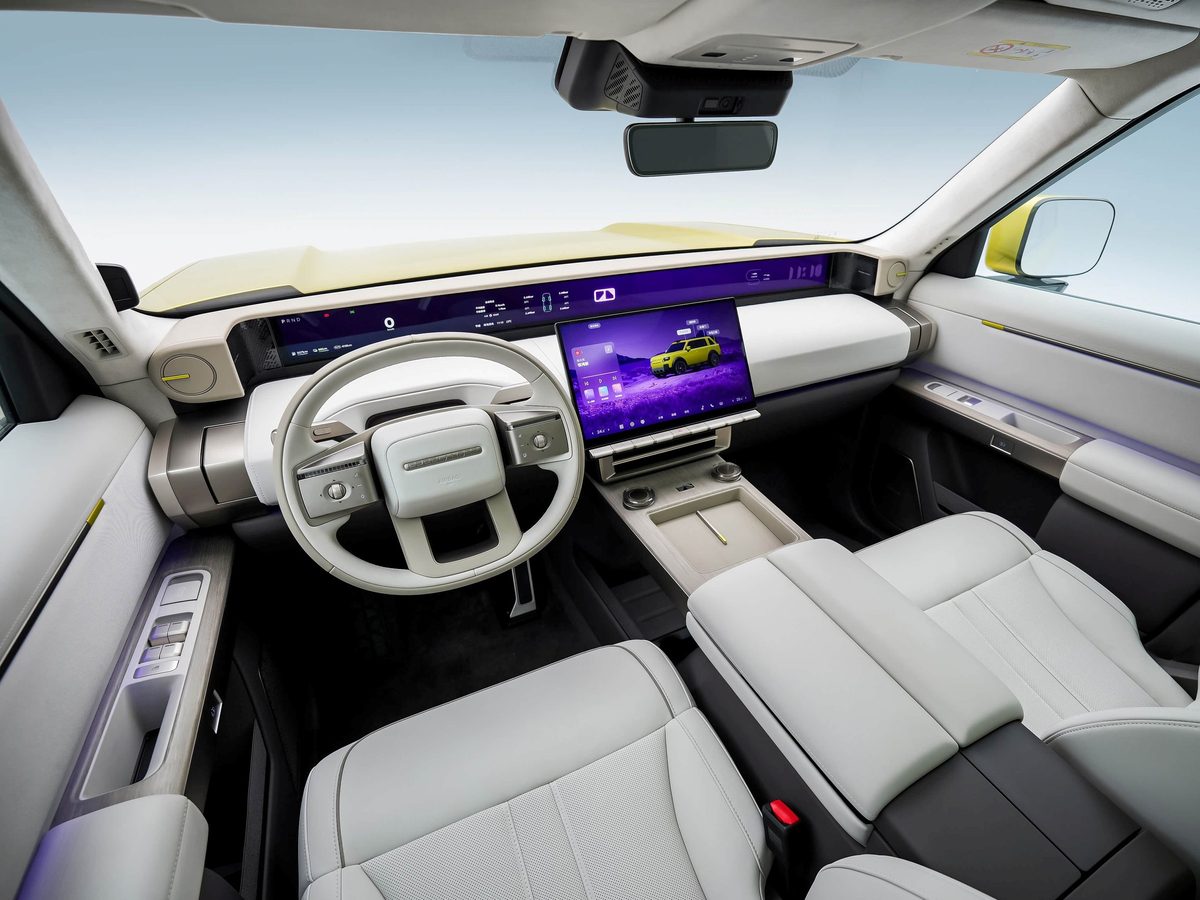
The Freelander 8 is the launch model for the Freelander brand, a China-developed marque from the Chery Jaguar Land Rover joint venture. It is a large SUV a little over five metres long, sold in a five-seat version and four six-seat ones, positioned as a family and off-road vehicle, and it revives a Land Rover nameplate under a wholly China-based engineering and supply chain.
It uses a range-extender (EREV) powertrain on an 800 V high-voltage architecture. A 1.5-litre turbocharged petrol engine, quoted at 45.79 percent thermal efficiency, serves only as a generator and never drives the wheels. Those are turned by a dual-motor all-wheel-drive system producing a combined 610 kW (818 hp) and 813 Nm, with the rear motor rated at 250 kW on its own. A 60.3 kWh CATL ternary lithium pack gives a certified pure-electric range of 310 km on the CLTC cycle, with the engine extending total range well beyond that. The battery supports up to 6C charging with a 350 kW peak intake. Drive goes through an all-terrain system with three differential locks - a front mechanical lock, a rear electronic limited-slip, and a virtual centre lock - integrated with Huawei’s i-ATS off-road software.
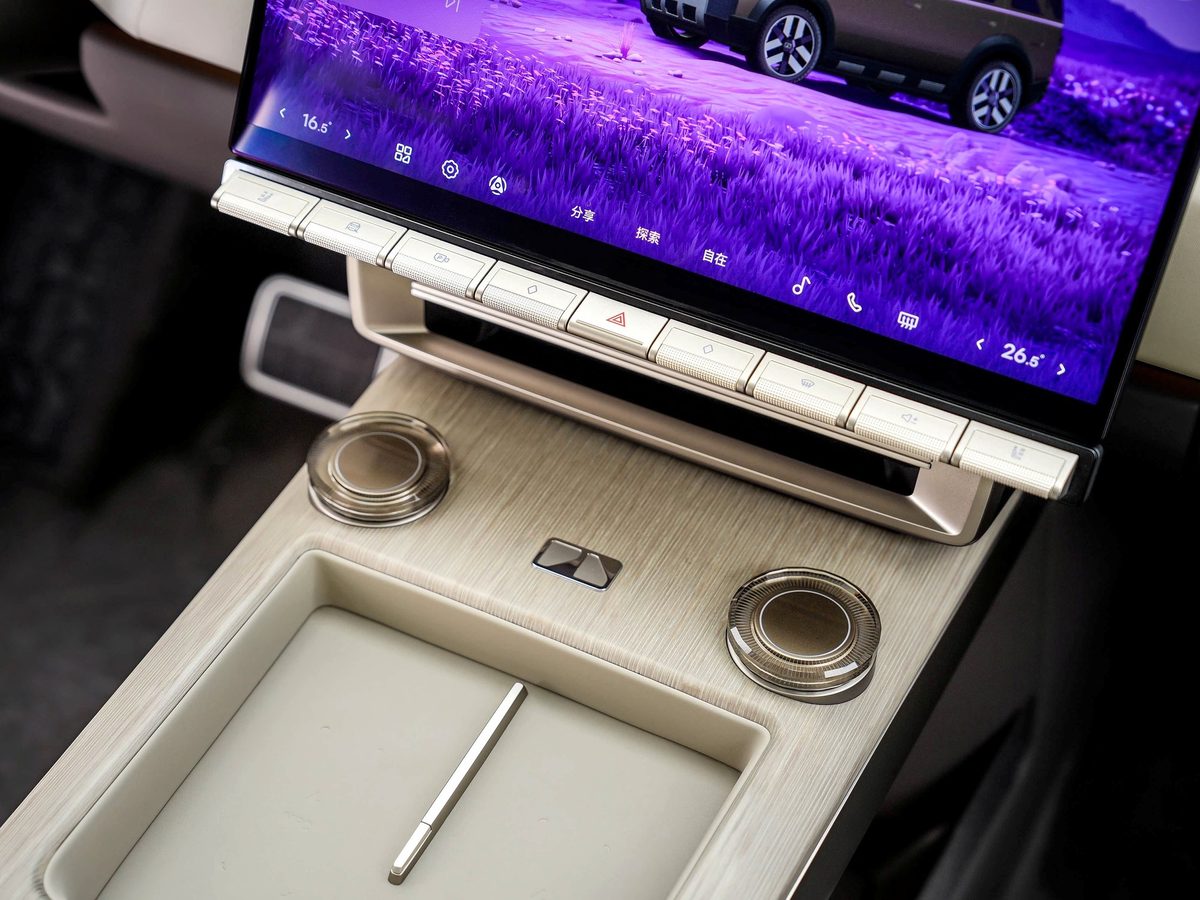
Technology is a core part of the pitch. The Freelander 8 runs Huawei’s Qiankun ADS 5 driver-assistance platform with a roof-mounted 896-line LiDAR as standard across the range, and a Qualcomm Snapdragon 8397 cockpit processor. The six-seat cars use a 2+2+2 layout with zero-gravity second-row seats. The result is an off-road-capable SUV carrying flagship-level Chinese smart-driving hardware.
Pre-sales opened on 14 August 2026. The five-seater starts at 339,900 yuan (about $50,100), the six-seat Pro at 349,900 yuan, the Max at 379,900 yuan and the Max+ at 429,900 yuan (about $63,300). A launch edition limited to 1,000 units is listed at 459,900 yuan with a locked-order price of 449,900 yuan. All five share the same powertrain, battery and certified range, so the money buys equipment rather than performance. The joint venture had previously said it was targeting the 300,000 yuan segment.