 China
China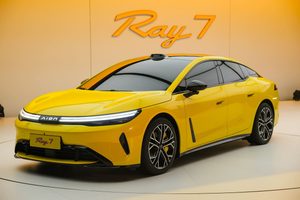
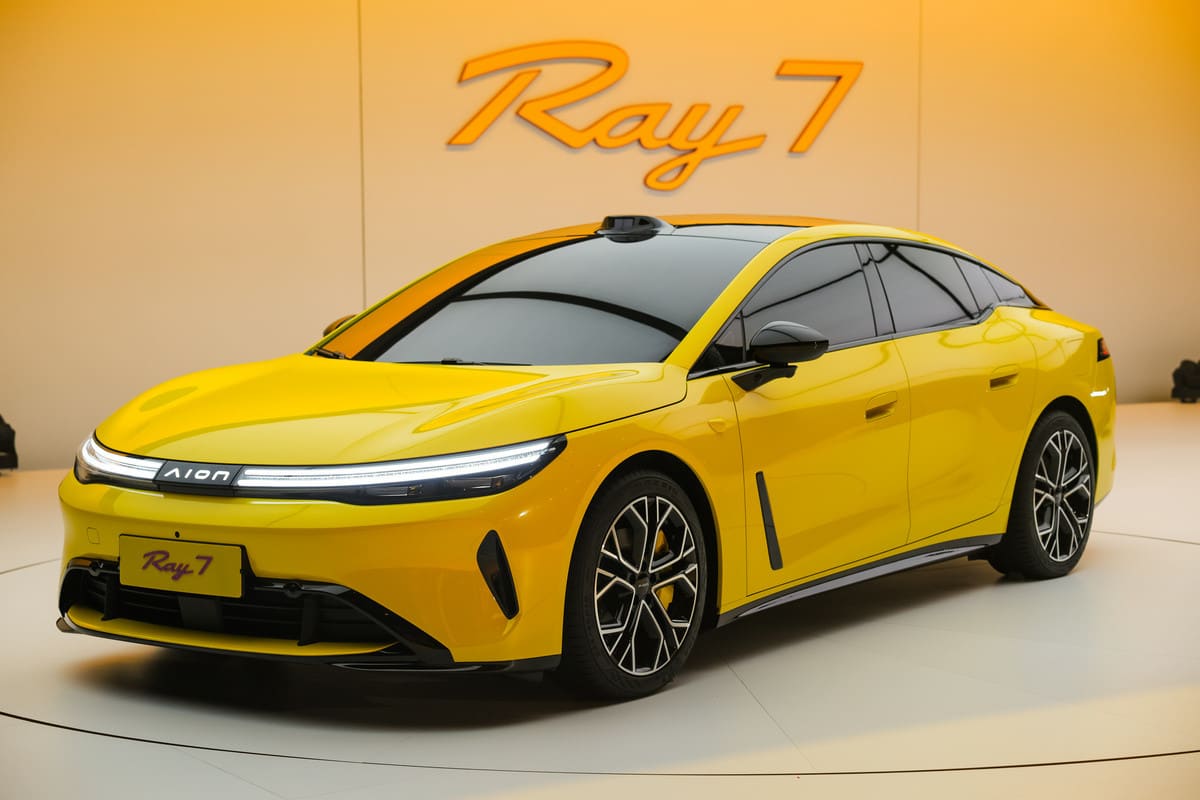
GAC Aion unveiled the Ray 7 on 19 August 2026 and put it on public display at the Chengdu auto show two days later. It is a rear-wheel-drive electric fastback, 4,960 mm long, and it arrives carrying two things at once: the first model of a new Ray line aimed at younger buyers, and the first application of GAC Aion’s redesigned logo. Prices and an on-sale date have not been announced.
What Huawei supplies
The rear motor is Huawei’s DriveONE permanent-magnet synchronous unit, with a peak output of 180 kW (241 hp) and a 180 km/h top speed. The lidar is Huawei’s 192-line unit, working with three 4D millimetre-wave radars in a set of 27 sensors. The brakes are Huawei’s EMB system, which drops the hydraulic line between pedal and caliper and puts an electric actuator at each wheel instead, so pedal travel is a signal rather than fluid pressure. GAC Aion quotes a 100 to 0 km/h stopping distance of 33 metres.
The driver assistance software is the other borrowed piece. GAC Aion says its algorithms share a foundation with WeRide’s Level 4 robotaxi programme, and that the car can drive itself from one parking space to another. The hardware does not make the Ray 7 a Level 4 car, and GAC Aion does not claim it does: the driver stays responsible, and what the system offers is navigation between addresses and self-parking.
Battery and range
Range is 700 km on China’s CLTC cycle, with claimed consumption as low as 9.7 kWh per 100 km on the same cycle. CLTC is China’s own test procedure and reads higher than WLTP or EPA for the same car, so both numbers are best read as a comparison against other Chinese-market EVs rather than against European figures.
Pack capacity has not been published. The type-approval filing lists two versions with lithium iron phosphate cells from different suppliers: CATL, using the Magazine Battery 2.0 pack construction, and Yinpai Battery, GAC Aion’s own cell unit. The two cars weigh 1,720 kg and 1,855 kg unladen. Drag coefficient is quoted at 0.22.
Where the Ray line sits
GAC Aion announced the Ray series in July 2026 and named the Ray 7 as its first model. At 4,960 mm it is longer than the Aion S Plus sedan and the Aion V SUV, and it launches in yellow and purple. Full specifications and pricing are still to come.

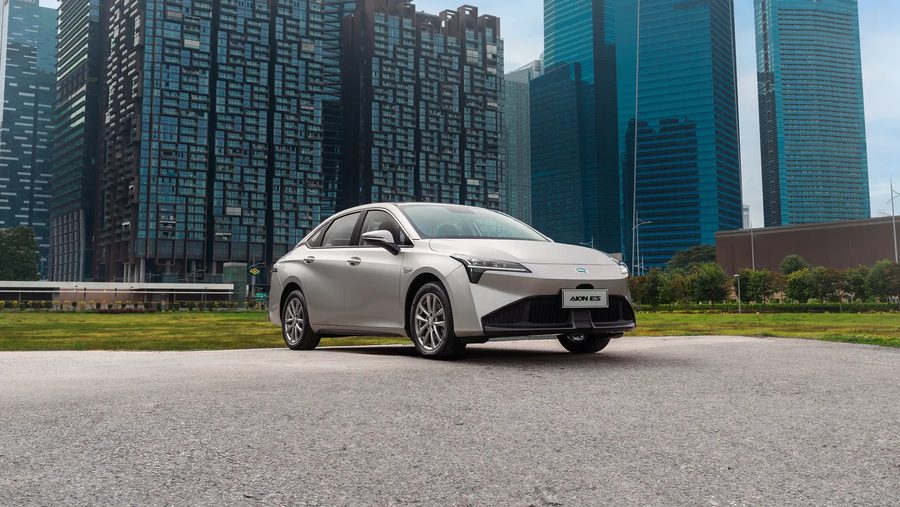
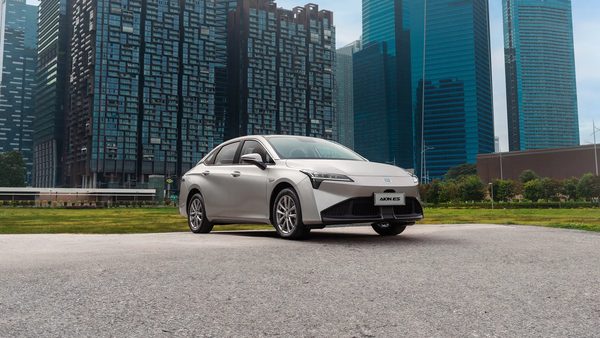
The Aion S Plus is GAC Aion's compact electric sedan, sold in China and exported as the Aion ES. A 55.6 kWh LFP battery gives 505 km of CLTC range from a single 134 hp front motor, with China prices from ¥89,800.
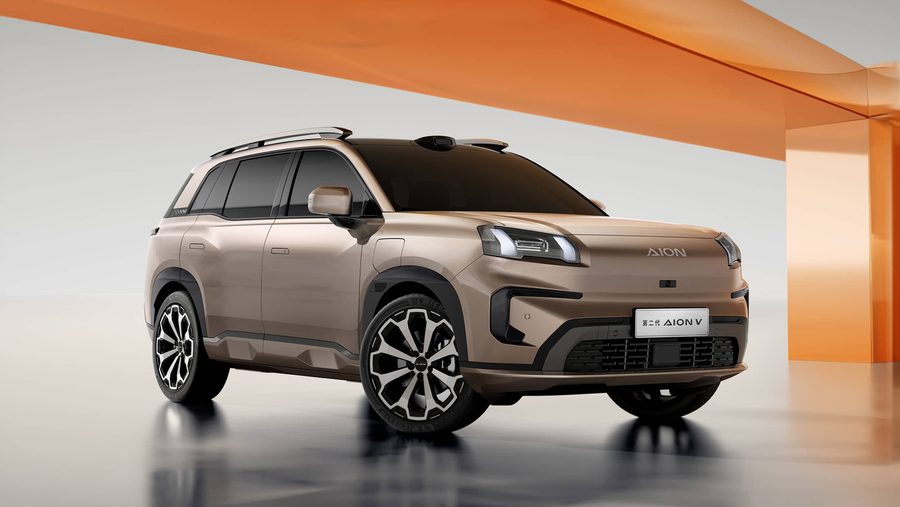
The Aion V is a compact electric SUV from GAC's Aion brand, sold globally under the same name. Two LFP battery tiers give 520 or 650 km of CLTC range from a single front motor, with prices starting from ¥101,800 in China.