Anything whose consequences reach past a single company. Emissions and safety regulation, tariffs and trade rules, battery and semiconductor supply, charging infrastructure, and the registration numbers that show which way a market is moving. A useful test: if the story would still matter with the brand names swapped out, it is filed here.
Industry
Stories that cross more than one manufacturer: regulation, tariffs, supply chains, charging networks and market-wide figures.
89 articles
News about Industry
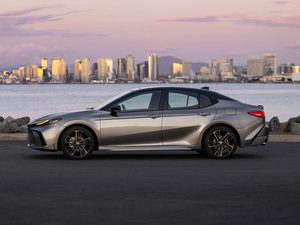
Toyota Beat Every Luxury Brand on Satisfaction
In the ACSI 2026 automobile study, mass-market and luxury brands finished level at 78 points out of 100, and Toyota led the whole industry with 83. Mercedes-Benz was the best luxury brand at 81, while Cadillac fell 15% to last place on 69 and Lexus dropped 10% to 78.
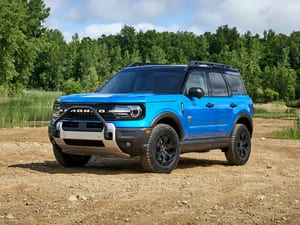
Ford CEO: Our Best Plants Aren't in the US
Ford CEO Jim Farley says the company's benchmark factories today are in Mexico and China rather than the US, pointing to stronger process discipline and line-level problem solving, while crediting UAW-staffed US plants with real progress that helped Ford rank first among mass-market brands in J.D. Power's 2026 initial quality study.

Geely's new 16-in-1 e-drive unit hits 93.8% efficiency
Geely has unveiled the Thunder 16-in-1 Intelligent E-Drive, a compact electric drive unit that folds 12 hardware components and 4 control systems into one module. The company says it reaches 93.8% efficiency, among the best figures for a production e-drive, while cutting part count by more than 180 and bringing unit weight down to 75 kg. The unit has already debuted on the Geely Galaxy TT Ultra.
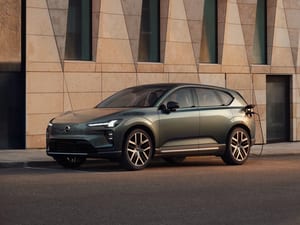
Volvo Plans Its Most Ambitious Product Push Ever
Volvo global sales fell 8 percent in the first half of 2026 to 324,800 cars, but CEO Hakan Samuelsson says the company's most ambitious product plan yet is set to turn that around, starting with the new EX60 electric SUV and a record-demand EX90 flagship, with a strategy reveal and electric successors to the S60 and V60 due later this year.
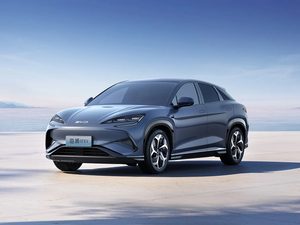
BYD hires Hungary's ex-foreign minister
BYD appointed Peter Szijjarto, Hungary's former foreign and trade minister, to lead external relations and new business development as the Chinese automaker scales up its European operations.
China tops 1 million car exports in a month
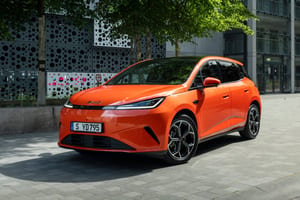
China shipped 1.037 million vehicles abroad in June 2026, the first time monthly exports have passed 1 million, according to CAAM data - up 75.1% year on year. NEV exports reached 523,000 for the month, also a record, as exports offset a 13.4% drop in domestic NEV sales in the first half.

VW, Mercedes, BMW, Porsche Slide in China
Volkswagen Group, Mercedes-Benz, BMW and Porsche all lost China sales in Q2 2026, led by a 36.6% drop for VW Group and 28% for Porsche, as buyers shift to faster-moving domestic EV brands.
China's Hainan Reaffirms 2030 Ban on Petrol Cars
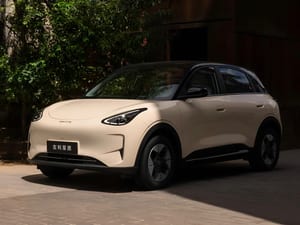
Hainan, a Chinese island province of about 10 million people, has restated its plan to end sales of new petrol cars by 2030 - a target first floated in 2020 and formalized in 2022. Private buyers will be required to choose a new-energy vehicle; public and commercial fleets face a 100% clean-energy rule, excluding special-purpose vehicles. No other Chinese province has set a comparable hard date.

VW Group CEO Warns Job Cuts Could Double to 100,000
Oliver Blume told staff in an internal memo that Volkswagen Group may need to cut 50,000 more jobs on top of the 50,000 already agreed, potentially reaching 100,000 total. He cited costs roughly 20% above competitors, weak China sales, US tariffs, and underused European plants.
EU now requires driver-monitoring cameras
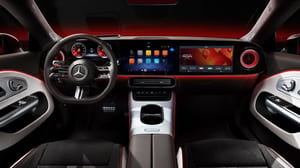
From 7 July 2026, every new car and van registered in the EU must carry a camera-based system that tracks the driver's gaze and warns them when they look away from the road for too long. New model types have had it since 2024. This deadline catches the older models still in production.
Ford sued over its $1.3 billion tariff refund
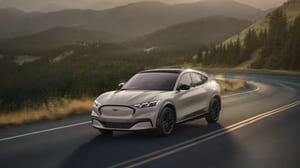
Ford expects to collect $1.3 billion back after the Supreme Court struck down the IEEPA tariffs. A proposed class action argues that the buyers who paid the tariff-inflated prices are owed a share, and that keeping both would be a windfall.

Slate Truck skips Canada over tariff economics
Slate Auto has confirmed it will not sell its sub-$25,000 electric pickup or SUV conversion in Canada. The company has not given an official reason, but a 25% retaliatory tariff on US-built cars would push the truck's Canadian price to roughly $44,500 CAD ($31,100 equivalent before conversion), undercutting the model's entire value pitch.

China to require physical buttons in new cars
China has approved new rules requiring physical buttons or switches for safety-related vehicle controls, reversing the touchscreen-only trend led by Tesla and Chinese EV makers. The rules take effect July 1, 2027.

VW Group Plans to Cut Its Model Lineup in Half
Volkswagen Group wants to cut its roughly 150 model lines by up to 50% and trim configuration options by up to 75%, while lowering annual production capacity to 9 million cars from a pre-pandemic target of 12 million. The Touareg, Touran, and T-Roc Cabriolet are among the models already leaving.
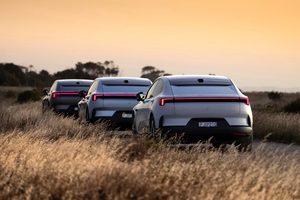
Polestar discounts remaining US stock by up to $25,000 ahead of 2027 sales ban
After the Connected Vehicles Rule blocked future US sales, Polestar is discounting its remaining 2026 inventory - up to $25,000 off the Polestar 4 and $23,000 off the Polestar 3 for cash buyers, with 0% APR financing and leases from $399 a month.
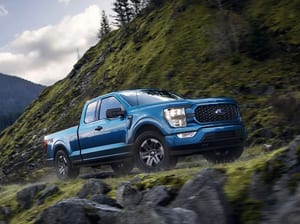
Ford recalls 741,195 trucks and SUVs over defect
The recall covers the Ford F-150 (2021), Explorer (2020-2021) and Expedition (2018-2021), plus the Lincoln Aviator (2020-2021) and Navigator (2018-2021). A transmission fault can let the parking mechanism fail after the vehicle is shifted into P, allowing it to roll. Dealers will apply a free software update and replace damaged parts as needed.

Hyundai posts record US H1 sales on hybrid growth
Hyundai Motor America sold a record 450,568 vehicles in the first half of 2026, up 3%. Hybrids grew 67% year-to-date and now outpace EVs as the brand's main growth engine, echoing Toyota's playbook.
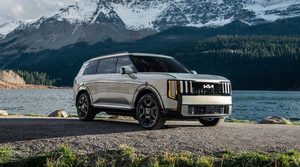
Kia's best-ever US half-year runs on hybrids
Kia sold 405,785 vehicles in the US in the first half of 2026, its best half ever, with June and Q2 also setting records. Hybrid versions of the Sportage, Sorento and Carnival drove the gain, while the EV6 was one of only two models to fall.
Reuters: VW may close 4 plants, cut 100,000 jobs
According to Reuters, Volkswagen is considering closing factories in Hannover, Zwickau, Emden and the Audi site in Neckarsulm, with group-wide job cuts potentially reaching 100,000. The supervisory board meets on July 9. Falling European sales, Chinese competition and US tariffs are cited as the main causes.

Honda, Nissan and Mitsubishi move to share the 'brains' of their next-generation cars
The three Japanese makers are in final talks to standardize the electronic control units (ECUs) that run their next-generation hybrids and EVs. The shared modules would cover autonomous driving, infotainment and powertrain control, with cars expected from 2029-2030. The aim is to cut costs against Chinese rivals and Tesla.