Anything whose consequences reach past a single company. Emissions and safety regulation, tariffs and trade rules, battery and semiconductor supply, charging infrastructure, and the registration numbers that show which way a market is moving. A useful test: if the story would still matter with the brand names swapped out, it is filed here.
Industry
Stories that cross more than one manufacturer: regulation, tariffs, supply chains, charging networks and market-wide figures.
89 articles
News about Industry
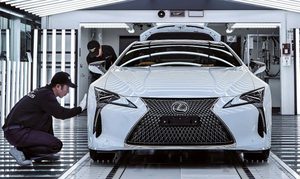
Lexus gets its first China plant, and Toyota owns all of it
Toyota is finishing a Lexus factory in Shanghai's Jinshan district, the brand's first production site in China and the first Japanese-owned car plant in the country with no local joint-venture partner. Investment is 14.6 billion yuan ($2.02 billion), capacity around 100,000 cars a year, and production starts in the second half of 2027.
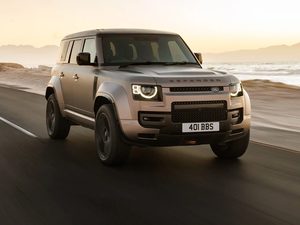
Electric Defender delayed by two years
The Times reports that JLR has paused work on the next-generation Defender, pushing the full electric version into the 2030s. Staff were told the reason is that the current car keeps selling, at around 110,000 units a year. What JLR has confirmed itself is separate: a smaller Defender-family model on the EMA platform, now offered as a hybrid as well as an EV.
Jeep returns to building cars in China
Stellantis and Dongfeng have registered Dongfeng Stellantis Automotive Technology, a company with 8.2 billion yuan ($1.2 billion) of capital that will develop two electrified Jeeps and two Peugeots. They are built at DPCA's Wuhan plant from 2027, and the Jeeps are meant for export.
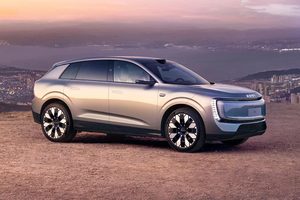
AUDI's China-only EVs are on sale in Germany
An independent importer is buying AUDI E5 Sportbacks and E7Xs in China, shipping them to Germany and homologating them there. The E5 lists at €59,980 (about $70,200) against a Chinese guide price of ¥235,900 ($34,900), and the cars carry no factory support in Europe.
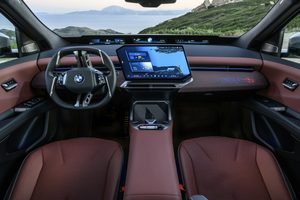
BMW is not putting the buttons back
Mercedes-Benz, Volkswagen and Hyundai have all restored physical controls after customer complaints. BMW Group Australia chief Vikram Pawah says the company reads the same evidence differently, and the new iX3 carries no climate switches on its dashboard at all.
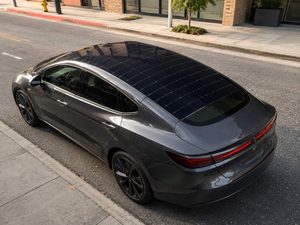
Fuyao's solar roof is ready for production
Fuyao has solar cells laminated inside panoramic roof glass and says it can mass-produce it. What the roof actually delivers is harder to pin down: the company has published no specification sheet, and the 720 W figure attached to it by Chinese media has been confirmed by nobody.
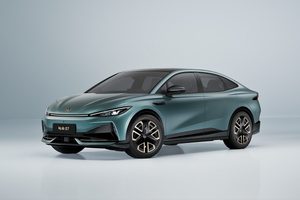
Volkswagen may build its China EVs in Europe
Volkswagen is running a feasibility study into selling models developed by its Chinese operations in Europe, and building them at underused European plants rather than importing them. Zwickau has been named as a possible site. Six candidate models have been reported, none of them confirmed.
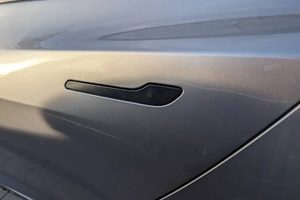
China orders record recall over door handles
China's market regulator has ordered nearly 4.3 million vehicles from 11 manufacturers back for a fix, the largest recall in the country's history. The fault is the emergency door release inside the cabin, which occupants and rescuers may not find after a crash cuts the power. Tesla accounts for about 2.98 million cars.
US-Canada trade talks collapse over auto tariffs
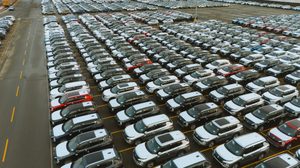
Negotiations broke down on August 21 after Washington moved to cut tariff relief for Canadian-made vehicles. New duties are already in force, and Canada retaliates from September 8.
The next South American Amarok drops Ford for SAIC
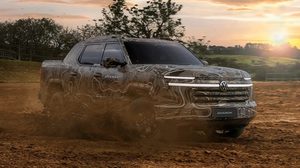
Volkswagen's regional Amarok will be a separate vehicle from the global, Ford-based one, built on the architecture under SAIC's Maxus Interstellar X. It goes into production at General Pacheco in Argentina in 2027, backed by $580m, and Volkswagen says it is doing the design, chassis tuning and testing itself rather than rebadging.
Geely to build premium cars at Volvo's EU plants
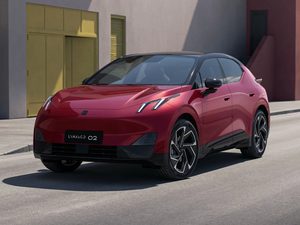
An Conghui, the new chairman of Geely Automobile, told the company's half-year results conference that from 2028 cars from the Geely Auto portfolio will be built at Volvo Cars' European plants. No model has been confirmed, but Geely Auto covers Geely, Zeekr and Lynk & Co, and Ghent is the plant with the electric lines already running.
Tesla says HW4 is enough for unsupervised FSD
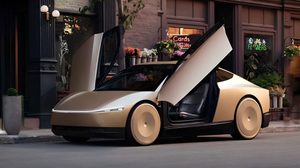
JPMorgan analysts visited Tesla's Fremont factory and came away with the company's clearest statement yet on hardware: the HW4 computer already fitted to cars on the road is sufficient for Full Self-Driving without driver supervision. The note also covers FSD v15, a faster AI4.5 chip, Cybercab scaling from late 2026 and an Optimus line going into the old Model S and X space.
Canada's EV rebate has a dealer payment backlog
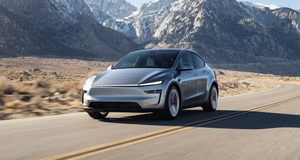
Canada restored federal electric-car incentives on 16 February 2026 through the Electric Vehicle Affordability Program, and EV sales rose more than 80% in March over February. The rebate is deducted at the dealership and reimbursed by Ottawa afterwards, and dealers report waits of up to 90 days against a 20-business-day service standard, with some carrying more than C$200,000 in unpaid claims.
Toyota Highlander EV to use LG's Michigan cells
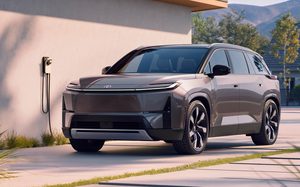
LG Energy Solution has started production at its $2 billion battery plant in Lansing, Michigan, and Toyota is the named automotive customer. The site builds the NMC cells for the 2027 Highlander EV, which Toyota assembles in Kentucky. General Motors part-built the plant, then sold its stake.

Ford opens its AI assistant to 8m cars
Ford is rolling out its AI Assistant to up to 8 million eligible Ford and Lincoln vehicles through the brands' phone apps. It answers questions about the specific car using live telemetry, reads photos, and moves into the dashboard from 2027. Google Gemini arrives separately as a voice assistant option.
Subaru spends nearly $10,000 to sell each EV in the US
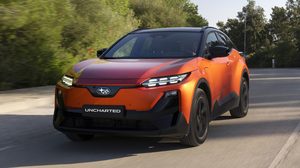
Subaru's new electric crossovers have lifted its US EV sales, but at a steep cost. Incentive spending averages $9,650 per Solterra, $9,155 per Uncharted and $8,982 per Trailseeker, against $3,036 for the gasoline Outback, and the spending has already cut into quarterly profit.
BMW starts i3 production, Munich goes EV-only
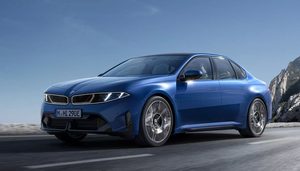
Series production of the electric BMW i3 has begun at the Munich plant, the second Neue Klasse model after the iX3. BMW spent about 650 million euros (roughly $760 million) converting the site, which stops building combustion cars in 2027. The launch version is the i3 50 xDrive: 463 hp, 108.7 kWh, and up to 906 km WLTP.
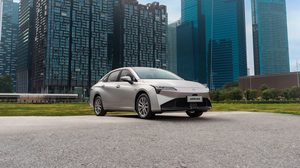
CALB overhauls battery quality after GAC Aion S cell failures
CALB, China's third-largest battery maker, has launched a manufacturing quality overhaul after a 177 Ah LFP cell it supplied swelled into a curved "banana" shape and lost power in about 213,000 high-mileage Aion S Plus, Charming 580, and Max sedans built 2022-2023. GAC Aion extended the affected cars' battery warranty to 8 years or 300,000 km rather than issue a recall.
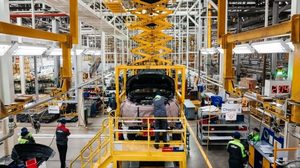
Li Auto's first factory outside China is being built in Kazakhstan
Li Auto signed a local-assembly agreement with Kazakh dealer group Allur to build its first production base outside China, at Kostanay. The move follows the L9's launch in Uzbekistan, where the brand has logged 5,056 deliveries and four stores since October 2025.
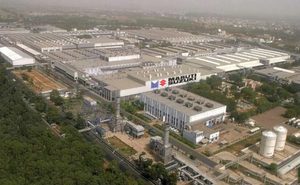
Maruti's Hansalpur plant becomes the first Suzuki factory anywhere to reach 1 million units of annual capacity
Maruti Suzuki's Plant D at Hansalpur, Gujarat has entered commercial production, lifting the site's annual capacity from 750,000 to 1 million units - the first time any single Suzuki factory worldwide has reached that figure. Plant D's first model off the line is the e Vitara.