Anything whose consequences reach past a single company. Emissions and safety regulation, tariffs and trade rules, battery and semiconductor supply, charging infrastructure, and the registration numbers that show which way a market is moving. A useful test: if the story would still matter with the brand names swapped out, it is filed here.
Industry
Stories that cross more than one manufacturer: regulation, tariffs, supply chains, charging networks and market-wide figures.
89 articles
News about Industry
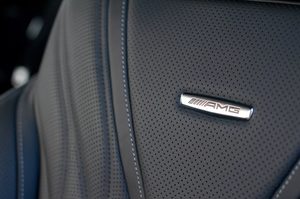
Mercedes-AMG owners sue over seat badges that caused burns
Two Mercedes-AMG owners have filed a proposed class action against Mercedes-Benz in California, saying the metal AMG badge built into the seatback heats up in the sun and burned their skin on contact. One plaintiff's dermatologist recorded first- and second-degree burns matching the emblem's shape.
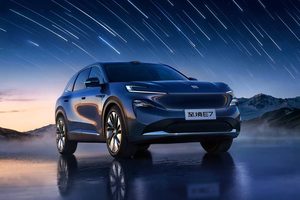
GM extends SAIC deal, exports Buicks from China
General Motors and SAIC have run their joint venture out to 2047 and given it a new job: at least 30 new-energy models by 2030, built in China and shipped to the Middle East, Africa, South America, Mexico and Asia-Pacific. The Buick Electra E7 goes first, in October. Chevrolet, meanwhile, stops selling in China.
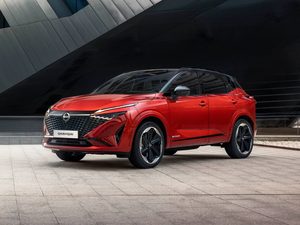
Nissan returns to profit as sales keep sliding
Nissan posted a ¥3.8 billion ($24 million) net profit for the first quarter of its 2026 fiscal year, against a ¥115.8 billion loss a year earlier. Global sales still fell 6.7% in the first half of 2026, and the company trimmed its full-year volume forecast to 3.15 million cars.
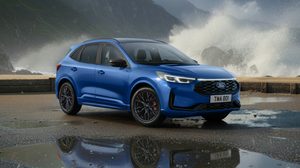
Ford and Geely set up a Spain joint venture that could reshape the Kuga
Ford and Geely are forming a joint venture at Ford's Valencia, Spain plant, with Ford holding 66% and Geely 34%. One of the first projects could be a next-generation Ford Kuga, reportedly moving to Geely's GEA architecture around 2029.
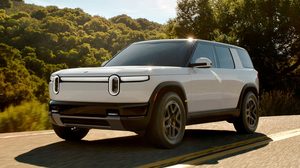
Uber to run up to 50,000 driverless Rivian R2s
Uber and Rivian will build a robotaxi fleet on the electric R2 crossover, with Uber investing up to $1.25 billion in Rivian through 2031 if autonomy milestones are met. The service starts in 2028 in San Francisco and Miami.
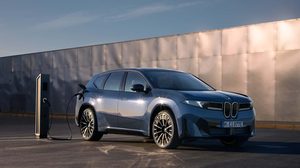
BMW plans more than 40 new and updated models through 2027
BMW is preparing its biggest lineup overhaul in years, with more than 40 launches promised across every segment as Neue Klasse design and technology spread from electric models to petrol, diesel, and hybrid cars. The electric iX3 and i3, an updated 7 Series, and the new X5 and iX5 are already underway, with a first electric M model and a BMW Alpina due in 2027.
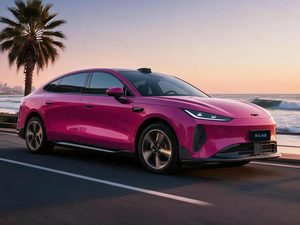
Chery's 18,173 Fulwin A9 orders, in context
Chery says the Fulwin A9 locked 18,173 orders in 72 hours, from 115,900 yuan ($17,100). Xiaomi's YU7 took 315,900 in the same window last year, and neither number tells you how many cars will actually ship.
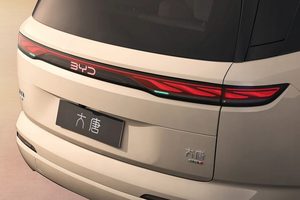
China bans blue exterior lights for driver-assist systems
China's regulator will no longer certify new models fitted with the small blue exterior lights used by Li Auto, Aito, XPeng, Nio, BYD, Xiaomi and others to signal active L2/L2+ driver assistance, citing the national lighting standard GB 4785-2019. The rule took effect 27 July 2026; measures for cars already on sale are still under review.
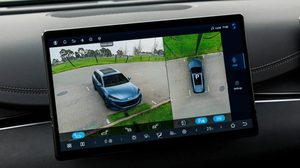
US, EU and China tighten rules on connected-car data
Modern cars stream location, speed, driving style, camera and sensor data, and voice commands back to the automaker. Regulators are now moving to control it: FTC action in the US, GDPR consent rules in the EU, and mandatory in-country data storage in China.
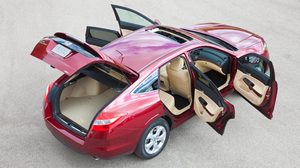
Honda may revive the Accord Crosstour to rival the Subaru Outback
Honda is reportedly weighing a return of the raised Accord Crosstour liftback, internally called Accord SUV, for the US market with production possibly starting in mid-2029. Honda has told Car and Driver the report isn't based on any of its announcements.
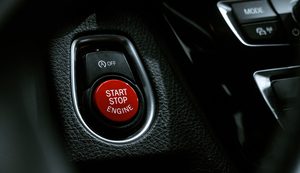
KARR's car alarm shared one key across 2.2m cars
UC San Diego researchers found that KARR, an aftermarket alarm installed at dealerships across Southern California, uses one Bluetooth authentication key across all 2.2 million units sold since 2017, letting anyone nearby unlock the car, kill the ignition or sound the horn. Acrisure, which makes KARR, shipped a patch on July 20, 2026, about 18 months after the researchers first reported the flaw. Fixing it requires the owner to install an app update; roughly half of owners do not know the alarm is even in their car.
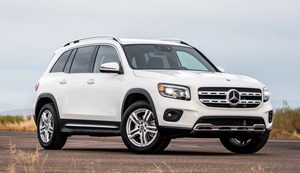
Mercedes-Benz recalls 310,667 US vehicles over a door-latch fault
Mercedes-Benz is recalling 310,667 vehicles in the US after moisture can enter a faulty door-latch microswitch supplied for the driver's door, which can stop the car from detecting that the door is open and keep the electronic parking brake or Auto-Park from engaging. No accidents have been reported.

BMW to cut about 8,000 jobs in Germany
BMW is launching its largest workforce reduction in years, aiming to cut around 8,000 positions by the end of 2027 - about 20% of administrative and engineering roles in Germany and roughly 5% of its global headcount. Factory workers are exempt, and the company points to a nearly 30% sales drop in China and a shrinking automotive margin.
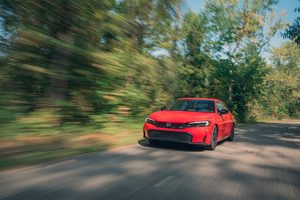
Honda pauses manual Civic Si and Integra builds
Honda will pause production of the manual-transmission Civic Si and Acura Integra A-Spec after the 2026 model year ends. Officially the company cites "changing business conditions," but a leaked internal letter from its Canadian plant points to EPA certification trouble for the shared 200 hp 1.5L turbo engine. Honda calls it a pause, not a cancellation, with dealer stock expected to last into early 2027. The Type R and Type S, built around a different 2.0L engine, are unaffected.
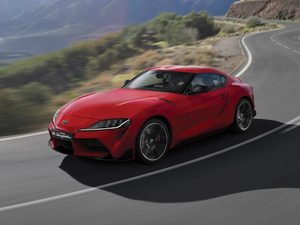
BMW recall over starter fire risk widens to Supra
BMW is recalling an additional 318,495 vehicles in the United States over a Valeo-built starter motor prone to excess wear, a campaign that also reaches the 2023-2024 Toyota Supra, which shares BMW-sourced drivetrain hardware. Metal dust from the wear can prevent the engine from starting or, rarely, spark a fire. BMW estimates fewer than 0.1% of covered vehicles carry the defect; owner notifications begin August 28.
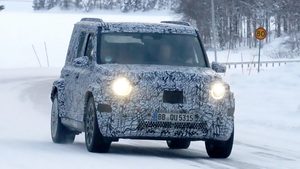
Mercedes will build its compact G-Class in Hungary
Mercedes-Benz has confirmed a smaller version of the G-Class will be built exclusively at its Kecskemet plant in Hungary, part of a 1 billion euro (about $1.09 billion) expansion that will make Kecskemet the automaker's largest European factory, with the compact G-Class due to start production in 2027 as an EV with a hybrid variant added later.
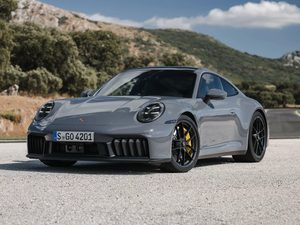
Porsche expands job cuts, rethinks its lineup
Porsche is preparing another round of restructuring as Chinese sales fall, US tariffs bite and EV demand slows, with Reuters reporting plans to raise total job cuts to about 9,000 positions by 2035 while the company refocuses on the 911 and premium SUVs and works more closely with Audi to cut costs.
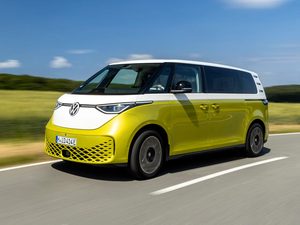
VW couldn't fit a gas generator into the ID. Buzz
Volkswagen Commercial Vehicles considered a range-extender version of the ID. Buzz, adding a small combustion engine to generate electricity and cut dependence on charging stations, but the MEB platform's short front overhang left no space for it without an expensive redesign, so the van stays fully electric.
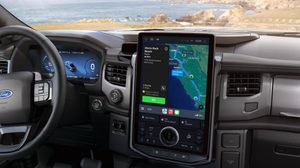
Ford's next EV platform will run Apple Maps natively, no iPhone required
Ford's Universal EV Platform will use Apple Maps as its built-in navigation system, with range-aware routing and charging-stop planning. The first model, a mid-size electric pickup around $30,000, arrives in 2027. Apple Maps data will also feed Ford's next-generation BlueCruise.
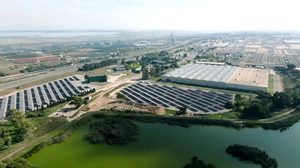
Ford and Geely Formalize Spain EV Deal
Ford and Geely Auto have signed a 66/34 joint venture to build EVs at Ford's Valencia plant in Spain, confirming and reshaping the informal deal first rumored in May 2026. The venture adds a Bronco-family SUV, a new Ford crossover, and two Geely electric SUVs from 2028; specific Geely models and full powertrain splits remain unconfirmed.