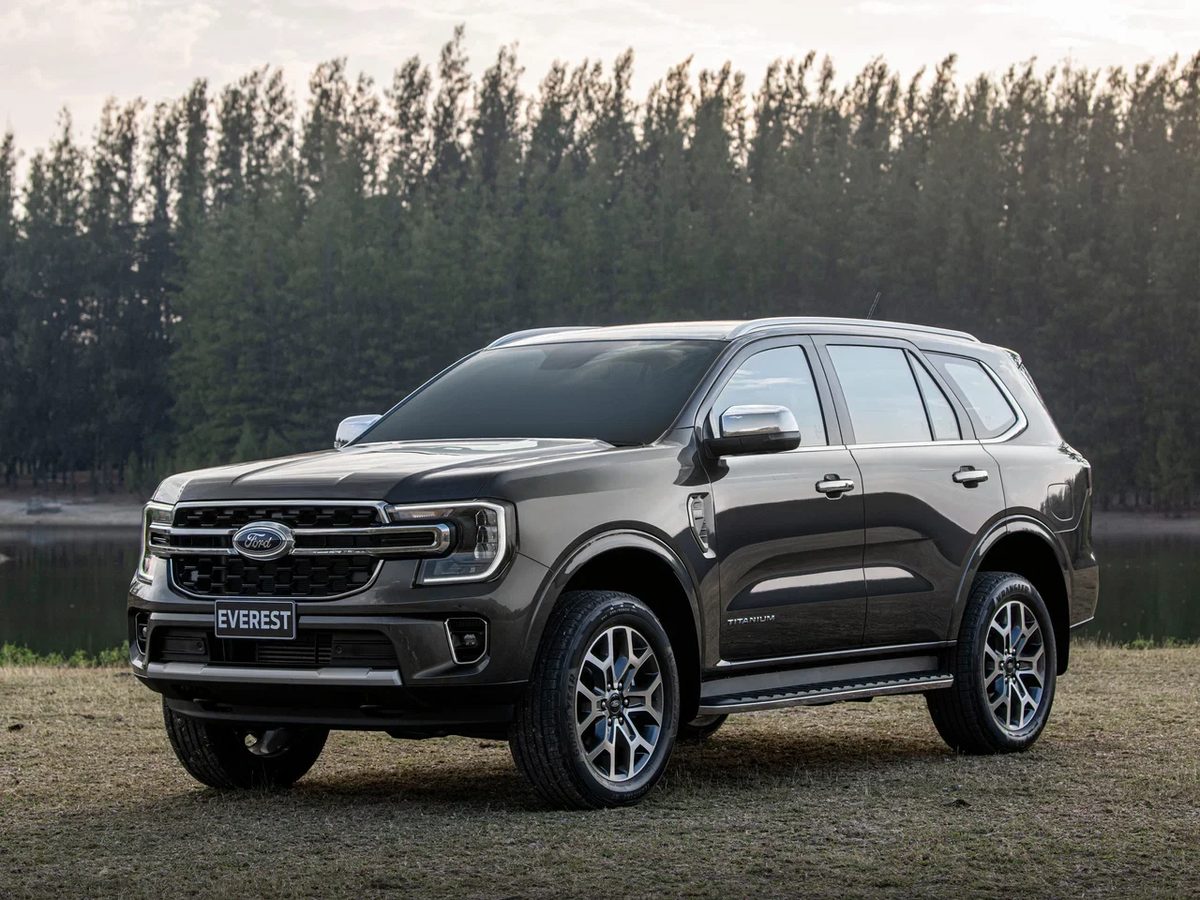
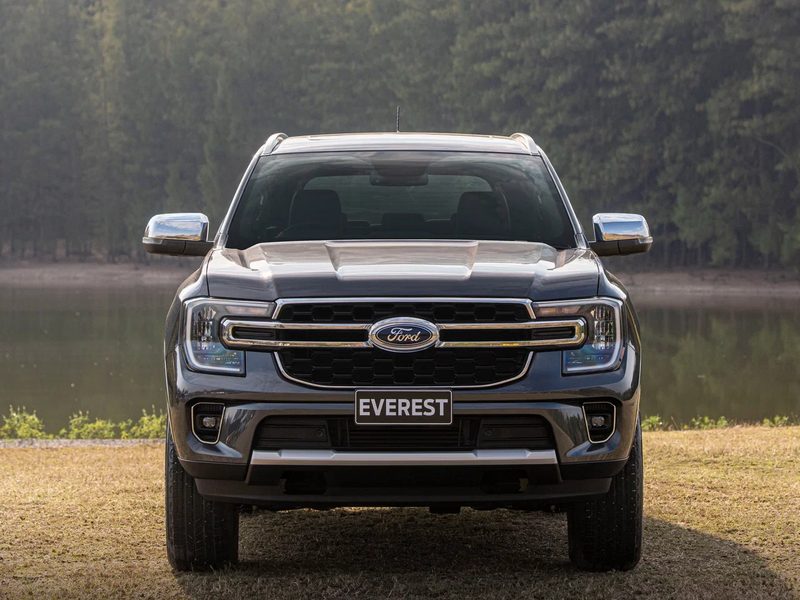
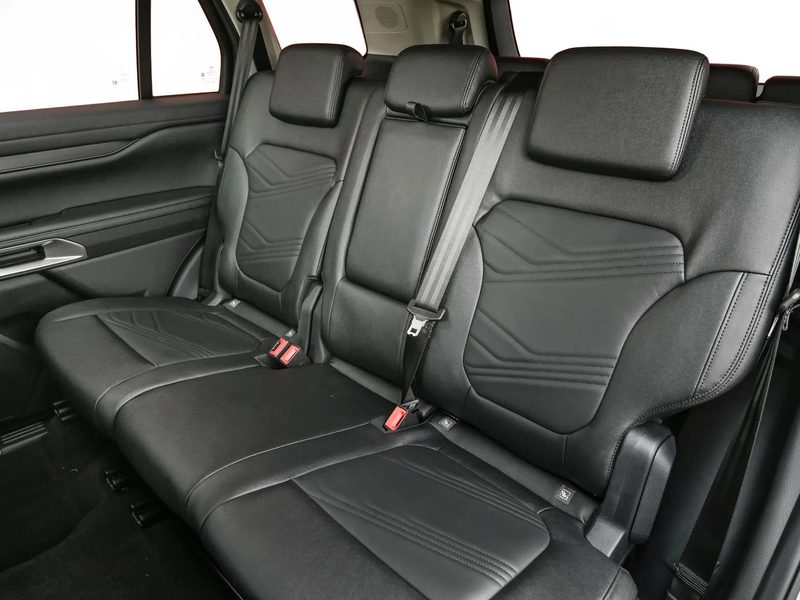
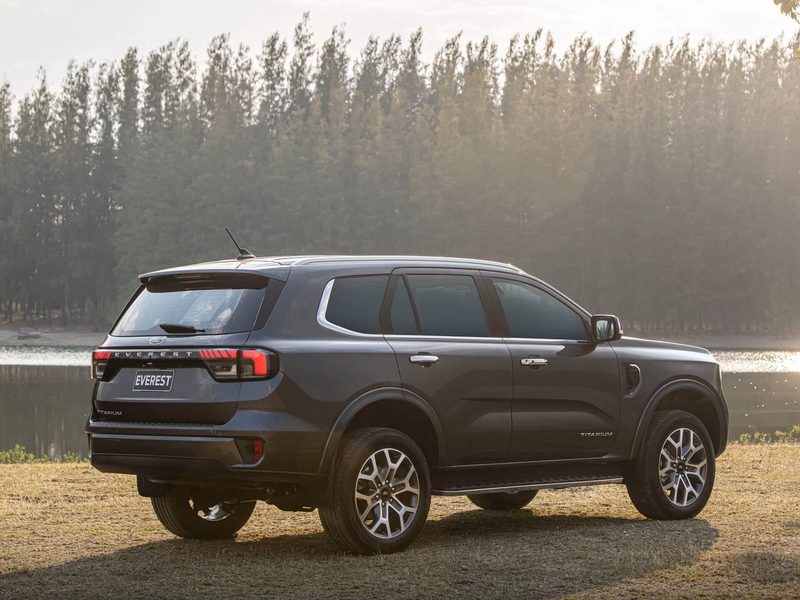
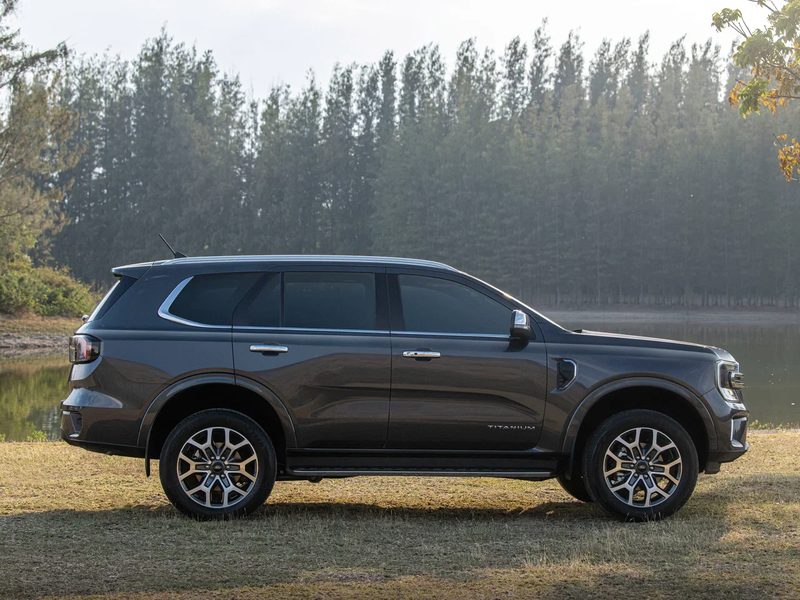
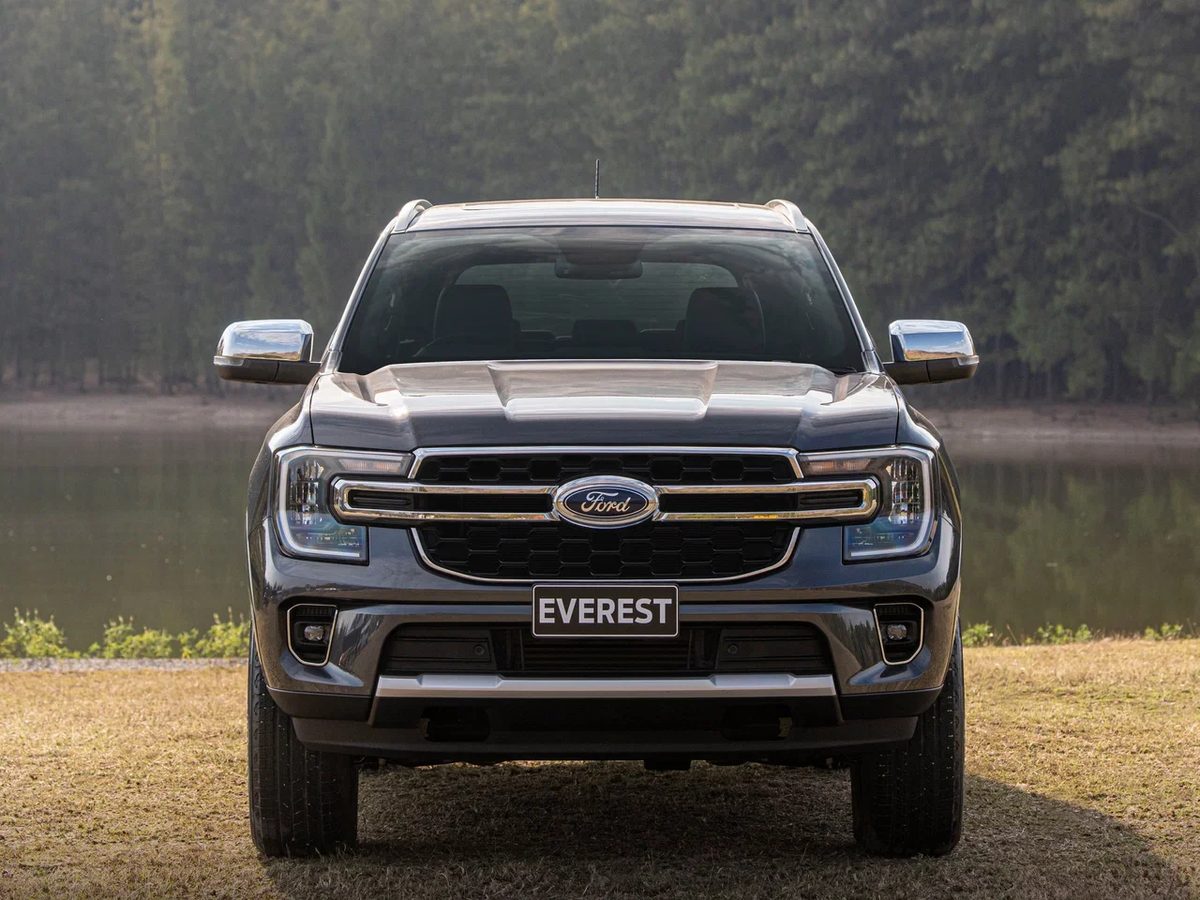
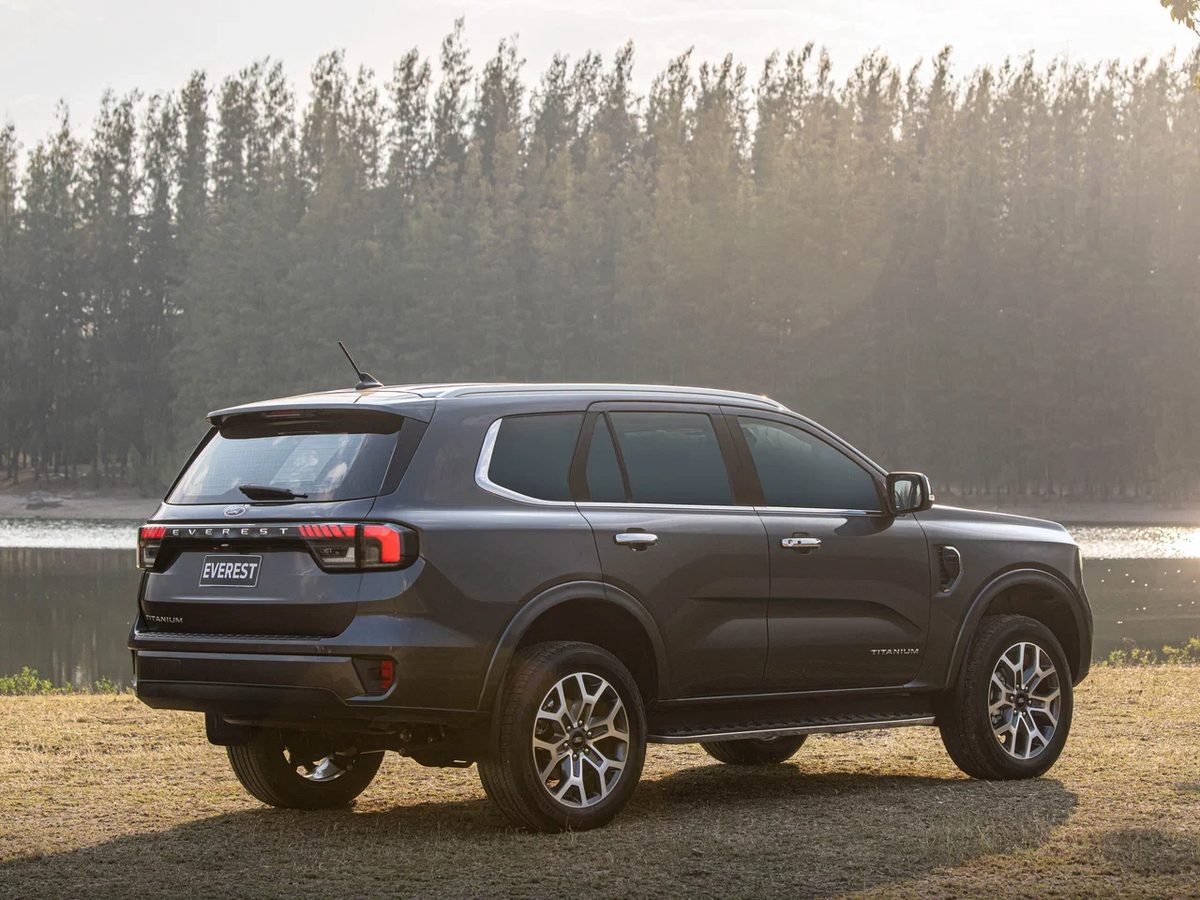
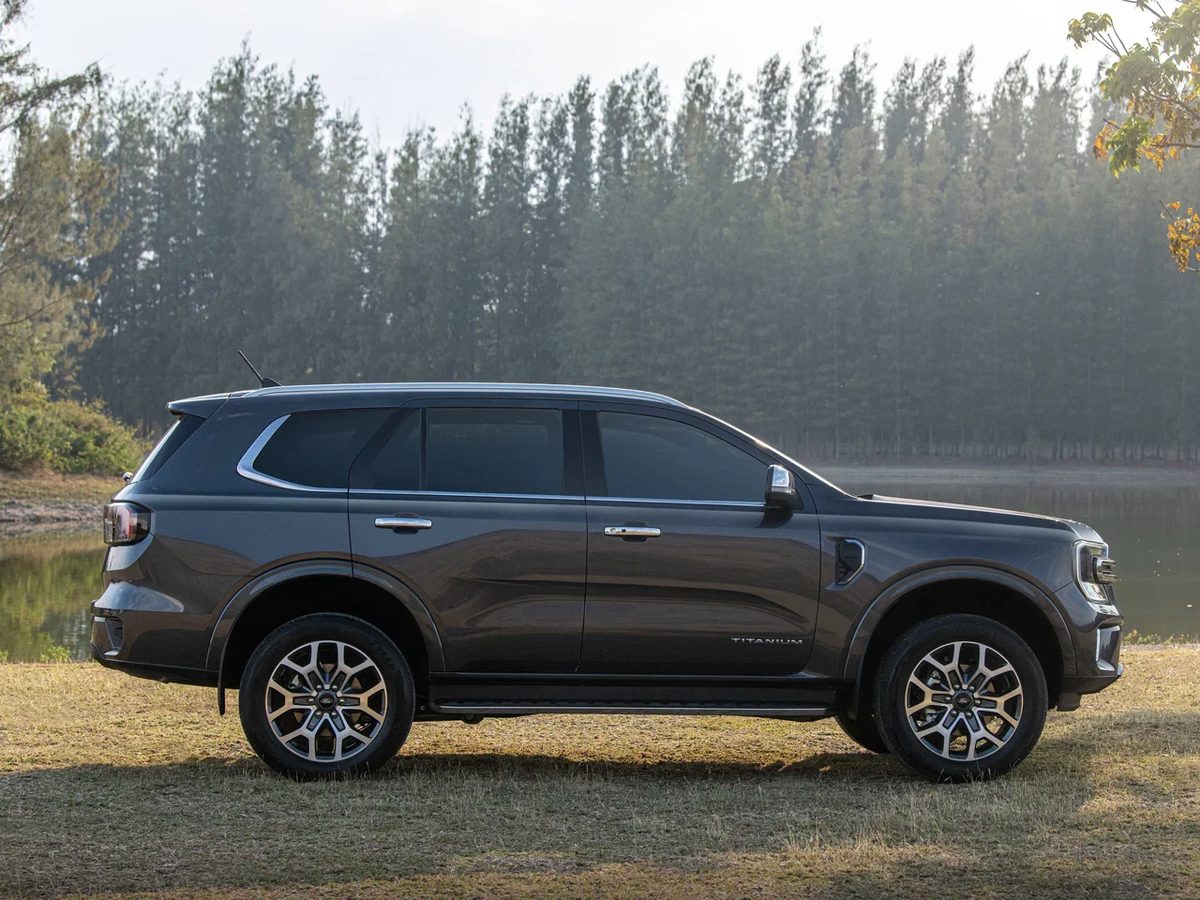
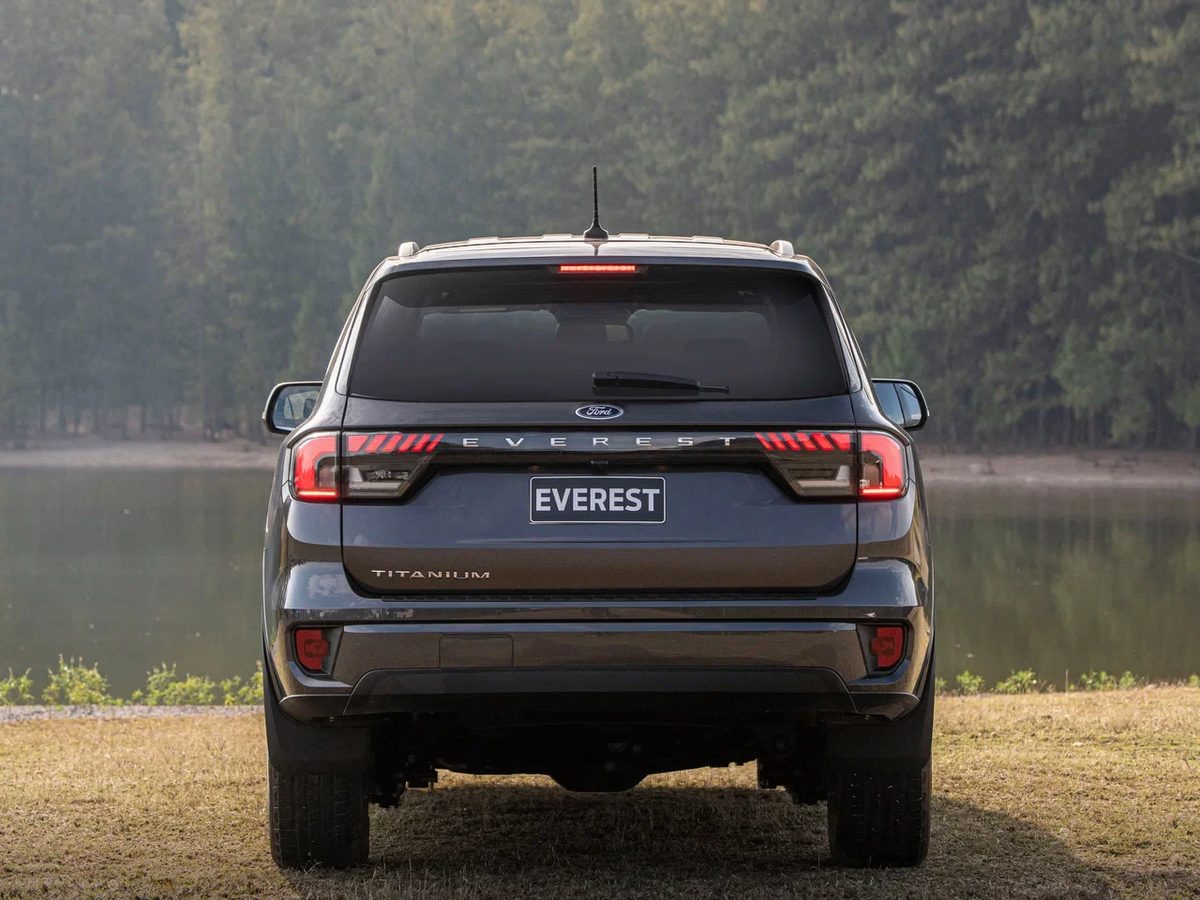
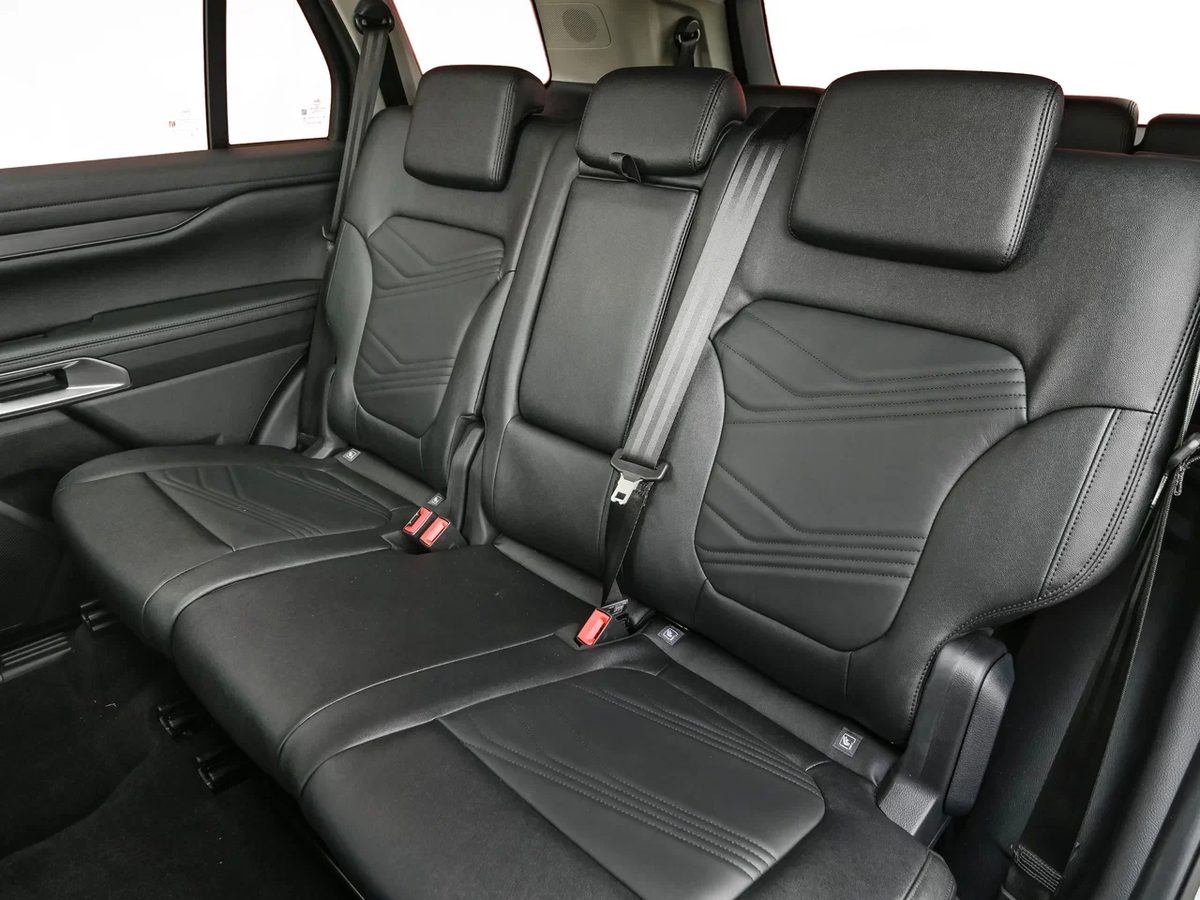
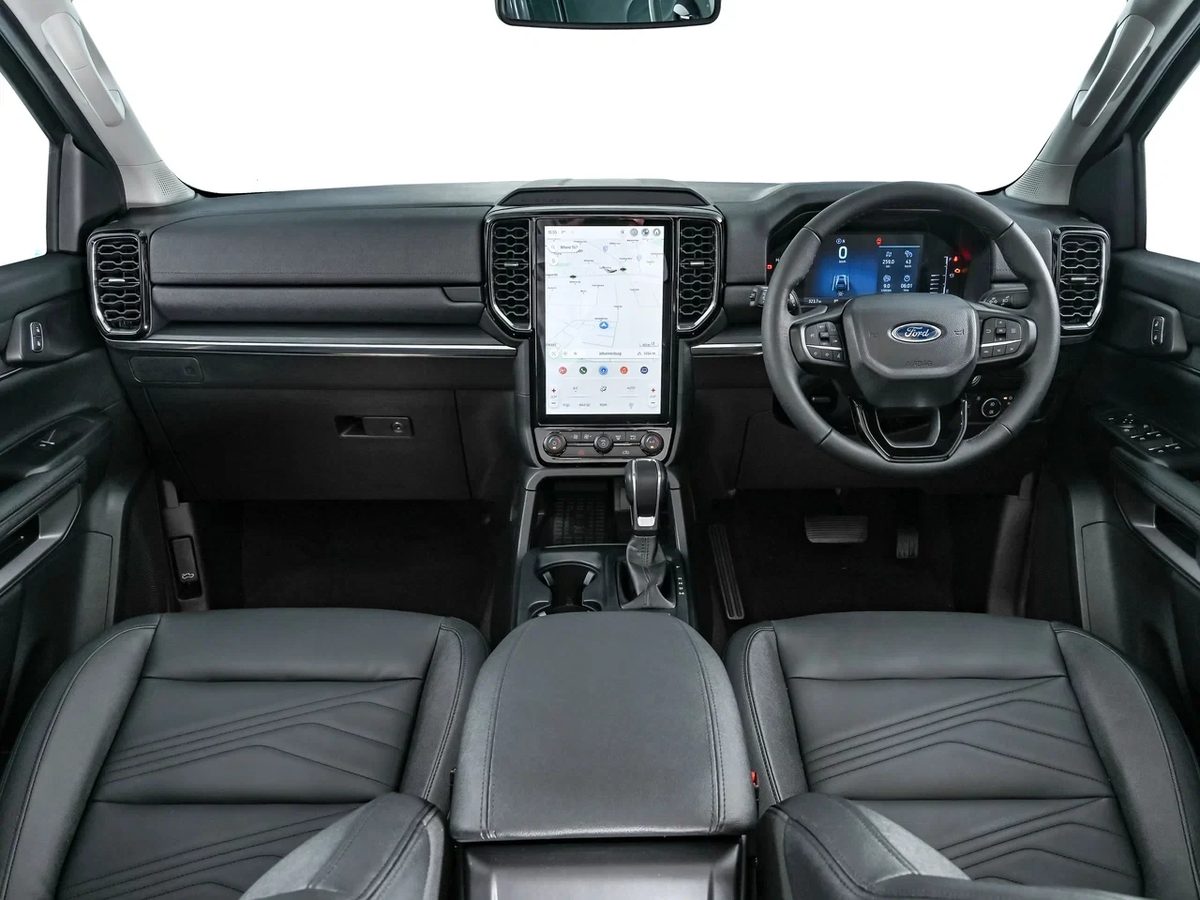
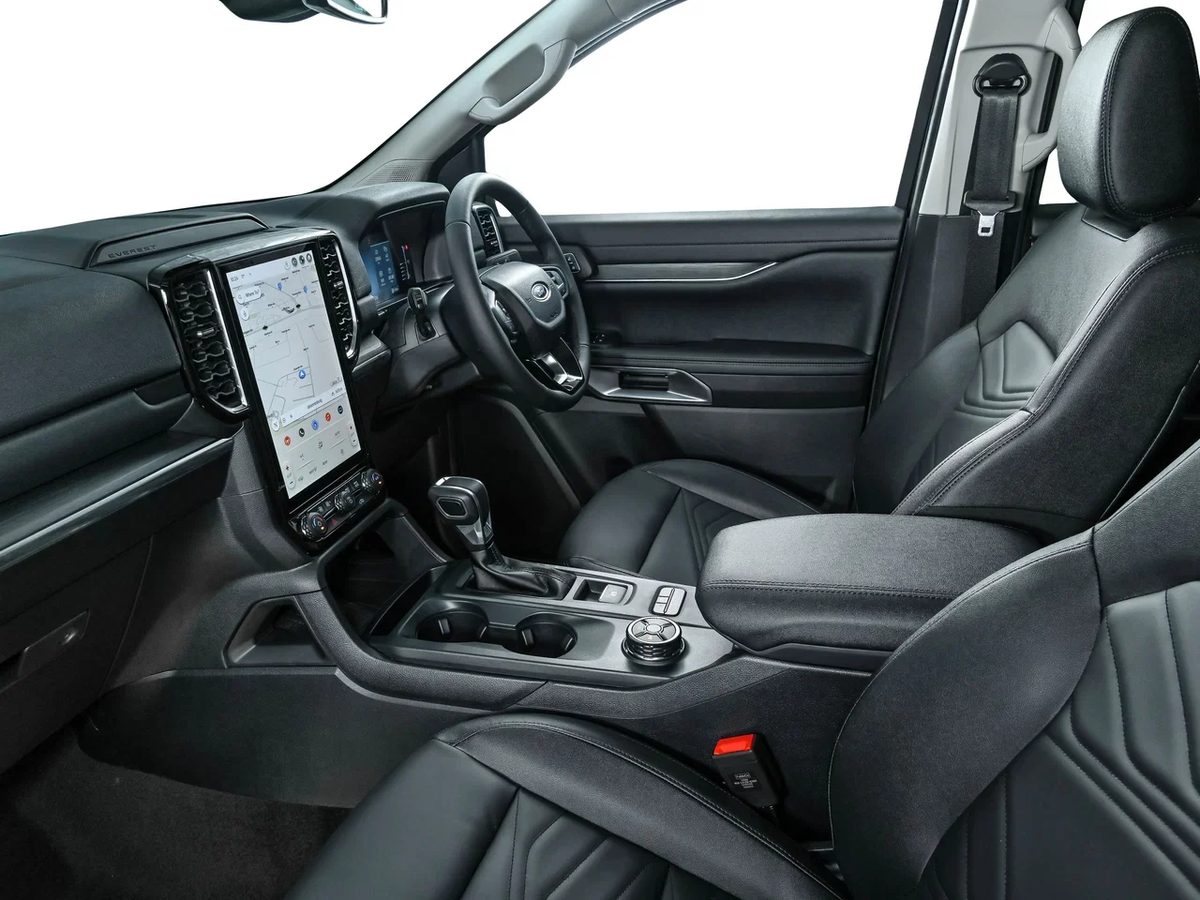
The Ford Everest is a body-on-frame SUV built on the same T6.2 ladder-frame platform as the current Ford Ranger pickup. It shares the Ranger’s engines and much of its front structure. Ford does not sell the Everest in North America; it is a mainstream model in Australia, across Southeast Asia (Thailand, the Philippines, Indonesia and neighbouring markets) and in South Africa, where body-on-frame SUVs derived from popular pickups are a large, established segment. The current generation seats up to seven across three rows.
Three diesel engines have carried the range. A 2.0-litre single-turbo inline-4 making 125 kW (168 hp) and 405 Nm became Australia’s entry engine with the MY26.5 update, replacing the 2.0-litre bi-turbo it once used there; the bi-turbo, at 154 kW (207 hp) and 500 Nm, is still offered in other markets. A 3.0-litre turbo-diesel V6 at 184 kW (247 hp) and 600 Nm sits above both on every grade. All three pair with a 10-speed automatic and four-wheel drive.
Australia runs a five-grade line-up for the 2027 model year. The Wolftrak replaces the Wildtrak and is offered with both engines. Over the Sport it adds Traction Green paint, leather-accented seats and the AUD 2,500 (~$1,800) Premium Towing Pack. Prices before on-road costs, single-turbo then V6: Active AUD 58,990 (~$42,100) or AUD 66,990 (~$47,900), Sport AUD 68,990 (~$49,300) or AUD 76,990 (~$55,000). The V6-only Tremor and the Wolftrak V6 are both AUD 79,990 (~$57,100), and the Platinum (V6 only) is AUD 82,917 (~$59,200). The single-turbo Wolftrak is quoted at AUD 73,000 (~$52,100) drive-away, which includes on-road costs. Ford builds the Everest in Thailand and South Africa for their respective regional markets, where trim names and engine-to-trim pairings differ from Australia’s.