Hyundai Grandeur platform and positioning
The Grandeur has been Hyundai’s flagship sedan since 1986 and remains one of South Korea’s best-selling cars: in July 2026 it registered 8,532 units, second only to the Tesla Model Y. This facelift of the seventh-generation model (launched 2022) went on sale on 14 May 2026, coincides with the nameplate’s 40th anniversary and is the most thorough interior overhaul of the current generation.
Generations: Seven Grandeurs have carried the name since 1986. The first was a rebadged Mitsubishi Debonair, the second (1992) was developed jointly with Mitsubishi, and the third (XG, 1998) was the first designed entirely in-house. Export markets knew the car as the XG and, from the fourth generation, as the Azera; Hyundai withdrew the Azera from North America after 2017 and handed that part of the range to Genesis, so the sixth and seventh generations have not been sold there. The GN7 arrived in 2022.
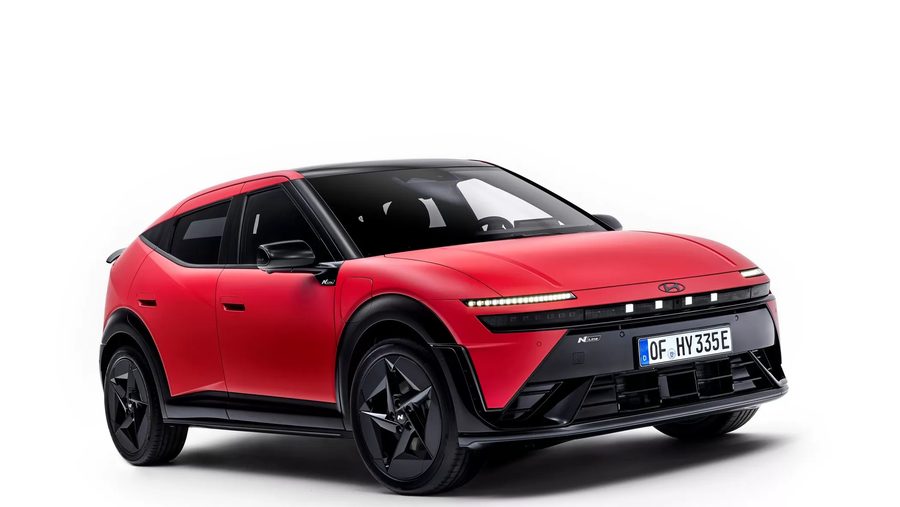
There is no production electric Grandeur. The battery-electric car photographed under the name is the Heritage Series Grandeur, shown in November 2021: a first-generation car rebuilt around an electric powertrain with pixel lighting and a velvet-and-Napa-leather cabin, built as a single design study and never offered for sale. The 1.6 T-GDI hybrid is the only electrified Grandeur on the price list.
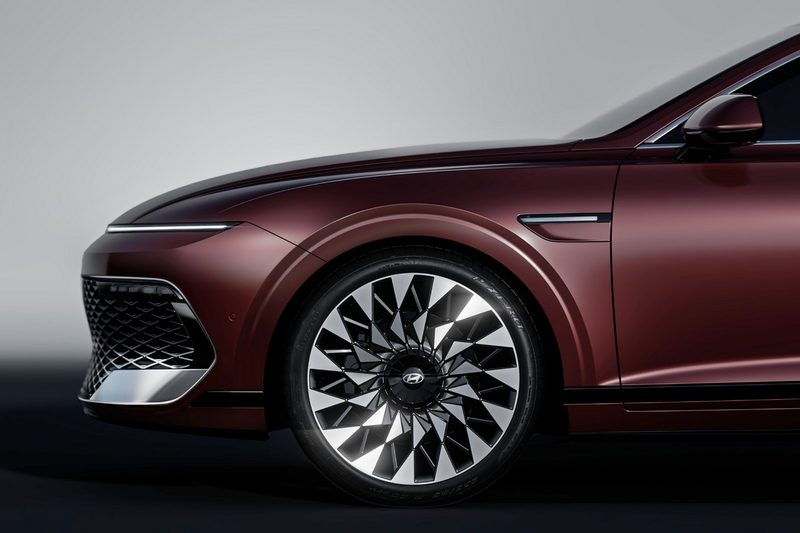
Platform: The GN7 architecture carries over unchanged, on a 2,895 mm wheelbase. The only exterior dimension change is a 15 mm increase in overall length to 5,050 mm, achieved through revised front and rear styling. Wheel options range from 18” to 20”. Boot space is 480 litres (VDA), or 320 litres in the LPG car, whose gas tank takes up part of the boot.
Hyundai Grandeur powertrain
Powertrains: The Grandeur offers four engine options for the Korean market. The base 2.5-litre GDI produces 198 PS (195 hp) and 248 Nm, paired with an eight-speed automatic and front-wheel drive. The V6 3.5-litre GDI develops 300 PS (296 hp) and 359 Nm and is offered in front- or HTRAC all-wheel drive. An LPG-fuelled V6 3.5 (South Korea has a significant LPG taxi and government fleet market) produces 240 PS (237 hp) and 314 Nm. The hybrid combines a 1.6-litre turbocharged petrol engine of 180 PS with a 47.7 kW electric motor for 239 PS (236 hp) combined, through a six-speed automatic. Its stay mode can run the air conditioning, audio and lighting from the hybrid battery without starting the engine while the car is parked.
Fuel economy on the Korean combined cycle runs from 15.9 to 18.4 km/L for the hybrid, depending on wheel size, 11.0 to 11.6 km/L for the 2.5, 8.9 to 10.0 km/L for the 3.5 V6 and 7.4 to 7.7 km/L for the LPG car. In Korea the hybrid’s motor, high-voltage battery and power control unit carry a 10-year, 200,000 km warranty.
Hyundai Grandeur design
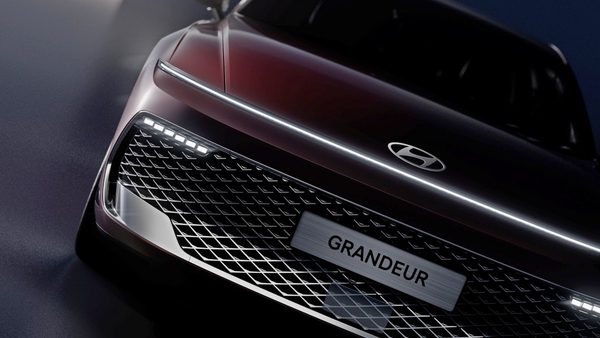
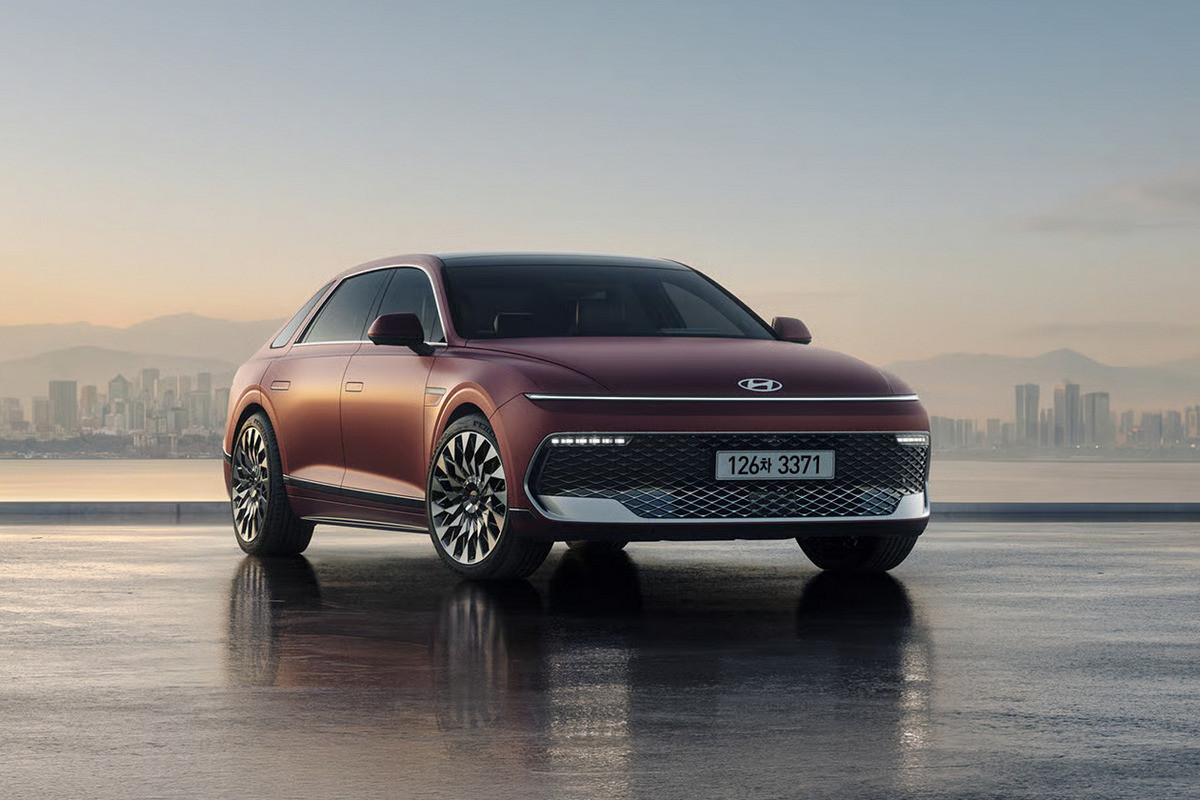
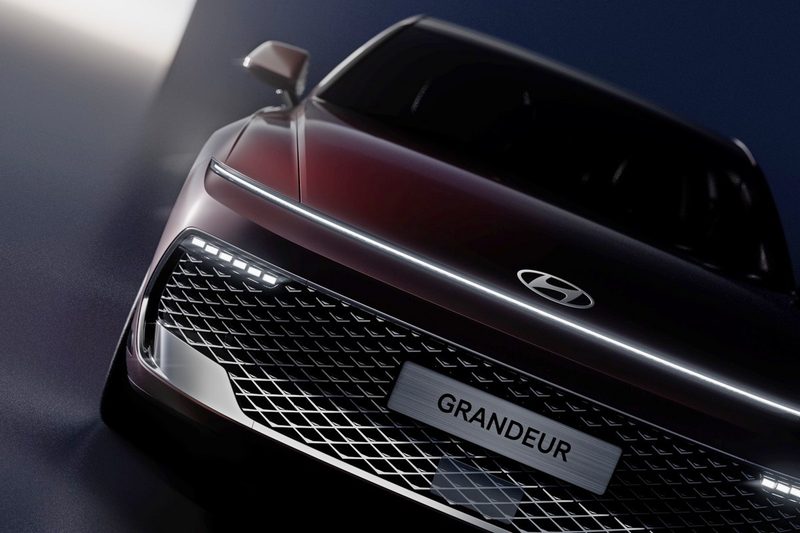
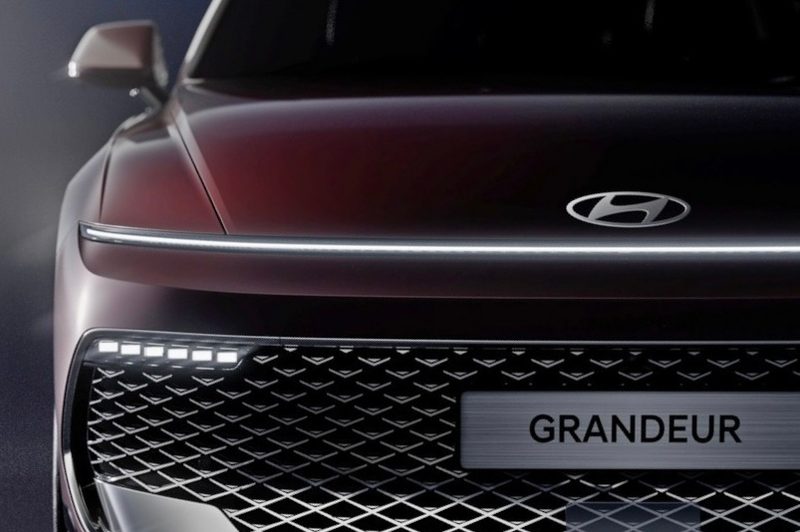
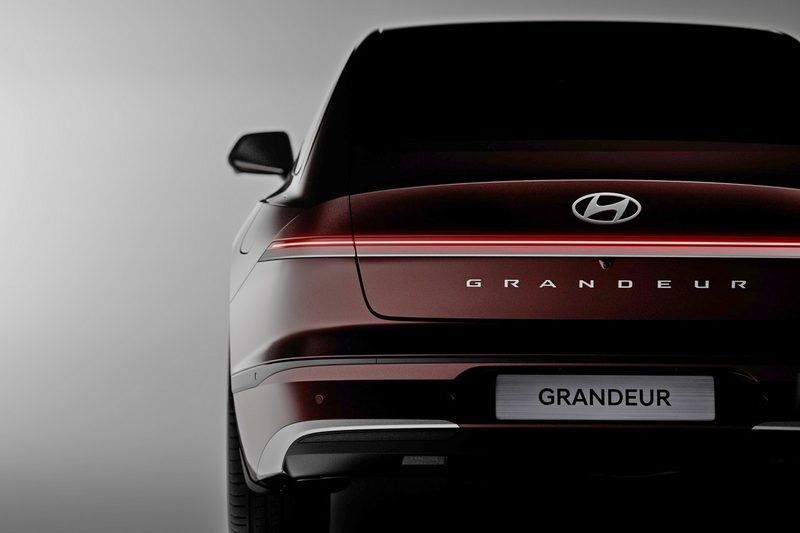
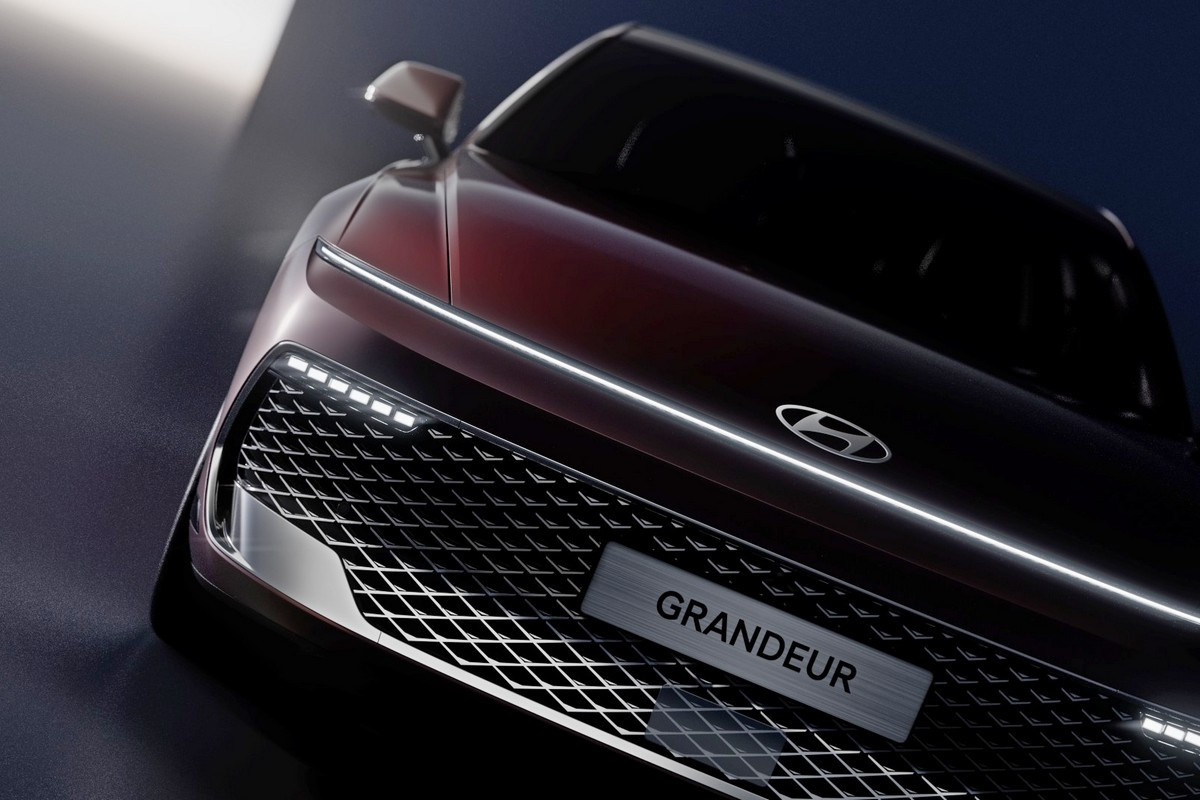
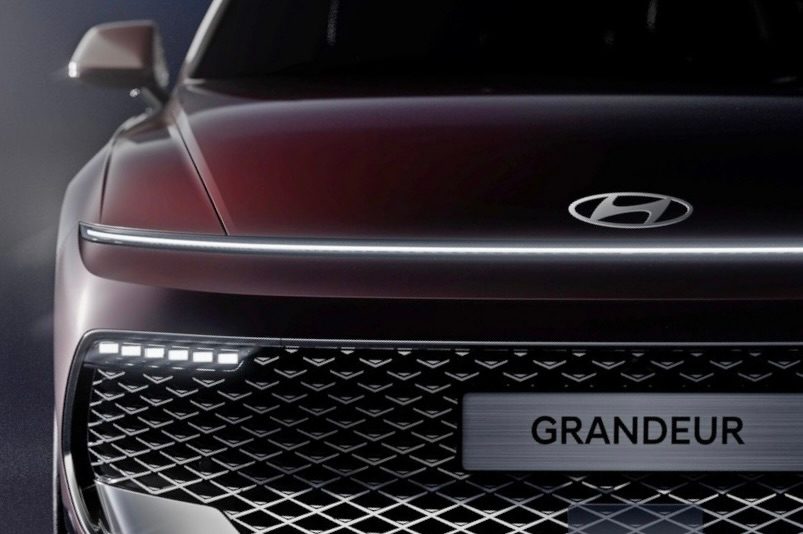
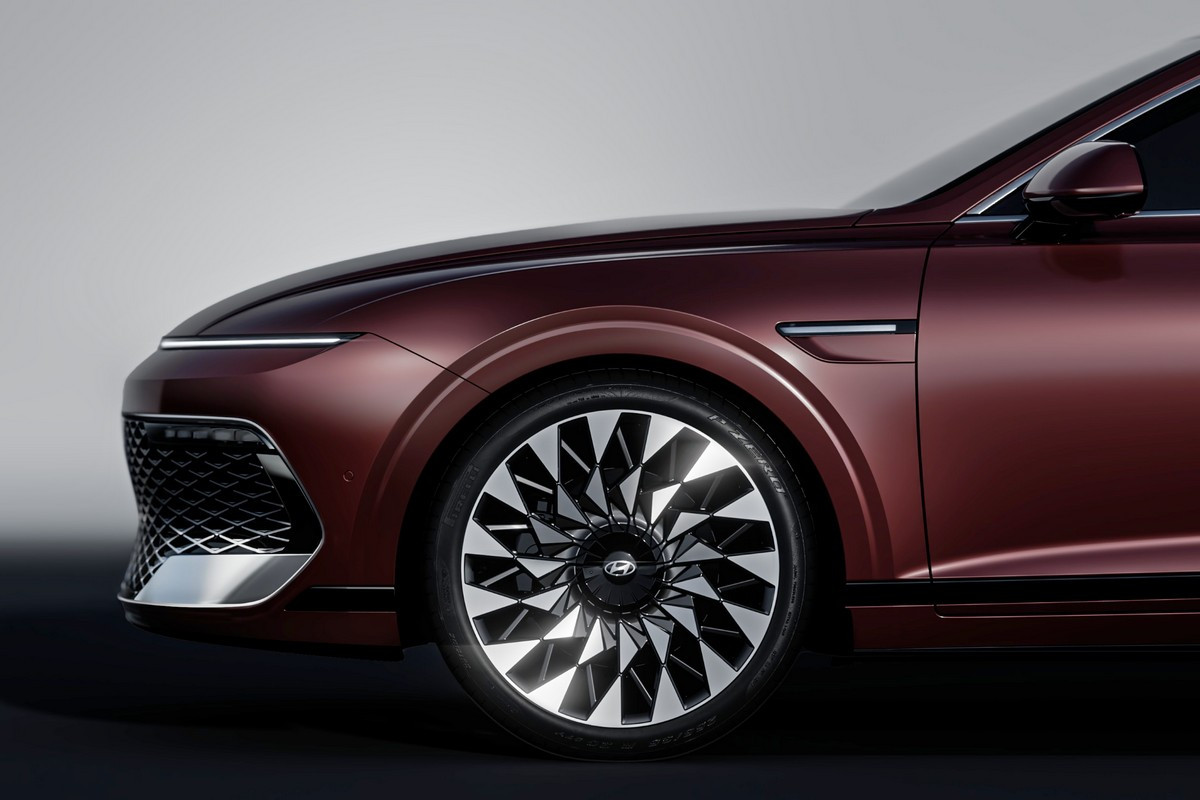
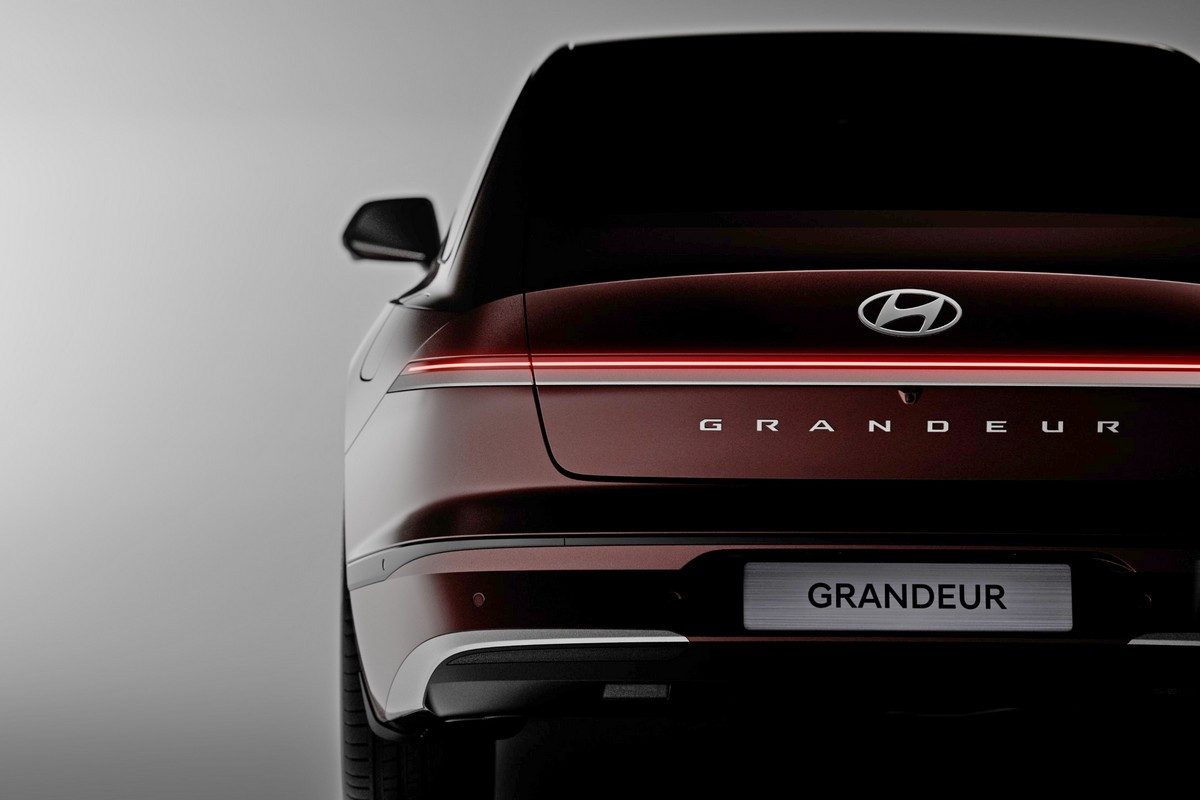
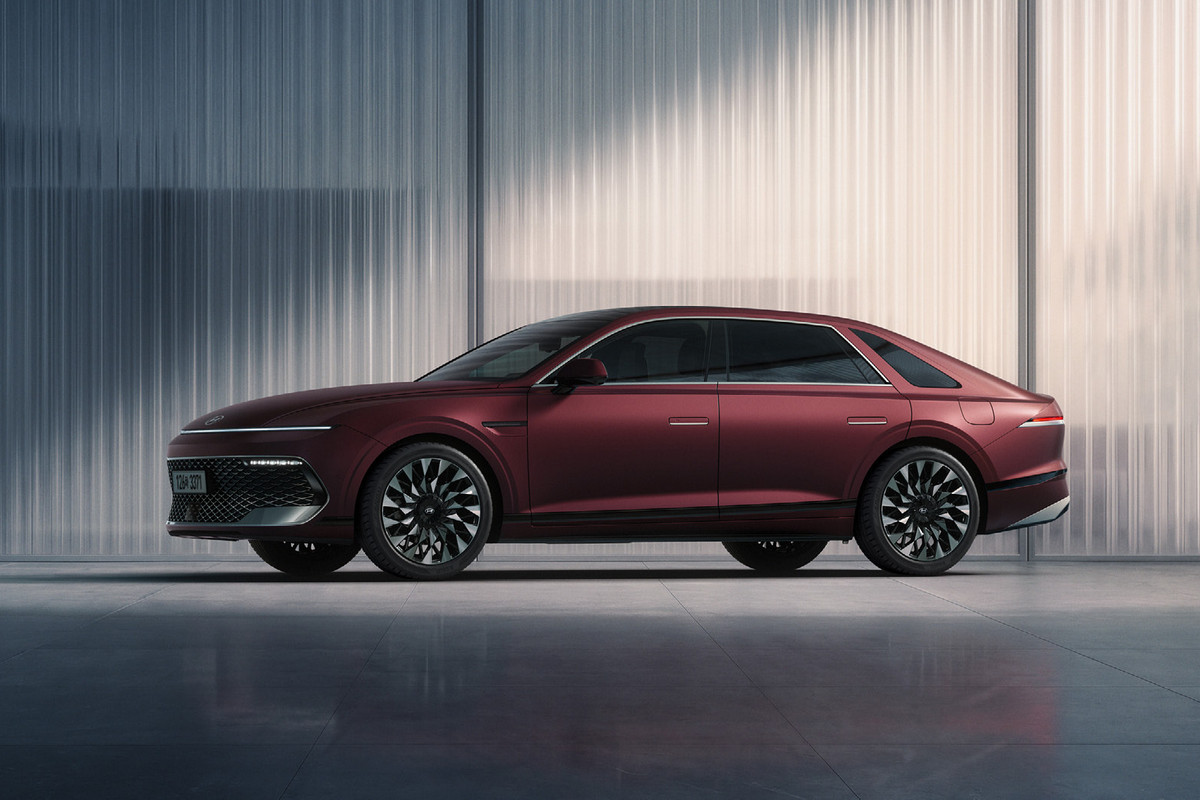
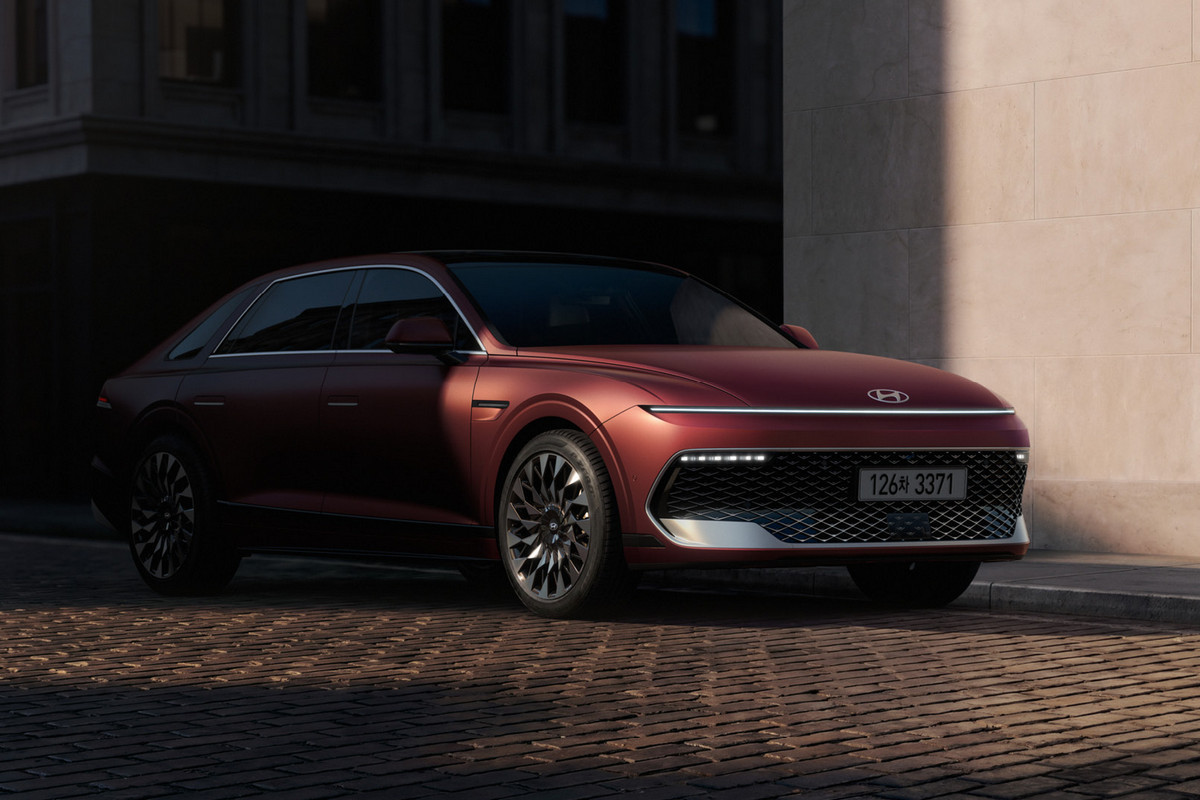
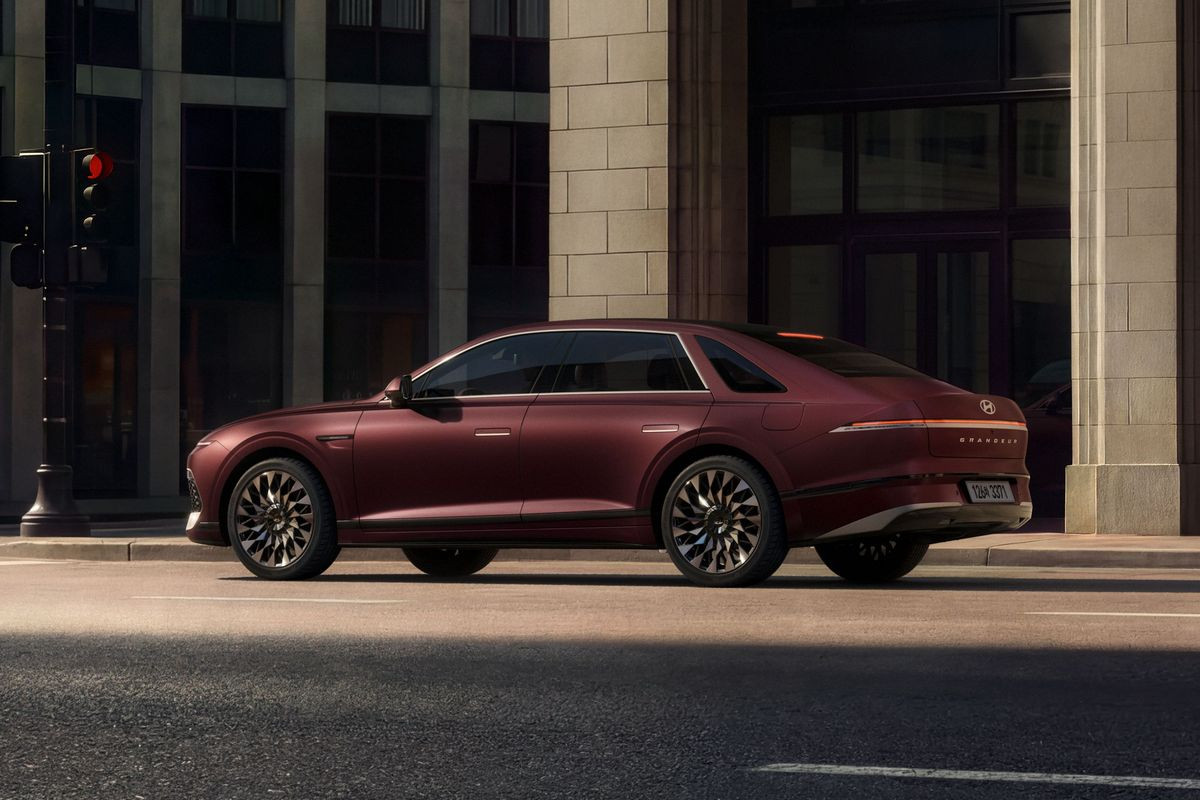
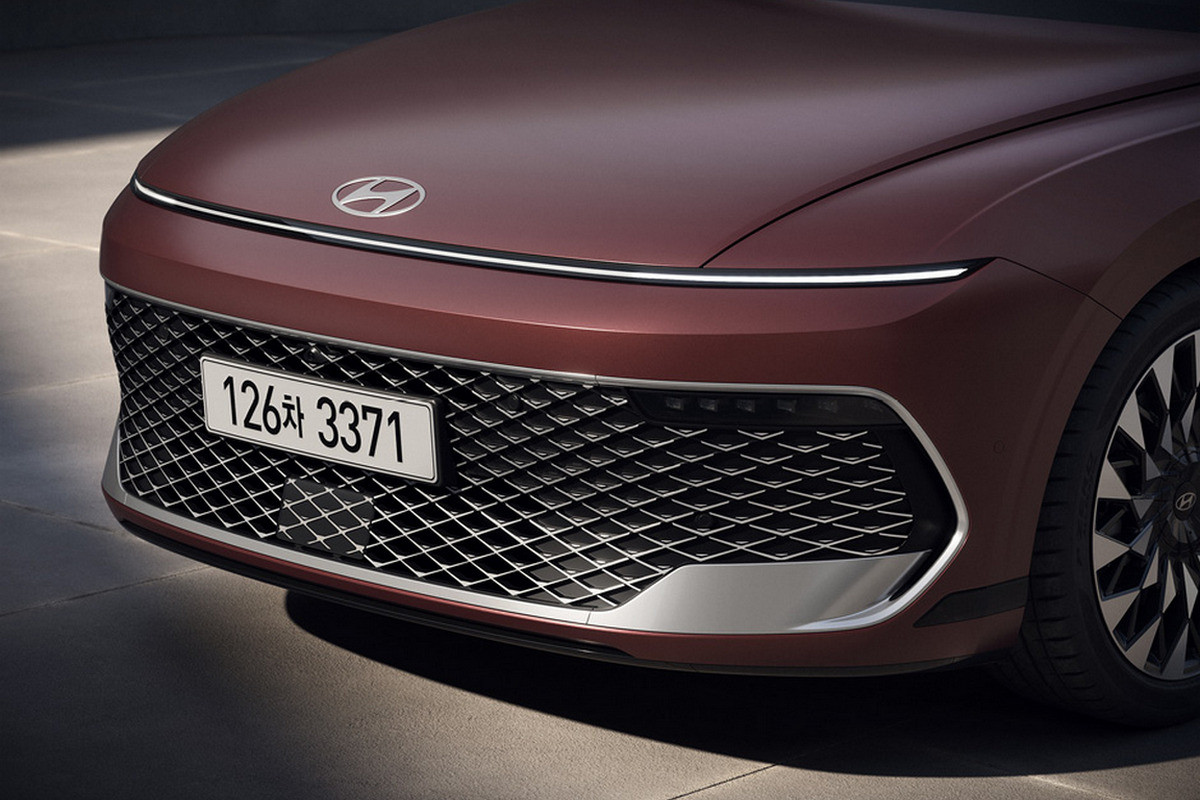
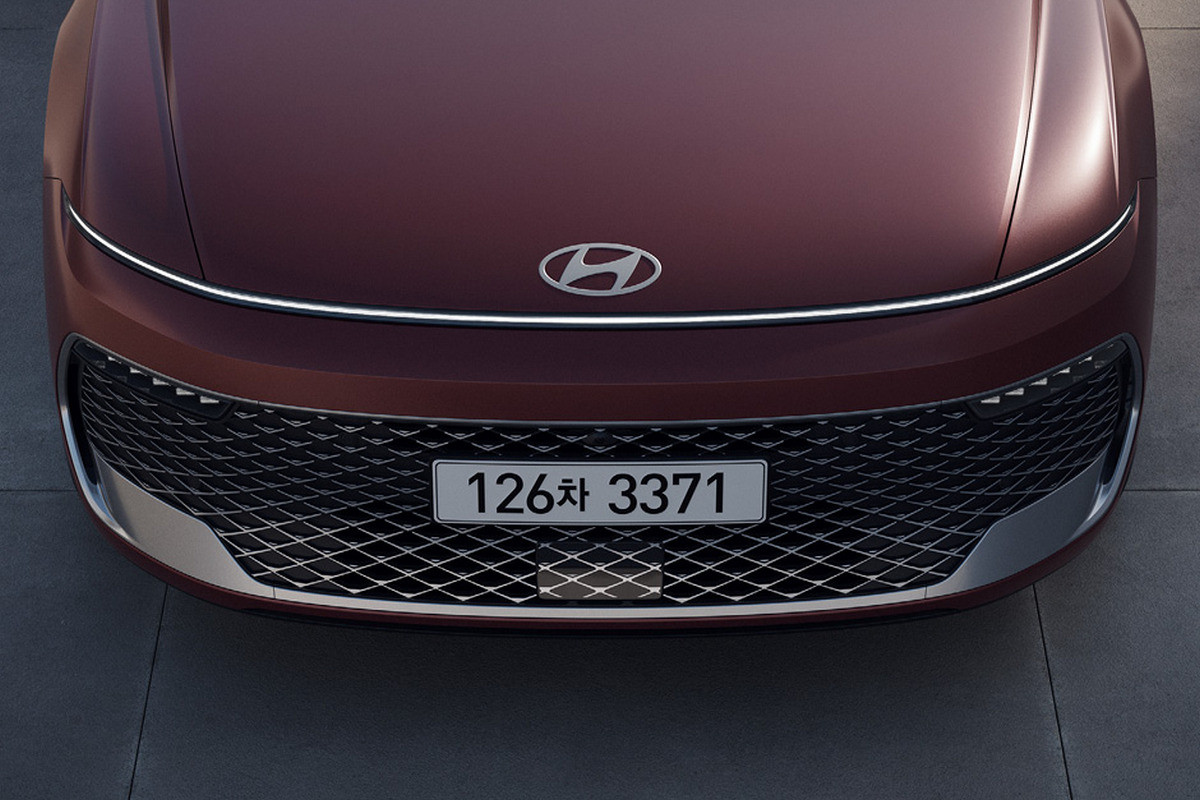
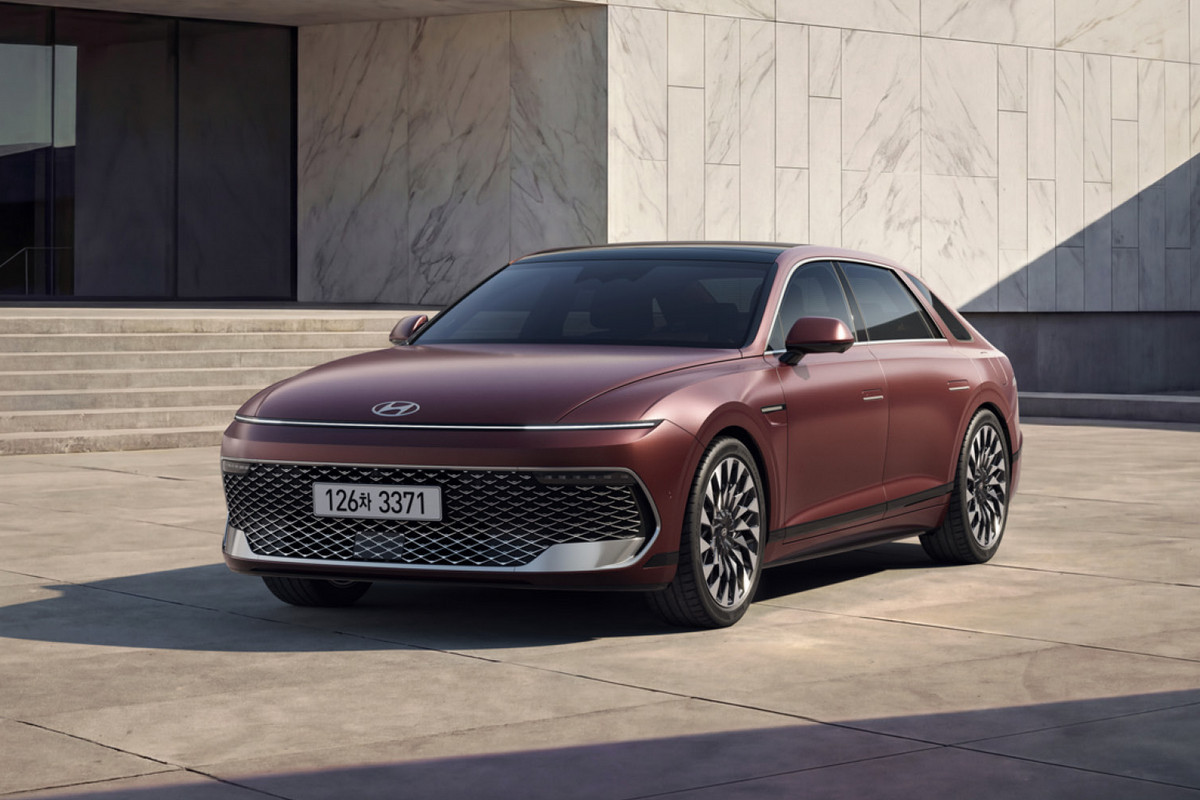
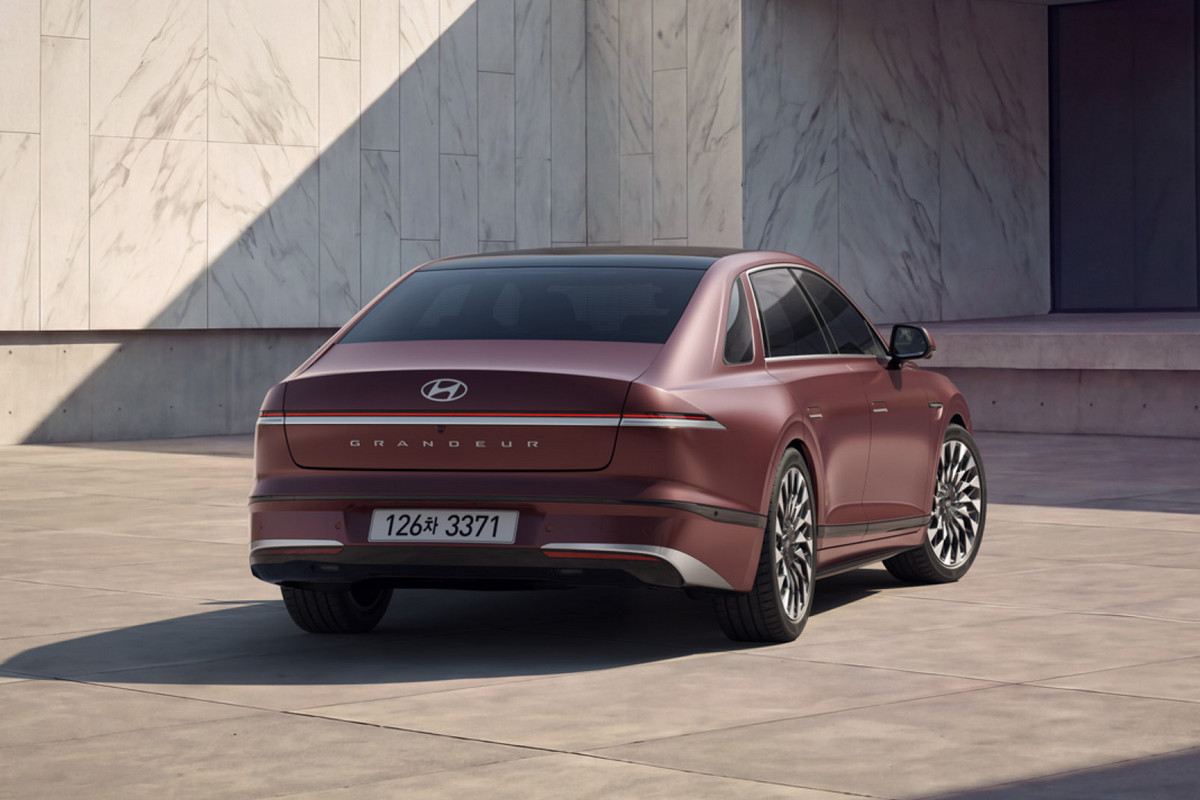
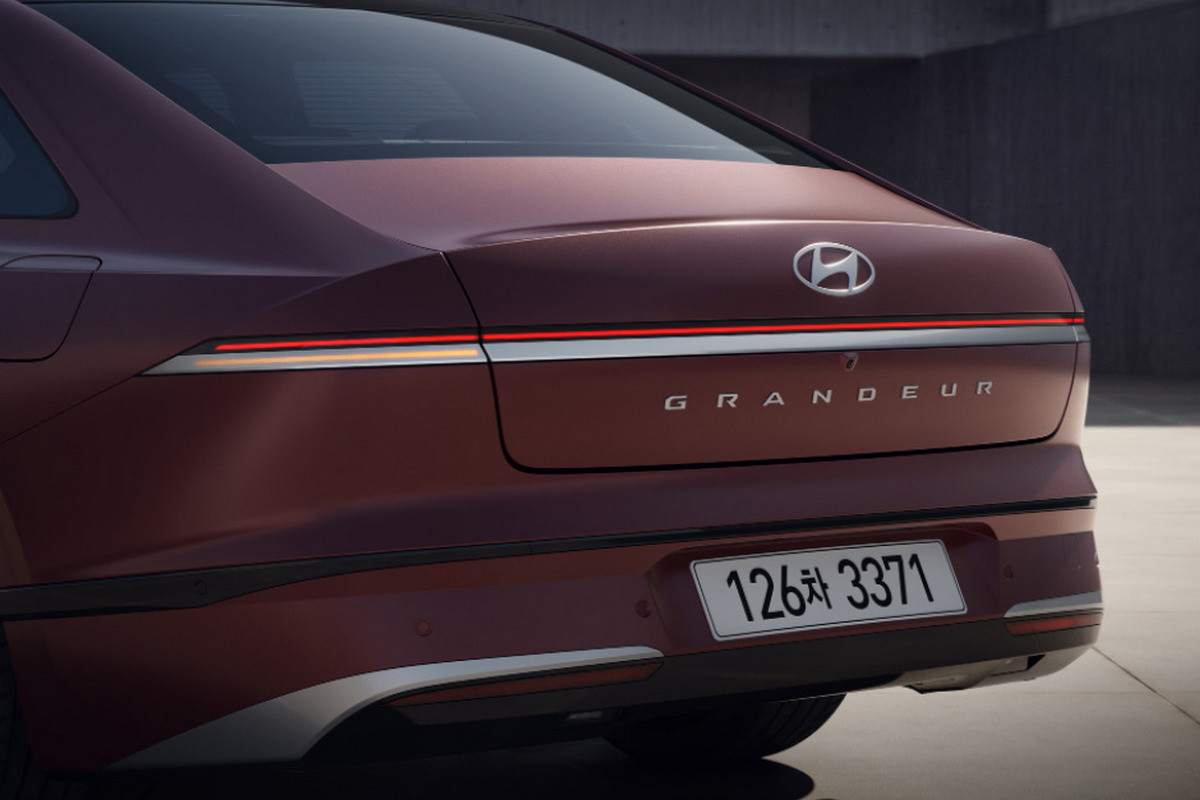
Exterior: Updated front bumper and grille extend the bonnet visually in a “shark nose” profile. The full-width LED front light bar is retained, but vertical DRL elements are replaced by narrow horizontal units. Rear turn indicators have been repositioned higher in the body.
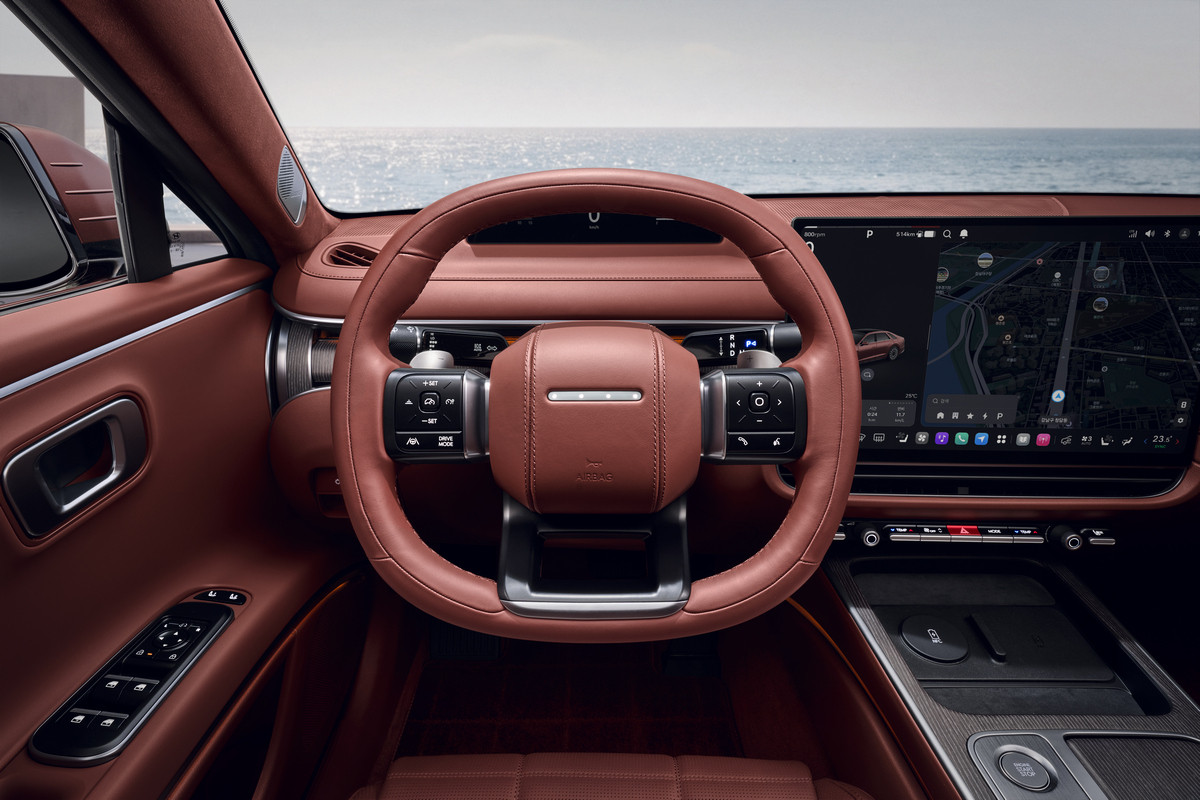
Inside the Hyundai Grandeur
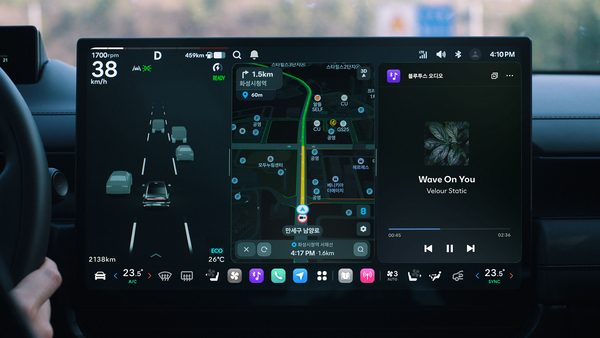
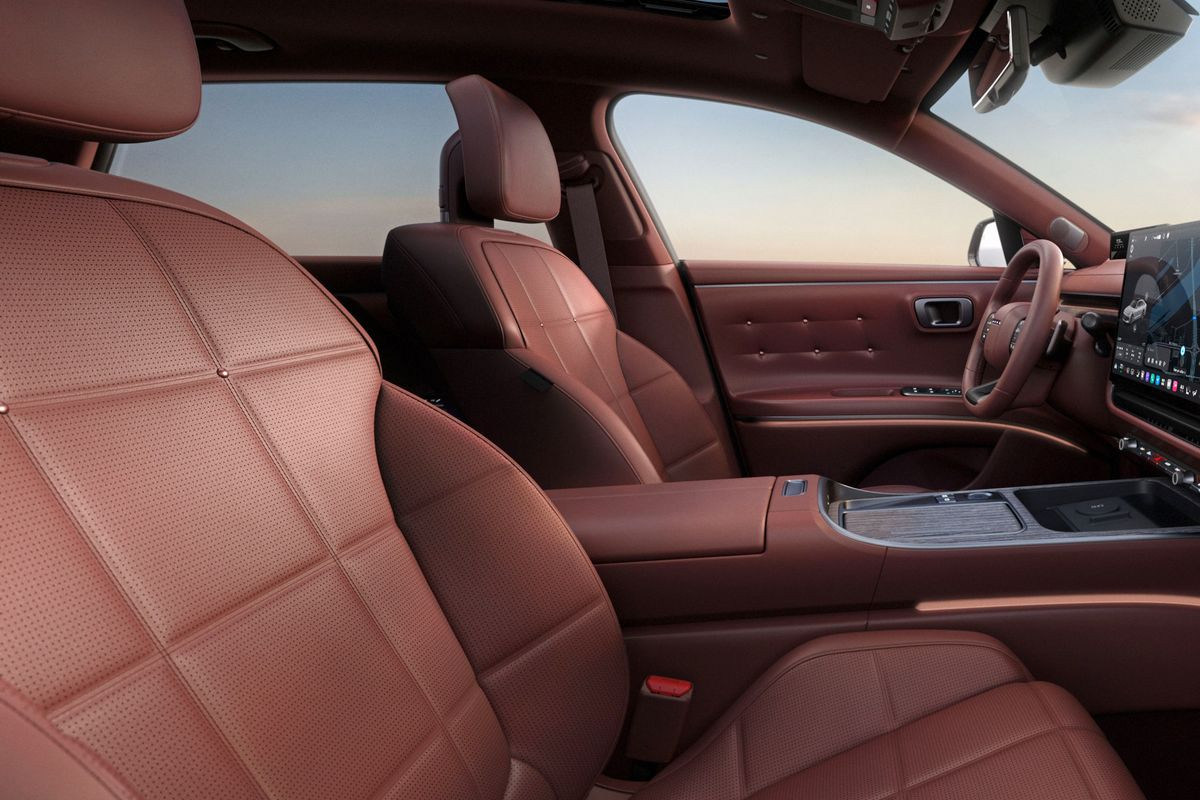
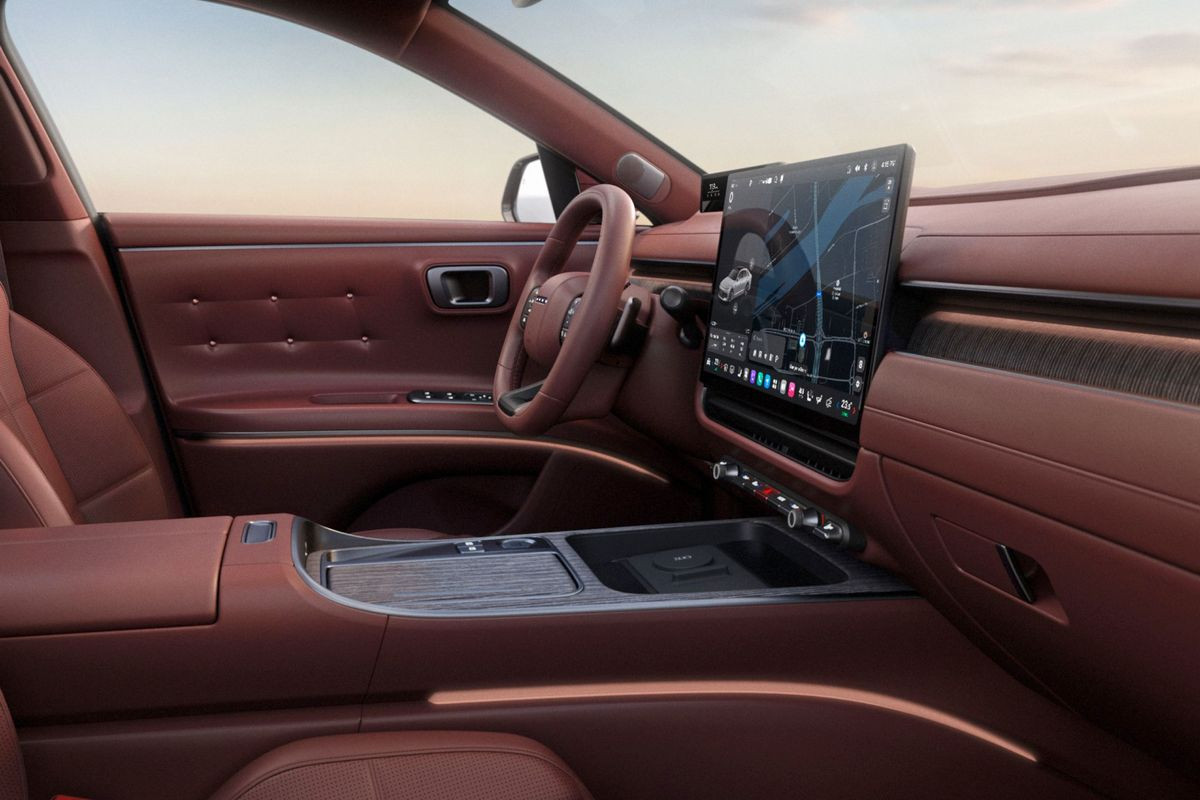
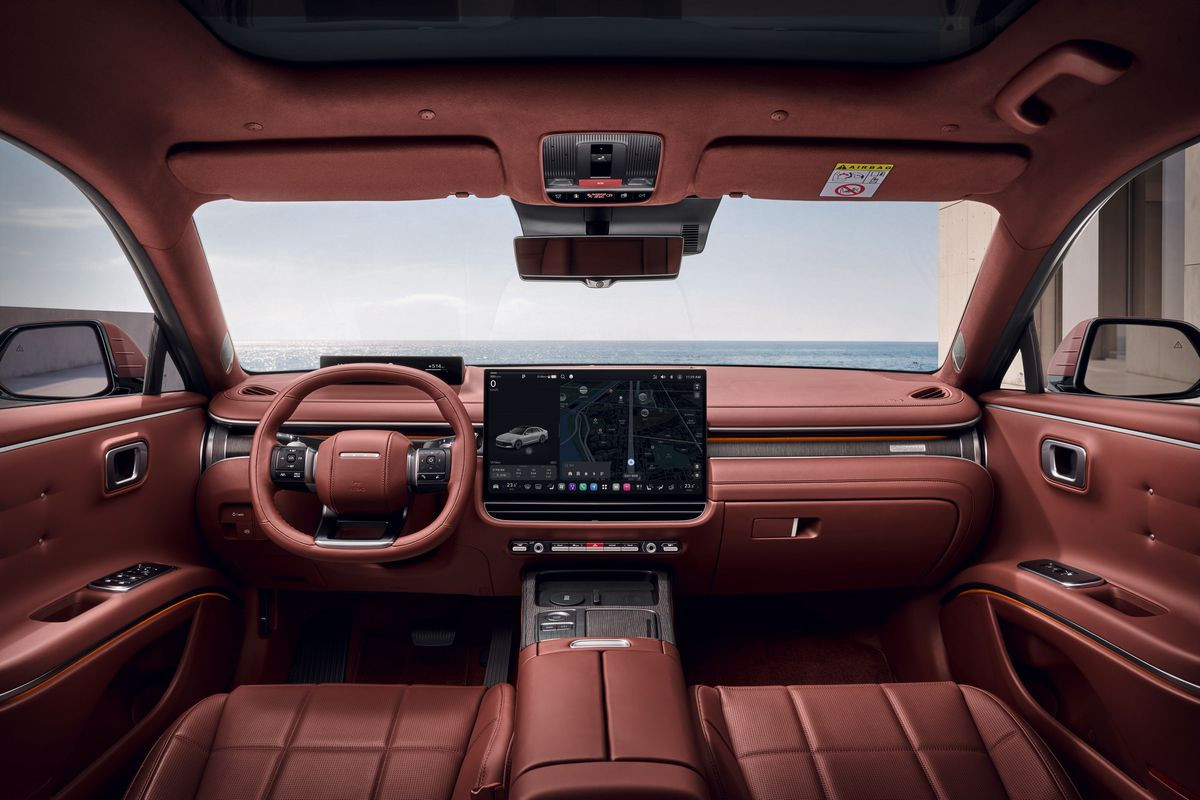
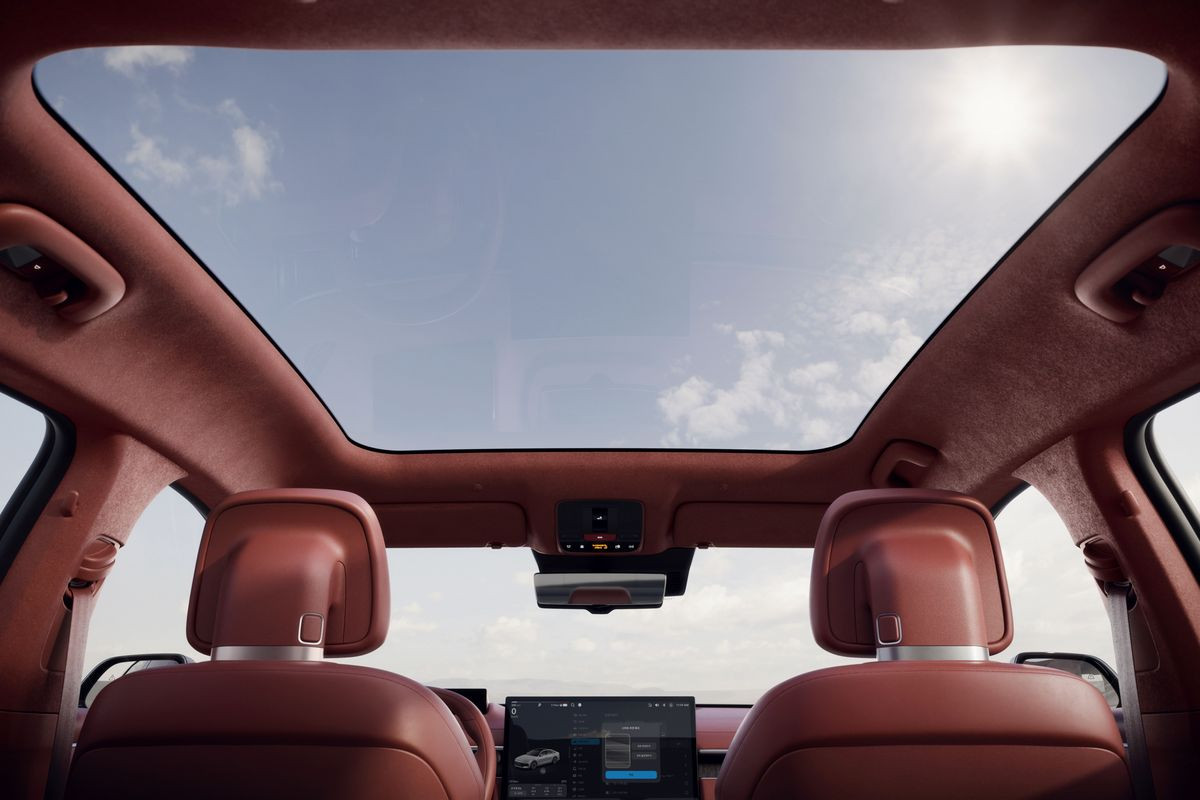
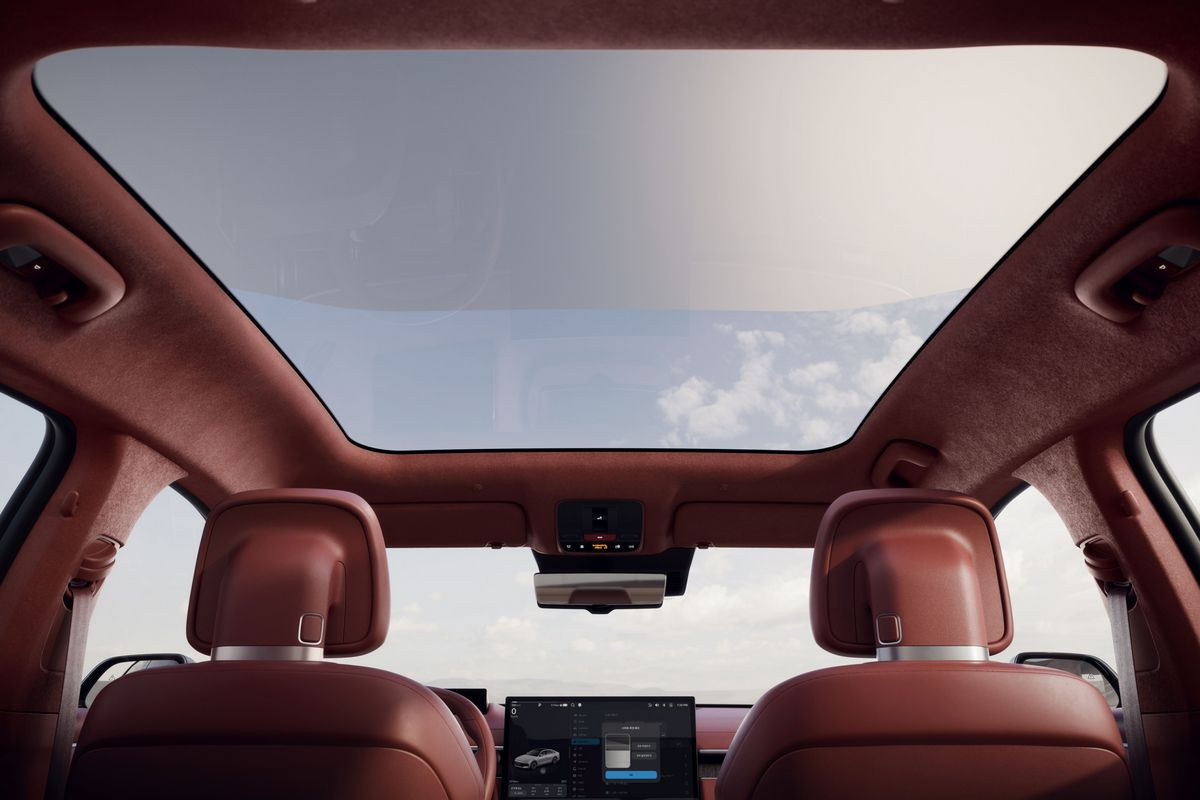
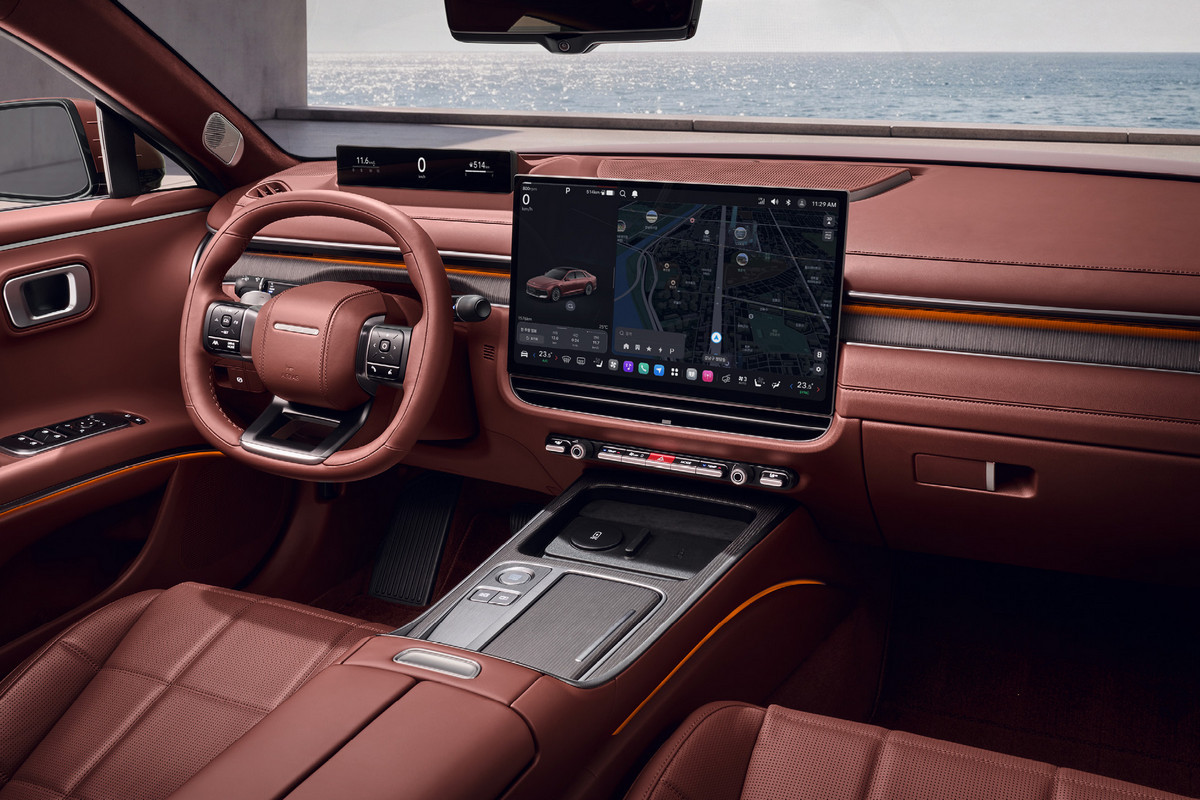
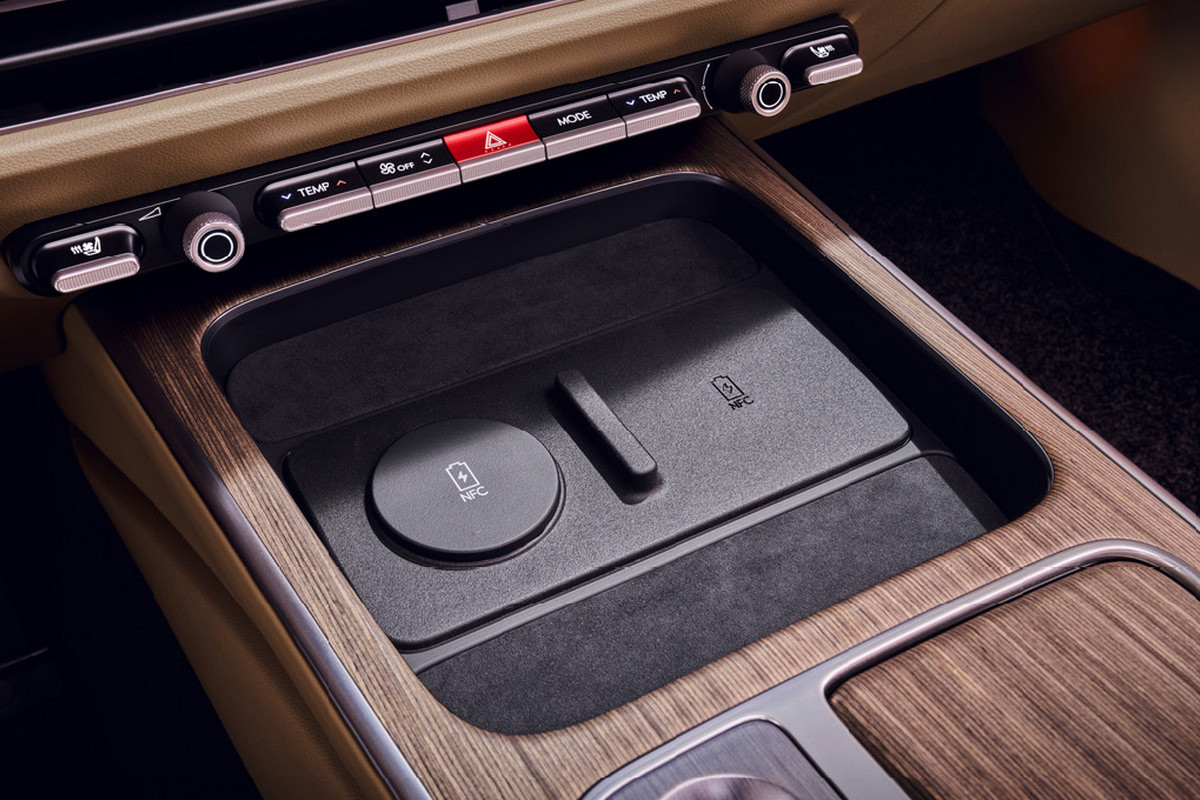
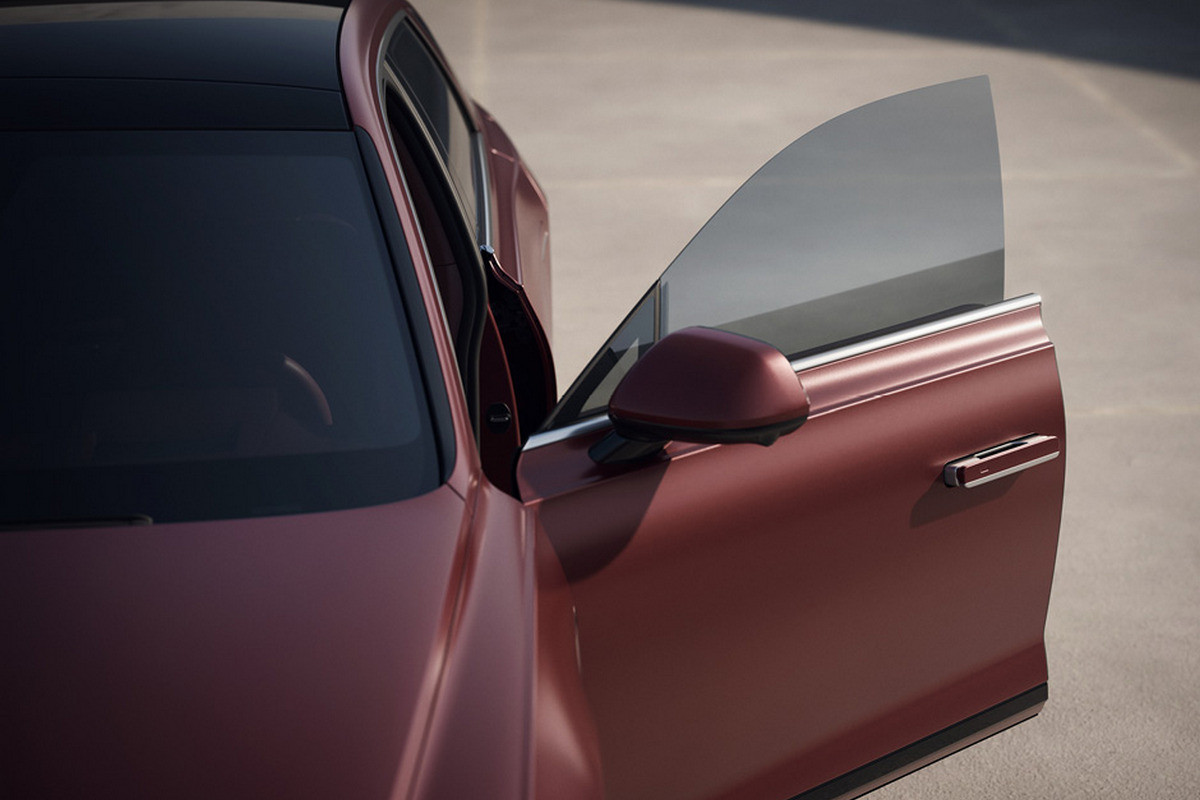
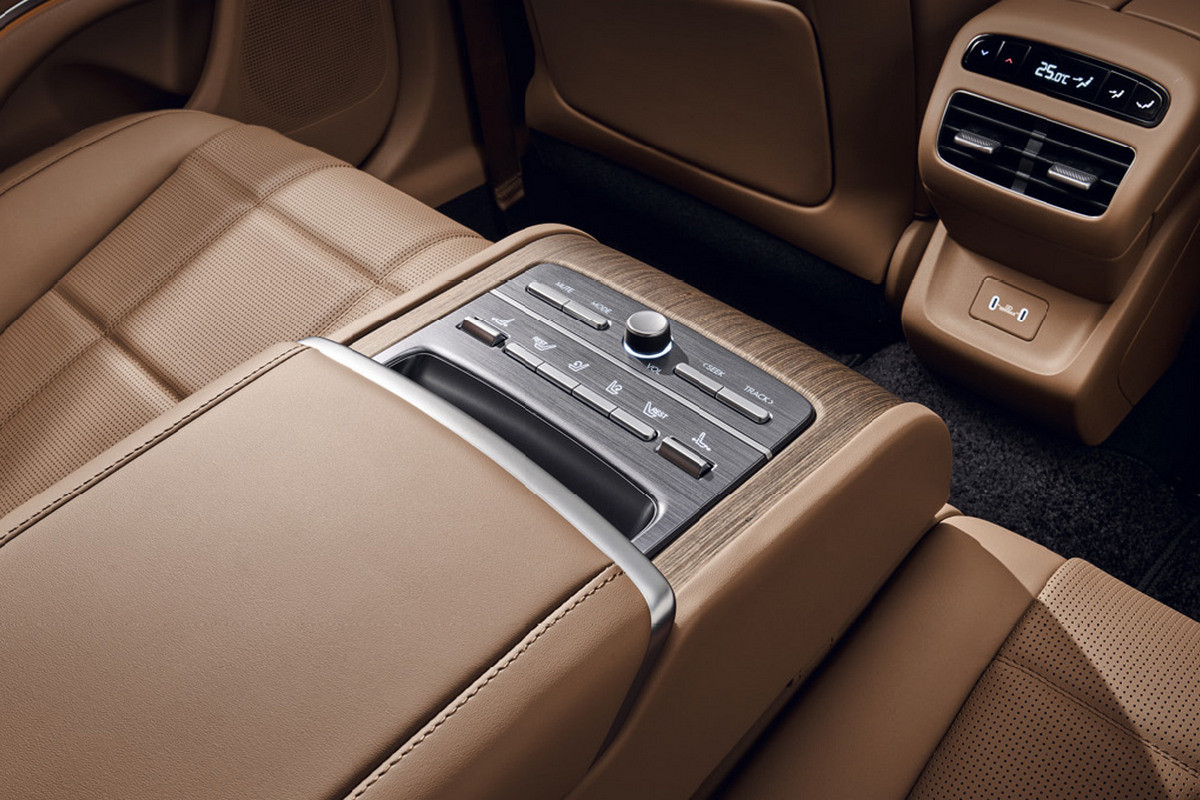
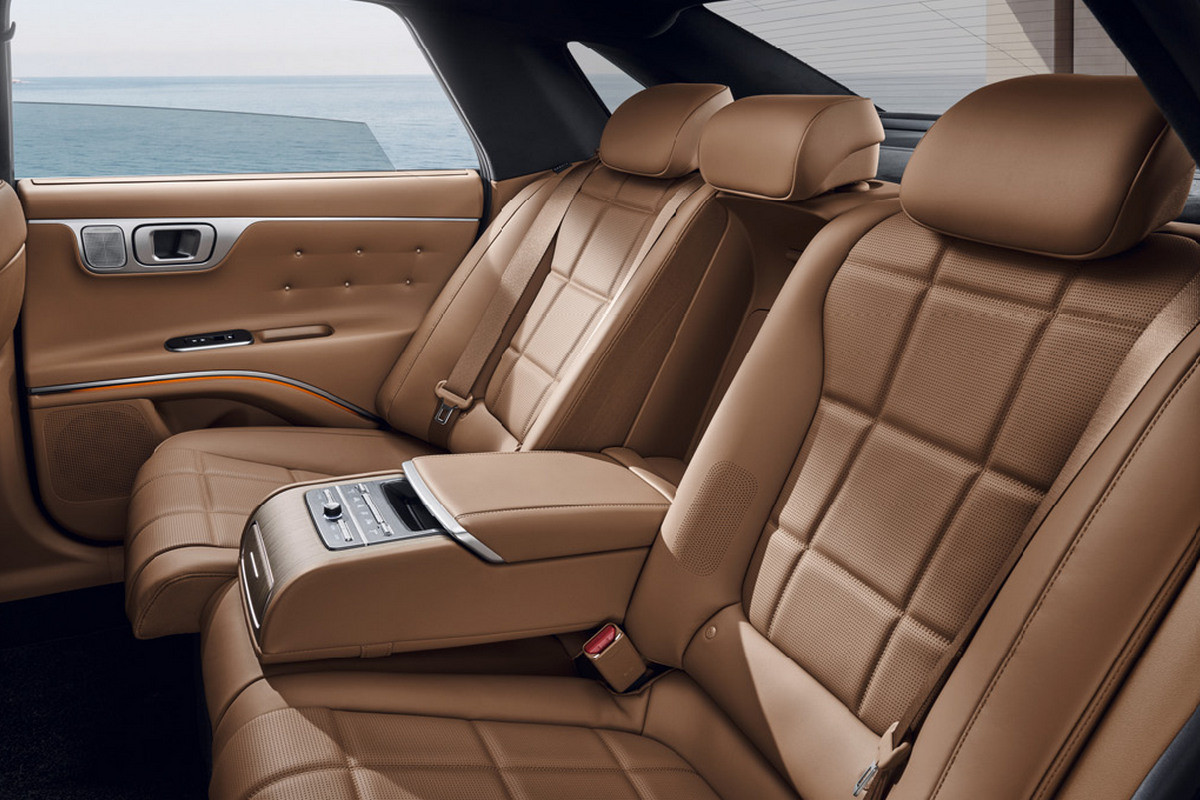
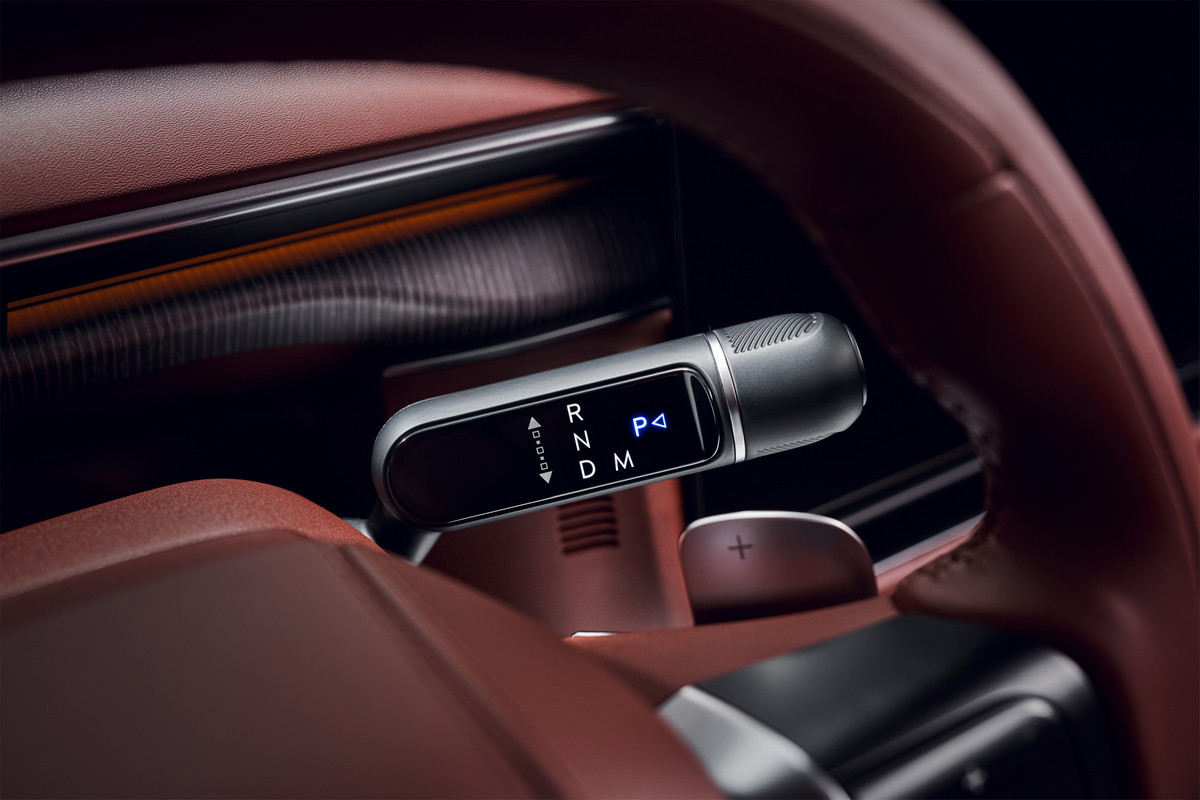
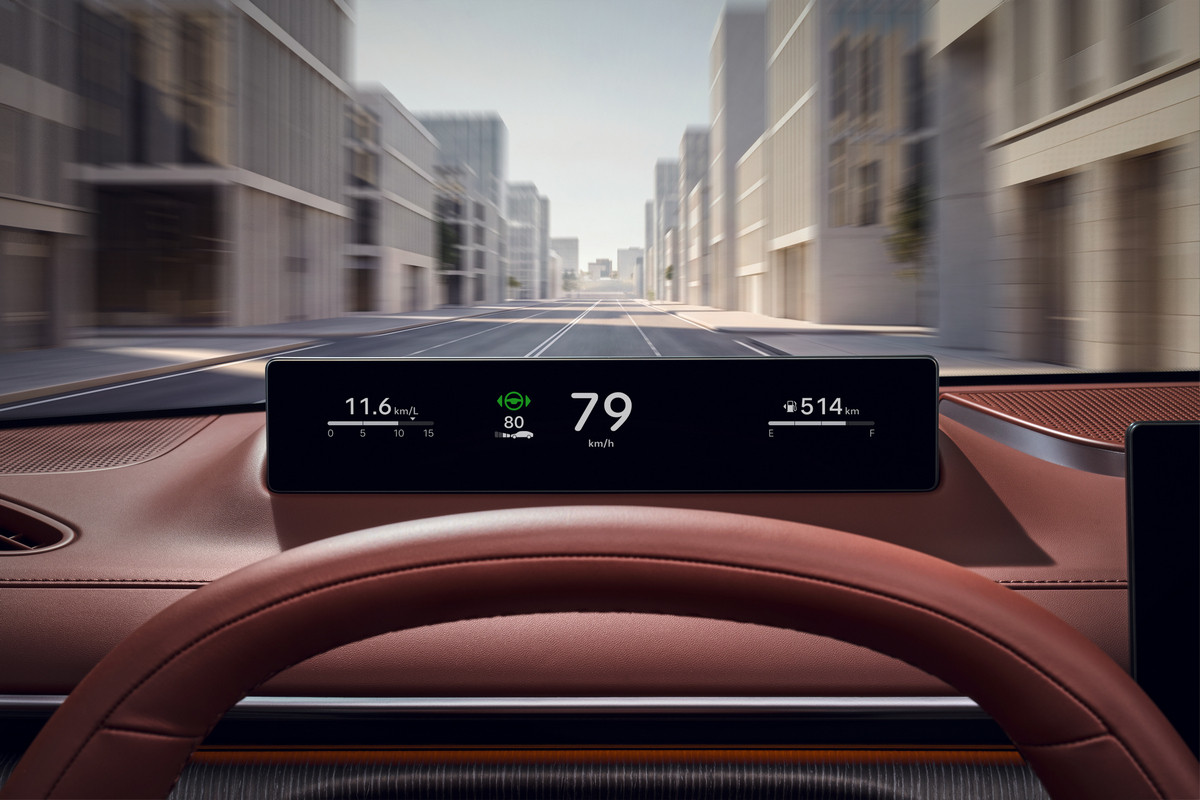
Interior: Completely redesigned. The centrepiece is a 17-inch Pleos Connect infotainment display running Android Automotive OS - the first Hyundai to use this platform, enabling native Google Maps and Play Store access, with Hyundai’s Gleo AI voice assistant. A slim 9.9-inch driver display sits ahead of the wheel, and physical climate controls return after some criticism of the previous touchscreen-only arrangement. The optional Smart Vision Roof is Hyundai’s first panoramic roof without a mechanical sunshade: a liquid-crystal film lets each of its six sections switch between clear and opaque. The Calligraphy trim adds a 14-speaker Bose audio system, a head-up display, three-zone climate control and ventilated rear seats; on lower trims the Bose system and the head-up display are options.
Hyundai Grandeur price and trims
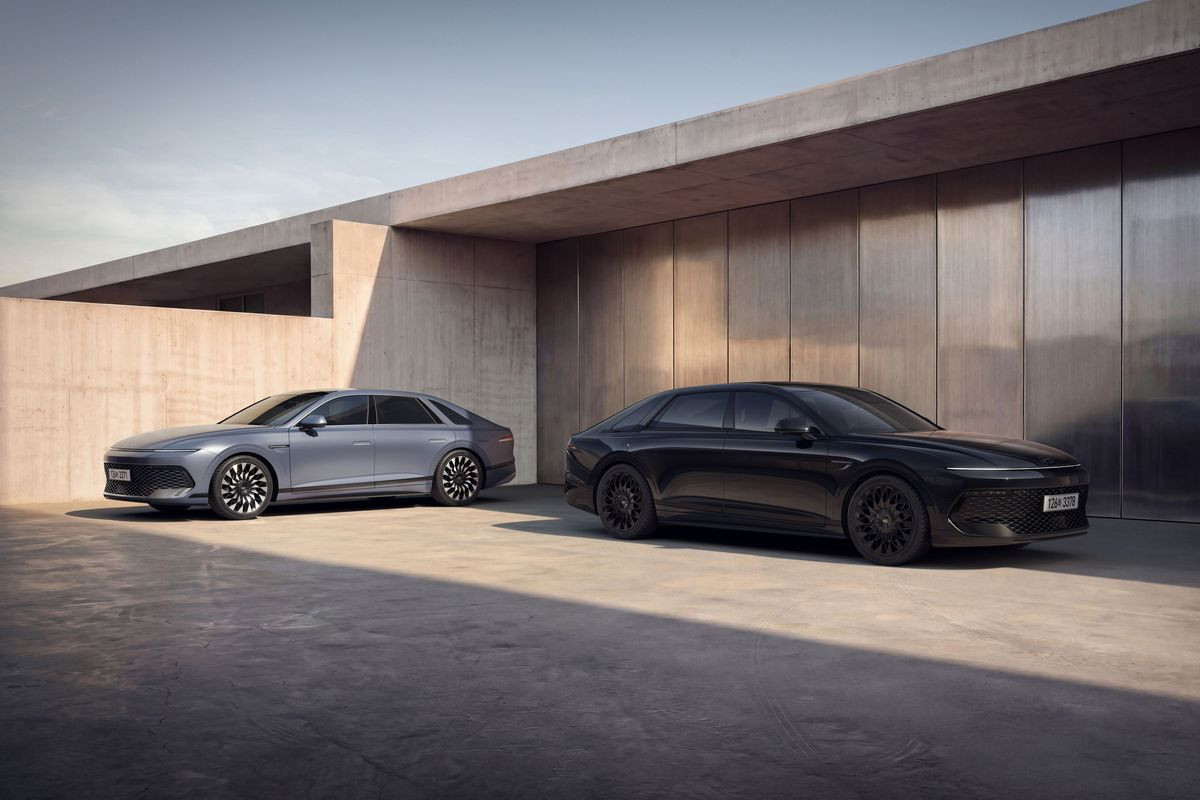
The facelifted Grandeur is sold in South Korea as the 2027 model year, from 42,450,000 won (~$30,600) for the 2.5 GDI Premium. The LPG V6 opens at 43,930,000 won (~$31,700), the V6 3.5 GDI at 44,910,000 won (~$32,400) and the V6 with HTRAC all-wheel drive at 47,110,000 won (~$34,000). The hybrid starts at 48,330,000 won (~$34,900) after its eco-car tax benefit (49,330,000 won (~$35,600) before it) and runs to 59,890,000 won (~$43,200) for the Calligraphy Black Ink. Above the Premium sit the Exclusive, Calligraphy and Black Ink trims; the 2.5 GDI runs to 54,000,000 won (~$39,000) as a Black Ink.
Every figure here is Hyundai’s Korean list price, re-checked in October 2026. Korea’s temporary cut in the individual consumption tax, from 5% to 3.5%, ended on 30 June 2026, which put roughly 600,000 won (~$400) on each petrol and LPG Grandeur from 1 July. The hybrid’s eco-car tax benefit runs to the end of 2026.