 Romania
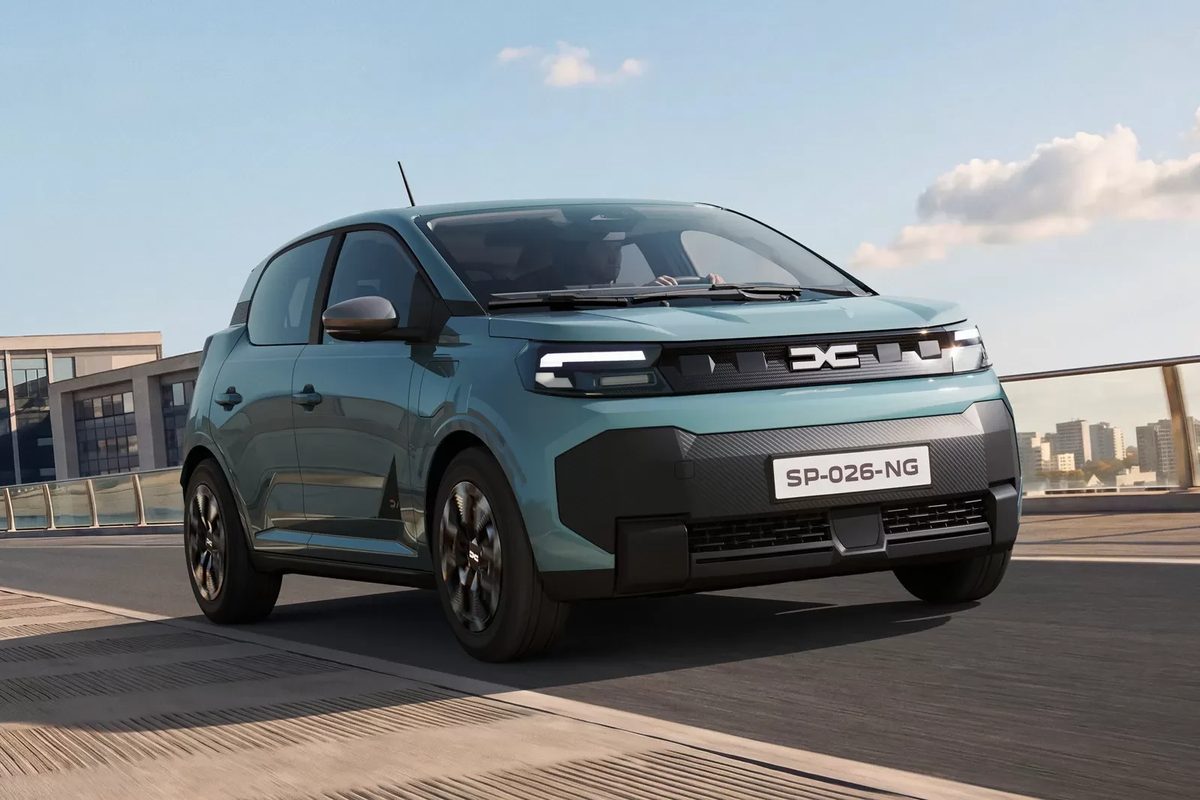
Dacia has revealed the second-generation Spring and opened order books in France, with prices from €17,990 (about $19,600). The car that arrives is not a facelift of the outgoing model. The first Spring was a rebadged Renault City K-ZE assembled in Hubei, China, and sold in Europe as an import; the new one is a ground-up design on Renault Group’s RG-EV small platform, and it is built at Novo Mesto in Slovenia, in the plant Renault’s subsidiary Revoz has run since 1988.
Why the factory matters
Moving assembly from China to Slovenia puts Dacia’s cheapest electric model inside the European Union, alongside the Renault Twingo E-Tech and the Clio that share the Novo Mesto lines. It is the harder version of the same commercial problem the first Spring solved by importing: European labour and European components cost more, and the price had to hold anyway. It roughly has. The outgoing car opened under €18,000 in France, and so does the new one, before the state purchase incentive of €3,620 to €6,180 that most French buyers qualify for depending on household income.
What the car is
A single front-mounted motor makes 60 kW, which Dacia quotes as 80 hp, with 175 Nm of torque. That takes the Spring to 100 km/h in 12.1 seconds and gives it a 130 km/h top speed. The battery is a 27.5 kWh LFP pack rated at up to 250 km on the WLTP cycle, and consumption starts at 12.7 kWh/100 km. Direct-current charging peaks at 50 kW, covering 15 to 80 percent in 28 minutes, while a 7 kW home wallbox needs 2 hours 55 minutes.
The body has grown to 3,850 mm long, 15 cm more than before, and it is 18 cm wider, though the height is unchanged at 1.52 m. Weight starts at 1,212 kg. The boot holds 337 litres, or 1,283 litres with the rear seats folded, and there is an 18-litre compartment under the bonnet.
Trims and timing
France gets two: Expression at €17,990 and Journey at €19,990 (about $21,800). Both share the powertrain. Every Spring has a 7-inch digital instrument cluster, and Journey adds the Media Nav Live system on a 10.1-inch touchscreen with navigation, a reversing camera and wireless Apple CarPlay and Android Auto, where Expression uses the simpler Media Control setup. Dacia counts 22 driver-assistance systems across the range. Orders opened on 8 September, and deliveries are due to start in early 2027.