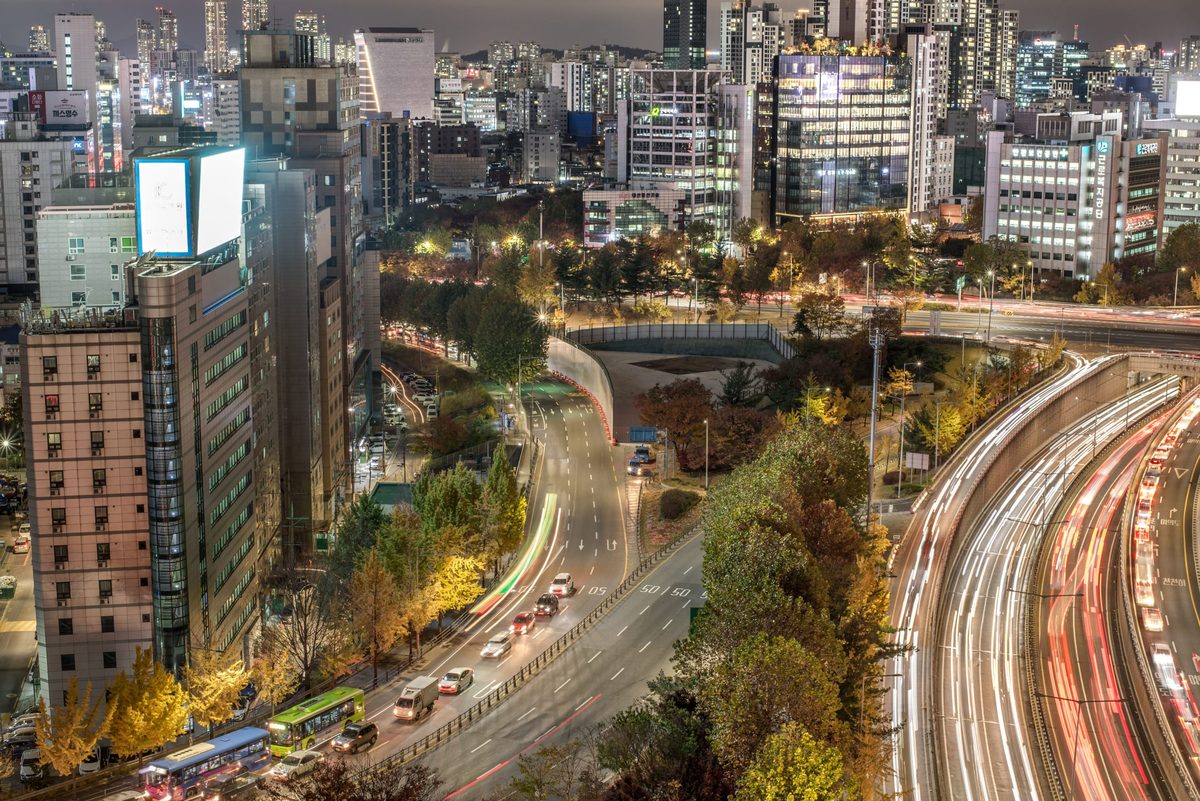
Name a Korean car brand and there is an 84% chance you have named a Hyundai Motor Group company. Hyundai, Kia and Genesis built 84% of the cars made in South Korea in 2025, out of a national total of just over four million light vehicles, enough to make Korea the sixth-largest vehicle producer in the world. Three other badges are built there, and none of them is a rival of comparable size. Two of them are controlled from outside Korea: from France, China and the United States. The fourth Korean carmaker has changed hands four times since 1997 and now belongs to a steel and chemicals conglomerate.
The ownership map
Jump to any group below. Each group lists its brands in full further down.
Hyundai Motor Group owns three of Korea’s car brands
One group, three badges
Hyundai Motor Group built 84% of the cars made in South Korea in 2025. Hyundai and Kia are separately listed companies that own parts of each other.
 Hyundai Mobis
 Parts and modules, not a car badge - and Hyundai Motor's largest single shareholder at 22.36%. Kia owns the largest piece of it, which is where the ring closes.
 Hyundai
 South Korea's largest carmaker. Hyundai Motor Company holds 35.17% of Kia.
 Kia
Kia Separately listed, and not a subsidiary in the ordinary sense - Kia is in turn the largest shareholder of Hyundai Mobis, at about 17.4%.
 Genesis
 Hyundai's luxury division since November 2015. Built at Ulsan, alongside Hyundai's own cars.
- Hyundai Mobis holds 22.36% of Hyundai
- Hyundai holds 35.17% of Kia
- Kia holds 17.4% of Hyundai Mobis
- Genesis is a division of Hyundai
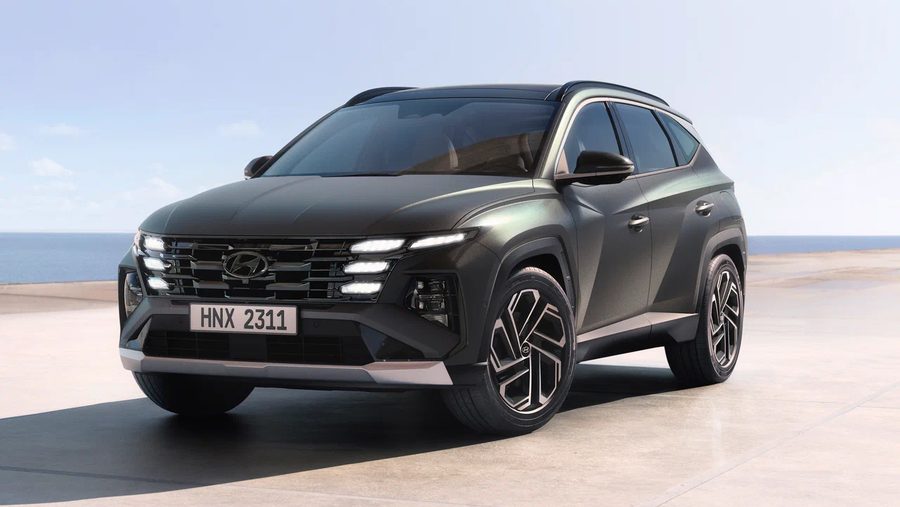
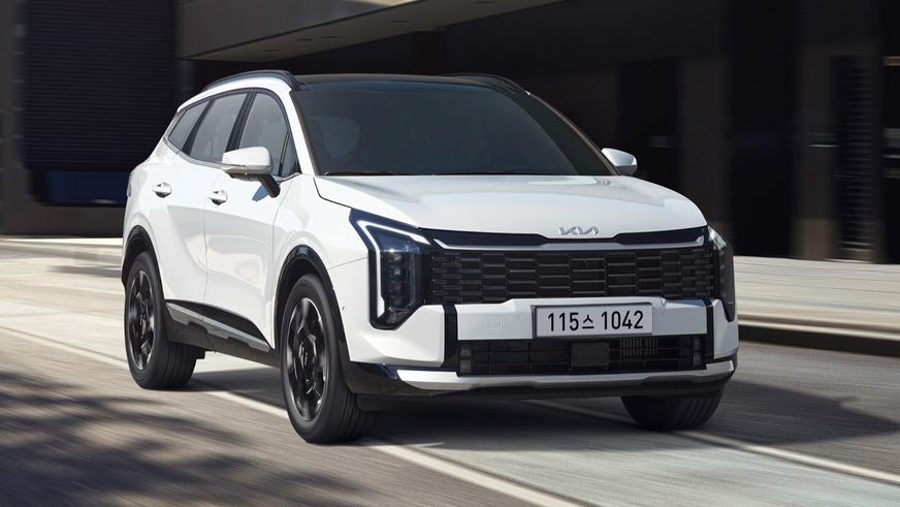
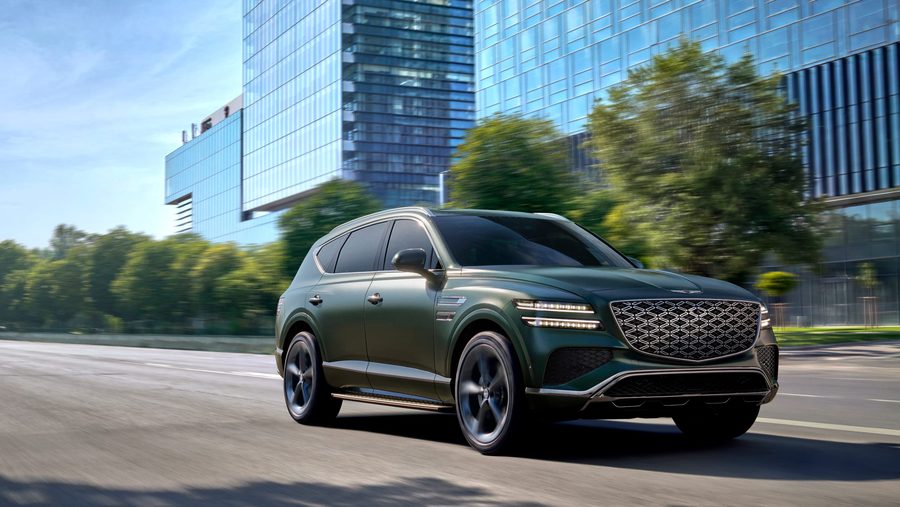
Hyundai and Kia each account for roughly 40% of South Korean vehicle production, and Genesis for about another 5%. The important thing about that trio is that it is not a parent and two subsidiaries in the ordinary sense. Hyundai Motor Company and Kia Corporation are separately listed on the Korean exchange, publish their own results, run their own design studios and sell cars that compete head-on. The Hyundai Tucson and the Kia Sportage are both built on the group’s N3 platform and go after the same buyer, and both are sold in showrooms that do not mention the other. Genesis sits above both, and its GV80 is the group’s full-size luxury SUV.
What binds them is a shareholding structure that runs in a circle rather than down a chain. Hyundai Mobis, the group’s parts and modules company, is Hyundai Motor’s largest single shareholder at 22.36%. Hyundai Motor is Kia’s largest shareholder at 35.17%. Kia is the largest shareholder of Hyundai Mobis, at about 17.4%. The ring closes, and the founding Chung family controls the whole of it without holding a large direct stake in any one company.
Korea’s Fair Trade Commission has spent years pressing the country’s conglomerates to untangle arrangements like this one, and Hyundai Motor Group did try. In March 2018 it proposed splitting Hyundai Mobis in two and merging the spun-off half into the group’s logistics arm, which would have broken the ring. It withdrew the plan that May after the activist investor Elliott Management and two proxy advisers urged shareholders to vote it down. The three holdings above are unchanged since.
Who owns Kia? Hyundai Motor Company, since 1998
Kia is older than Hyundai’s car business. It was founded in May 1944 as Kyungsung Precision Industry, making bicycle parts, and was building cars under licence while Hyundai Motor was still being set up. What ended its independence was the Asian financial crisis. Korean conglomerates had expanded through the 1990s on borrowed dollars and yen, carrying debt of four to five times equity, and when regional currencies broke in 1997 the won lost about two-thirds of its value against the dollar. South Korea signed a US$58bn standby package with the IMF on 3 December 1997, the largest the fund had arranged to that point, on terms that required the chaebol to restructure. Kia declared bankruptcy that year, and in 1998 Hyundai acquired 51% of it, outbidding Ford, which had held a stake in Kia since 1986 and expected to take control.
Hyundai Motor’s holding stands at 35.17% today, or 36.99% counting related parties. That is enough to control the company without owning it outright, and the distance matters: Kia has its own balance sheet, its own dividend and, since the mid-2000s, a deliberately separate design language. The relationship also runs in both directions, because Kia’s own largest investment is the 17.4% of Hyundai Mobis that closes the group’s shareholding ring. Saying Hyundai owns Kia is half the picture. Kia owns a controlling slice of the company that controls Hyundai.
Is Genesis a separate company from Hyundai?
Genesis is a division of Hyundai Motor Company. It is also younger than most buyers assume: it was announced as a standalone brand on 4 November 2015, having previously been a Hyundai model name. The first car sold under the new badge, the G90, was announced five weeks later.
Two things are widely said about Genesis that are not true. The first is that its cars are built in separate factories. The Korean-built Genesis range comes out of Hyundai’s Ulsan complex, the same site that builds Hyundai’s own cars, and the US-built cars come out of Hyundai’s Alabama plant. The second is that Genesis shares no parts with Hyundai. It shares platforms, engines and electrical architecture, in the same way Lexus shares them with Toyota.
Its retail network is separate only in part. In the United States its cars are sold through designated Genesis space inside certain existing Hyundai dealerships rather than through a wholly separate network.
KG Mobility sells its cars as KGM, and it used to be called SsangYong
The company now called KG Mobility is the oldest carmaker in Korea, tracing back to the Ha Dong-hwan Motor Workshop of 1954, and it has spent the last three decades being sold. Daewoo Motors bought a controlling stake in 1997 and sold it again in 2000. China’s SAIC took 51% in late 2004 and walked away when the company entered receivership in January 2009. India’s Mahindra completed a US$463.6m purchase in February 2011 and stopped funding it in December 2020, sending it into receivership a second time. The Korean conglomerate KG Group - steel, chemicals and media, no previous car business - was cleared to buy 61% in August 2022, and the SsangYong name was retired in March 2023.
Korean-owned, and not Hyundai
The only carmaker in South Korea that is both Korean-controlled and outside Hyundai Motor Group. It took four changes of owner in twenty-five years to stay that way.
 KG Group
 A Korean conglomerate in chemicals, steel and media. It bought 61% of SsangYong out of receivership in 2022; KG ETS holds 58.84% today.
 KGM
KGM The brand name KG Mobility Corporation uses on its cars. Called SsangYong until March 2023. About 3% of Korean production, built at Pyeongtaek.
- KG Group holds 58.84% of KG Mobility
- 1988–1997
 SsangYong SsangYongSouth Korea
The name the company took in 1988 and kept until March 2023. Daewoo Motors bought a controlling stake in 1997.
- 1997–2000
 Daewoo DaewooSouth Korea
Daewoo Motors bought control of SsangYong in 1997 and sold it again in 2000.
- 2004–2009
 SAIC SAICChina
The Shanghai state-owned carmaker. Took 51% in late 2004 and walked away when the company entered receivership in January 2009.
- 2011–2020
 Mahindra MahindraIndia
The Indian group completed a US$463.6m purchase in February 2011 and stopped funding the company in December 2020.
- 2022–KG Group KG GroupSouth Korea
A Korean conglomerate in chemicals, steel and media. It bought 61% of SsangYong out of receivership in 2022; KG ETS holds 58.84% today.
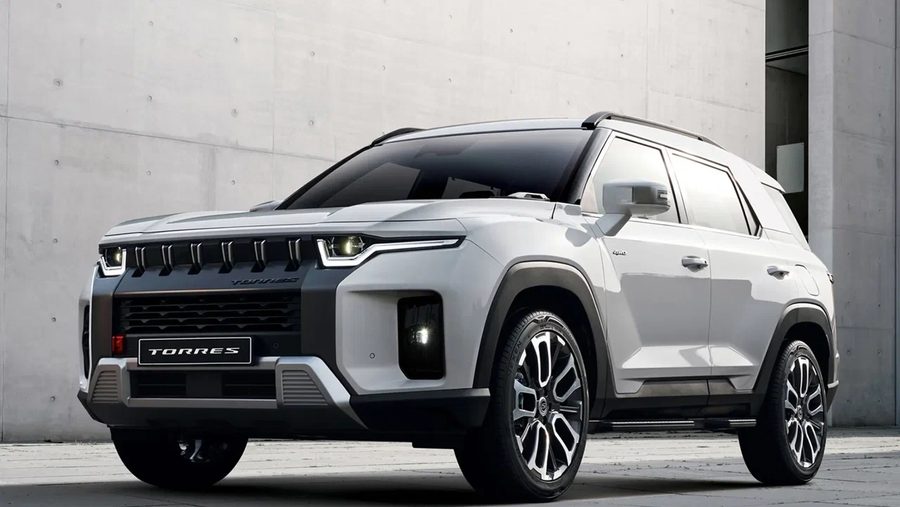
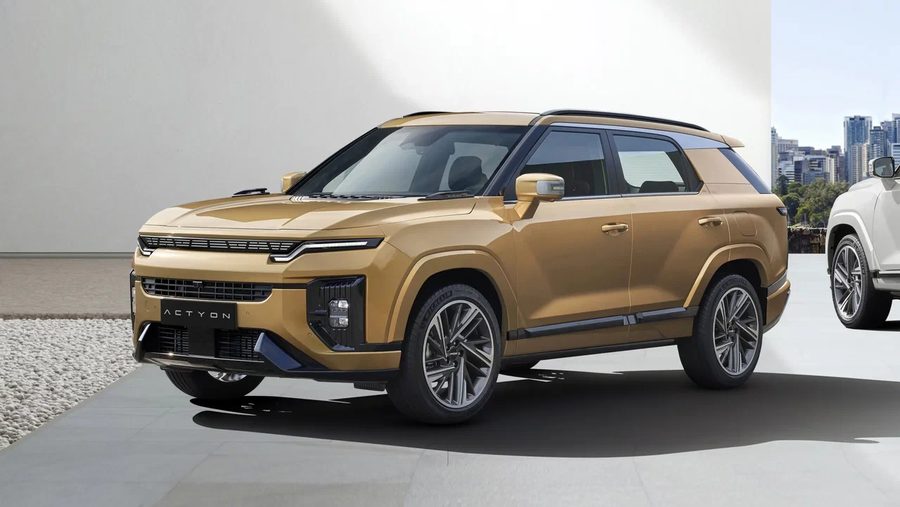
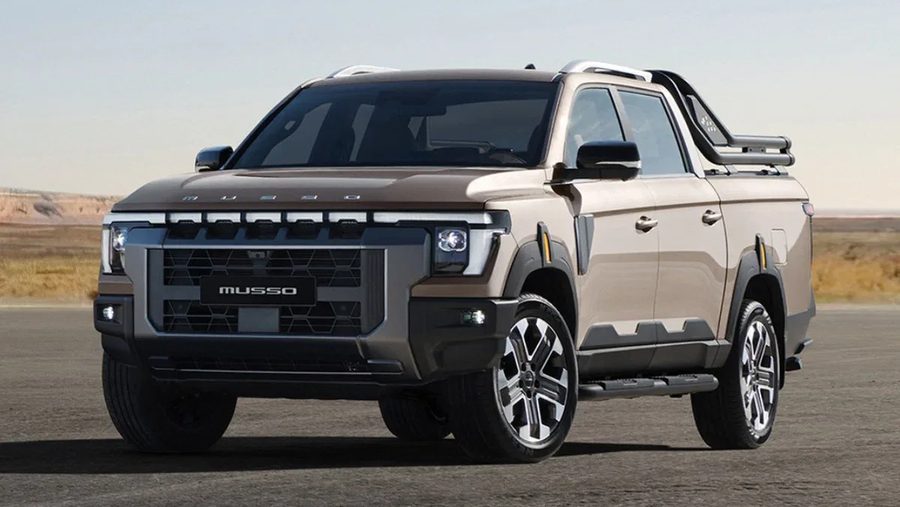
Its cars are still built at Pyeongtaek. At about 3% of national production that is roughly 120,000 cars a year, from a company that has been through two receiverships and four owners since 1997. KG ETS holds 58.84% of it today, which makes KG Mobility the only carmaker in the country that is both Korean-controlled and outside Hyundai Motor Group. The Torres, launched under the SsangYong name in 2022, is the model that carried the company through the KG Group takeover, and it is sold today as a petrol, a hybrid and the battery-electric Torres EVX - all three off the same Pyeongtaek line. The Actyon shares the Torres’s platform under a coupe-roofline body, and the Musso pickup, completely redesigned for 2026, is the model most likely to be the only KGM a UK or European buyer has ever seen.
Renault Korea is part-owned by Geely
Renault Korea began as Samsung Motors, founded in 1994 as the Samsung group’s entry into carmaking, and it lasted four years before the same crisis that took Kia caught up with it. Renault bought 70% of it in September 2000 for US$560m and added another 10% from creditors in 2005. The cars carried a Renault Samsung badge until 2022, which is why Korean buyers spent two decades calling a French-owned company by a Korean electronics name.
A Korean carmaker owned in France and China
Renault Korea is the former Samsung Motors. Two owners, one French and one Chinese, and a plain Renault badge on the cars.
 Renault
 Holds 52.9%. Bought 70% of the collapsed Samsung Motors in September 2000 for US$560m.
 Geely
Geely Took 34.02% through a capital increase completed at the end of 2022 - a Chinese group part-owning a French-badged Korean carmaker.
 Samsung Card
 The Samsung group's card company. Holds 13.1%, a leftover of the carmaker's start as Samsung Motors.
Renault Holds 52.9%. Bought 70% of the collapsed Samsung Motors in September 2000 for US$560m.
- Renault holds 52.9% of Renault Korea
- Geely holds 34.02% of Renault Korea
- Samsung Card holds 13.1% of Renault Korea
- 1994–2000
 Samsung Motors Samsung MotorsSouth Korea
Founded by the Samsung group in 1994. Renault bought 70% of it in September 2000 for US$560m.
- 2000–2022Renault Samsung Renault SamsungSouth Korea
Renault Samsung Motors from 2000 to March 2022. Renault added another 10% in 2005.
- 2022–Renault Korea Renault KoreaSouth Korea
Renault Korea Motors from March 2022, Renault Korea since April 2024. Geely has held 34.02% since the end of 2022.
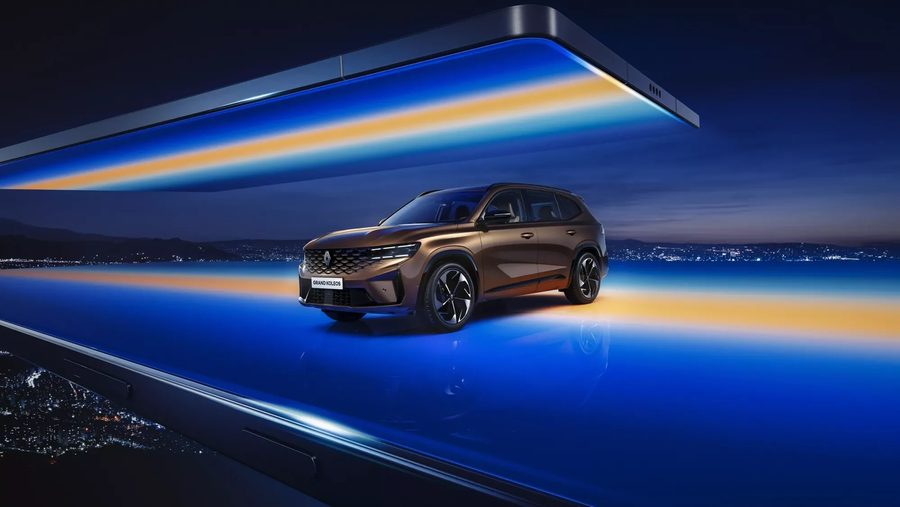
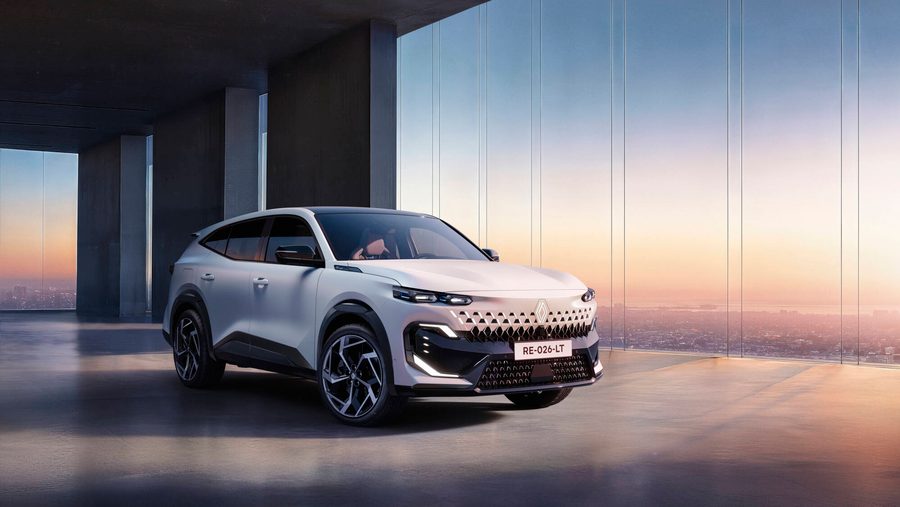
The Chinese half arrived in 2022. Geely took 34.02% through a capital increase completed at the end of that year, leaving Renault Group with 52.9% and Samsung Card with 13.1%. The result is a carmaker headquartered in Busan, controlled from France, part-owned from Hangzhou, and selling cars that wear a plain Renault badge with nothing on them to indicate any of it. At about 2% of national production it is the smallest of the four, and the only one whose ownership sits in three countries at once. The Grand Koleos makes the point in one car: it is built on Geely’s CMA platform, shared with the Geely Monjaro, and assembled at Busan. The Filante, Renault’s new international flagship crossover, is a Korean-designed car built on the same line and exported from there to the rest of the world.
GM Korea builds Chevrolets, and it used to be Daewoo
Daewoo Motor collapsed with the rest of the Daewoo group in 2000. General Motors bought the car business the following year, and GM Daewoo Auto & Technology began trading on 17 October 2002, with GM and its partners holding 66.7% against 33.3% for Korean creditors. The Daewoo name survived on the cars for another decade. In March 2011 the company became GM Korea, and the remaining Daewoo models were rebadged as Chevrolets.
An American owner, an American badge, a Korean factory
South Korea's second-largest producer at about 11% of 2025 output. Everything it builds wears a Chevrolet badge and most of it is exported.
 GM
GM Holds 77% of GM Korea. Korea Development Bank holds 17% and SAIC 6%, a leftover of the GM Daewoo era.
 Korea Development Bank
 South Korea's state-owned policy bank. Holds 17%; the 2018 rescue commits GM to stay until 2028.
SAIC The Shanghai state-owned carmaker. Holds 6%, a leftover of the GM Daewoo era.
 Chevrolet
 The badge on every car GM Korea builds, since the Daewoo name was retired in 2011.
- GM holds 77% of GM Korea
- Korea Development Bank holds 17% of GM Korea
- SAIC holds 6% of GM Korea
- 1983–2000Daewoo DaewooSouth Korea
Daewoo Motor Co. from January 1983. General Motors bought the car business in 2001, after the Daewoo group collapsed.
- 2002–2011GM Daewoo GM DaewooSouth Korea
General Motors' Korean company from October 2002, built on Daewoo's car assets.
- 2011–GM Korea GM KoreaSouth Korea
The name since March 2011. Plants at Bupyeong and Changwon, and most of what they build is exported.
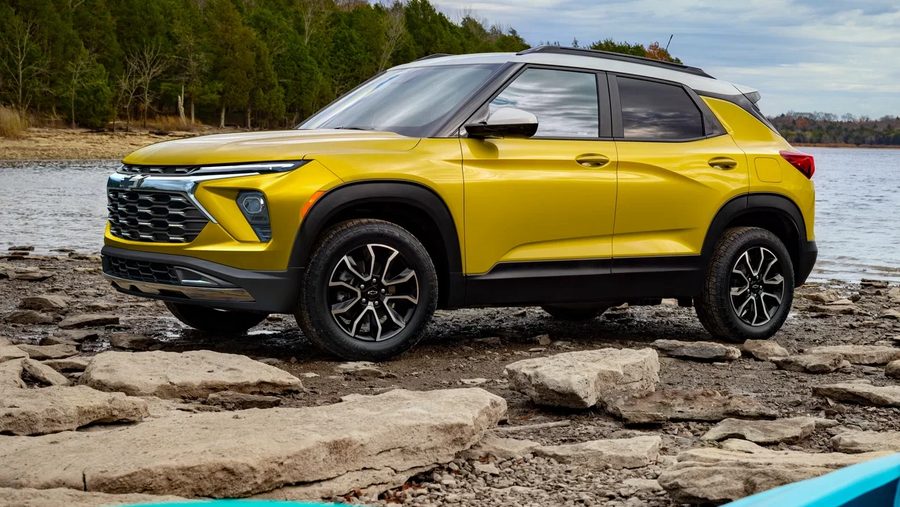
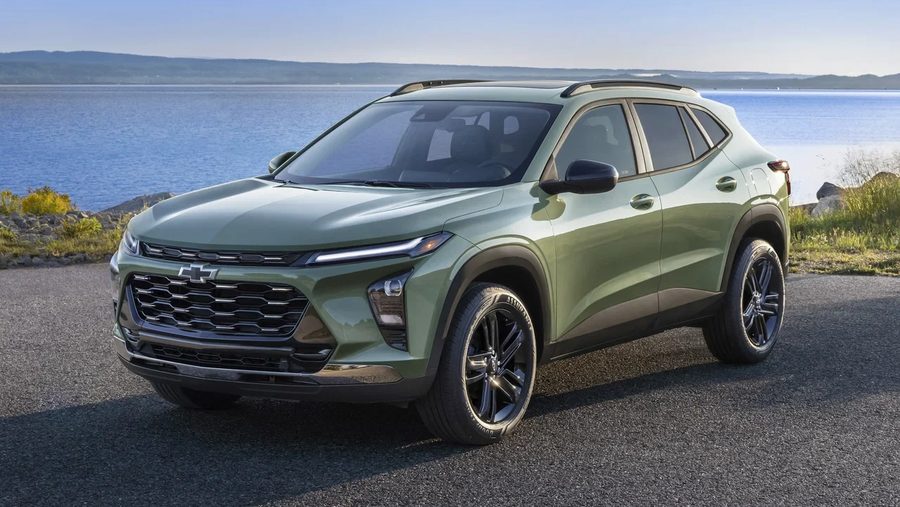
GM holds 77% today, the state-owned Korea Development Bank 17%, and SAIC 6%. The Chinese stake dates from 2002, when SAIC came in alongside Suzuki as one of GM’s partners in the original GM Daewoo venture, and it has never been bought out. The plants are at Bupyeong, with capacity for roughly 440,000 cars a year, and Changwon, with about 210,000. Together they make GM Korea the second-largest producer in the country at around 11% of 2025 output, and most of that leaves the country: a meaningful share of the Chevrolets sold in North America are Korean cars. GM came close to leaving in 2018, and the rescue package that kept it carries a commitment against exiting that runs to 2028. The Trailblazer comes out of Bupyeong and the Trax out of Changwon - two of Chevrolet’s US-market crossovers that are Korean cars in every sense except the badge.
Why Hyundai Motor Group ended up with almost everything
Every one of those stories has the same date in it. South Korea had five independent carmakers in 1996. Kia went bankrupt in 1997 and went to Hyundai in 1998. Daewoo collapsed in 2000 and its car business went to General Motors in 2001. Samsung Motors, four years old, went to Renault in September 2000. SsangYong went to Daewoo in 1997 and has been passed along ever since. The Asian financial crisis did not thin the field gradually. It removed four owners inside four years, and only one of the replacements was Korean.
This mechanism explains the shape of the industry better than any account of Hyundai’s product strategy. Hyundai was the only Korean carmaker with the balance sheet to buy rather than be bought, and the government wanted the chaebol restructured into fewer, stronger firms. Of the four companies that changed hands between 1997 and 2001, Hyundai took one and foreign buyers took the other three.
The durable consequence is that Korea’s domestic market has no second Korean giant to discipline the first, and the three non-Hyundai producers are all structurally export-facing: GM Korea ships most of its output, Renault Korea is a node in a French and Chinese network, and KG Mobility is too small to be anything else. Nothing currently under way changes that. GM’s exit commitment expires in 2028, and what it does then is the one date on which the balance of the four could still move.
Six badges, four owners, and two nationalities
Sorted by who controls them rather than by who builds them, the six badges fall into two halves. Hyundai, Kia, Genesis and KG Mobility are Korean-controlled, though the first three are one company in every way that counts and the fourth is a 3% producer owned by a conglomerate that had never built a car. Renault and Chevrolet are the foreign half: a French badge on a Korean company part-owned in China, and an American badge on a Korean company part-owned in China as well, through SAIC’s 6%.
That split is unusual among the big producing countries. Japan’s carmakers stay overwhelmingly Japanese-controlled but tangle themselves in cross-shareholdings between rivals. China’s are dominated by state groups that partner with foreign firms rather than being bought by them. Europe’s badges are concentrated into a handful of multinational groups that span borders. Korea is the case where a currency crisis did the consolidating, in four years, and the map has barely moved since.
Frequently asked questions
Who owns Kia?
Are Hyundai and Kia the same company?
Is Genesis a Hyundai?
What happened to SsangYong?
Is Chevrolet a Korean brand?
Does Geely own Renault Korea?
What happened to Daewoo cars?
More explainers

Mitsubishi sold its half of GAC Mitsubishi for one yuan in 2023, and that plant now builds Aion EVs.
Makers quote 10-80%, 10-70%, 30-80% or km added. The figures side by side, with independent tests beside them.
Stellantis, behind Jeep and Ram, is based in the Netherlands. Scout belongs to VW, Lucid mostly to a Saudi fund.
Updated 13 Sep 2026