




































Most of China’s cars come from about a dozen groups, and nearly every unfamiliar badge belongs to one of them. The brand on the grille rarely names the owner: a single company often sells under three or four badges at once - usually a mainstream brand, a premium one, and an electric or off-road spin-off - separated by price and positioning rather than by company.
Ownership splits three ways, and the split is the fastest way to read the chart. The central state-owned groups - FAW, Dongfeng and Changan - report directly to SASAC, the central government’s asset regulator. The locally state-owned groups answer to a city instead: SAIC to Shanghai, GAC to Guangzhou. The private side covers BYD, Geely and Great Wall along with the newer challengers - NIO, Li Auto, XPeng and Xiaomi - most of them listed in Hong Kong or New York.
Two things are easy to get wrong. Huawei is not a carmaker: its HIMA brands are an alliance, which is a different relationship from ownership, and it is flagged separately below. And this chart moves - Changan was spun out as a central state enterprise in its own right in July 2025, Chery listed in Hong Kong that September, and Zeekr took majority control of Lynk & Co in 2024.
The ownership map
Jump to any group below. Each group lists its brands in full further down.
 BYD Privately owned
  Geely Holding Privately owned
  Huawei (HIMA) Alliance
  SAIC State-owned
  GAC State-owned
  Changan State-owned
  Chery Mixed ownership
  Great Wall Motors Privately owned
  NIO Privately owned
  Dongfeng State-owned
  FAW State-owned Independent automakers Privately owned Sino-foreign joint ventures Mixed ownership
 BYD
BYD is the largest piece of the puzzle and the easiest to read. The core brand splits its line into two naming systems: the Dynasty series, named after Chinese dynasties (Han, Tang, Song, Qin, Yuan), and the Ocean series, named after sea creatures and water (Seal, Dolphin, Seagull). Dynasty leans traditional and upmarket; Ocean is younger and more design-led. Above the core brand sit the premium tiers - Fangchengbao for rugged and off-road models, Denza for executive cars, and Yangwang as the ultra-premium halo. All of them are BYD; the badges just mark the price ladder.
BYD
Privately ownedChina's largest carmaker; a Dynasty/Ocean mainstream core under a premium ladder.
 BYD
BYD Dynasty and Ocean model families
Privately owned · BYD
 Denza
Denza Premium; now BYD-controlled (former Mercedes JV)
Privately owned · BYD
 Fangchengbao
 Rugged / off-road sub-brand
Privately owned · BYD
 Yangwang
 Ultra-premium flagship brand
Privately owned · BYD
Geely Holding
Geely Holding owns more brands, in more countries, than any other Chinese group. The core Geely brand carries the Galaxy NEV line for its electrified models. One level up sits Zeekr, the premium electric brand, which since 2024 controls a majority of Lynk & Co - so Lynk & Co is a grandchild of Geely Holding rather than a direct sibling of Geely. The group also holds Lotus, majority ownership of Volvo, the Volvo-and-Geely spin-off Polestar, a 50/50 stake in Smart alongside Mercedes-Benz, and 49.9% of Malaysia’s national carmaker Proton. Different continents, different design studios, one Chinese parent.
Geely Holding
Privately ownedThe most sprawling Chinese group; owns and part-owns brands far beyond China.
 Geely
Geely Core brand; Galaxy NEV line
Privately owned · Geely Holding
 Zeekr
Zeekr Premium EV brand
Privately owned · Geely Holding
 Lynk & Co
 51% Zeekr / 49% Geely (completed Feb 2025)
Privately owned · Geely Holding
 Lotus
Lotus British sports/EV brand, Geely-controlled
Privately owned · Geely Holding
 Volvo
Volvo Swedish; Geely is majority owner
Privately owned · Geely Holding
 Polestar
 EV brand spun out of Volvo + Geely
Privately owned · Geely Holding
 Smart
Smart 50/50 joint venture with Mercedes-Benz
Privately owned · Geely Holding
 Radar
Radar Riddara EV pickups
Privately owned · Geely Holding
 Proton
 Malaysian; Geely owns 49.9%
Privately owned · Geely Holding
 Livan
Livan Privately owned · Geely Holding
 Ji Yue
 Geely + Baidu (wound down 2025)
Privately owned · Geely Holding
Huawei (HIMA)
This is the part almost every chart gets wrong. Huawei does not own these brands and does not build the cars. Under its HIMA model (Harmony Intelligent Mobility Alliance) Huawei supplies the software, electronics, and showroom experience, and a partner carmaker manufactures the vehicle. AITO is built by Seres. Luxeed is built by Chery. Stelato is built by BAIC. Maextro is built by JAC. The fifth brand, Shangjie, is built by SAIC. If you remember one thing here: Huawei is the technology partner, the OEM behind each badge is the actual owner.
Huawei (HIMA)
AllianceNOT an automaker. A tech alliance: Huawei supplies software/electronics, partner OEMs build the cars.
 AITO
AITO Built by Seres
Tech alliance · Huawei (HIMA)
 Luxeed
 Built by Chery
Tech alliance · Huawei (HIMA)
 Stelato
 Built by BAIC
Tech alliance · Huawei (HIMA)
 Maextro
 Built by JAC
Tech alliance · Huawei (HIMA)
 Shangjie
 Built by SAIC (the fifth HIMA brand)
Tech alliance · Huawei (HIMA)
SAIC
SAIC Motor is China’s largest automaker by volume and is state-owned at the city level: its controlling shareholder is the Shanghai municipal government, and it has been listed on the Shanghai Stock Exchange since 1997. MG is the export face, and the reason a “British” brand keeps topping European EV charts - SAIC acquired the marque through its 2007 merger with Nanjing Automobile, which had bought the collapsed MG Rover two years earlier. Roewe, built on the Rover designs SAIC bought separately in 2005, covers the domestic mainstream, and IM Motors is the premium-EV play developed with Alibaba. Wuling, maker of China’s runaway cheap city EVs, comes through the SAIC-GM-Wuling joint venture rather than from SAIC alone. Maxus, sold as LDV in some markets, rounds out the commercial side.
SAIC
State-ownedShanghai's state-owned giant; home of the exported MG brand.




GAC
GAC Group is Guangzhou’s state-owned automaker, controlled by the Guangzhou municipal government and listed in both Hong Kong and Shanghai. Like the other local state groups it pairs a core brand with electric and premium spin-offs: the Trumpchi line covers combustion and hybrid models, Aion is the EV brand, and Hyptec sits above it as the premium tier, sold as Hyper in export markets. GAC is also one of the three groups that has run more than one foreign joint venture at a time, building in Guangzhou for both Toyota and Honda - which is why its own badges are less visible abroad than the group’s output would suggest.

GAC
State-ownedGuangzhou's state group; the Aion EV brand and its Hyptec premium tier.



Changan
Changan is Chongqing’s automaker and, since July 2025, a central state-owned enterprise in its own right. It had spent decades as a subsidiary of China South Industries Group, the state defence and industrial conglomerate; SASAC spun it out and inaugurated China Changan Automobile Group on 29 July 2025, making it the third centrally administered car group alongside FAW and Dongfeng. The brand ladder is unchanged by the reshuffle: the core Changan badge, the Deepal EV sub-brand, and Avatr at the premium end - a three-way effort with Huawei and battery maker CATL, which is why Avatr comes up in Huawei discussions without belonging to the HIMA alliance below.
Changan
State-ownedState-owned; a fast-growing NEV stable plus the Huawei/CATL-backed Avatr.
 Changan
 Core brand
State-owned · Changan
 Deepal
 EV/EREV sub-brand
State-owned · Changan
 Avatr
Avatr Changan + Huawei + CATL
State-owned · Changan
 Qiyuan (Nevo)
 NEV brand (Nevo in export markets)
State-owned · Changan
 Oshan
Oshan SUV / MPV brand
State-owned · Changan
 Kaicene
 State-owned · Changan
Dongfeng
Dongfeng is a central state-owned group, reporting to SASAC and headquartered in Wuhan. It was founded in 1969 as China’s Second Automobile Works, and much of its scale still comes from long-running joint ventures with Nissan, Honda and the Peugeot-Citroen side of Stellantis. Its own premium NEV push runs through Voyah, with the luxury off-road Mengshi badge above it. Epicland, announced in November 2025, is a newer premium brand built on Huawei’s Qiankun technology rather than inside the HIMA alliance - Huawei supplies the driver-assistance stack, but Dongfeng owns the brand.
Dongfeng
State-ownedState group; premium NEV efforts led by Voyah.
 Dongfeng
 Core mainstream brand
State-owned · Dongfeng
 Voyah
Voyah Premium NEV brand
State-owned · Dongfeng
 Epicland
 Premium NEV brand built with Huawei Qiankun
State-owned · Dongfeng
 Mengshi
 Luxury off-road brand
State-owned · Dongfeng
 Aeolus
 Mainstream brand (Fengshen)
State-owned · Dongfeng
 eπ
eπ NEV sub-brand
State-owned · Dongfeng
 Forthing
 SUV / MPV brand
State-owned · Dongfeng
 Nammi
Nammi Small-EV brand
State-owned · Dongfeng
FAW
FAW is the oldest name in the Chinese industry and another of the central state-owned groups. First Automobile Works opened in Changchun in 1953 and built the country’s first domestically produced cars; it answers to SASAC today. Hongqi - the name means “Red Flag” - is its flagship state-luxury marque, the badge used for official limousines since 1958 and now stretched downmarket into SUVs and electric models. Bestune covers the mainstream and Jiefang builds the trucks. FAW-Volkswagen and FAW-Toyota are among the largest foreign joint ventures in the country, which is why FAW sells far more cars than its own badges account for.
FAW
State-ownedState group; home of China's flagship luxury marque, Hongqi.
 Hongqi
 State luxury brand
State-owned · FAW
 Bestune
 State-owned · FAW
 Jiefang
 Trucks
State-owned · FAW
Chery
Chery is based in Wuhu, in Anhui province, and is the odd one out on ownership - neither a clean state group nor a straightforwardly private one. It listed on the Hong Kong Stock Exchange in September 2025, and the Anhui and Wuhu governments together hold roughly a third of it, with employees holding about 18% and connector maker Luxshare and battery maker CATL among the outside shareholders. It is also one of China’s biggest exporters, fronted globally by the younger Omoda and the off-road-styled Jaecoo brands. Lepas, launched in April 2025, is Chery’s most premium export brand. Jetour, Exeed, and the electrified, off-road-styled iCAUR (sold as iCar in China) fill out the range at home and abroad.
Chery
Mixed ownershipWent mixed-ownership in 2025; a prolific exporter behind Omoda and Jaecoo.
 Chery
Chery Core export brand
Mixed ownership · Chery
 Omoda
Omoda Younger global sub-brand
Mixed ownership · Chery
 Jaecoo
 Off-road-styled global sub-brand
Mixed ownership · Chery
 Lepas
Lepas Premium global sub-brand, launched April 2025
Mixed ownership · Chery
 Jetour
 SUV and MPV brand (Jietu in China)
Mixed ownership · Chery
 Exeed
Exeed Mixed ownership · Chery
 iCar (iCAUR)
 Mixed ownership · Chery
Great Wall Motors
Great Wall Motors (GWM) is privately controlled - founder and chairman Wei Jianjun holds the majority through a family holding company - and is listed in both Hong Kong and Shanghai from its base in Baoding, in Hebei province. It takes a different approach to the badge ladder: instead of one brand with tiers stacked above it, it organises around model-led brands - Haval for mainstream SUVs, Tank for serious off-roaders, Wey for premium, and Ora for small city EVs. GWM itself still badges pickups and SUVs directly in export markets. Same company, five front doors.
Great Wall Motors
Privately ownedPrivately controlled; organised into model-led brands rather than one badge.
 GWM
GWM GWM's own export-market brand
Privately owned · Great Wall Motors
 Haval
Haval Mainstream SUV brand
Privately owned · Great Wall Motors
 Tank
Tank Rugged off-road brand
Privately owned · Great Wall Motors
 Wey
Wey Premium brand
Privately owned · Great Wall Motors
 Ora
Ora City-EV brand
Privately owned · Great Wall Motors
 Poer
Poer Pickups
Privately owned · Great Wall Motors
NIO
NIO is a private company listed in New York, Hong Kong and Singapore, and the first of the challenger automakers - standalone firms that belong to no larger group and own their full stack. It is headquartered in Shanghai, though the city of Hefei took a significant stake in its China operations in 2020, in a rescue that kept the company alive. NIO runs a three-brand ladder: the premium NIO badge, the family-focused Onvo (sold as Ledao in China), and the small-car Firefly. It also builds and owns its battery-swap network rather than licensing one, which is unusual even among the independents.


Independent automakers
Li Auto, XPeng and Xiaomi are the other privately held challengers, none of them part of a larger group. Li Auto built its name on range-extender SUVs and XPeng on driver-assistance technology, both listed in Hong Kong and New York. Xiaomi crossed over from smartphones and is the exception to the pattern: its car division is funded from the parent electronics business rather than from outside automotive investors, so the carmaker has no separate listing of its own. Leapmotor is independent too, though Stellantis holds about 20% and handles a chunk of its overseas sales. And several of these companies are quietly the real OEMs behind the Huawei badges above - Seres builds AITO, JAC builds Maextro, and BAIC, parent of Arcfox, builds Stelato.
Independent automakers
Privately ownedStandalone companies - some are the real OEMs behind alliance brands above.
 Li Auto
 EREV pioneer
Privately owned · Independent automakers
 XPeng
XPeng Smart-EV maker
Privately owned · Independent automakers
 Xiaomi
 Phone giant turned carmaker
Privately owned · Independent automakers
 Leapmotor
 Stellantis holds a stake
Privately owned · Independent automakers
 Seres
Seres Builds AITO for Huawei
Privately owned · Independent automakers
 JAC
JAC Builds Maextro for Huawei; owns 25% of Volkswagen Anhui
Privately owned · Independent automakers
 BAIC
BAIC State-linked; builds Stelato for Huawei
Privately owned · Independent automakers
 Arcfox
 BAIC's premium EV brand
Privately owned · Independent automakers
Sino-foreign joint ventures
Volkswagen, Toyota, Honda, and GM build their China lineups locally, through a joint venture with a domestic partner. From 1994 until the cap was lifted in 2022, Chinese policy capped foreign ownership of a passenger-car plant at 50%, so any foreign automaker manufacturing there needed a local co-owner (Tesla’s wholly foreign-owned Shanghai plant, opened under an earlier carve-out for electric vehicles, was the exception that preceded the general 2022 repeal). SAIC, FAW, and GAC - the same three groups covered above - ran more than one of these joint ventures at a time because, as the largest state-owned automakers, they had the capital and government backing to take on multiple foreign partners: SAIC with both Volkswagen and GM, FAW with both Volkswagen and Toyota. The rule no longer applies to new plants, but the joint ventures below still build under their original names. Volkswagen Anhui is the exception to the 50% cap and predates its repeal: an earlier carve-out for electric-vehicle ventures let Volkswagen take 75% of what had been JAC Volkswagen in May 2020, leaving JAC with the remaining quarter. FAW-Volkswagen went a step further in 2019, spinning up Jetta as its own standalone budget brand for first-time buyers, sold alongside the Volkswagen-badged lineup rather than instead of it. Two other ventures have since invented a badge the same way: SAIC Audi sells electric cars under an AUDI wordmark with no four-ring emblem, and Chery Jaguar Land Rover brought back Freelander as a marque of its own rather than a Land Rover model name.
Sino-foreign joint ventures
Mixed ownershipNot a group - the partnerships that let foreign automakers build passenger cars in China at all.
 SAIC
SAIC SAIC Volkswagen, founded 1985
Mixed ownership · Sino-foreign joint ventures
 Volkswagen
 German half of SAIC Volkswagen
Mixed ownership · Sino-foreign joint ventures
 FAW
FAW FAW-Volkswagen, founded 1991
Mixed ownership · Sino-foreign joint ventures
Volkswagen German half of FAW-Volkswagen
Mixed ownership · Sino-foreign joint ventures
 Jetta
Jetta Budget sub-brand FAW-Volkswagen created in 2019
Mixed ownership · Sino-foreign joint ventures
 Audi
Audi SAIC Audi, founded 2021; the ring-badged cars come from a separate FAW venture
Mixed ownership · Sino-foreign joint ventures
SAIC Shanghai state group, the second Chinese partner Audi took on
Mixed ownership · Sino-foreign joint ventures
 AUDI (SAIC)
 The letter badge without the rings; electric cars sold only in China
Mixed ownership · Sino-foreign joint ventures
 GAC
GAC GAC Toyota, founded 2004
Mixed ownership · Sino-foreign joint ventures
 Toyota
 Japanese half of GAC Toyota
Mixed ownership · Sino-foreign joint ventures
FAW FAW Toyota, the other Toyota JV alongside GAC Toyota
Mixed ownership · Sino-foreign joint ventures
Toyota Japanese half of FAW Toyota
Mixed ownership · Sino-foreign joint ventures
GAC GAC Honda, founded 1998 as Guangzhou Honda
Mixed ownership · Sino-foreign joint ventures
 Honda
Honda Japanese half of GAC Honda
Mixed ownership · Sino-foreign joint ventures
SAIC SAIC-GM, founded 1997; sibling of the SAIC-GM-Wuling venture behind Wuling
Mixed ownership · Sino-foreign joint ventures
 GM
GM American half of SAIC-GM
Mixed ownership · Sino-foreign joint ventures
Chery Chery Jaguar Land Rover, the venture that revived Freelander as a marque
Mixed ownership · Sino-foreign joint ventures
 Land Rover
 Licenses the nameplate it first used for a compact SUV in 1997
Mixed ownership · Sino-foreign joint ventures
 Freelander
 A model name promoted to a brand, engineered and built in China
Mixed ownership · Sino-foreign joint ventures
JAC Volkswagen Anhui, the one JV here where the foreign partner holds the majority
Mixed ownership · Sino-foreign joint ventures
Volkswagen German half of Volkswagen Anhui, at 75%
Mixed ownership · Sino-foreign joint ventures
Why the chart keeps changing
Chinese carmakers restructure faster than almost any industry on earth. Stakes get bought and sold, joint ventures form and dissolve, and brands get folded into their parents or spun back out within a year or two. The 2024 Lynk & Co reshuffle and Chery’s 2025 ownership change are recent examples, and there will be more by the time you read this. We keep this map current and date every update, so the relationships above reflect the latest known structure rather than a snapshot from two years ago.
Frequently asked questions
Who owns AITO?
Is Lynk & Co a Geely brand?
Who makes Zeekr?
Is Huawei a car company?
Who owns Volvo, Polestar, and Lotus?
Are Chinese car brands state-owned or private?
More explainers

Mitsubishi sold its half of GAC Mitsubishi for one yuan in 2023, and that plant now builds Aion EVs.
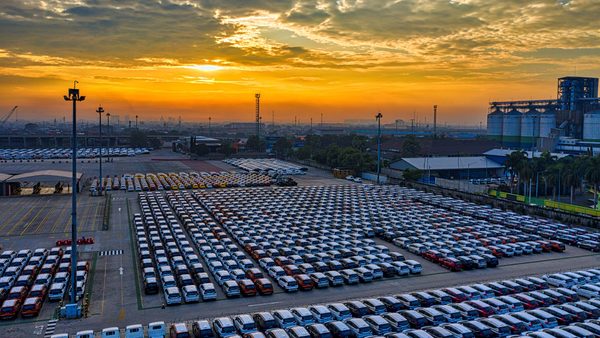
Chinese brands took 51.7% of the Russian new-car market in 2025 and almost none of the American one.
The Jaecoo 7 is sold in China as the Chery Tansuo 06, and Huawei holds no stake in Avatr.
Updated 11 Sep 2026