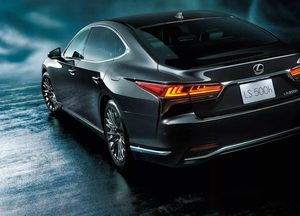
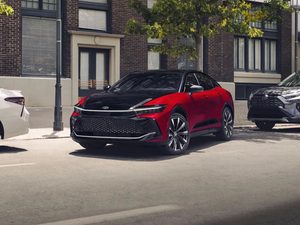
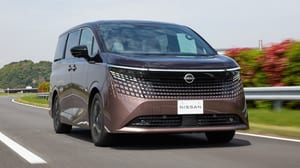
This page collects news about the Japanese car industry: model launches, plants, alliances and ownership. Japan builds about 8 million vehicles a year and exports more than half of them, and it has kept more assembly at home than any other large producer: Toyota has held to a floor of roughly 3 million vehicles a year built in Japan, a commitment made to keep the domestic supplier base intact. That base is the quieter half of the industry. Denso, Aisin and Yazaki are among the largest component makers in the world, and the methods worked out on Toyota’s lines in the 1950s and 1960s, just-in-time supply and kanban, are taught as standard practice in factories that have nothing to do with cars. Japanese makers also stayed with hybrids through the years when Europe was committing to battery-electric, and kept refining them: Toyota has sold petrol-electric cars since the 1997 Prius, and the systems now run in Subaru and Mazda models too.
Then there is the class no other market has. Kei cars, capped at 660 cc and 3.4 m long, take roughly a third of Japanese new-car sales. The rules that define them date from 1949 and have shaped everything from parking regulation to what a Japanese city street looks like, and no other country runs an equivalent category at volume.
Almost all of the industry is Japanese-owned, so its structure is cross-shareholdings rather than parent companies. Toyota owns Lexus and Daihatsu outright and holds minority positions in three firms it competes with, about 20% of Subaru, 5.1% of Mazda and 4.9% of Suzuki, none of which is control: the money funds shared plants and co-developed cars like the Subaru BRZ and Toyota GR86. The Nissan side is a triangle rather than a hierarchy, with Renault on about 15% of Nissan, down from a controlling 43% before the 2023 rebalancing, Nissan holding a matching non-voting 15% in return, and Nissan itself owning about 24% of Mitsubishi. Honda sits outside all of it, with Acura as its North American premium badge; merger talks with Nissan opened in December 2024 and collapsed by February 2025 over whether Nissan would join as a subsidiary or an equal. The stakes and alliances are drawn out in Japan’s car brands.