🇨🇳

Car News from China

The world's largest car market, run by about a dozen groups that each sell under several badges at once.

106 articles · 46 brands

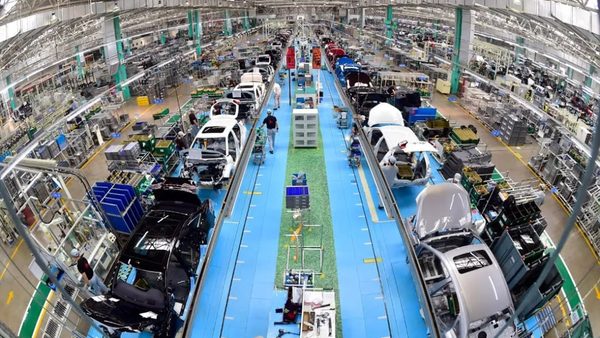
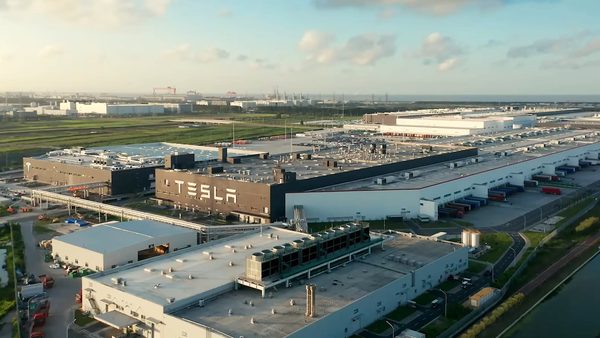
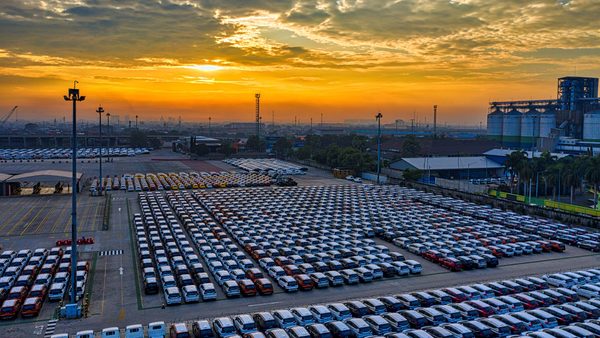
This page collects news about the Chinese car industry: model launches, plants, exports and ownership. Start with the size of it. About 31 million vehicles were sold in China in 2024 and almost all of them were built there, in regions that have each specialised: Shanghai and Hefei around electric assembly, Shenzhen around BYD and the electronics supply base it grew out of, Changchun and Chongqing around the older state groups. What reordered the industry, though, was the supply chain rather than the cars. China refines most of the world’s battery-grade lithium and graphite, and CATL alone accounts for more than a third of the electric-car batteries fitted anywhere. Product cycles run off that base: a new model can go from sign-off to showroom in around 18 months, roughly half what the same job takes in Europe, and the domestic price war that opened in 2023 has kept the pace there. Two dates mark the result. China passed Japan as the world’s largest vehicle exporter in 2023, and new energy vehicles took more than half of monthly retail sales for the first time in July 2024.

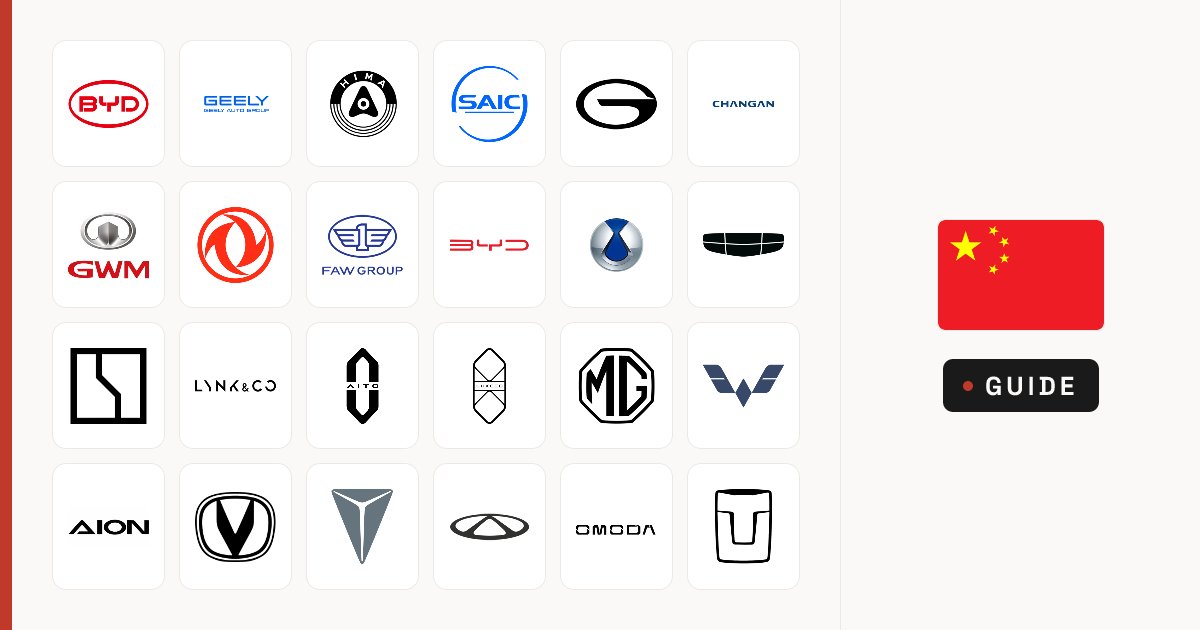
Ownership is a short list sitting behind a long one. Roughly a dozen groups run those two dozen badges as ladders: BYD sells its Dynasty and Ocean lines under its own name with Denza, Fangchengbao and Yangwang above them, Geely Holding reaches from Geely and Zeekr at home to Volvo, Polestar and Lotus in Europe, and Chery fronts export markets with Omoda, Jaecoo and Lepas while keeping Jetour and Exeed for China. Five of the largest owners, SAIC, FAW, Dongfeng, Changan and GAC, are state enterprises; the rest are private. Huawei belongs in neither column, since its HIMA brands, AITO, Luxeed, Stelato and Maextro, are an alliance in which the partner carmaker builds the vehicle and Huawei supplies the software, electronics and showrooms. The full map of parents and sub-brands is in China’s car brands, explained.

Brands

View all 46 brands →

Factories

Market Data

Explainers

Korean car brands: six badges, four owners

Six car badges are built in South Korea and four companies own them. Hyundai Motor Group makes 84% of them, and two of the others are foreign-controlled.
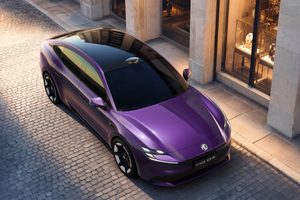
Europe's car brands: the ownership structure

Who owns Europe's car brands: the five groups that hold most of them, the icons now controlled from China, India and Abu Dhabi, and the same map sorted by country.

China's car brands: who owns what

China's car market runs on a handful of giant groups, each fielding a stack of brands. Here is who owns what - the parent companies, the sub-brands, the Huawei alliance, and why the chart keeps changing.

Hybrid, MHEV, PHEV, EREV, EV: what each powertrain actually does

Six powertrains are on sale and three of them are called hybrids. What MHEV, HEV, PHEV, EREV and EV mean, how far each goes on its battery, and how to tell them apart.

How Norway made almost every new car electric

Norway sells almost nothing but electric cars, and never paid a purchase subsidy to get there. The tax structure that did it, year by year, and how it ends in 2028.

Joint-venture car brands in China

The Volkswagens sold in China are built by two companies, and one of them is Chinese. That arrangement started in 1983 as a condition of entry, and it has since produced badges that exist nowhere else: Jetta, Wuling, and AUDI in block capitals with no rings. Who holds which half, which brands the ventures invented for themselves, and which of the old partnerships have quietly ended.
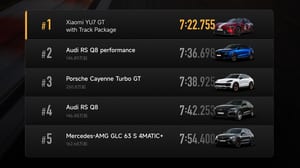
Who makes Aion, Jaecoo and Deepal: China's export badges explained

Aion is GAC, Jaecoo and Omoda are Chery, Deepal is Changan, Nammi is Dongfeng. Ten Chinese brands whose names do not carry the parent company, grouped by how each one relates to its owner: brands sold only outside China, recent badges on long-established state groups, brands two levels below the group, and one that Huawei supplies but does not own.
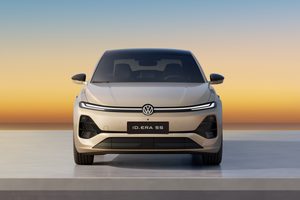
European car brands where the badge and the owner disagree

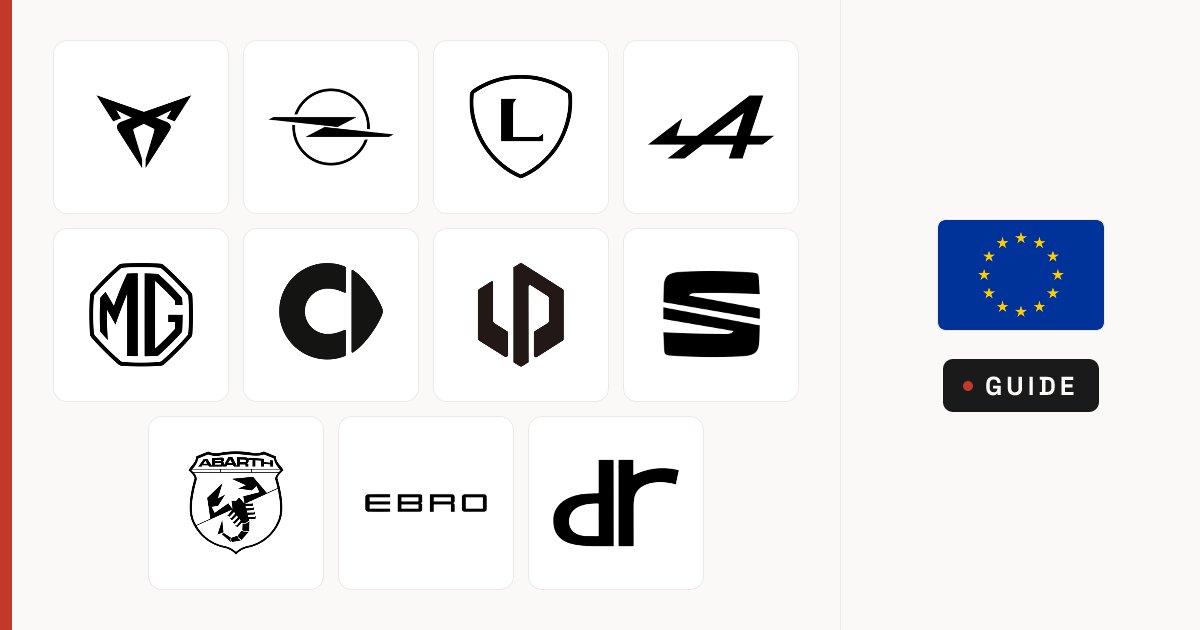
Twelve European badges whose nationality does not match their ownership: Cupra, Vauxhall, DS, Opel, Lancia, Alpine, Abarth, MG, Ebro, DR Automobiles, smart and Leapmotor. Some are Spanish or British names owned in Germany or the Netherlands, some are revived badges on Chinese hardware, and several are assembled in a third country again.

Frequently asked questions
What does NEV mean in China?
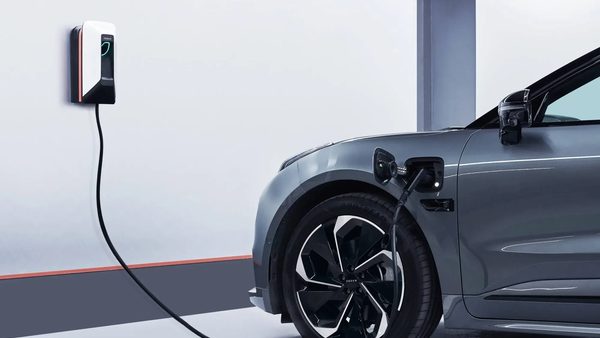
New energy vehicle. The Chinese regulatory category covers battery-electric, plug-in hybrid, range-extender and fuel-cell cars, and it is what qualifies a vehicle for a green licence plate and the purchase incentives attached to it. Conventional hybrids without a plug are excluded, which is why a Toyota Prius counts as an ordinary petrol car in Chinese statistics.
Why do Chinese carmakers launch so many brands?
Because a badge is cheaper than a company. A group that already has an engineering base and a supplier network can open a new brand to reach a different price bracket, a different age group or a different sales channel without building anything new underneath it. Most of these sub-brands share platforms, batteries and software with their parent.
Which Chinese carmaker sells the most cars?
BYD, by a wide margin. It sold 4.27 million vehicles in 2024, and it makes its own batteries and semiconductors rather than buying them in. Geely and Chery follow, with Chery the largest exporter of the three.
Are Chinese car companies owned by the state?
Some are. SAIC, FAW, Dongfeng, Changan and GAC are state-owned enterprises, which is what gave them the capital and the political standing to run several joint ventures with foreign automakers at once. BYD, Geely, Great Wall and the newer technology-led makers are privately held. Chery moved to a mixed-ownership structure in 2025.
Search