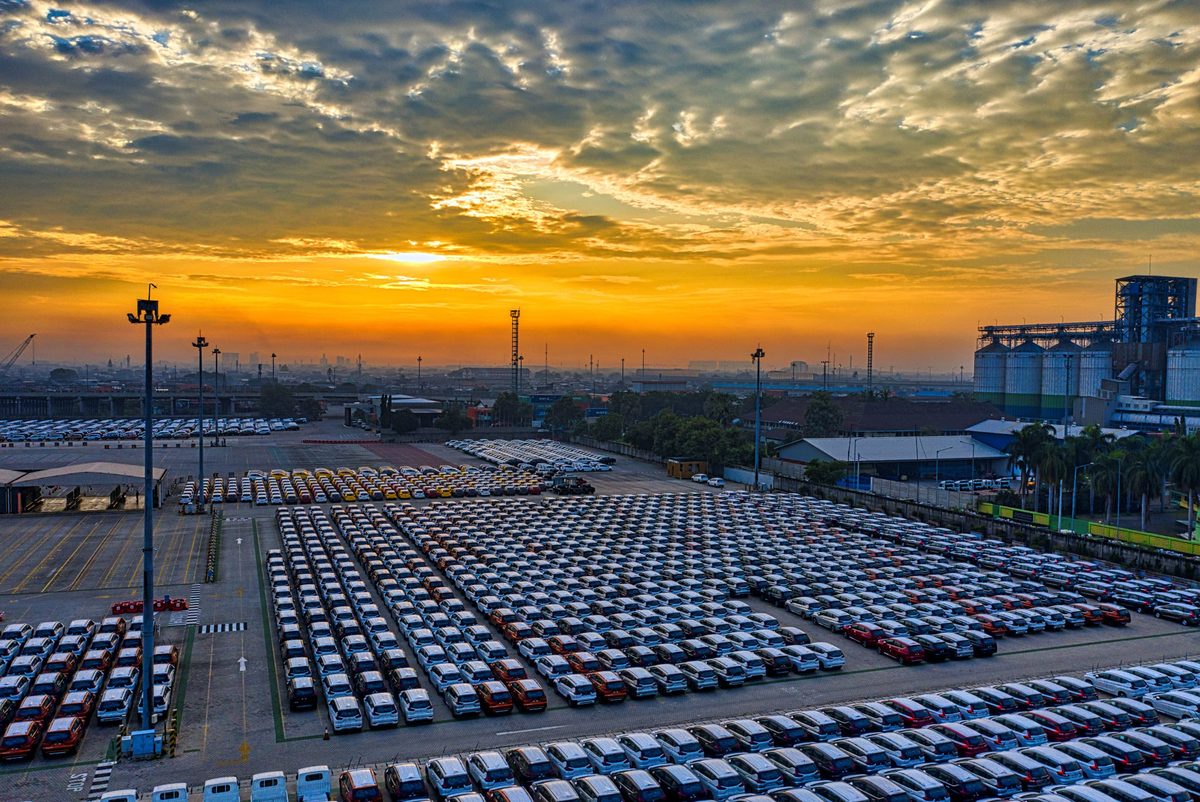
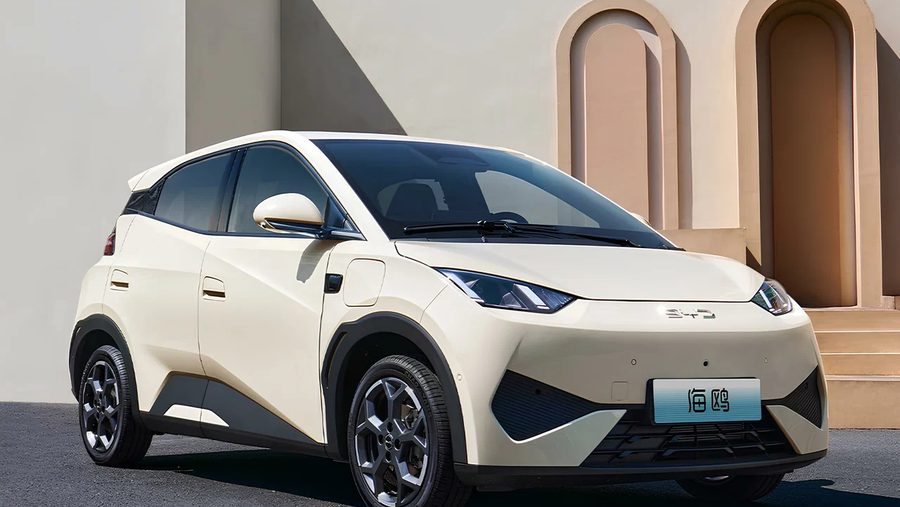
Chinese car brands sold 32.4% of new cars in Chile in 2025, 51.7% in Russia and 6.1% in Europe. In the United States they sell almost none. Many of the cars are the same: the BYD Seagull is sold as the Dolphin Mini in Latin America, the Dolphin Surf in Europe and the Atto 1 in Australia. What differs from one country to the next is how its rules treat a car built in China, or a carmaker controlled from there.
Twenty years ago the obstacle was the car itself. In 2005 the German motoring club ADAC crash-tested the Landwind X6, one of the first Chinese SUVs offered in Europe, and recorded the worst frontal-impact result in its history (Automotive News). The European launch ended after about 60 cars had been sold in the Netherlands (CarNewsChina). Today the gaps between markets come from tariffs, ownership rules and local-production deals, each with a date attached. Who owns each brand is set out in the Chinese car brand ownership map.
Chinese car brands’ market share by country
The figures count cars sold under Chinese brands, as a share of each market’s new passenger and light-vehicle sales for the full year. That is a different number from cars built in China. Chile’s automotive association ANAC publishes both: Chinese brands took 32.4% of Chilean sales in 2025, while cars built in China, under any badge, took 41.4% (ANAC). Where a figure is derived or estimated rather than published, the note under the table says so.
| Market | 2025 | Earlier |
|---|---|---|
| RussiaWestern carmakers exit, 2022; recycling fee up 70-85%, Oct 2024 Source: Autostat | 202551.7% | 20217.5% (2021) |
| ChileChile-China free trade agreement, in force Oct 2006 Source: ANAC | 202532.4% | 202019.9% (2020) |
| Gulf statesGCCCommon external tariff on cars, no local industry Source: AlixPartners | 2025~15% | 2019~2% (2019) |
| MexicoAMDATariff on cars from non-FTA countries 20%, then 50% from 1 Jan 2026 Source: AMDA, INEGI | 2025~15%INEGI: 9.4% | 202412.5% (2024) |
| NorwayNo import duty on cars and EV tax exemptions open to every maker Source: OFV | 202513.7% | 20190% (2019) |
| UKOutside the EU duties since Brexit; no extra duty on Chinese-built EVs Source: SMMT | 20259.7% | |
| BrazilEV import tax 10% (Jan 2024) rising to 35% (Jul 2026); BYD and GWM plants from 2025 Source: K.Lume, Fenabrave | 20259.6%† | 20246.8%† (2024) |
| EuropeEU, EFTA and UKEU countervailing duties on Chinese-built BEVs, 30 Oct 2024; plug-in hybrids not covered Source: JATO, Dataforce | 20256.1% | 20221.7% (2022) |
Share of new passenger and light-vehicle sales going to Chinese-owned brands, full year, as of September 2026. ~ estimate · † derived from unit sales · * part of the year.
- Russia: Chinese cars built and sold under Russian badges (Tenet, Belgee) count as Russian, which is part of the 2025 fall.
- Chile: By brand origin. ANAC also publishes cars built in China, a larger figure (41.4% in 2025) that includes Western brands made there.
- Gulf states (GCC): Consultancy estimate; no Gulf state publishes an official brand-origin figure.
- Mexico (INEGI): BYD, GAC and Zeekr do not report sales to INEGI, which is most of the gap to the dealer association's figure.
- Norway: As OFV counts Chinese brands; it does not publish which brands it includes.
- Brazil: Chinese-brand sales (K.Lume) divided by Fenabrave's total for cars and light commercials.
- Europe (EU, EFTA and UK): 2022-23 from JATO, 2025 from Dataforce; the two providers count slightly different markets, and no comparable 2024 figure was published.
Russia moved furthest and fastest: Chinese brands went from 7.5% of the market in 2021 to 58.5% in 2024. Chile crossed 30% in 2021 and has stayed between 28.9% and 32.4% since. Europe’s share more than tripled between 2022 and 2025 and is still the lowest 2025 figure in the table.
Europe
2022 1.7% → 2025 6.1%
Russia
2021 7.5% → 2025 51.7%
Chile
2020 19.9% → 2025 32.4%
Norway
2019 0% → 2025 13.7%
Why Chinese car brands are not sold in the US
The US keeps Chinese brands out with two rules. Under Section 301 of the Trade Act, the tariff on electric cars imported from China rose to 100% on 27 September 2024 (USTR). A China-specific tariff can be avoided by building the car in another country, and BYD already builds cars in Brazil and Thailand.
The Commerce Department’s connected-vehicle rule closes that route. Published on 16 January 2025, it bans Chinese- or Russian-linked software in connected cars from model year 2027 and hardware from model year 2030 (Federal Register). It also bars carmakers owned or controlled from China from selling connected cars in the US from model year 2027, wherever the cars are built (BIS).
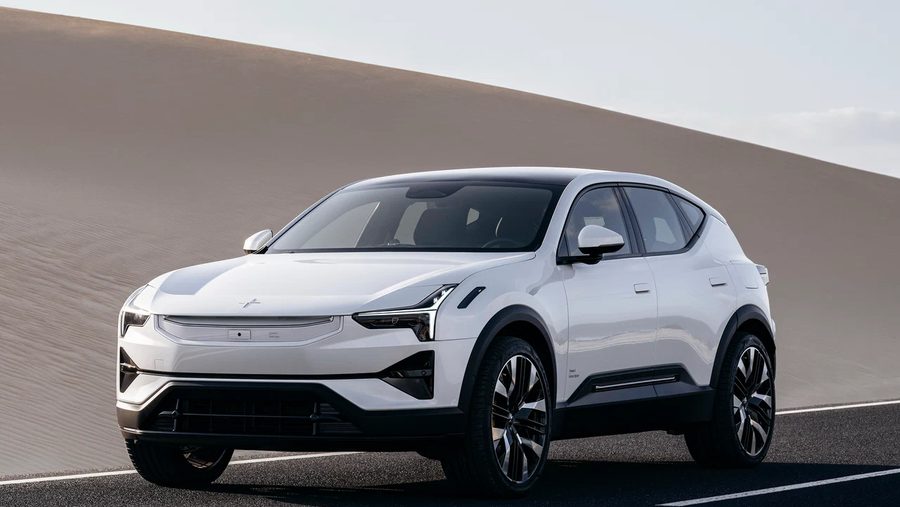
Polestar is the first brand the rule has removed. The Swedish company is majority-owned by China’s Geely Holding, and on 25 June 2026 it said the Bureau of Industry and Security had declined to authorise its US sales from model year 2027 (Polestar). The Polestar 3 sold in the US is built in Ridgeville, South Carolina, so the ban reaches a car made in America. Polestar said 94% of its retail sales in the first quarter of 2026 came from outside the US.
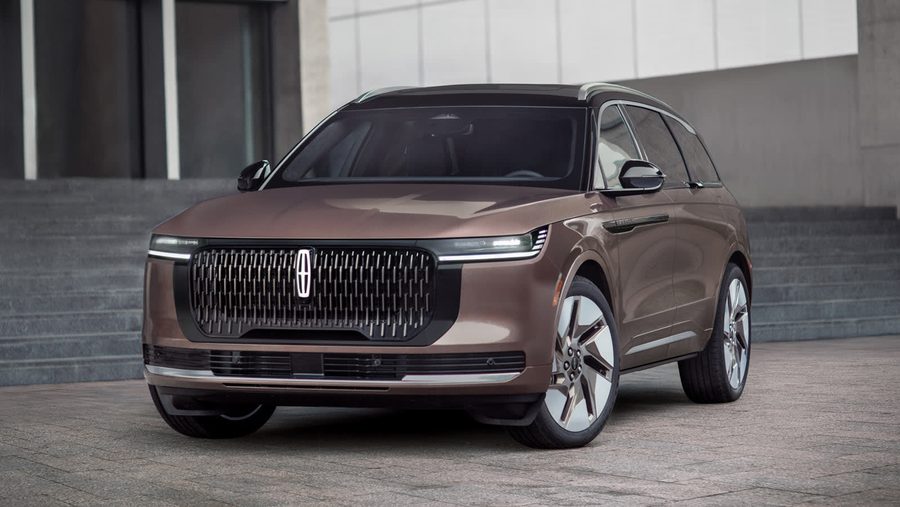
Chinese-built cars still reach US showrooms under American badges, because their makers are American. The Buick Envision is built by SAIC-GM, General Motors’ joint venture in China, and the Lincoln Nautilus by Ford’s venture Changan Ford at its Hangzhou plant (Consumer Reports). Neither maker is China-controlled, so the sales ban does not apply to them, although the hardware ban from model year 2030 does.
Canada followed the US tariff and then partly reversed it. A 100% surtax on China-made electric cars took effect on 1 October 2024 (Finance Canada). Under an arrangement agreed with China on 16 January 2026, up to 49,000 Chinese-built electric cars a year have entered at the normal 6.1% duty since 1 March 2026 (Global Affairs Canada). The Shanghai-built Tesla Model 3 became Canada’s cheapest Tesla under that quota, and Polestar named Canada among the markets where it will keep investing.


How EU tariffs pushed Chinese brands toward plug-in hybrids
Regulation 2024/2754, in force from 30 October 2024 for five years, adds countervailing duties of 7.8% to 35.3% to the standard 10% import duty on battery-electric cars built in China, including range-extender models (EUR-Lex). Plug-in hybrids and conventional hybrids are not covered.
The rate depends on the company that builds the car and how much state support the EU’s investigation found. Tesla’s Shanghai-built cars carry the lowest rate, 7.8%. SAIC, which owns MG, carries the highest, 35.3%.
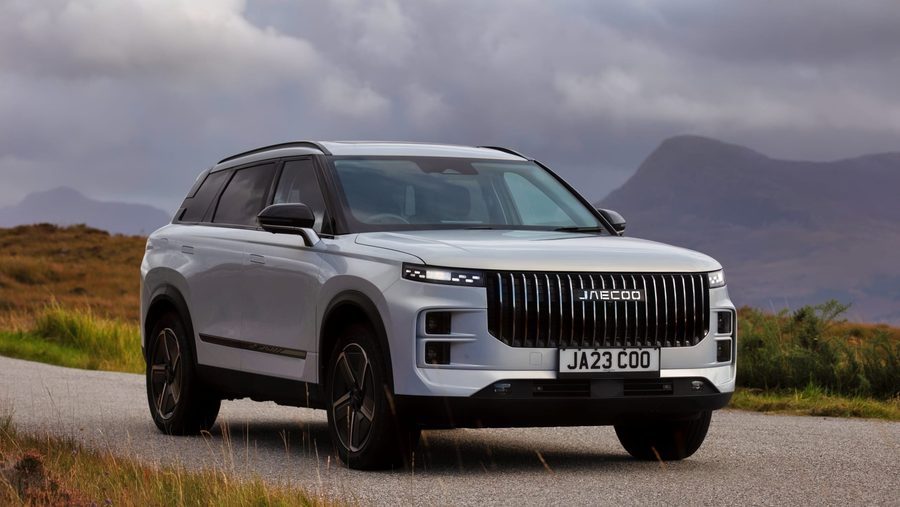
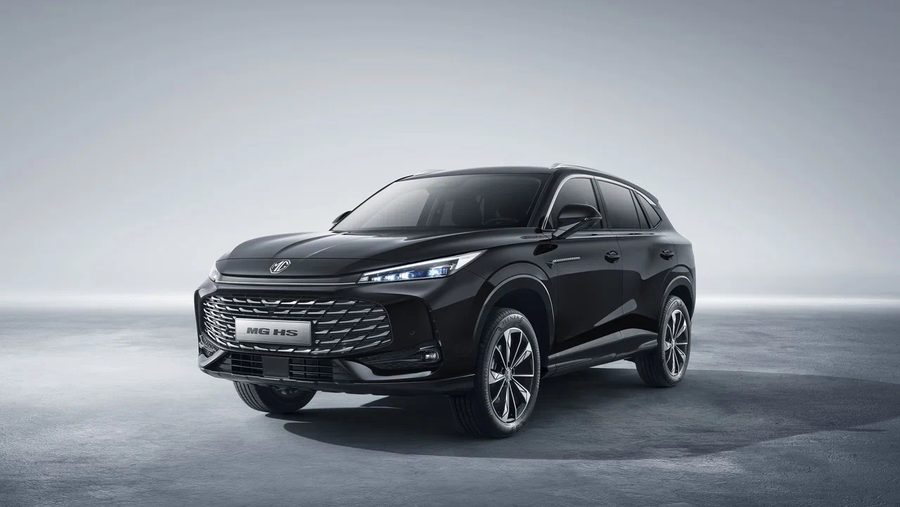
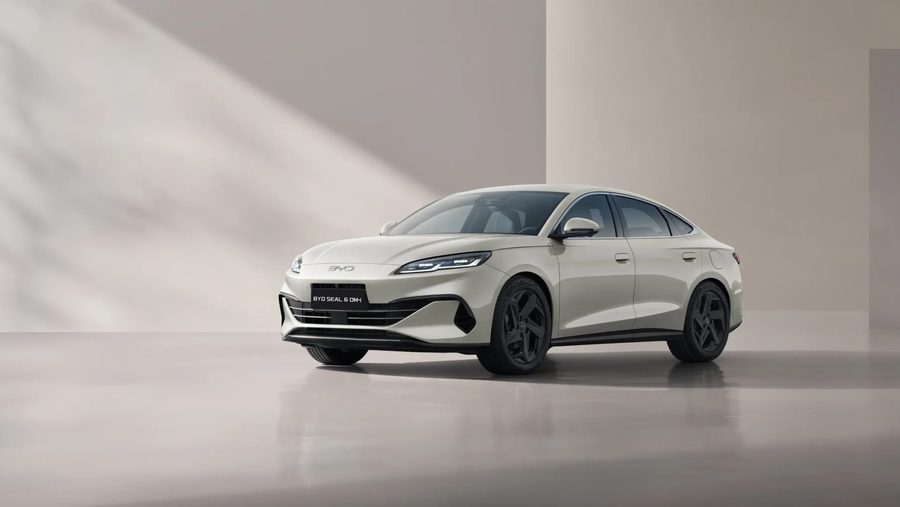
Chinese brands answered by shipping plug-in hybrids, which pay only the 10%. By mid-2026 they accounted for about a third of Europe’s plug-in hybrid sales, according to the data firm Dataforce (Carscoops). The Jaecoo 7, the MG HS and the BYD Seal 06 are all sold in Europe as plug-in hybrids. Across every powertrain, Chinese brands’ share of the European market went from 2.6% in 2023 (JATO) to 6.1% in 2025, or 810,982 cars (Dataforce).
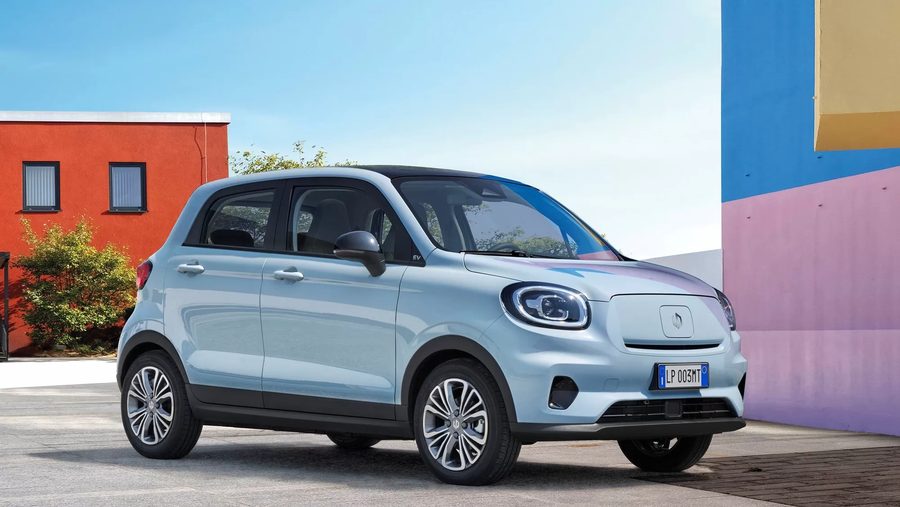
Building inside the EU removes the duty altogether. Leapmotor, part-owned by Stellantis, assembled the T03 at Stellantis’s Tychy plant in Poland from September 2024 until spring 2025 (electrive). In August 2026 it began building the B10 at Stellantis Zaragoza in Spain, starting at 40,000 cars a year (InsideEVs). MG has announced its own Spanish factory, due in 2028.
The UK left the EU before the duties were set and has not added its own. Chinese brands took 9.7% of UK new-car sales in 2025, about 200,000 cars, according to SMMT figures (electrifying.com). That is above the 6.1% for Europe as a whole, a figure that includes the UK.



Russia: from a gap left by Western brands to Chinese cars under Russian badges
Chinese brands held 7.5% of Russia’s new-car market in 2021. After Western carmakers withdrew in 2022, their share rose to 19.4% that year, 51% in 2023 and 58.5% in 2024, according to the analytics agency Autostat (Autostat).
The factories the Western brands left behind now build Chinese cars under local names. The former Renault plant in Moscow builds the Moskvich 3, a rebadged JAC JS4 (Vision Mobility). In Belarus, the Geely Coolray has been sold as the Belgee X50 since September 2023 (Autoreview). The largest of these brands, Tenet, was set up in 2025 by Russia’s AGR Holding and Defetoo, a Chery subsidiary, at Volkswagen’s former plant in Kaluga. It sells the Chery Tiggo 4 as the Tenet T4 and the Tiggo 7L as the T7, and went on sale in August 2025 (Wikipedia).
Importing a finished car also became much more expensive. Russia’s recycling fee, a one-off charge on new cars, rose by 70-85% on 1 October 2024. For a car with a 1- to 2-litre engine it went from 300,600 to 556,200 rubles, and it rises again every 1 January until 2030 (Interfax).
Autostat counts Tenet and Belgee as non-Chinese brands. Its figure for Chinese brands in 2025 was 51.7%, down 6.8 points on 2024, and the rebadged Chery and Geely models account for part of that fall.
Open markets with no car industry to protect
Chile builds no passenger cars of its own and has had a free trade agreement with China since October 2006, China’s first with a single country (MOFCOM). Chinese brands took 19.9% of Chilean new-car sales in 2020 and 32.4% in 2025, according to ANAC. Cars built in China took 41.4% of 2025 sales, because brands from other countries also ship China-built models to Chile.
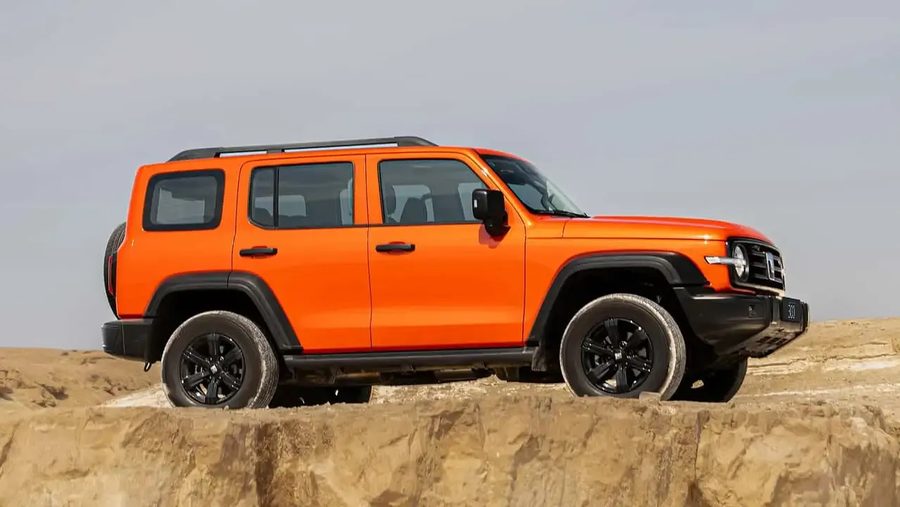
Australia stopped building cars when Holden’s Elizabeth plant closed on 20 October 2017 (ABC). The China-Australia Free Trade Agreement had been in force since 20 December 2015 (DFAT). The figure Australian reports use is cars built in China, which made up about 14% of new sales in 2024 and about 20% in 2025 (carsales). GWM, BYD and MG finished seventh, eighth and tenth among brands in 2025. GWM’s Tank 300 off-roader has been sold in Australia since 2023, including as a hybrid.
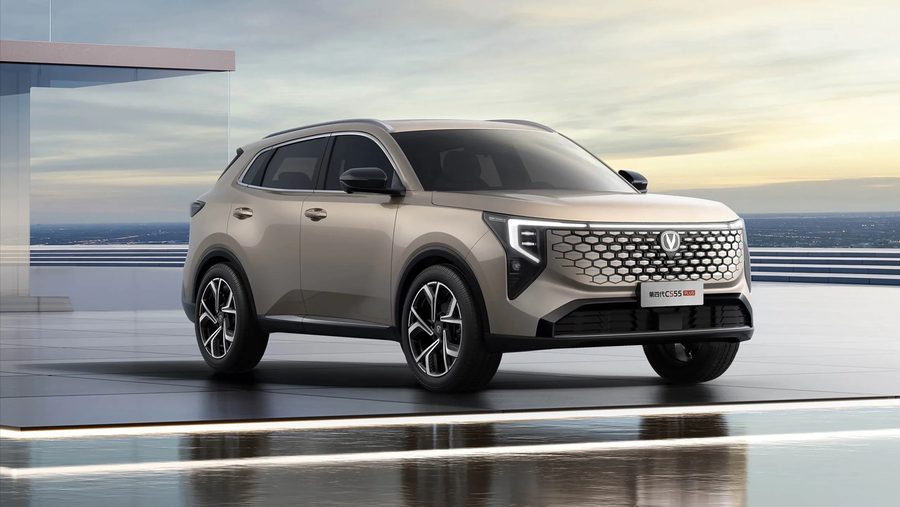
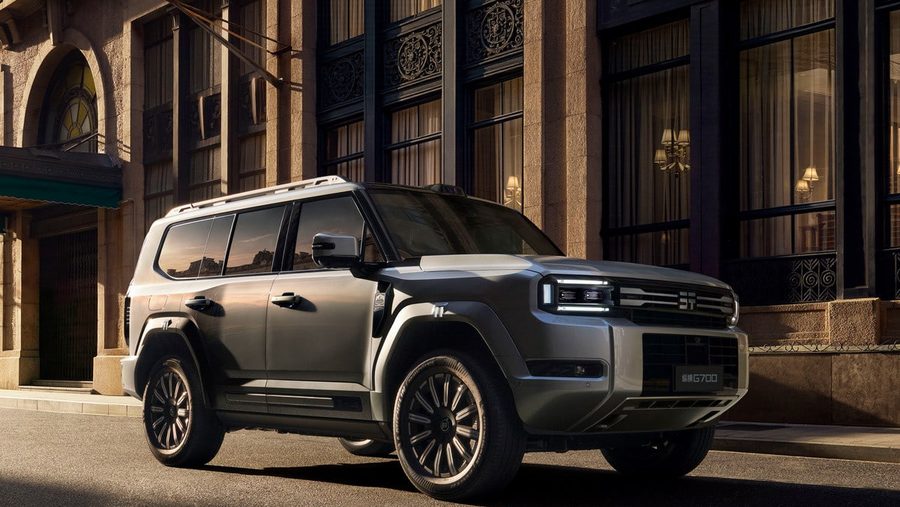
The six Gulf Cooperation Council states apply one common customs tariff to imported cars, and none has a volume car industry. No Gulf government publishes sales by brand origin. The consultancy AlixPartners estimates that Chinese brands went from about 2% of Gulf sales in 2019 to about 15% in 2025, and reached about 12% in Saudi Arabia by mid-2025 (Arab News). Changan sells the CS55 Plus in the Middle East as the UNI-S, and Jetour’s G700 is on sale in the UAE.
Norway charges no import duty on cars, and its electric-car tax exemptions apply to every brand (how Norway made new cars electric). BYD and Xpeng both chose Norway as their first European market in 2020. Chinese brands, as the Norwegian Road Information Authority (OFV) counts them, went from 0% in 2019 to 10.4% of new cars in 2024 and 13.7% in 2025, or 24,524 cars (OFV). That is less than half of Chile’s share under a similarly open door. In Norway the Chinese brands arrived in a market that was already 54% electric in 2020, with European, American and Korean brands selling electric cars there.



Building behind the tariff wall: Brazil, Turkey, Thailand and Mexico
Brazil charged no import tax on electric cars until the end of 2023. Gecex, the committee that sets Brazil’s import tariffs, then brought it back in steps: 10% in January 2024, 18% in July 2024, 25% in July 2025 and 35% in July 2026. Plug-in and conventional hybrids reached the same 35% on the same date (Datamar).
BYD began production in July 2025 at the former Ford plant in Camaçari, Bahia, with capacity for 150,000 cars a year. Its models there include the Dolphin Mini, the Brazilian name for the BYD Seagull (Ford Authority). GWM started building the Haval H6 at a former Mercedes-Benz plant in Iracemápolis in August 2025 (CnEVPost). Chinese brands’ share of Brazilian sales went from about 6.8% in 2024 to 9.6% in 2025.
Turkey added a 40% duty, at least $7,000 per car, on vehicles from China from 7 July 2024, with an exemption for carmakers that invest in Turkish production (CarNewsChina). BYD agreed that month to build a $1 billion plant in Manisa for 150,000 cars a year. In June 2026, BYD executive vice president Stella Li said the company had no timeline for starting production there, with its plant in Szeged, Hungary the first priority (Daily Sabah).
Electric cars built in China enter Thailand duty-free under the China-ASEAN free trade agreement. To get them built locally, Thailand’s EV 3.0 programme, launched in 2022, paid 70,000 to 150,000 baht (~$2,100–4,500) per electric car on one condition: every car a maker imported in 2022 and 2023 had to be matched by one built in Thailand from 2024 (Rhodium Group). BYD, GWM and Changan now assemble cars there.
Mexico’s tariff on cars from countries without a trade agreement with Mexico was 20% until the end of 2025 and rose to 50% on 1 January 2026 (Expansión). China shipped 625,187 vehicles to Mexico in 2025, more than to any other country, much of it just ahead of the increase (El Imparcial). Chinese brands’ share of Mexican sales was 12.5% in 2024 and an estimated 15% in 2025, according to the dealer association AMDA (Xataka).

Why published figures for Chinese car sales disagree
China exported 571,937 vehicles to the United Arab Emirates in 2025, its third-largest destination after Mexico and Russia, according to the China Passenger Car Association (CarNewsChina). The UAE’s whole new-car market that year was 335,772 cars (AutoPunditz). Imports of 1.7 times the domestic market mean much of the total was shipped on to other countries.
Some of those cars left China as “zero-mileage” used cars: new vehicles registered and then exported as second-hand. China’s used-car exports rose from 15,000 in 2021 to 436,000 in 2024, and industry estimates put 70-80% of them at zero kilometres. From 2026, a car must be held for 180 days before it can be exported as used (CarNewsChina).
In Mexico, AMDA estimates Chinese brands at 15% of 2025 sales, about 244,000 cars, while the statistics office INEGI reports 9.4%, or 143,134 cars (Vanguardia). Most of the gap is BYD, which sold about 85,000 cars, together with GAC and Zeekr: none of the three reports its sales to INEGI.
The other gaps come from what is counted as Chinese. Russia’s figure leaves out Tenet and Belgee. Chile’s brand figure and its built-in-China figure are nine points apart. Europe’s series comes from two data providers, JATO and Dataforce, whose market definitions differ slightly, so no 2024 figure joins them.
Rule changes already scheduled for Chinese cars, 2026 to 2030
- USA: the connected-vehicle rule’s software ban applies from model year 2027 and its hardware ban from model year 2030. Polestar stops selling new cars in the US with model year 2027.
- US-market Chinese-built cars: GM moves Buick Envision production for the US to Fairfax, Kansas, from 2028 (Carscoops). Ford ends production in China of Lincolns for the US by 2030 (Detroit News).
- EU: the duties on Chinese-built electric cars run for five years from 30 October 2024, to October 2029, unless they are renewed.
- Brazil and Mexico: Brazil’s 35% rate took effect in July 2026 and Mexico’s 50% tariff in January 2026, so 2026 is the first year each market sells under its full rate.
- Canada: the 49,000-car quota at 6.1% runs alongside the 100% surtax on every Chinese-built electric car above it.
The 2025 figures for Brazil, Mexico and the US are the last ones taken before these rules applied in full.
Frequently asked questions
Why are BYD cars not sold in the US?
Can you buy a Chinese car in Canada?
Which Chinese-built cars are sold in the US?
Do EU tariffs apply to Chinese hybrids?
Why did Chinese car brands' share fall in Russia in 2025?
Which country buys the most Chinese cars?
More explainers
Huawei owns none of its HIMA brands, and Changan became a central state enterprise in its own right in July 2025.

Mitsubishi sold its half of GAC Mitsubishi for one yuan in 2023, and that plant now builds Aion EVs.
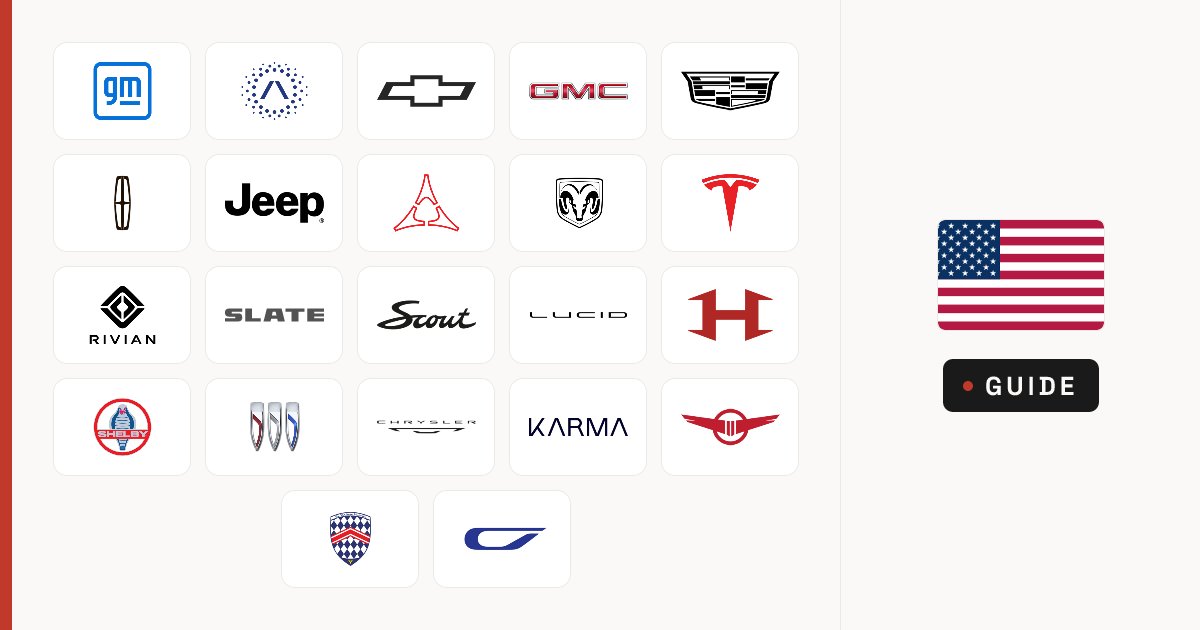
Stellantis, behind Jeep and Ram, is based in the Netherlands. Scout belongs to VW, Lucid mostly to a Saudi fund.
Updated 4 Oct 2026